Why Does Your Black Obsidian Bracelet Feel Cold or Warm?
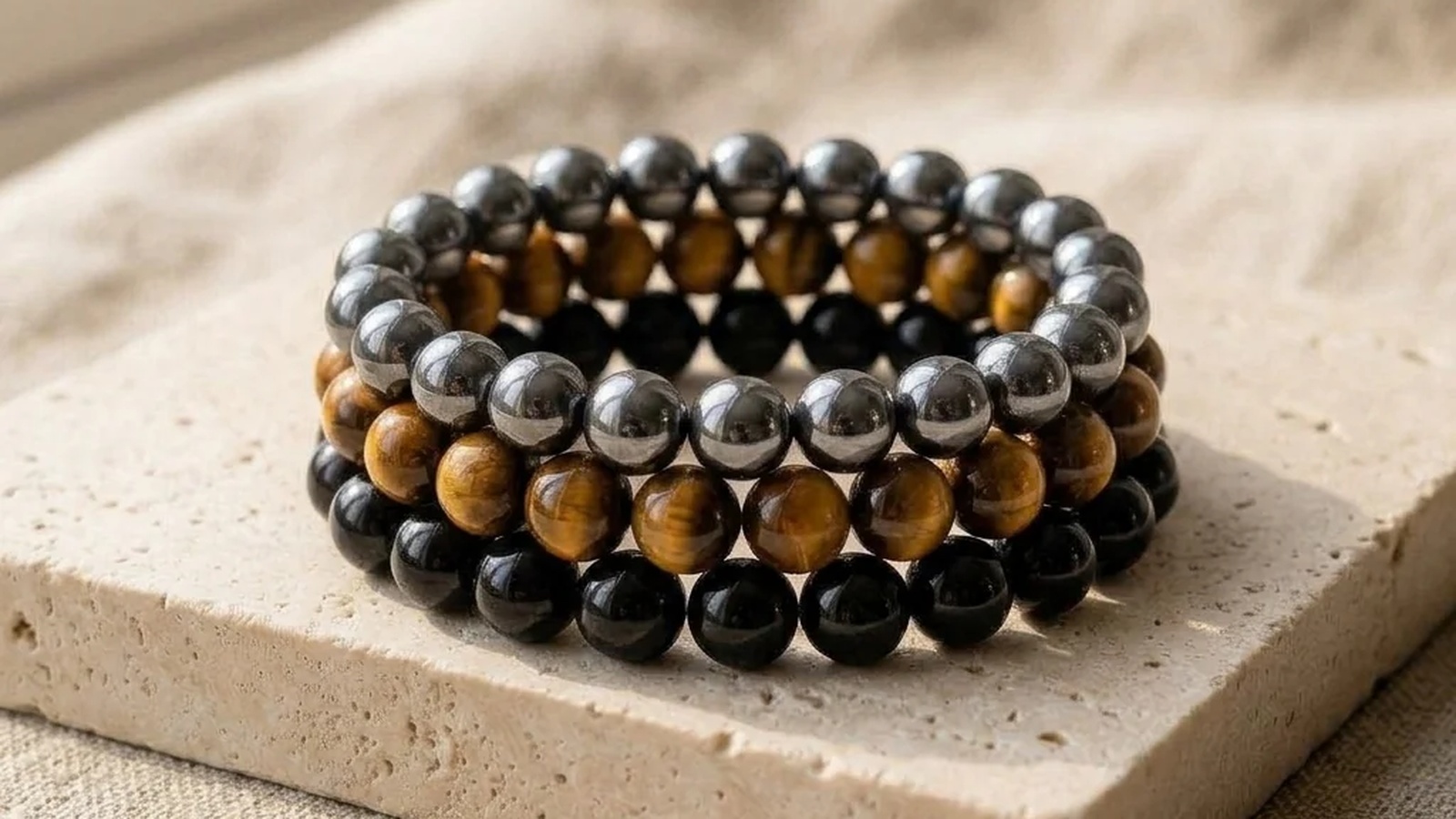
Table of Contents
- Why Does Your Black Obsidian Bracelet Feel Cold or Warm? A Quick Answer
- The Science: Why Real Black Obsidian Feels Cold at First Touch
- Volcanic glass and thermal conductivity explained
- Why Your Bracelet Warms Up (or Stays Warm) on Your Wrist
- Body heat, tight fit, and plastic vs. stone
- Cold or Warm: What It Says About Your Bracelet's Authenticity
- 4 quick at-home checks: temperature, weight, texture, shine
- The Spiritual Meaning Behind Cold and Warm Sensations
- Grounding, absorbing negativity, and why sensitivity varies by person
- Warm Isn't Always Comfortable: When Cold/Warm Reads as Pain or Discomfort
- FAQ
- Why does my black obsidian bracelet feel cold at first?
- Does a real obsidian bracelet feel cold or warm?
- Why does my obsidian bracelet warm up or stay warm on my wrist?
- Does temperature tell me if my black obsidian bracelet is real or fake?
- Can a black obsidian bracelet feel cold or warm for energy or spiritual reasons?
- What to Do Next
- Sources
A genuine black obsidian bracelet usually feels noticeably cool the moment it touches your skin, then gradually warms toward your body temperature over several minutes. That first cold impression comes from obsidian's nature as volcanic glass: it conducts heat away from your skin faster than plastic, resin, or most room-temperature air, so your nerve endings register a distinct chill. If your bracelet warms up almost instantly, or never feels cool at all, that is a signal worth examining — but temperature alone is only one clue, not a verdict.
Why Does Your Black Obsidian Bracelet Feel Cold or Warm? A Quick Answer
Real obsidian is volcanic glass formed when molten lava cools so quickly that crystals never have a chance to grow. Because it is dense glass rather than a porous or synthetic material, it pulls heat from your hand efficiently, so the first touch reads as cold. As your skin transfers warmth into the beads, the bracelet settles into a neutral, skin-adjacent temperature. A bracelet that feels warm right away, or stays unusually warm, may be made of plastic or resin instead of real stone.
The Science: Why Real Black Obsidian Feels Cold at First Touch
Temperature is not something a stone "has" on its own — it is a relationship between the stone and your skin. Your hand is warmer than the surface of most objects in a room, so heat flows from you into whatever you touch. The speed of that flow depends on the material's thermal conductivity.
Volcanic glass and thermal conductivity explained
Obsidian is glass, and glass conducts heat more readily than plastic, rubber, or resin. When your fingers close around genuine obsidian beads, heat leaves your skin quickly, and your nerves interpret that rapid heat loss as coldness. A real stone also takes a little time to warm up; if it warms up really fast when you hold it, it might be plastic or resin instead of real stone.
Why Your Bracelet Warms Up (or Stays Warm) on Your Wrist
Once the bracelet is on, it is in constant contact with a warm body. Within minutes, the beads absorb heat from your skin and reach a temperature close to your wrist. This is normal and expected. What matters is how fast that happens and whether the warmth feels even across the beads.
Body heat, tight fit, and plastic vs. stone
Several factors change how warm your bracelet feels:
- Fit: A snug bracelet touches more skin and warms faster; a loose one traps air and stays cooler longer.
- Bead size: Larger beads hold more mass, so they feel cold longer and take more time to equalize.
- Material: Plastic and resin have low thermal conductivity and low mass, so they warm quickly and may feel almost instantly neutral.
- Ambient conditions: A cold room, air conditioning, or winter air will keep the surface chill for longer.
- Wearing with other bracelets: Stacking can add weight and pressure, which is a separate comfort issue from temperature (see the section below).
Cold or Warm: What It Says About Your Bracelet's Authenticity
Temperature is a useful first clue, but it is not proof. A cool bracelet could also be glass, and a warm one could be a genuine stone that has been sitting against your skin for an hour. Use temperature alongside weight, texture, and shine.
4 quick at-home checks: temperature, weight, texture, shine
This is a decision table, not a single test. No one row proves authenticity on its own. Look for a pattern across all four.
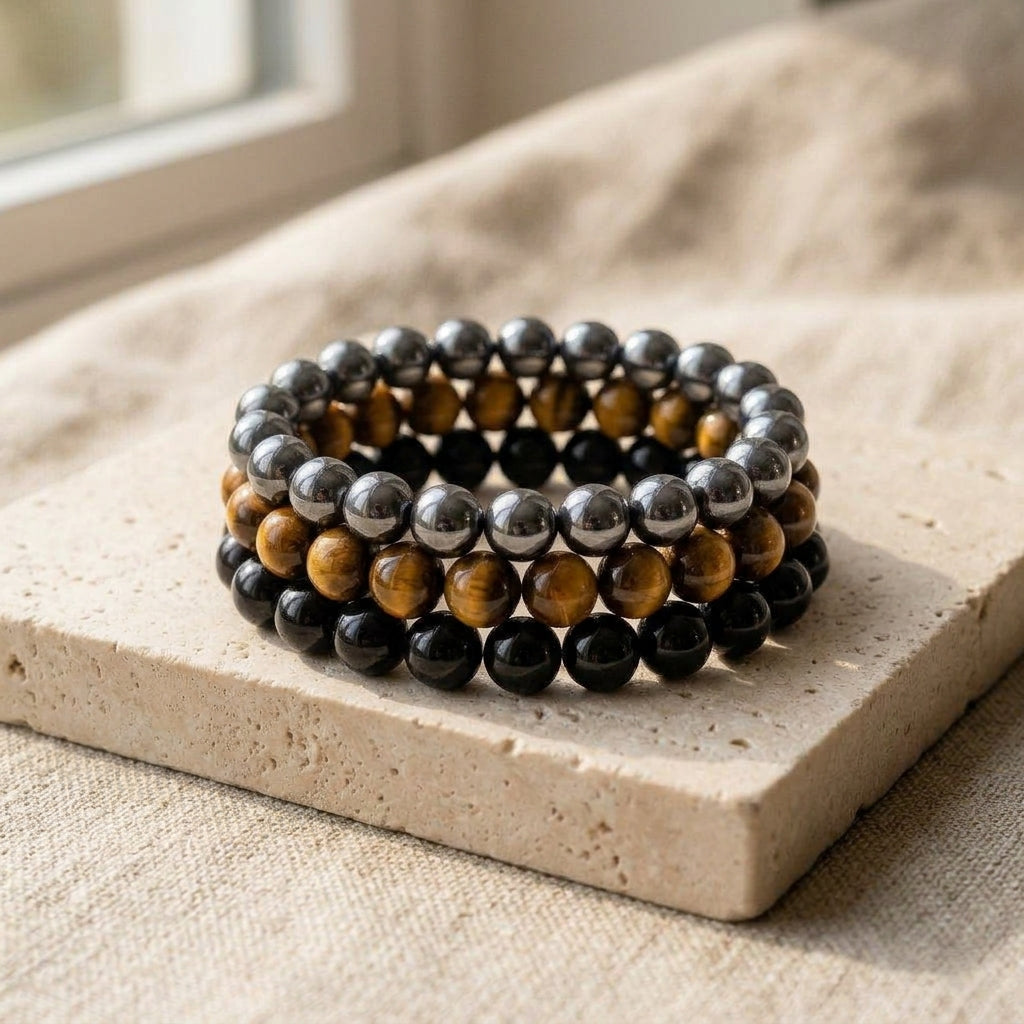
The Master Triple Protection Ritual Stack (Natural Tiger's Eye, Black Obsidian & Hematite)
Black obsidian is often worn as a grounding ritual piece for days that ask for steadier energy.
Shop This Authentic Piece →| Check | What real obsidian tends to do | What plastic, resin, or dyed glass tends to do | How much weight to give it |
|---|---|---|---|
| Temperature | Feels cold on first touch, warms slowly toward hand temperature | Warms almost immediately, or feels neutral from the start | Strong supporting clue, not proof |
| Weight | Dense and substantial for its size; feels heavier than it looks | Light for its size; hollow or airy feel | Strong clue, especially with large beads |
| Texture | Smooth glass-like surface, cool and hard, with natural variation between beads | Uniformly smooth but soft or slightly tacky; beads look identical | Moderate clue |
| Shine | Glossy but deep; can show subtle sheen, sheen shifts, or natural imperfections | Overly glossy, mirror-like, or unnaturally uniform | Moderate clue |
If three or four checks line up, you have reasonable confidence. If temperature fails but weight and texture pass, the stone may simply have been warmed by your hand before you tested it. If two or more checks fail, treat the piece as likely synthetic.
The Spiritual Meaning Behind Cold and Warm Sensations
Some wearers choose to treat the initial coolness as a personal reminder: a physical cue to pause, breathe, and return to the present moment. Whether you use your bracelet this way is entirely your own choice.
Grounding, absorbing negativity, and why sensitivity varies by person
Why does one person feel an intense chill and another barely notice? Several ordinary factors explain most of the variation:
- Skin temperature and circulation: Warm hands register cold surfaces more sharply.
- Ambient temperature: A cool room makes the contrast stronger.
- Attention: If you are watching for a sensation, you are more likely to feel it.
- Bead mass and contact area: More stone touching more skin means more heat transfer.
Spiritual interpretations are personal and are often associated with a wearer's intention and focus rather than a measurable property of the stone. Hold them gently, as meaning you bring to the piece rather than a claim the stone makes on its own.
Warm Isn't Always Comfortable: When Cold/Warm Reads as Pain or Discomfort
Sometimes the sensation is not a pleasant chill or a cozy warmth — it is pain. If your arm aches, tingles, or feels numb while wearing the bracelet, temperature is likely not the real issue. A bracelet that is too heavy or too tight may put pressure on a nerve, and this can happen more easily when you wear it stacked with other bracelets that add weight.
Practical steps to try:
- Remove the bracelet and see whether the discomfort fades.
- Wear it alone rather than stacked, to reduce total weight.
- Check the fit: you should be able to slide a finger under the band.
- Try the other wrist to compare.
- If pain, numbness, or tingling continues, stop wearing it and have it checked by a doctor. Persistent arm pain is worth a professional opinion, regardless of what you are wearing.
Many people find that simply loosening the fit or wearing a lighter piece resolves the issue. Others find the sensation passes after the first few wears as the bracelet settles into body temperature. Neither outcome says anything about your character or your sensitivity — it is usually just physics and fit.
FAQ
Why does my black obsidian bracelet feel cold at first?
Because obsidian is volcanic glass, it conducts heat away from your skin faster than plastic, resin, or air. Your nerves read that rapid heat loss as coldness. The sensation fades as the stone absorbs warmth from your body.
Does a real obsidian bracelet feel cold or warm?
Real obsidian usually feels cold on first touch and then gradually warms toward hand temperature. It does not warm up instantly. That slow warm-up is one of several clues used to distinguish genuine stone from plastic or resin.
Why does my obsidian bracelet warm up or stay warm on my wrist?
Your wrist is warm, and the beads absorb heat from your skin. A tight fit and larger beads speed this up because more stone touches more skin. Staying warm after an hour of wear is normal. Warming up within seconds of first touch is the more telling sign.
Does temperature tell me if my black obsidian bracelet is real or fake?
Temperature is a supporting clue, not proof. A cool first touch points toward real stone, while fast warming suggests plastic or resin. To be more confident, check weight, texture, and shine as well, and look for a natural variation between beads.
Can a black obsidian bracelet feel cold or warm for energy or spiritual reasons?
Some wearers interpret the initial chill as a grounding cue, and obsidian is often associated with protection and anchoring to the present moment. These meanings are personal and are not a measurable property of the stone. Physical factors such as skin temperature, room temperature, and attention explain most of the variation.
What to Do Next
Notice the first ten seconds after your bracelet touches your skin. Does it feel cool, then settle? Does it warm almost instantly? Pair that impression with a quick weight and texture check. If everything lines up, you can wear your obsidian with quiet confidence — and if your arm hurts, take the bracelet off before you take the meaning off your wrist. Your comfort comes first, and the stone will still be there when you are ready.
Sources
© 2026 Lumina Quartz. This article shares general information about obsidian and jewelry wear. It is not medical advice. If you experience persistent pain, numbness, or tingling, consult a healthcare professional.
Product Facts From the Current Catalog
These details come from the active Lumina Quartz catalog record checked on 2026-10-02. They are product-listing facts, not laboratory results or invented wear-test claims.
| Listed product | The Master Triple Protection Ritual Stack (Natural Tiger's Eye, Black Obsidian & Hematite) | Grade AAA Set // Lumina Quartz |
|---|---|
| Format | Bracelets |
| Listed price snapshot | 89.00 |
Price, availability, and options may change. Check the live product listing before choosing.