The Complete Everyday Guide to Obsidian Blue Color: Meaning and Uses
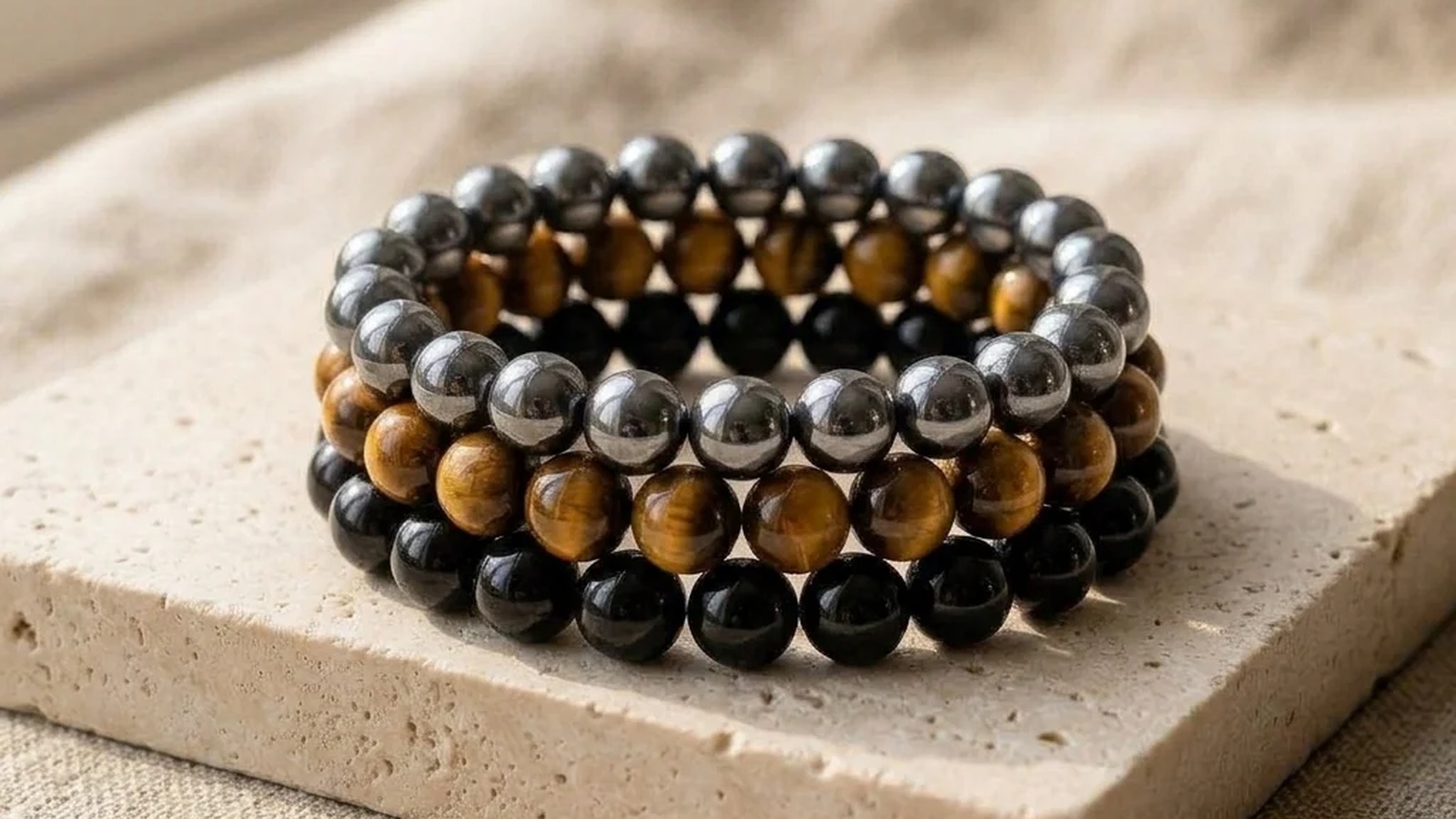
Table of Contents
- 10-Second Executive Summary / The Verdict Box
- What Is Obsidian Blue? The Color Behind the Name
- Blue or Black? How Obsidian Blue Shifts in Different Light
- Obsidian Blue Color Codes: Hex, RGB, and CMYK Values
- The Meaning and Mood of Obsidian Blue
- Obsidian Blue in the Real World: Stone, Paint, and Design
- Natural Obsidian vs. Blue Obsidian
- Obsidian Blue Pearl in Paint and Automotive Finishes
- How to Use Obsidian Blue in Everyday Style and Interior Design
- Obsidian Blue Color Pairings for a Polished Palette
- Obsidian Blue Decision Checklist: Which Version Do You Actually Need?
- Frequently Asked Questions About Obsidian Blue
- Is obsidian blue or black?
- What is the hex code for obsidian blue color?
- What does obsidian blue symbolize or mean?
- What colors pair well with obsidian blue?
- Is blue obsidian a real stone or just a color?
- Sources
Obsidian blue is a very dark blue-black color that sits at the boundary between the two shades, and the simplest answer is this: obsidian is naturally black or near-black volcanic glass, and "obsidian blue" describes either a bluish refraction in some natural obsidian or a color name inspired by that sheen. In natural stone, the blue tone is a visual effect of light, not a separate pigment — the base material stays dark. In design and paint, obsidian blue is a deep, cool shade used where black feels too stark and navy feels too bright.
10-Second Executive Summary / The Verdict Box
- Direct Verdict: Obsidian blue is a very dark blue-black. In nature it is a cool sheen on black volcanic glass; in design it is a deep near-black blue used as a softer alternative to pure black.
- Material: Obsidian is volcanic glass (amorphous, not crystalline), chiefly silica-rich.
- Mohs Hardness: Approximately 5–5.5 — soft enough to scratch, so obsidian jewelry and surfaces need care.
- Color Range: Natural obsidian occurs black, bluish, mahogany, golden, peacock, and grey-green; the tint comes largely from refraction by microscopic bubbles and inclusions.
- Best Use Scenarios: Deep accent walls, automotive and pearl finishes, evening wear, and grounding interiors that need depth without harshness.
- Buying Note: For natural stone, look for the Lumina Grade AAA Integrity Standard — natural rough, zero chemical resin filling, no irradiation or dye treatment.
What Is Obsidian Blue? The Color Behind the Name
Obsidian is volcanic glass formed when molten lava cools so quickly that minerals never have time to crystallize. Because it is glass rather than a crystal, it breaks with smooth, curved fractures and holds a deep, mirror-like surface. Its color is listed across a wide range: black, bluish, mahogany, golden, peacock, and grey-green, with the differences caused largely by refraction through microscopic bubbles and tiny mineral inclusions (Mindat). The U.S. Geological Survey describes the material plainly as volcanic glass (USGS).
"Obsidian blue" therefore names a color impression rather than a mineral species. On a polished surface, a dark obsidian can flash cool and blue-grey as light grazes it; designers then took that impression and built a paint and palette color around it. It is the color of deep water at dusk, of a night sky just before full dark — dark enough to feel protective, blue enough to feel alive.
Blue or Black? How Obsidian Blue Shifts in Different Light
Obsidian blue is a chameleon because it is genuinely close to black. In low, warm indoor light it usually reads as black or charcoal. In cool daylight, or when a polished face catches a reflection, the blue undertone surfaces. This is not your eyes playing tricks — it reflects how natural obsidian behaves, since its apparent color depends heavily on how light refracts through the glass and its micro-inclusions.
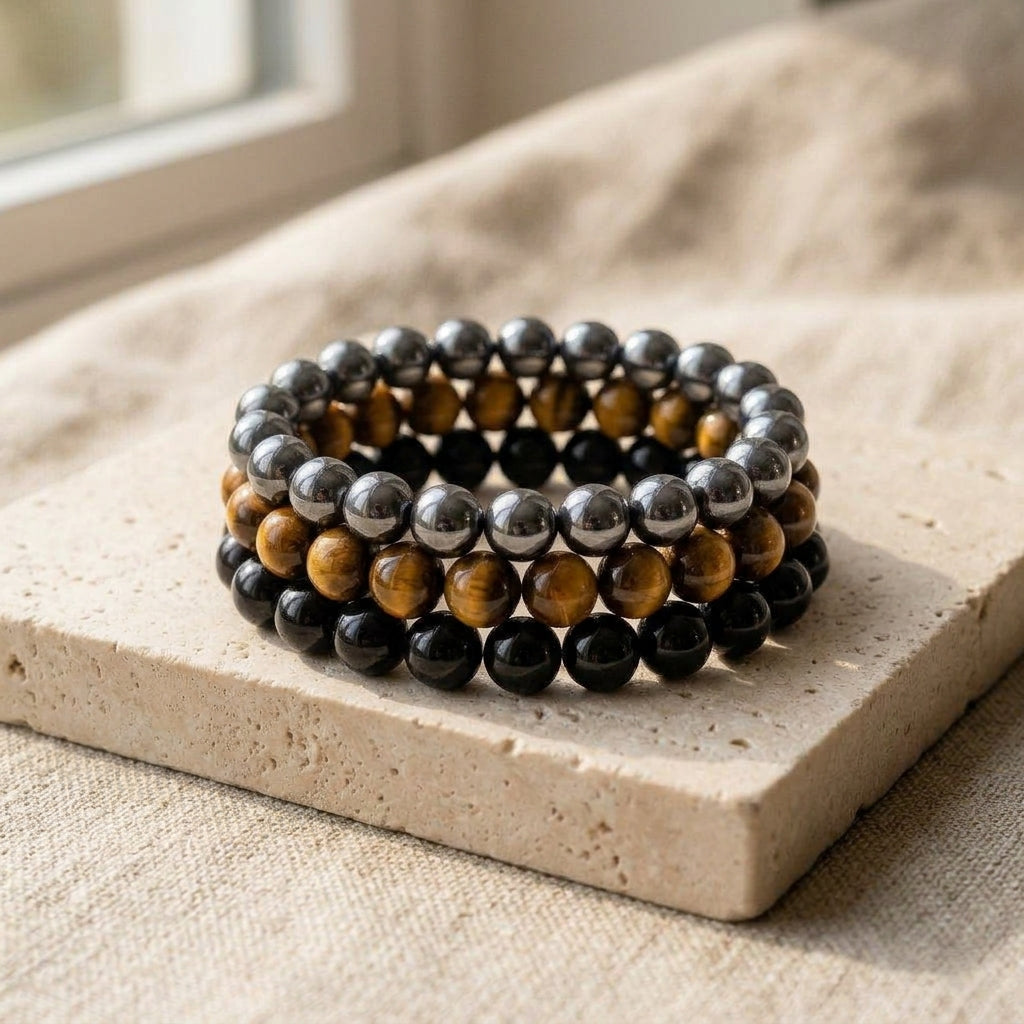
The Master Triple Protection Ritual Stack (Natural Tiger's Eye, Black Obsidian & Hematite)
Black obsidian is often worn as a grounding ritual piece for days that ask for steadier energy.
Shop This Authentic Piece →For practical purposes, treat obsidian blue as a black with a blue bias. That means:
- On screens: it can look almost pure black on dim displays and distinctly blue on bright ones.
- On walls: north-facing rooms tend to pull out the blue; warm lamp light pushes it toward black.
- On fabric: matte textures read darker, while satin and pearl finishes flash the blue more strongly.
If you want the blue to be visible, place it near daylight or cool-white light. If you want it to behave as a rich black, keep the lighting warm and low.
Obsidian Blue Color Codes: Hex, RGB, and CMYK Values
There is no single official standard for "obsidian blue," so different design tools assign slightly different values. The working figure most often used is a deep blue-black near hex #29313F. The table below gives a practical, buildable set you can use confidently.
| Format | Approximate Value | Notes |
|---|---|---|
| Hex | #29313F (range roughly #1F2833 to #2F3A4A) | Deep blue-black; lighter variants lean navy |
| RGB | 41, 49, 63 | Low overall brightness, blue channel highest |
| CMYK | Approx. 35, 22, 0, 75 | Print values vary by profile; proof before production |
| HSL | Approx. 218°, 21%, 20% | Cool hue, low saturation, very low lightness |
Two cautions for real projects: paper and ink shift dark blues noticeably, so always request a physical proof for print; and on uncalibrated monitors, obsidian blue can collapse into flat black. Test your chosen value in the actual lighting of the room or product before committing.
The Meaning and Mood of Obsidian Blue
Obsidian has long been associated with protection, reflection, and truth-telling in cultural symbolism, and the blue variant inherits that mood while softening it. Where pure black can feel severe, obsidian blue often reads as calm authority — grounded, quiet, and a little mysterious. In color psychology terms this is usually described as depth and introspection, though these are associations rather than measurable effects.
It is worth keeping the line clear: obsidian's cultural and personal meaning is symbolic and subjective. The stone's physical nature — volcanic glass, roughly 5–5.5 on the Mohs scale — is documented fact. It is often used as a personal reminder stone, and many people find dark, glossy objects calming to hold or look at, but this is an individual experience, not a guarantee. On the material side, obsidian also carries real archaeological weight: the Smithsonian has studied shifts in obsidian use over time as indicators of wider socioeconomic change and ancient trade networks (Smithsonian Profiles).
Obsidian Blue in the Real World: Stone, Paint, and Design
Natural Obsidian vs. Blue Obsidian
This is where buyers most often get confused. Natural obsidian genuinely occurs in bluish tones, but the blue is a sheen produced by refraction and inclusions, not a body color like sapphire. "Blue obsidian" sold as a bright, evenly colored, gem-clear stone is usually not natural obsidian at all — it is commonly man-made glass, or treated material, sold under a trade name.
When selecting natural pieces, apply the Lumina Grade AAA Integrity Standard: natural rough, zero chemical resin filling, no irradiation and no dye. Practical checks include:
- Color evenness: a suspiciously uniform, saturated blue across a large piece is a red flag; natural tone varies and shifts with the light.
- Surface and fractures: obsidian breaks with curved, glassy fractures; filled cracks may show a slightly different refractive line.
- Weight and coolness: glass feels lighter than dense stone and warms quickly in the hand.
- Disclosure: a reputable seller states treatment clearly. "Natural color, untreated" should be a claim you can verify, not assume.
For collectors, the more reliable natural display pieces for blue sheen are dark obsidian with visible flow structures and reflection, not neon-blue "gem" stones.
Obsidian Blue Pearl in Paint and Automotive Finishes
In the paint world, obsidian blue pearl is a dark blue base with mica or pearl pigments that flash lighter blue, teal, or even violet as the viewing angle changes. This effect mimics the way natural obsidian's surface catches light, and it is why the color appears in car finishes and premium interior paints. The GIA's work on fire obsidian shows how rich and directional those natural glass patterns can be when light strikes them correctly (GIA) — a good reminder that the best "pearl" look is usually a controlled version of something the earth already does.
In paint, expect pearl finishes to look darker in shade and brighter in direct sun, and to show fingerprints and dust more readily on flat panels. Sample on a real surface before you buy a full can.
How to Use Obsidian Blue in Everyday Style and Interior Design
Because obsidian blue is dark and cool, it works best as a grounding anchor rather than a whole-room flood. A step-by-step approach:
- Choose one focal surface. An accent wall, a front door, a sofa, or a single jacket — let the color carry one moment rather than every surface.
- Match the finish to the light. Use matte for walls in bright rooms (it hides imperfections and keeps the blue from looking artificial); use satin or pearl for small objects and accessories where you want the blue to flash.
- Balance with one warm and one neutral. A warm wood or brass note keeps the cool blue from feeling cold; a soft neutral (bone, oatmeal, greige) keeps the room breathing.
- Layer texture. Pair the color with wool, linen, leather, or raw stone so the darkness reads as material, not as a flat graphic.
- Edit the lighting. Add a warm lamp near the blue surface; this creates the dusk effect the color is named for.
In personal style, obsidian blue is a strong alternative to black for evening wear, denim, knitwear, and leather goods. It photographs beautifully and flatters most skin tones, especially when a little shine is present.
Obsidian Blue Color Pairings for a Polished Palette
These pairings are chosen to keep the color grounded rather than moody-for-its-own-sake:
| Companion Color | Effect | Best Placement |
|---|---|---|
| Warm brass / antique gold | Adds warmth and quiet luxury | Hardware, jewelry, picture frames |
| Bone / oatmeal | Softens the darkness, keeps it livable | Textiles, walls, upholstery |
| Deep forest green | Rich, natural, slightly nocturnal | Interior accents, menswear |
| Dusty rose / muted clay | Gentle contrast that humanizes the blue | Bedding, ceramics, accessories |
| Cool silver / steel | Polished, modern, glassy | Kitchens, tech, jewelry |
| Warm walnut wood | Grounds and warms the palette | Floors, furniture, frames |
Avoid pairing it with bright primary blue or neon accents unless you want a deliberately loud contrast — obsidian blue's strength is restraint.
Obsidian Blue Decision Checklist: Which Version Do You Actually Need?
Use this checklist to move from "I like the color" to the right purchase. It is organized as a decision path, not a generic buying list.
- Define the job of the color. If you need a wall or an object to read as near-black but softer, choose paint or textile in obsidian blue (#29313F range). If you want natural material with light-responsive depth, you are shopping for obsidian stone, not a pigment.
- Decide whether you need "natural" or "look." Natural obsidian's blue is a refraction sheen — it will never be uniform. A perfectly even blue is a sign of man-made glass or treated material, so set expectations before you compare prices.
- Check the hardness against the use. At Mohs 5–5.5, obsidian scratches relatively easily. It suits pendants, cabochons, and display pieces; it is a poor choice for rings worn daily or for high-traffic flooring.
- Apply the integrity screen. For any natural stone, ask for Lumina Grade AAA Integrity Standard confirmation — natural rough, zero chemical resin filling, no irradiation, no dye. This is the single most useful filter against "too-blue" imitations.
- Test the finish in situ. For paint, order a sample and view it in morning, afternoon, and lamp light. For jewelry, hold the stone near a window and then in shade to see whether the blue survives.
- Decide your tolerance for maintenance. Polished obsidian shows fingerprints and fine scratches; matte finishes hide wear better but flash less blue. Choose based on how much care you will realistically give it.
Boundary note: obsidian blue is a color name and a visual description, not a regulated standard. Hex values vary by source, natural stone varies piece to piece, and pearl paint varies by pigment batch. Verify the specific product, not the label.
Frequently Asked Questions About Obsidian Blue
Is obsidian blue or black?
Natural obsidian is most commonly black or near-black, though it also occurs in bluish, mahogany, golden, and grey-green tones. The "blue" is usually a sheen caused by light refracting through the glass and its microscopic inclusions, so the same stone can look black in one light and blue in another.
What is the hex code for obsidian blue color?
There is no single official value, but a commonly used approximation is #29313F, with practical variants ranging from about #1F2833 to #2F3A4A. Because the color is so dark, always proof it on the actual screen, paper, or surface before finalizing.
What does obsidian blue symbolize or mean?
It is often associated with protection, depth, reflection, and quiet authority, carried over from the cultural symbolism of obsidian. These are symbolic and personal meanings rather than measured effects, and individual experience with the color varies.
What colors pair well with obsidian blue?
Warm brass or antique gold, bone and oatmeal neutrals, deep forest green, dusty rose, cool silver, and warm walnut wood all pair well. The goal is to add one warm note and one soft neutral so the deep blue reads as grounded rather than cold.
Is blue obsidian a real stone or just a color?
Both exist. Some natural obsidian does show a bluish sheen, but it is a refraction effect, not a body color. Bright, evenly saturated "blue obsidian" sold as a gem is typically man-made glass or treated material, so verifiable integrity standards matter more than the name.
Sources
- Mindat — Obsidian: Mineral information, data and localities
- U.S. Geological Survey — Obsidian (volcanic glass)
- Smithsonian Profiles — Obsidian use and interaction networks
- GIA — Fire Obsidian's Beguiling Spectrum
- Smithsonian Museum Conservation Institute — Obsidian research and conservation
This article is for informational and design guidance only. It is not medical advice, and no crystal or color is presented as a treatment for any health condition. Cultural and symbolic meanings are subjective and distinct from documented mineral properties.
© 2026 Lumina Quartz. All rights reserved.
Product Facts From the Current Catalog
These details come from the active Lumina Quartz catalog record checked on 2026-11-23. They are product-listing facts, not laboratory results or invented wear-test claims.
| Listed product | The Master Triple Protection Ritual Stack (Natural Tiger's Eye, Black Obsidian & Hematite) | Grade AAA Set // Lumina Quartz |
|---|---|
| Format | Bracelets |
| Listed price snapshot | 54.90 |
Price, availability, and options may change. Check the live product listing before choosing.