The Complete Everyday Guide to Rainbow Obsidian: Meaning and Uses
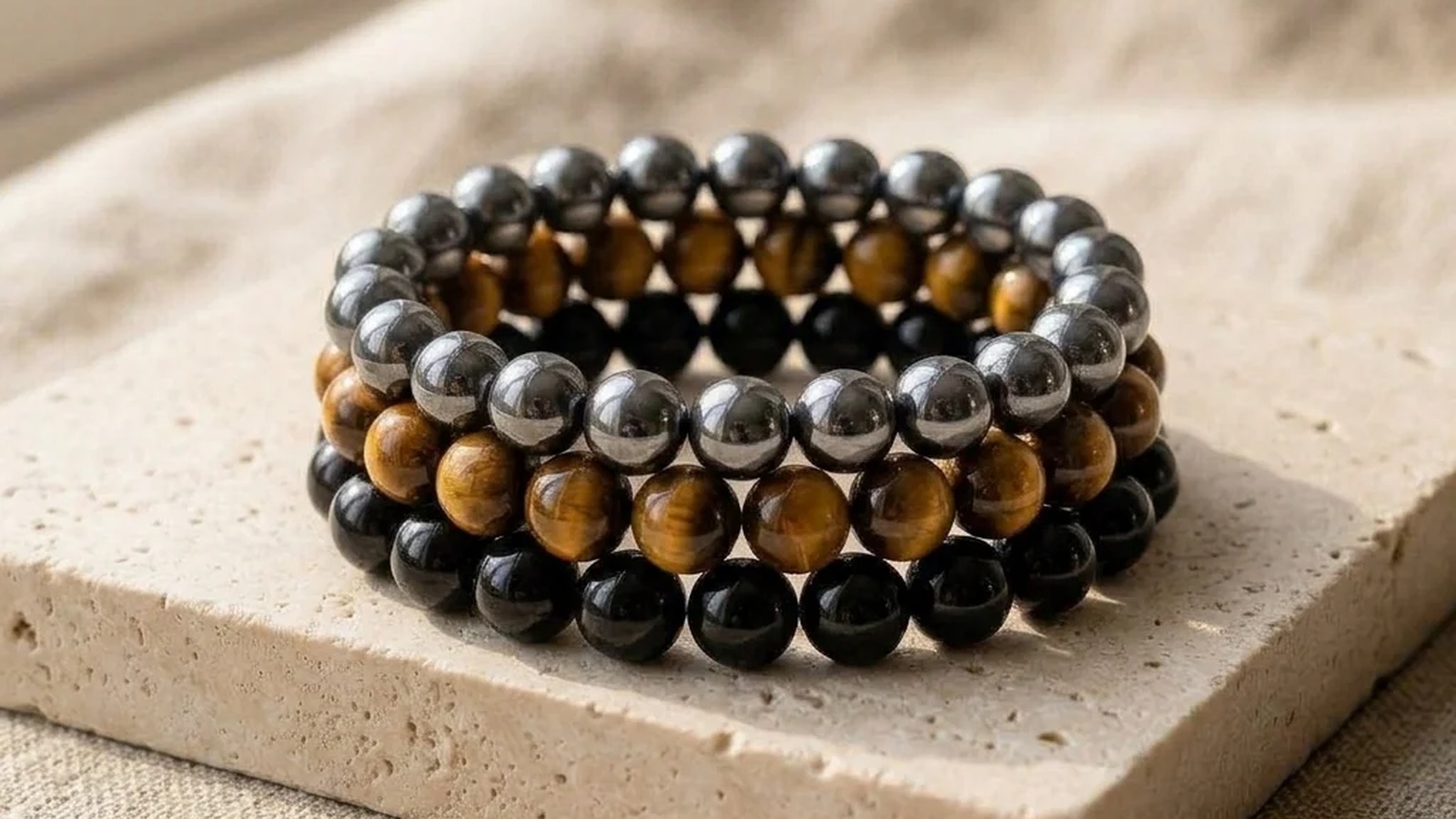
Table of Contents
- 10-Second Executive Summary / The Verdict Box
- What Is Rainbow Obsidian? (Meaning and Formation)
- The Science Behind the Rainbow Sheen
- Rainbow Obsidian vs. Other Obsidian Varieties
- Comparison: Rainbow Obsidian and Related Varieties
- Where Rainbow Obsidian Comes From
- Metaphysical Properties and Healing Benefits
- How to Use Rainbow Obsidian in Everyday Life
- Jewelry, Meditation, and Space Clearing
- How to Identify and Care for Rainbow Obsidian
- Authenticity, Water, Sunlight, and Cleansing
- Buying Guide: What to Look for in Rainbow Obsidian Jewelry
- Frequently Asked Questions
- What is rainbow obsidian and what causes its rainbow sheen?
- Where is rainbow obsidian found, and can you find it yourself?
- Is rainbow obsidian safe in water and sunlight?
- Sources
Rainbow obsidian is a natural volcanic glass whose multicolored sheen comes from tiny hedenbergite nanoparticles trapped inside it. That sheen is not a surface coating or a dye: it is a light-interference effect built into the stone as the lava cooled. Understanding that single fact answers most of what people search for — what it means, where it comes from, how to use it, and how to tell real from treated.
10-Second Executive Summary / The Verdict Box
- Direct Verdict: Rainbow obsidian is a genuine rock — an iridescent variety of obsidian — not a crystal and not a dyed glass. Buy it for the sheen and for personal ritual, not for promised medical outcomes.
- Mohs Hardness: approximately 5 to 5.5, so it scratches and chips more easily than quartz.
- What Causes the Rainbow: inclusions of hedenbergite (CaFe2+Si2O6) nanoparticles that produce multicolored iridescence.
- Known Source Localities: La Revoltosa Mine, Jalisco, Mexico; Glass Buttes, Oregon, USA; Davis Creek, Modoc County, California, USA.
- Also Called: Iris Obsidian.
- Best Use Cases: jewelry worn with care, meditation and grounding rituals, and quiet space-clearing routines — always as personal symbolism rather than treatment.
- Buying Standard: look for visible, direction-dependent sheen and untreated natural glass, the baseline described by the Lumina Grade AAA Integrity Standard.
What Is Rainbow Obsidian? (Meaning and Formation)
Rainbow obsidian is classified as a rock subtype: a silicic volcanic glass formed when lava cools so quickly that minerals cannot organize into crystals. Within that glass, bands of microscopic hedenbergite particles reflect light in shifting colors, which is why the stone is also known as Iris Obsidian. In everyday language, the "meaning" of the stone splits cleanly into two parts: a geological meaning, which is fully documented, and a cultural meaning, which is symbolic and personal. Keeping those two apart is the honest way to work with it.
The Science Behind the Rainbow Sheen
According to mineralogical records, the iridescence in rainbow obsidian is caused by inclusions of hedenbergite nanoparticles (Ma et al., 2001; Nadin, 2007). These particles sit in layers within the volcanic glass, and the colors you see depend on the angle of the light and the angle of your eye. That is why a genuine piece often looks dark and plain until it is tilted — and why photographs, which freeze one angle, can either flatter a stone or hide its sheen entirely. Rainbow obsidian is related to, but distinct from, fire obsidian, another iridescent variety noted in the same mineralogical record.
Rainbow Obsidian vs. Other Obsidian Varieties
All obsidian shares the same glassy volcanic origin, so the differences between varieties come down to what is trapped inside and how light interacts with it. This matters for buyers because sellers sometimes use variety names loosely.
Comparison: Rainbow Obsidian and Related Varieties
| Variety | What Creates the Effect | How It Behaves in Light | Practical Buying Note |
|---|---|---|---|
| Rainbow obsidian (Iris obsidian) | Hedenbergite nanoparticles producing multicolored iridescence | Colors shift as the stone or light moves; often subtle from one angle | Ask for video or multiple angles; a single flat photo cannot show the full effect |
| Fire obsidian | A separate iridescent variety referenced alongside rainbow obsidian | Distinct sheen pattern that should not be described as identical | Confirm which variety is being sold; do not accept the names as interchangeable |
| Plain black obsidian | No iridescent particle layers | Glossy black reflection only | Useful as a baseline to compare sheen against |
Applicability boundary: this comparison covers only what verified mineralogical sources document. Claims that one variety "carries stronger energy" than another are cultural interpretation, not geology, and should be presented as personal belief.
Where Rainbow Obsidian Comes From
Rainbow obsidian is documented at specific localities rather than everywhere obsidian appears. Verified source locations include the La Revoltosa Mine in San Andrés, Magdalena Municipality, Jalisco, Mexico; Glass Buttes in Lake County, Oregon, USA; and the area around Davis Creek on the Modoc Plateau, Modoc County, California, USA. These are the locations recorded in mineralogical databases — a useful check when a seller makes vague origin claims or implies the stone is rare to the point of being unverifiable.
Metaphysical Properties and Healing Benefits
Here the honest framing matters most. Obsidian's cultural associations are long-standing and worth exploring, but they are symbolic traditions, not measured effects. In crystal and folk practice, rainbow obsidian is often associated with reflection, self-awareness, and the gentle release of what no longer serves — the rainbow sheen read as a reminder that difficulty and beauty can coexist in the same material. People who work with it often describe it as a grounding stone for journaling, intention-setting, or quiet meditation.

The Master Triple Protection Ritual Stack (Natural Tiger's Eye, Black Obsidian & Hematite)
Black obsidian is often worn as a grounding ritual piece for days that ask for steadier energy.
Shop This Authentic Piece →What we should not do is dress symbolism up as physiology. Wearing rainbow obsidian may support a sense of calm or focus for some people, in the way a meaningful object often does — but it is not a treatment, and it is not a substitute for care from a qualified professional. Treat its "healing" reputation as poetic language for personal reflection, and you will get more from it, not less.
How to Use Rainbow Obsidian in Everyday Life
The most satisfying way to work with rainbow obsidian is to give it a job that matches its character: catching light, marking a pause, or holding an intention. Because the stone rewards movement and angle, it naturally invites you to slow down and look again — which is precisely why it suits small daily rituals better than display-only ownership.
Jewelry, Meditation, and Space Clearing
- Jewelry: A pendant or ring keeps the sheen visible to you and to others as you move, which is where the rainbow actually shows. Because the stone rates roughly 5 to 5.5 on the Mohs scale, choose settings that protect the edges and remove the piece before heavy chores, gardening, or gym sessions.
- Meditation: Hold a polished piece at eye level and tilt it slowly. The shifting colors make a simple, repeatable focal point; many people use it to mark the start and end of a short breathing practice. This is a personal anchoring habit, not a therapeutic technique.
- Space clearing: Place a palm stone or small sphere where daylight rakes across it — a windowsill shelf or a desk corner — so the sheen appears at certain hours. Pair it with a short weekly reset: clear the surface, set one intention for the week, and leave the stone as the visual cue.
How to Identify and Care for Rainbow Obsidian
Identification comes down to one reliable test: move the stone. Genuine rainbow obsidian shows its colors only at certain angles, in layers that seem to sit beneath the glassy surface rather than on top of it. A painted or coated imitation tends to look uniformly bright from every direction, and a dyed glass often shows color pooled in cracks. Natural pieces also carry normal imperfections — small bubbles, flow lines, uneven sheen patches — which are evidence of origin, not flaws.
Authenticity, Water, Sunlight, and Cleansing
For authenticity and quality, the Lumina Grade AAA Integrity Standard is the benchmark we work to: natural, unaltered obsidian with no chemical resin filling of fractures and no irradiation or dyeing to fake or intensify the rainbow. Apply it as a set of questions when you shop: Is the sheen angle-dependent? Are surface pits natural or resin-filled? Has the color been enhanced?
On care, three practical points:
- Water: brief contact during hand-washing is generally fine for polished obsidian, but avoid prolonged soaking, especially for jewelry with glued settings or metal that tarnishes, and dry the stone promptly. Obsidian is glass, so it is not a good candidate for harsh chemical cleaners.
- Sunlight: this is ordinary volcanic glass, not a light-sensitive mineral, so normal daylight display is not a documented risk. The real risk is heat and sudden temperature change, which can stress glass — keep pieces away from hot windowsills and car dashboards. (Note that some other colored stones do fade in sun; obsidian is not one of them, so do not apply that rule here.)
- Cleansing: a soft dry cloth or lukewarm water with mild soap is enough. Skip ultrasonic and steam cleaners, which can loosen settings or chip edges. For symbolic cleansing, moonlight, sound, or a brief smoke ritual are gentle options that will not harm the stone.
Buying Guide: What to Look for in Rainbow Obsidian Jewelry
Use this step-by-step checklist in order — each step filters out a common disappointment before you spend money.
- Request angle-shifting video. Ask the seller to tilt the piece under ordinary light. If the rainbow does not appear and disappear, question the material.
- Inspect the layers. Genuine sheen looks like it is inside the glass, in bands. Surface shimmer that looks sprayed on is a red flag.
- Confirm treatment status. Ask directly whether the piece has resin filling, dye, or irradiation, and whether it meets a stated integrity standard such as Lumina Grade AAA.
- Check the setting against the hardness. At roughly 5 to 5.5 Mohs, obsidian needs a protective bezel or well-supported setting rather than exposed thin edges for daily wear.
- Verify origin claims. Known localities include Jalisco, Mexico; Glass Buttes, Oregon; and Davis Creek, California. A specific, checkable origin is a better sign than a vague "rare find" story.
- Accept honest imperfection. Small bubbles and uneven patches are normal in natural glass; a perfectly uniform, flawlessly bright surface at a low price deserves a second look.
Frequently Asked Questions
What is rainbow obsidian and what causes its rainbow sheen?
Rainbow obsidian is an iridescent variety of volcanic glass, also called Iris Obsidian. Its multicolored sheen is caused by inclusions of hedenbergite nanoparticles that reflect light in shifting colors depending on the viewing angle.
Where is rainbow obsidian found, and can you find it yourself?
Documented localities include the La Revoltosa Mine in Jalisco, Mexico; Glass Buttes in Oregon, USA; and the Davis Creek area of Modoc County, California, USA. Whether collecting is allowed depends on the specific site's land status and rules, so check locally before planning a trip.
Is rainbow obsidian safe in water and sunlight?
Brief water contact is generally fine for polished obsidian, but avoid prolonged soaking and dry the piece promptly, especially on jewelry. Normal daylight is not a documented concern for obsidian; protect it instead from heat, sudden temperature change, and knocks.
Sources
This article is for general information and cultural interest only. It is not medical advice, and crystal traditions described here are symbolic rather than clinically established. © 2026 Lumina Quartz.
Product Facts From the Current Catalog
These details come from the active Lumina Quartz catalog record checked on 2026-11-06. They are product-listing facts, not laboratory results or invented wear-test claims.
| Listed product | The Master Triple Protection Ritual Stack (Natural Tiger's Eye, Black Obsidian & Hematite) | Grade AAA Set // Lumina Quartz |
|---|---|
| Format | Bracelets |
| Listed price snapshot | 89.00 |
Price, availability, and options may change. Check the live product listing before choosing.