The Complete Everyday Guide to Golden Obsidian: Meaning and Uses
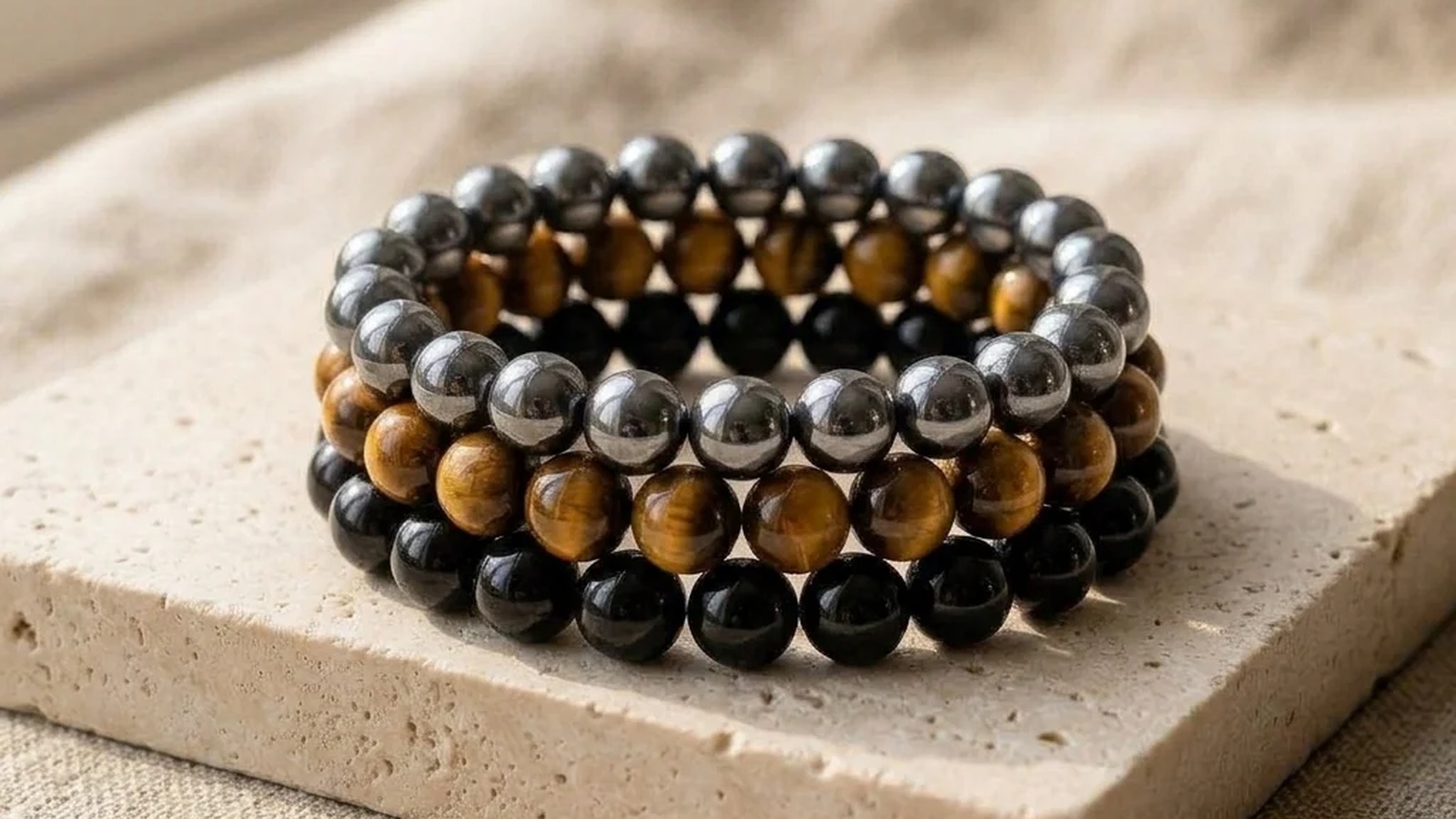
Table of Contents
- The Verdict Box — 10-Second Executive Summary
- What Is Golden Obsidian? A Plain-English Definition
- Why Does Golden Obsidian Shimmer? The Science Behind the Sheen
- Gas Bubbles, Flow Banding, and the Chatoyant Effect
- Golden vs. Rainbow, Silver, and Fire Obsidian
- Golden Obsidian Meaning and Healing Properties
- Root and Solar Plexus Chakras, Zodiac and Element Associations
- Golden Obsidian Benefits in Everyday Life: Confidence, Grounding, and Protection
- Golden Obsidian Jewelry: Pendants, Earrings, Beads, and Carvings
- What to Wear — and What to Avoid (Rings and Bracelets)
- Real vs. Fake: How to Identify Natural Golden Obsidian
- Golden Obsidian Authenticity Checklist — Step by Step
- How Golden Obsidian Is Priced — and What Raises Value
- FAQ: Golden Obsidian Questions Answered
- What is golden obsidian, and what causes its golden sheen?
- Is golden obsidian real gold or natural volcanic glass, and how can you tell natural from fake?
- How do you wear and care for golden obsidian jewelry without chipping it?
- Closing Thought
- Sources
Golden obsidian is a natural volcanic glass whose golden shimmer comes from microscopic gas bubbles and flow banding trapped as the molten lava cooled quickly — it is not gold, and the sheen is a reflection inside the glass rather than a metal coating. That single fact answers most of the confusion around this stone, whether you are buying your first pendant or comparing a raw specimen to a polished cabochon.
The Verdict Box — 10-Second Executive Summary
- Direct Verdict: Golden obsidian, formally a sheen obsidian, is a genuine silicate volcanic glass with an internal golden reflection — natural, affordable, and widely available; the main thing buyers must verify is that the sheen is inside the glass, not painted on.
- Mohs Hardness: About 5–5.5 — softer than quartz (7), so it scratches and chips more easily; best kept in pendants and earrings rather than daily-wear rings.
- Mineral Identity: A variety of obsidian (silicic volcanic glass), classified in Mindat as a glassy igneous rock — a rock, not a single mineral species.
- Best For: Statement pendants, drop earrings, carved cabochons, and grounding-practice collections; not ideal for knuckle-level rings or hard-impact bracelets.
- Quality Marker: Even, moving sheen with no surface paint, no bubble-free synthetic glass finish, and honest disclosure of origin — the Lumina Grade AAA Integrity Standard checks for natural rough, zero chemical resin filling, and no irradiation or dye treatment.
What Is Golden Obsidian? A Plain-English Definition
Golden obsidian is obsidian — quickly cooled volcanic glass formed from silica-rich lava — that shows a golden sheen effect when light hits its surface. Mindat classifies this material as Sheen Obsidian, "a variety of obsidian exhibiting a golden sheen effect," and places it within the broader obsidian family of silicic volcanic glass rather than under a single mineral name.
The definition matters because it sets expectations. Obsidian is amorphous: it has no crystal lattice, which is why it fractures with the smooth curved break (conchoidal fracture) that glass shares. Golden obsidian is therefore worked like glass, polished like glass, and priced like a decorative stone rather than a precious gem. It is not a gold-bearing ore, and no gold metal is involved in its color.
Why Does Golden Obsidian Shimmer? The Science Behind the Sheen
The shimmer is an optical effect, not a pigment. As lava cools and the glass solidifies, tiny layers and irregularities form inside the material, and light reflecting off those internal features returns to the eye as a moving golden glow. The effect shifts as the stone turns — the hallmark of a chatoyant sheen.
Gas Bubbles, Flow Banding, and the Chatoyant Effect
Two internal features do most of the work. Gas bubbles trapped in the cooling glass act as tiny reflectors. Flow banding — the layered alignment recorded as the lava moved — creates parallel reflective planes. Together they produce the soft "cat's eye" glide of light that gives sheen obsidian its character. Because these structures are inside the stone, a genuine sheen moves and deepens with the viewing angle; a coating sits flat on the surface.
Golden vs. Rainbow, Silver, and Fire Obsidian
Scholars and sellers group these stones by the color and mechanism of their reflection:
- Golden sheen obsidian: a warm yellow-to-bronze reflection from internal layering — the subject of this guide.
- Silver sheen obsidian: the same structural mechanism, but the reflection reads cool and white-gray.
- Rainbow obsidian: thin-film interference across internal fractures produces multiple colors in a single stone.
- Fire obsidian: a very thin, bright iridescent layer (often described as a "fire" layer) that flashes with intense color — scarce and typically priced far above golden sheen material.
Of the four, golden and silver sheen are the most common and the most affordable. Rainbow and fire obsidian rely on different light effects and are less uniform; comparing them side by side is the quickest way to train your eye.
Golden Obsidian Meaning and Healing Properties
In crystal lore, golden obsidian is often associated with confidence, boundary-setting, and grounded self-honesty. These are cultural and personal-reminder associations, not medical claims: golden obsidian is not a treatment for anxiety, and wearing it does not regulate the nervous system. Treat its meaning as a reflective practice — a reminder you choose — and its physical properties as verifiable facts.
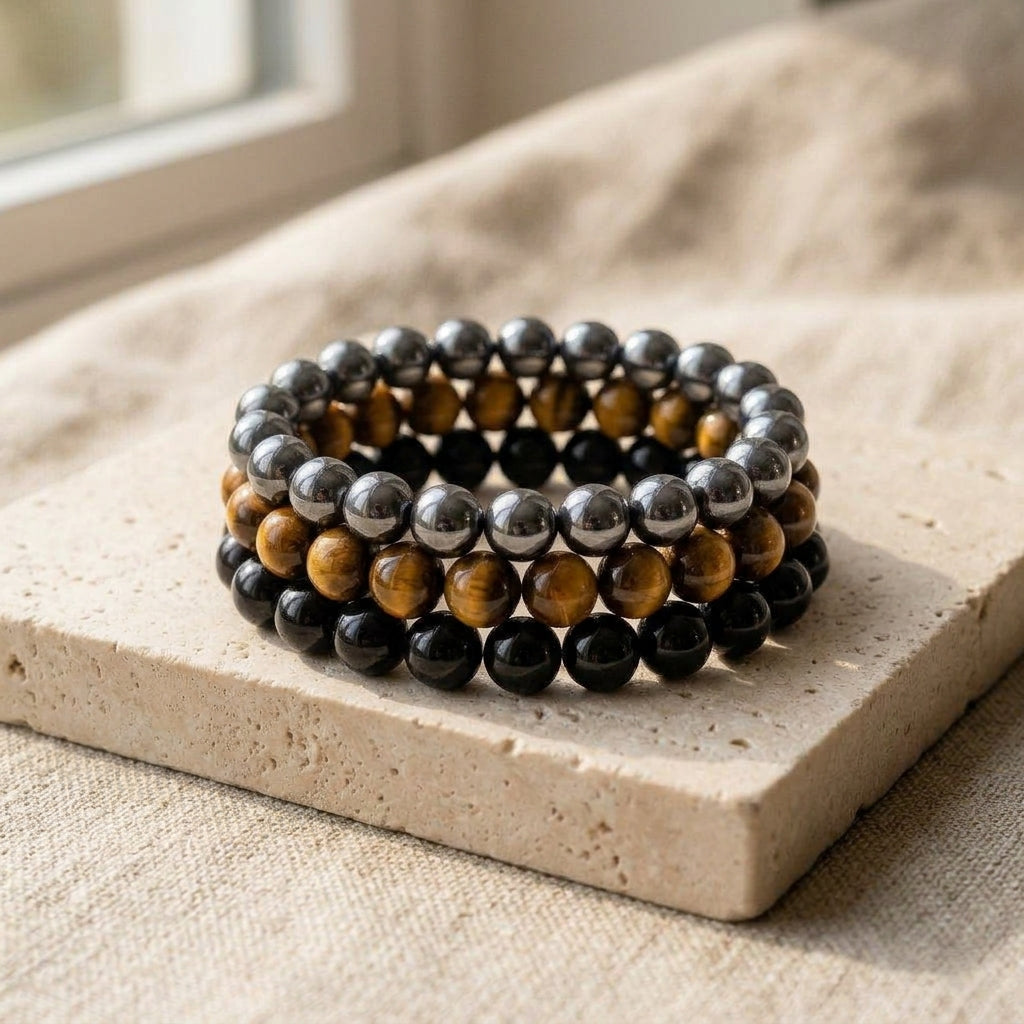
The Master Triple Protection Ritual Stack (Natural Tiger's Eye, Black Obsidian & Hematite)
Black obsidian is often worn as a grounding ritual piece for days that ask for steadier energy.
Shop This Authentic Piece →Root and Solar Plexus Chakras, Zodiac and Element Associations
In modern chakra frameworks, golden obsidian may be linked with the root chakra (grounding, stability) and the solar plexus chakra (personal will, confidence), which fits its warm golden tone. Elementally it is associated with earth (volcanic origin, density) and sometimes fire (its molten birth). Zodiac connections vary by tradition; it is most often paired with Scorpio and Capricorn. These are symbolic systems, not scientific classifications — useful for ritual and reflection, not for diagnosis.
Golden Obsidian Benefits in Everyday Life: Confidence, Grounding, and Protection
Practically, golden obsidian's everyday value is twofold. First, as a tactile anchor: holding a smooth stone during a pause can support a grounding habit, much like any deliberate object of attention. Second, as a visual reminder of steadiness under pressure — the stone that formed by cooling fast and holding its shape.
Where it shines physically is display and adornment: a polished cabochon catches light and changes as you move, so it may support a sense of presence when worn as a pendant. Keep benefits framed honestly: golden obsidian may support a personal ritual of confidence and grounding, and is often associated with protection in folk traditions — it is not a substitute for care, and no stone can promise emotional or physical outcomes.
Golden Obsidian Jewelry: Pendants, Earrings, Beads, and Carvings
Because golden obsidian is glass with a Mohs hardness of roughly 5–5.5, jewelry design should protect edges. Pendants, drop earrings, and bezel-set cabochons are the most forgiving formats. Beads work well in necklaces and in bracelets worn with care. Carvings — spheres, hearts, palm stones — are popular because the sheen moves across a broad polished face.
What to Wear — and What to Avoid (Rings and Bracelets)
Wear: pendants, earrings, brooches, and display carvings. These keep the stone away from knocks and abrasion.
Avoid or limit: rings, especially on the dominant hand, and tight beaded bracelets that knock against desks, keys, or other jewelry. Glass chips at edges and scratches against harder stones and grit. If you love a bracelet, choose larger, smooth beads with a soft cord and take it off for heavy tasks.
Care: wipe with a soft damp cloth, dry fully, store separately in a pouch, and avoid ultrasonic cleaners, steam, and sudden temperature changes.
Real vs. Fake: How to Identify Natural Golden Obsidian
Most "fake" golden obsidian is coated glass, dyed material, or synthetic sheen glass — and the test is straightforward. A natural sheen lives inside the glass; a coating lives on top.
Golden Obsidian Authenticity Checklist — Step by Step
- Tilt test: Rotate the stone under a lamp. Natural golden sheen should glide and deepen as the angle changes; a painted or filmed coating looks flat and static.
- Edge inspection: Look at chipped or polished edges with a loupe. A coating often shows a visible line or wear at the rim; natural sheen continues through the body.
- Surface feel: Genuine polished obsidian is glassy and cool. Painted pieces may feel slightly warmer or show brush texture.
- Bubble check: Small round gas bubbles are expected in natural obsidian; a perfectly bubble-free, mirror-perfect surface on cheap material is a red flag for synthetic glass.
- Color test (with care): A cotton swab with a little acetone on an inconspicuous spot may lift dye from treated pieces. Never test a finished setting this way.
- Weight and fracture: Obsidian is dense and breaks with curved glassy fractures; coated resin imitations feel light and break differently.
- Ask for provenance: Known sheen obsidian localities include Mexico, Morocco, and Lassen Volcanic National Park in California, per Mindat. The Lumina Grade AAA Integrity Standard requires natural rough, zero chemical resin filling, and no irradiation or dye treatment — ask any seller for that level of disclosure.
How Golden Obsidian Is Priced — and What Raises Value
Golden obsidian is an affordable stone. Price is driven less by rarity than by sheen quality (even, bright, and moving), cut and polish (clean cabochons and matched pairs cost more), size, and origin disclosure. A dealer who names the locality and states that no coating or dye was used is offering more than a vague "golden obsidian" label. Collector-grade pieces with unusually strong sheen and clean carving command a premium; everyday pendants remain accessible.
FAQ: Golden Obsidian Questions Answered
What is golden obsidian, and what causes its golden sheen?
Golden obsidian is a sheen variety of volcanic glass (obsidian) whose golden reflection comes from internal gas bubbles and flow banding that reflect light — not from gold or a coating.
Is golden obsidian real gold or natural volcanic glass, and how can you tell natural from fake?
It is natural volcanic glass, not gold. Tilt the stone: a natural sheen moves and deepens inside the glass, while a fake coating looks flat and may show wear at the edges.
How do you wear and care for golden obsidian jewelry without chipping it?
Choose pendants and earrings over rings, avoid knocks against harder stones, and clean with a soft damp cloth — never ultrasonic or steam cleaners, and store it separately.
Closing Thought
Golden obsidian asks very little of you and gives a lot back in presence: a warm, moving light held inside cooled fire. Learn to check the tilt, respect its softness, and it will stay beautiful for years — a quiet, grounding companion rather than a promise.
Sources
© 2026 Lumina Quartz. Cultural and chakra associations are symbolic and personal; they are not medical advice. Mineral properties are described from the sources above.
Product Facts From the Current Catalog
These details come from the active Lumina Quartz catalog record checked on 2026-11-06. They are product-listing facts, not laboratory results or invented wear-test claims.
| Listed product | The Master Triple Protection Ritual Stack (Natural Tiger's Eye, Black Obsidian & Hematite) | Grade AAA Set // Lumina Quartz |
|---|---|
| Format | Bracelets |
| Listed price snapshot | 89.00 |
Price, availability, and options may change. Check the live product listing before choosing.