Rainbow Obsidian Meaning: A Complete Crystal Guide for Grounding and Protection
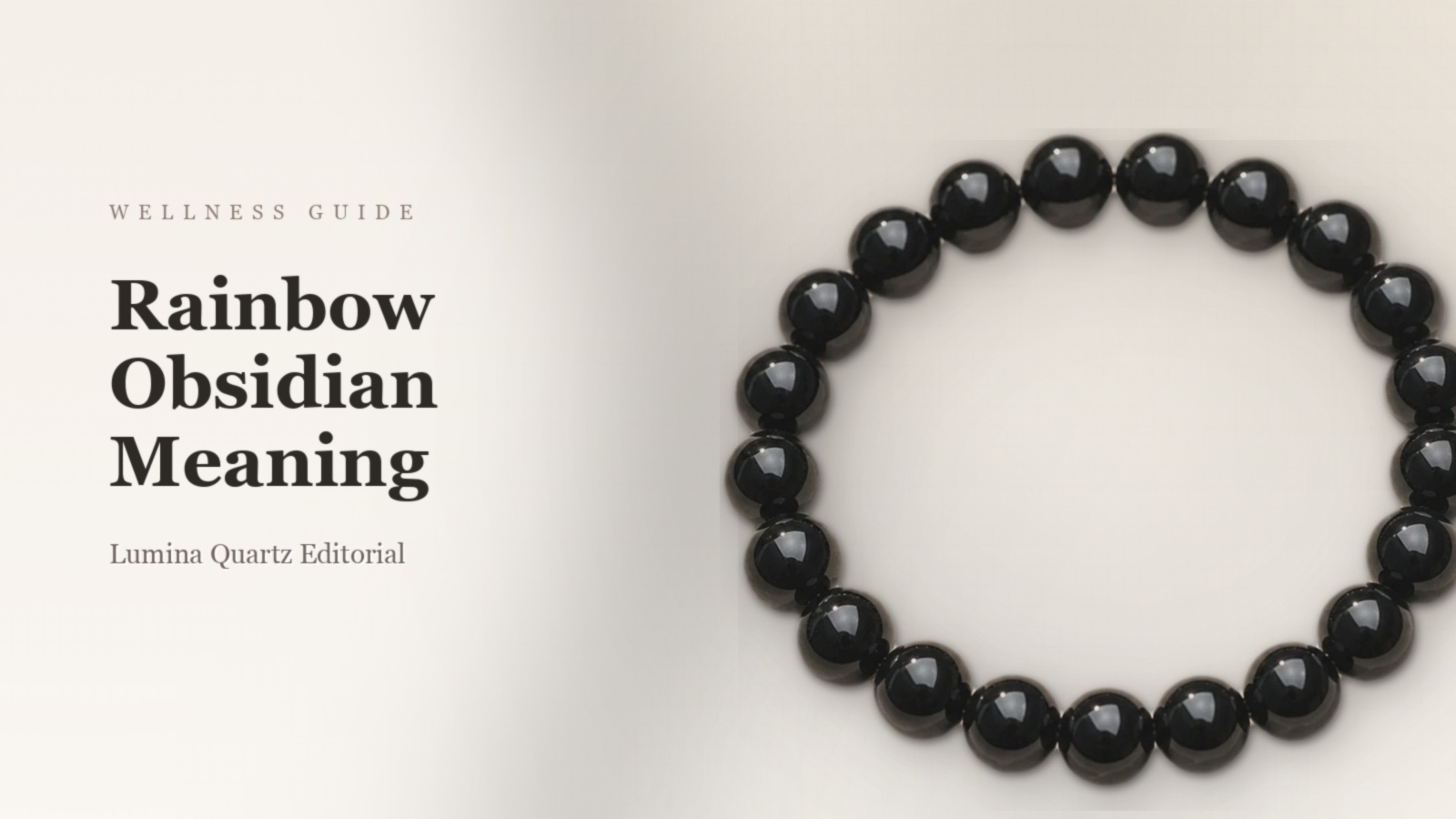
Introduction to Rainbow Obsidian
There are stones that whisper, and then there are stones that sing. Rainbow obsidian sits somewhere between the two—a volcanic glass that carries the memory of fire and the patience of time. When light catches its surface just so, bands of color emerge beneath the black: green, gold, violet, sometimes a flash of blue. It feels like a secret revealed only to those who look closely.
For centuries, people have turned to this remarkable stone for grounding, reflection, and quiet strength. Its meaning is layered, much like the colors that shift within its dark body. To understand rainbow obsidian meaning is to understand something about the human heart—that even in the darkest places, color can live.
What is Rainbow Obsidian?
Rainbow obsidian is a naturally occurring volcanic glass formed when silica-rich lava cools rapidly with minimal crystal growth. Unlike many gemstones that take shape deep within the earth over millions of years, obsidian forms on the surface, often in rhyolitic lava flows. The rainbow effect—sometimes called schiller—appears when microscopic inclusions of gas or mineral nanoparticles, often magnetite, are arranged in thin layers within the glass. As the mineral database Mindat notes, obsidian's many color expressions—including the iridescent sheen of rainbow obsidian—are "due largely to refraction by microscopic bubbles (and microscopic mineral inclusions such as magnetite in 'Rainbow Obsidian')."
It is found in several locations around the world, with notable sources in the United States (particularly Oregon and California), Mexico, Japan, and Armenia. Each locality yields slightly different color expressions, but the experience of holding a piece of rainbow obsidian is universal: cool, smooth, and strangely alive.
The Unique Appearance of Rainbow Obsidian
At first glance, rainbow obsidian appears simply black. It is only when you tilt it toward light—sunlight, candlelight, even the glow of a lamp—that the color begins to emerge. Thin bands of green, copper, gold, and sometimes purple ripple across the surface like oil on water, yet somehow more dimensional, more deliberate. This is not a stone that demands attention. It waits. And when you are ready to look, it reveals itself.
This quality of hidden beauty makes rainbow obsidian particularly meaningful for those drawn to introspection and personal growth. The stone mirrors a quiet truth: that what we carry within us is often more colorful than we allow ourselves to see.
Rainbow Obsidian Meaning and Symbolism
Rainbow obsidian meaning is rooted in both its origins and its appearance. Born from fire and cooled into stillness, it symbolizes transformation—the moment when chaos settles into clarity, when heat becomes form, when pain becomes wisdom. The rainbow bands are often associated with the spectrum of human emotion, reminding us that feeling deeply is not a weakness but a kind of brilliance.
Across different cultures, obsidian has been used for mirrors, tools, and ceremonial objects. The ancient Mesoamericans carved obsidian into reflective surfaces, using them in rituals of divination and self-inquiry. Archaeologists studying obsidian trade routes have found that shifts in how the stone was used over time often mirrored larger socioeconomic changes—a reminder that this material has carried meaning for human communities across millennia. Rainbow obsidian, with its iridescent flashes, was especially prized for reflective and ceremonial purposes. To gaze into its dark surface was to look inward, to seek the truth hidden beneath appearances.
Emotional Healing and Heart Support
In the realm of crystal work, rainbow obsidian is often associated with emotional healing, particularly for those navigating grief, heartbreak, or periods of emotional turbulence. The stone is said to bring buried feelings to the surface—not to overwhelm, but to offer the opportunity for release. It may support the process of self-forgiveness and compassion, gently encouraging the holder to acknowledge pain without being defined by it.
Because the stone contains so many colors, it is often seen as a mirror for the full range of human feeling. Where a person may have suppressed certain emotions—anger, sadness, vulnerability—rainbow obsidian may support the gentle acknowledgment of those parts, creating space for integration and wholeness.
Grounding and Protection
Despite its delicate iridescence, rainbow obsidian is a deeply grounding stone. Formed from volcanic earth, it carries a dense, rooted energy. Many who work with it describe feeling anchored—less easily swept away by stress or the emotions of others. It is often used as a protective stone, believed in folk tradition to shield the wearer from energetic overwhelm and negativity.
This combination of grounding and protection makes rainbow obsidian particularly useful for those who are deeply empathetic. If you tend to absorb the moods and feelings of those around you, holding a piece of rainbow obsidian during difficult conversations or crowded settings may support a sense of calm and discernment.
Hope and Joy
There is a hopefulness embedded in rainbow obsidian that is hard to find in other black stones. The color that emerges from darkness offers an honest kind of optimism—not the forced positivity of denial, but the quiet assurance that light still lives within us, even when we cannot see it. It is this quality that makes rainbow obsidian meaning feel so alive: it does not promise that sadness will vanish, but it reminds us that beauty and sadness can coexist.
Many people reach for rainbow obsidian during transitions—the end of a relationship, a career shift, the passing of a loved one. The stone does not hurry grief. It simply sits beside it, reflecting the small moments of color that remain. In this way, it may support a slow return to joy, one small glint at a time.
Geological Background and Formation
To fully appreciate rainbow obsidian, it helps to understand where it comes from. Obsidian forms when silica-rich lava—typically rhyolite—erupts from a volcano and cools so quickly that the atoms do not have time to arrange into a crystalline structure. The result is an amorphous glass, similar in composition to fused quartz but with a higher water content and a distinctive conchoidal fracture.

The Master Triple Protection Ritual Stack (Natural Tiger's Eye, Black Obsidian & Hematite)
Black obsidian is often worn as a grounding ritual piece for days that ask for steadier energy.
Shop This Authentic Piece →The rainbow effect is a phenomenon called thin-film interference. Within the glass, microscopic layers of magnetite or other mineral nanoparticles are deposited during cooling. When light enters these layers, some wavelengths are reinforced and others cancelled, producing the iridescent bands that seem to shift as you move the stone. The Gemological Institute of America (GIA) has documented how obsidian's flow structures—stretched, sheared, and compressed while still molten—are preserved in the solidified glass, revealing "a history of the once molten glass" that can only be seen through careful observation and lapidary work.
This origin story matters for the stone's symbolic meaning. Rainbow obsidian is not polished into beauty; it is revealed. The color was always there, waiting for the right angle of light.
Rainbow Obsidian Healing Properties and Benefits
Physical Healing Properties
In crystal healing traditions, rainbow obsidian is sometimes associated with the physical body in gentle, supportive ways. It is believed by some practitioners to support the release of tension held in the body, particularly in the shoulders, jaw, and stomach—areas where stress often accumulates. Because obsidian is formed from volcanic material, it is also sometimes linked to vitality and the body's own capacity for renewal.
These are traditional associations rather than medical claims. Rainbow obsidian is not a substitute for professional healthcare, and anyone experiencing persistent physical symptoms should consult a qualified practitioner.
Emotional and Spiritual Healing
Emotionally, rainbow obsidian is often described as a stone of gentle release. It does not force confrontation; instead, it creates a safe container for feelings that have been waiting to be acknowledged. Many people who work with it report a sense of emotional clarity—a quiet understanding of what they are truly feeling beneath the surface.
Spiritually, the stone is associated with the concept of shadow work—the practice of examining the parts of ourselves we tend to hide. Rainbow obsidian is believed to support this process with compassion rather than judgment, reminding us that even our darkest experiences contain the potential for growth and color.
How to Choose the Right Rainbow Obsidian for You
Not all rainbow obsidian looks or feels the same. Use this quick guide to find a piece that matches your intention.
- For grounding and protection: Choose a smooth, palm-sized tumble or palm stone. The density of the glass gives it a reassuring weight in the hand.
- For emotional reflection: Look for a piece with visible color bands—green, gold, or violet. Holding it under different light sources (sunlight, candlelight, a lamp) can reveal how the colors shift and which ones resonate with you.
- For daily wear: A pendant or bracelet places the stone near the heart or pulse point, keeping its grounding energy close throughout the day.
- For meditation: A larger specimen with clear flow structures can serve as a focal point, especially when positioned near a window or under a small light.
- For collectors: Note the locality if available. Mexican, Oregon, and Armenian rainbow obsidian each have distinct color expressions and flow patterns.
How to Use Rainbow Obsidian
Meditation and Chakra Work
Rainbow obsidian is often placed on or near the root chakra during meditation, where its grounding energy is believed to support a sense of safety and stability. Some practitioners also use it near the heart chakra, drawn by its association with emotional healing and the integration of feeling.
A simple practice: hold the stone in your left hand, close your eyes, and breathe slowly. Imagine any heaviness you carry draining into the stone, and any color you need flowing back into you. There is no right or wrong way to work with it—only what feels honest and steady.
Jewelry and Daily Wear
Rainbow obsidian makes beautiful, understated jewelry. A pendant or beaded bracelet keeps its grounding presence close without drawing attention. Because the stone is a natural glass, it is relatively durable but can chip with rough impact, so it is best worn with a little care. Many people find that wearing rainbow obsidian during busy or emotionally charged days helps them stay centered.
Cleansing and Charging Methods
Like all crystals in folk tradition, rainbow obsidian benefits from periodic cleansing. Because obsidian is glass, it is best to avoid harsh chemicals or prolonged soaking. Gentle methods work well:
- Pass the stone briefly through the smoke of sage, palo santo, or incense.
- Place it under moonlight overnight, especially during a full or new moon.
- Rest it on a bed of dry sea salt for a few hours, then wipe clean.
- Set it beside clear quartz or selenite to refresh its energy.
To charge it, simply hold the stone in sunlight for a few minutes and set an intention. The color bands will catch the light, and many people find this small ritual deeply centering.
How to Identify Authentic Rainbow Obsidian
Authentic rainbow obsidian has a few telltale qualities. It should feel cool and smooth, with a glassy luster. When tilted under direct light, the color bands should appear within the stone, not on its surface—this is the key difference from a coating or treatment. The colors are usually subtle at first and become more visible as the angle changes.
If a piece looks uniformly colored from every angle, or if the "rainbow" seems painted on, it may be treated or imitation glass. Genuine rainbow obsidian also tends to show flow lines or subtle banding when held up to light, a reminder of its molten origins. Buying from a reputable source that can describe the stone's origin is the best way to ensure authenticity.
Rainbow Obsidian vs. Other Obsidian Types
Obsidian comes in many varieties, each with its own character:
- Black obsidian: The most common form—deeply grounding and protective, with a uniform dark surface.
- Rainbow obsidian: Contains iridescent layers that flash with color under light, associated with emotional healing and hope.
- Golden obsidian: Shows a metallic gold sheen, often linked to personal power and confidence.
- Mahogany obsidian: Features reddish-brown bands, grounding with a warm, earthy energy.
- Snowflake obsidian: Contains white cristobalite clusters that resemble snowflakes, often used for balance and patience.
- Fire obsidian: A rare variety with intense, shifting color bands, prized by collectors and documented by the GIA for its remarkable flow structures.
While all obsidian shares a volcanic origin and grounding nature, rainbow obsidian is unique for its combination of protective depth and visible color—a reminder that even within darkness, something luminous can appear.
Where to Buy Rainbow Obsidian
Rainbow obsidian is available from crystal shops, online retailers, and specialty gem shows. When shopping, look for sellers who provide clear photographs under natural light and describe the stone's origin. Prices vary widely depending on size, color intensity, and locality—a small tumbled stone may be quite affordable, while a large specimen with vivid bands can be a collector's piece.
At Lumina Quartz, we offer a selection of carefully sourced crystals, including rainbow obsidian pieces chosen for their grounding presence and quiet beauty. Whether you are drawn to a palm stone for meditation or a pendant for daily wear, the right piece tends to find you when the time is right.
Conclusion
Rainbow obsidian is a stone of quiet revelations. It does not shout its beauty; it waits for the right light, the right angle, the right moment. In a world that often demands brightness and certainty, it offers something gentler: the reminder that color lives within darkness, that feeling deeply is a form of strength, and that grounding and hope can exist side by side.
Whether you are drawn to its protective nature, its association with emotional healing, or simply the way its colors shift beneath the surface, rainbow obsidian invites you to look closer—at the stone, and at yourself.
Key Takeaways
- Rainbow obsidian is a volcanic glass formed when silica-rich lava cools rapidly, creating thin layers that produce iridescent color bands.
- Its meaning centers on transformation, emotional healing, grounding, protection, and hope.
- It is associated with the root chakra and, for many, the heart chakra.
- Authentic rainbow obsidian shows color within the stone that shifts with the angle of light.
- It can be used in meditation, worn as jewelry, and cleansed gently with smoke, moonlight, or salt.
- It is not a substitute for professional medical or mental health care.
FAQ
What is the meaning of Rainbow Obsidian?
Rainbow obsidian symbolizes transformation, emotional healing, and hope. Its iridescent bands emerging from dark glass are often seen as a reminder that beauty and color can exist within difficult experiences. It is also associated with grounding, protection, and gentle self-reflection.
How is Rainbow Obsidian formed?
It forms when silica-rich lava cools so quickly that atoms cannot arrange into a crystal structure, creating volcanic glass. The rainbow effect comes from thin layers of microscopic mineral inclusions, often magnetite, that interfere with light and produce shifting color bands.
What are the healing properties of Rainbow Obsidian?
In crystal traditions, rainbow obsidian is associated with emotional release, grounding, protection, and support during grief or transition. Some practitioners link it to physical tension release and vitality, though these are traditional associations rather than medical claims.
How to cleanse and charge Rainbow Obsidian?
Gentle methods work best: passing it through incense or sage smoke, resting it under moonlight, placing it briefly on dry sea salt, or setting it beside clear quartz or selenite. To charge it, hold it in sunlight for a few minutes while setting an intention.
Which chakra is associated with Rainbow Obsidian?
Rainbow obsidian is most often associated with the root chakra, where its grounding energy supports stability and safety. Many people also work with it near the heart chakra for emotional healing and integration.
Related Reading
- Kyanite Crystal Meaning: A Guide to Benefits, Uses, and Chakra Alignment
- Red Jasper: A Gentle Guide to Meaning, Benefits, and Uses
- Black Tourmaline Meaning: Meaning, Properties, and Everyday Uses
- Rose Quartz Crystal: A Gentle Guide to Meaning, Benefits, and Uses
- Sunstone Meaning: Meaning, Properties, and Everyday Uses
- Fluorite Meaning: Meaning, Properties, and Everyday Uses