Obsidian Healing: Meaning, Healing Properties, and Daily Benefits
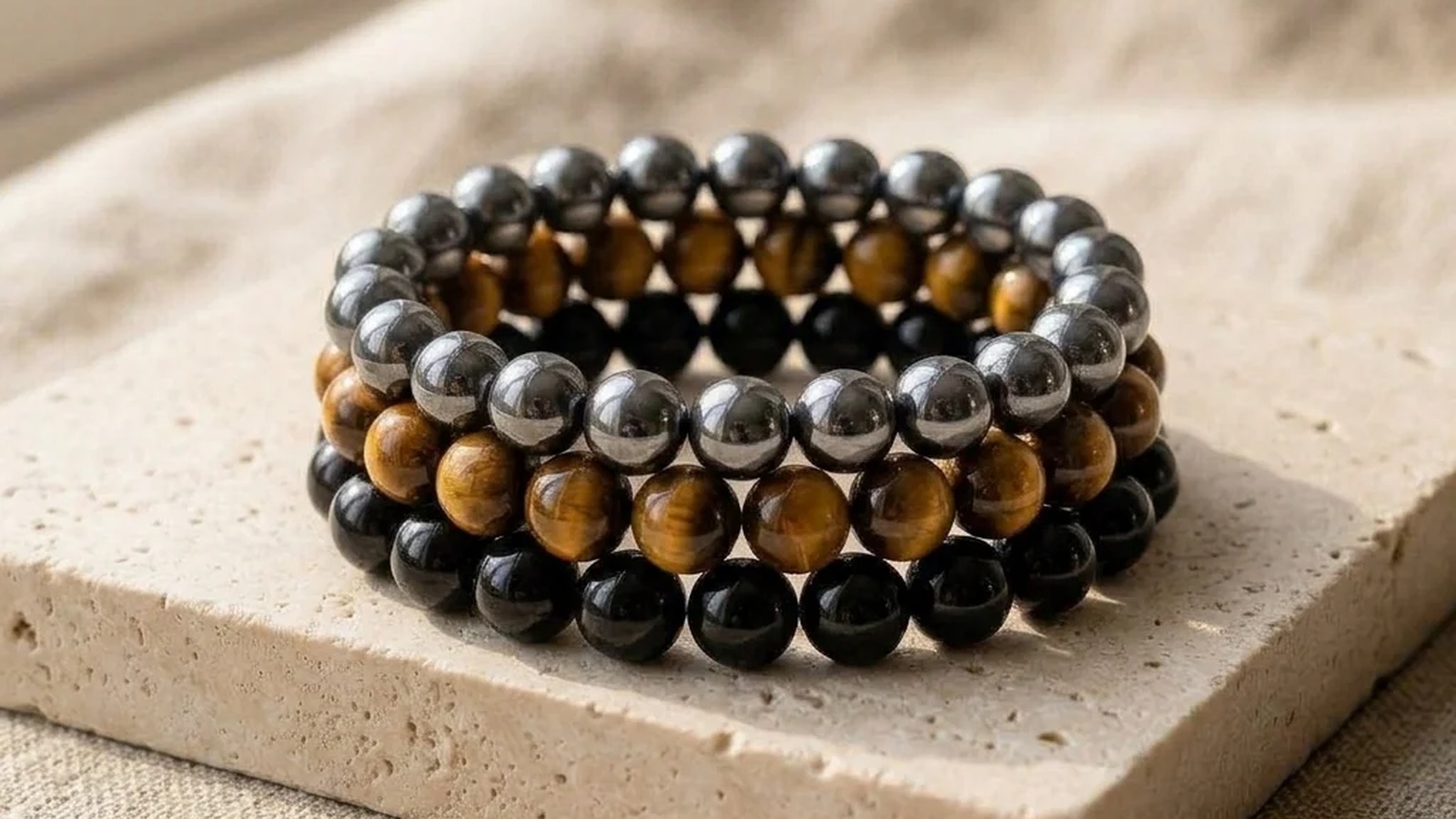
Table of Contents
- The 10-Second Executive Summary
- What Is Obsidian? Volcanic Glass, Not a Crystal
- Obsidian Meaning and Symbolism: Protection, Truth, and Release
- Obsidian Healing Properties: 7 Traditional Claims Explained
- Grounding and Present-Moment Awareness
- Emotional Protection, Boundaries, and Releasing What No Longer Serves You
- Self-Reflection, Courage, and Resilience
- Obsidian and the Root Chakra
- Types of Obsidian: Black, Snowflake, Mahogany, Rainbow, and Peacock
- Decision Table: Choosing Obsidian by Purpose
- Step-by-Step Buying Checklist
- Scope and Boundaries
- How to Use Obsidian Daily: Meditation, Journaling, Workspace, and Feng Shui
- Obsidian Care, Safety, and Realistic Expectations
- Frequently Asked Questions
- What are the healing properties of obsidian, and are they scientifically proven?
- How do you use black obsidian for grounding, protection, and emotional release?
- Which chakra is obsidian associated with, and what does it mean?
- Is obsidian safe to wear or handle daily, and how do you clean and care for it?
- What is the difference between black, snowflake, mahogany, and rainbow obsidian?
- Sources
Obsidian is a naturally occurring volcanic glass formed when lava cools too quickly to crystallize, and its "healing properties" are traditional and symbolic rather than medically proven: it is most often associated with grounding, protection, self-reflection, and emotional release, with no clinical evidence that it treats physical or mental health conditions. If you are searching for what obsidian means and how to actually work with it day to day, the answer is straightforward — obsidian is a tool for intention and reflection, not a treatment.
The 10-Second Executive Summary
- Direct Verdict: Obsidian's "healing properties" are traditional and symbolic. It may serve as a mindfulness and ritual object that supports grounding, boundary-setting, and self-reflection as personal habits. It is not a medical treatment and has no proven physiological healing effect.
- What It Actually Is: Volcanic glass (silica-rich, rapidly cooled lava), not a crystalline mineral. No crystal lattice; it fractures with a conchoidal break.
- Mohs Hardness: Approximately 5 to 5.5 — softer than quartz (7) and easy to scratch or chip.
- Chakra Association: Traditionally linked to the root chakra (Muladhara) in symbolic chakra traditions.
- Best For: Grounding rituals, journaling prompts, workspace boundaries, meditation focal points, and intentional home placement.
- Not Recommended For: Medical or psychological treatment, unverified "detox" or "pain relief" claims, or unsupervised use with children (sharp fracture edges).
- Quality Check: When buying, look for glassy, uncoated volcanic glass and ask sellers whether a piece has been filled, dyed, or otherwise treated; treat vague "healing-grade" labels with caution.
What Is Obsidian? Volcanic Glass, Not a Crystal
Obsidian is formed when silica-rich lava cools so rapidly that atoms cannot arrange themselves into a crystal lattice. The result is a natural glass — smooth, vitreous, and often jet-black, though iron oxide and other inclusions produce brown, rainbow, and speckled varieties. Because it lacks crystalline structure, mineralogists classify obsidian as a mineraloid rather than a true mineral.
This matters for anyone working with it. Obsidian does not "hold a crystal grid" in the way quartz does; its identity is geological and physical. It is brittle, fractures with sharp edges, and sits at roughly 5 to 5.5 on the Mohs hardness scale — meaning it scratches more easily than quartz and can chip if dropped. Historically, its sharp conchoidal fracture made it valuable for cutting tools; a controlled animal study comparing obsidian and surgical steel scalpels found no difference in wound tensile strength, though early scar width was narrower in obsidian incisions (PubMed, 8415970). That is a laboratory finding about blade geometry in rats, not evidence that obsidian heals people through contact or proximity.
Obsidian Meaning and Symbolism: Protection, Truth, and Release
Across many cultural traditions, obsidian is often associated with protection, truth-telling, and the release of what no longer serves a person. Its deep, mirror-like surface is frequently described as a "truth stone" — a surface that reflects rather than absorbs, inviting honest self-examination. These are symbolic and cultural meanings, not physical properties, and they vary by culture and practitioner.
In modern crystal practice, black obsidian is often framed as a grounding stone: dark, dense, and visually anchoring. The symbolism is consistent and easy to understand — darkness as protection, reflection as self-knowledge, glass as clarity. Holding that symbolic frame is useful for ritual and intention-setting; treating it as a factual claim about energy or health is not something current evidence supports.
Obsidian Healing Properties: 7 Traditional Claims Explained
Below are seven claims commonly attached to obsidian in traditional and contemporary crystal practice. Each is described as a traditional association, with an honest note on what is and is not supported. None of these should be read as a description of how the stone acts on the body or mind.
- Grounding: Traditionally described as a stone of presence and steadiness. In practice, any grounding you feel comes from the mindfulness habit you pair with it, not from the stone.
- Protection: Traditionally framed as a "shield" stone for boundaries and difficult environments. This is symbolic imagery, not literal shielding.
- Emotional release: Traditionally tied to letting go of old patterns through reflection and journaling. The reflection is the active ingredient.
- Truth and honesty: Symbolically linked to seeing situations clearly. Useful as a prompt for honest self-assessment.
- Courage and resilience: Traditionally associated with facing difficult truths. A reminder object, not a source of courage, which is built through action and support.
- Focus and clarity: Often used as a meditation focal point. Any benefit is attention training, not a stone effect.
- Dream and shadow work: Associated with nighttime reflection and processing. No verified mechanism; treat it as a symbolic prompt.
Grounding and Present-Moment Awareness
Obsidian's weight and smooth, cool surface make it a practical tactile anchor for grounding exercises — the kind where you hold an object and return attention to the present. Any benefit comes from the attention practice, not the stone itself. A simple approach: hold the stone, name five things you can see and feel, and breathe slowly for one minute. This is a mindfulness technique that obsidian may support as a cue.
Emotional Protection, Boundaries, and Releasing What No Longer Serves You
The "protection" theme around obsidian is often associated with boundaries — deciding what you let in and what you release. Used as a journaling prompt, obsidian can anchor questions like: What am I holding that I no longer need? Where do I need a clearer boundary this week? These are reflective tools. Obsidian is not a substitute for therapy, and claims that it stabilizes mood or regulates the body have no demonstrated basis.
Self-Reflection, Courage, and Resilience
Obsidian's mirror-like surface is often used symbolically for self-reflection. A practical ritual is to place the stone where you will see it during a daily review and use it as a cue to ask one honest question about the day. Courage and resilience are built through action and support systems; the stone may serve as a reminder of intentions you have already chosen.
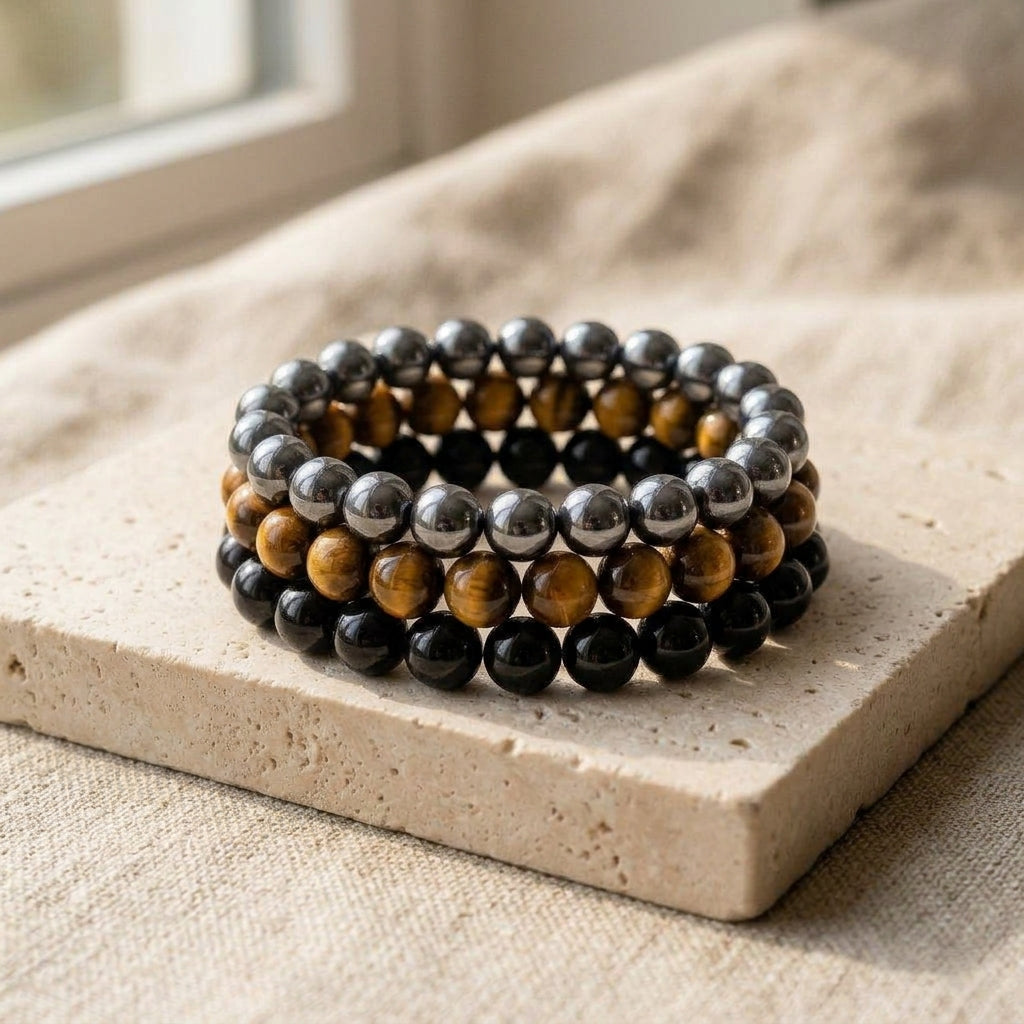
The Master Triple Protection Ritual Stack (Natural Tiger's Eye, Black Obsidian & Hematite)
Black obsidian is often worn as a grounding ritual piece for days that ask for steadier energy.
Shop This Authentic Piece →Obsidian and the Root Chakra
In chakra traditions, obsidian is most often associated with the root chakra (Muladhara), the energy center linked to themes of safety, stability, and belonging. The connection is symbolic: obsidian's dark, dense appearance fits the root chakra's grounding imagery, and practitioners often pair it with practices like seated breathing, walking barefoot, or grounding journaling. Traditional associations are not medical claims, and chakra work is a spiritual framework rather than a clinical one.
Types of Obsidian: Black, Snowflake, Mahogany, Rainbow, and Peacock
Obsidian varieties differ in appearance and formation, and each is often given slightly different symbolic emphasis in crystal practice. The physical differences are real; the "properties" attached to each are traditional interpretations.
- Black obsidian: The most common form, uniformly dark. Most often associated with protection and grounding themes.
- Snowflake obsidian: Contains white cristobalite clusters that look like snowflakes. Often associated with patience and seeing patterns over time.
- Mahogany obsidian: Brown-red from iron oxide inclusions. Often associated with warmth and steadiness.
- Rainbow obsidian: Iridescent layers from microscopic inclusions. Often associated with insight and clarity symbolism.
- Peacock obsidian: A blue-green sheen, usually a variety of rainbow obsidian. Often associated with self-expression and release.
Decision Table: Choosing Obsidian by Purpose
Use this table to match a variety to an intention, and to set realistic expectations. All "properties" below are traditional associations, not verified effects.
| If your purpose is… | Consider… | Why (traditional) | Realistic expectation |
|---|---|---|---|
| Grounding and daily anchoring | Black obsidian, palm-sized | Weight and dark tone as a tactile cue | Supports mindfulness habits; no physiological effect |
| Boundary-setting and release | Black or peacock obsidian | Protection and letting-go symbolism | A journaling or ritual prompt |
| Patience and pattern-spotting | Snowflake obsidian | Visible "growth" patterns | A reflective visual reminder |
| Warmth and steady energy | Mahogany obsidian | Iron-rich color symbolism | Aesthetic and symbolic only |
| Insight and clarity | Rainbow obsidian | Iridescent sheen as a clarity symbol | A focus object for meditation |
Quality check: Genuine obsidian is glassy, cools to the touch, and shows conchoidal fracture at chipped edges. When buying, look for natural, untreated volcanic glass and ask whether a piece has been resin-filled, irradiated, or dyed — treated or filled pieces are sometimes marketed with vague "healing-grade" labels, so request clear mineral descriptions and photos in daylight.
Step-by-Step Buying Checklist
- Confirm the material: The listing should describe volcanic glass (mineraloid), not a "crystal" with a lattice.
- Ask about treatment: Request a written answer on resin filling, dye, and irradiation.
- Inspect the finish: Natural pieces show flow-like banding, sheen, or inclusions rather than perfectly uniform color.
- Check the edges: Edges should be smoothly polished; chipped or sharp edges are a safety issue, not a feature.
- Match size to use: Palm-sized for breathing and journaling cues; small tumbled pieces for desks; avoid small loose pieces around young children.
- Set expectations: Buy for aesthetics and personal ritual, not for promised health outcomes.
Scope and Boundaries
This guide covers symbolic, cultural, and practical uses only. It does not address medical use, and obsidian should not be relied on for any health condition, diagnosis, or treatment decision.
How to Use Obsidian Daily: Meditation, Journaling, Workspace, and Feng Shui
Practical use is simple and low-risk. Choose one or two habits and let the stone serve as the cue:
- Meditation: Hold a piece in your palm during a five-minute breathing session; return attention to its weight and coolness when the mind wanders.
- Journaling: Place it on the desk and use it as a prompt for one honest question per entry — what to release, what boundary to hold.
- Workspace: Keep a small piece near your monitor as a physical reminder to pause and reset between tasks.
- Feng Shui: In feng shui practice, dark stones are often placed near entryways or in the "career" or "knowledge" areas as symbolic anchors; interpretations vary, so treat placement as personal ritual rather than rule.
Keep expectations grounded: these practices may support attention and reflection as habits; they do not treat conditions or replace professional care.
Obsidian Care, Safety, and Realistic Expectations
Obsidian is durable but not indestructible. At Mohs 5 to 5.5 it scratches more easily than quartz, and its glassy fracture means chipped edges can be sharp. Care guidelines:
- Clean with lukewarm water and a soft cloth; avoid harsh chemicals, ultrasonic cleaners, and sudden temperature changes.
- Store separately from harder stones to prevent scratching; wrap pieces individually.
- Inspect regularly for chips or sharp edges, especially on jewelry and pieces handled by children.
- Do not use obsidian as a cutting tool for food or skin; the PubMed study above concerns surgical blades in a controlled animal setting, not household use.
Frequently Asked Questions
What are the healing properties of obsidian, and are they scientifically proven?
Obsidian is traditionally associated with grounding, protection, self-reflection, and emotional release, but these are symbolic and cultural claims, not scientifically proven medical effects. No clinical evidence shows that obsidian treats physical or mental health conditions.
How do you use black obsidian for grounding, protection, and emotional release?
Use it as a mindfulness cue: hold it during slow breathing, place it on your journal as a prompt for one honest question, or keep it in your workspace as a reminder to pause. Any benefit comes from the reflection practice you build around it, not the stone itself.
Which chakra is obsidian associated with, and what does it mean?
Obsidian is most often associated with the root chakra (Muladhara), linked to themes of safety, stability, and belonging. This is a symbolic chakra tradition, not a medical or physiological claim.
Is obsidian safe to wear or handle daily, and how do you clean and care for it?
Obsidian is generally safe to wear and handle, but it is glassy (Mohs ~5–5.5) and can chip into sharp edges, so inspect jewelry regularly. Clean with lukewarm water and a soft cloth, avoid harsh chemicals and sudden temperature changes, and store pieces separately.
What is the difference between black, snowflake, mahogany, and rainbow obsidian?
All are volcanic glass; differences are in appearance and inclusions. Black is uniformly dark, snowflake contains white cristobalite clusters, mahogany is iron-oxide brown-red, and rainbow shows iridescent layers. These visual differences are real; the "properties" attached to each are traditional interpretations.
Sources
This article is for educational and symbolic purposes only. Obsidian is not a medical device or treatment. Consult a qualified professional for health concerns. © 2026 Lumina Quartz.
Crystal traditions are presented here as symbolic, cultural, and personal ritual practices. They are not medical tools; consult a qualified professional for health concerns.
Product Facts From the Current Catalog
These details come from the active Lumina Quartz catalog record checked on 2026-11-06. They are product-listing facts, not laboratory results or invented wear-test claims.
| Listed product | The Master Triple Protection Ritual Stack (Natural Tiger's Eye, Black Obsidian & Hematite) | Grade AAA Set // Lumina Quartz |
|---|---|
| Format | Bracelets |
| Listed price snapshot | 89.00 |
Price, availability, and options may change. Check the live product listing before choosing.