How To Tell If Rose Quartz Is Real
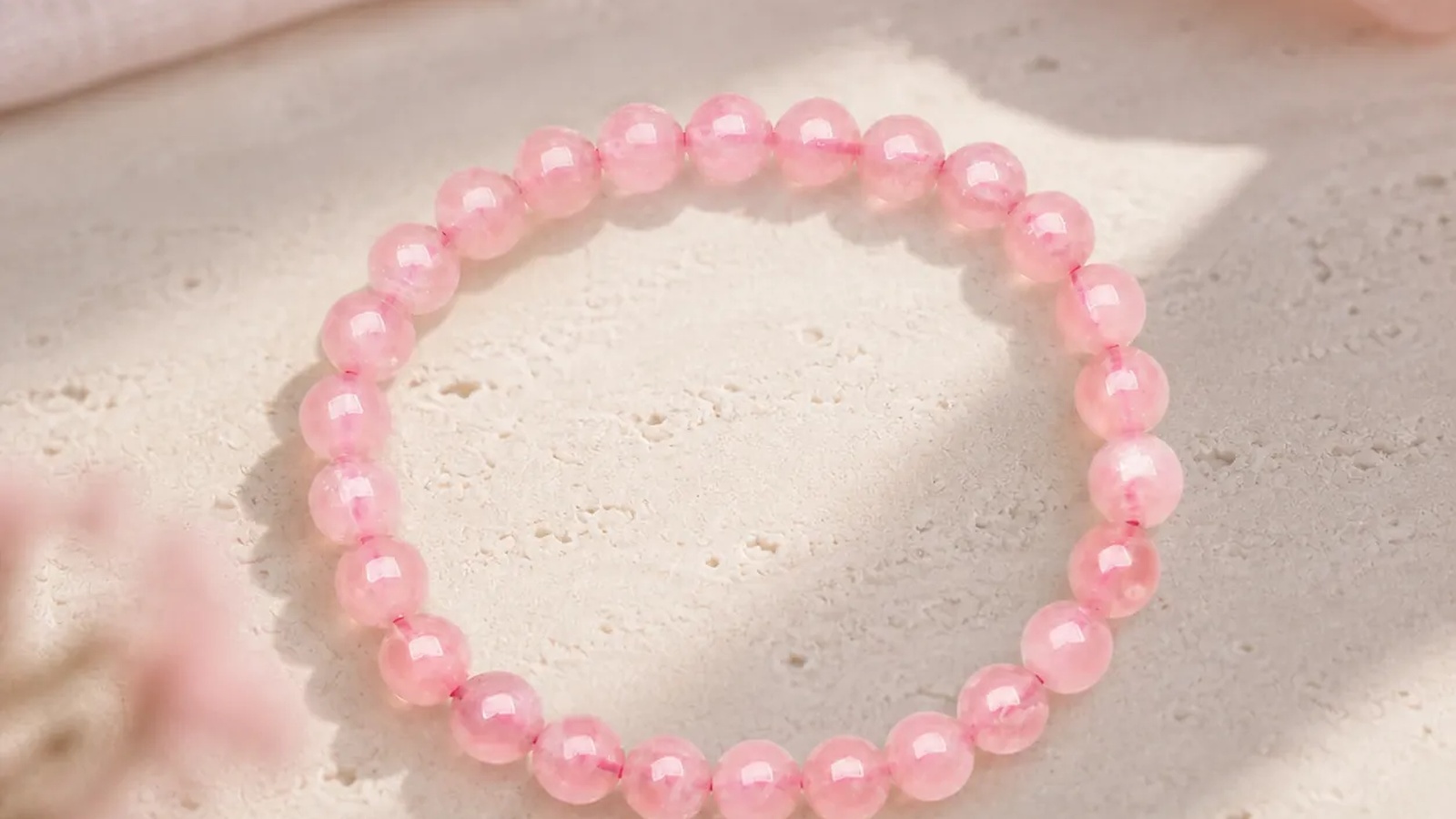
Table of Contents
- What Makes Rose Quartz Real? Natural vs. Fake at a Glance
- What Makes Rose Quartz Real? Natural vs. Fake at a Glance
- 7 At-Home Tests to Check If Rose Quartz Is Real
- Visual Inspection: Cloudiness, Bubbles, and Color
- Scratch and Weight Tests
- Heat and Alcohol Tests for Fakes
- Common Rose Quartz Fakes and Treatments to Watch For
- Step-by-Step Authenticity Checklist
- How to Spot Real Rose Quartz Jewelry and Beads
- When to Trust a Jeweler or Lab Test
- How to Care for Real Rose Quartz
- Frequently Asked Questions
- How can you tell if rose quartz is real at home?
- Is real rose quartz transparent or cloudy?
- Does real rose quartz scratch glass?
What Makes Rose Quartz Real? Natural vs. Fake at a Glance
You can usually tell whether rose quartz is real by verifying three objective traits: a Mohs hardness of 7.0, a color that comes from fibrous borosilicate nanoinclusions inside the stone rather than surface dye, and a soft, cloudy translucency instead of glass-like clarity. Fakes fail at least one of these checks, often because they are dyed crackle quartz, calcite, or glass with pigment sitting in surface cracks.
10-Second Executive Summary / The Verdict Box
- Direct Verdict: Real rose quartz is naturally pink, slightly cloudy, and hard enough (Mohs 7.0) to scratch ordinary glass (Mohs 5.5) without being scratched itself. Dye, bubbles, or glass-clear clarity are red flags.
- Mohs Hardness: 7.0 — a true quartz hardness that resists everyday wear and supports a reliable scratch test.
- Color Origin: Microscopic fibrous borosilicate nanoinclusions (closely related to dumortierite), not chemical surface dyes.
- Quality Benchmark: Lumina Grade AAA Madagascar Earth-Mined Rose Quartz Standard — natural origin, no chemical resin filling, no irradiation or dye treatment.
- Best Use Cases: Heart-led personal wear, self-compassion reminders, left-wrist rituals, and any purchase where mineral integrity matters more than vivid color.
What Makes Rose Quartz Real? Natural vs. Fake at a Glance
Authentic rose quartz derives its delicate pink hue from microscopic fibrous borosilicate nanoinclusions closely related to dumortierite, rather than chemical surface dyes. That internal origin explains why genuine stones look softly colored through the whole body, while dyed pieces show pigment concentrated in cracks and pits. The table below gives you the fastest natural-versus-fake comparison before you run any test.
| Feature | Natural Rose Quartz | Common Fake (dyed crackle quartz, calcite, glass) |
|---|---|---|
| Color source | Internal fibrous nanoinclusions | Surface or crack-filling dye |
| Clarity | Soft translucency; often cloudy or milky | Either glass-clear or unnaturally vivid |
| Hardness | Mohs 7.0 | Calcite is near 3; glass near 5.5; dyed quartz may still be 7 but is treated |
| Response to acetone | No color transfer | Dye may bleed onto the cloth |
| Internal structure | Fine fibrous inclusions; possible asterism under a single-point light | Air bubbles (glass) or dye pooling in fractures |
| Wear over time | Stable color | Color may fade, rub off, or look patchy |
7 At-Home Tests to Check If Rose Quartz Is Real
These checks are simple, low-risk, and most of them need nothing more than a glass bottle, a cotton pad, and some isopropyl alcohol. Run two or three together rather than relying on one alone, since a single pass or fail rarely tells the whole story.
Visual Inspection: Cloudiness, Bubbles, and Color
Hold the stone against natural daylight. Real rose quartz usually shows a soft, milky or gently translucent body; high-grade Madagascar specimens in particular exhibit characteristic soft translucency. Look for the following:
- Cloudiness is a good sign. A slightly hazy or gently streaked body fits natural growth.
- Bubbles are a warning. Round, uniform air bubbles strongly suggest glass rather than quartz.
- Overly saturated pink is a warning. Over 70% of mass-market "vivid pink" crystals are dyed crackle quartz, cheap calcite, or dyed glass.
- Dye pooling in cracks. If the color is darker inside fractures but pale on the surface, the pigment likely entered from outside.
Under a focused single-point light, a high-quality stone may reveal faint asterism — a star effect caused by oriented fibrous micro-silk. It is not guaranteed, but when present it supports natural origin.
Scratch and Weight Tests
Natural rose quartz possesses a true quartz Mohs hardness of 7.0, allowing it to easily scratch ordinary window glass (Mohs 5.5) without sustaining surface damage. Use an inconspicuous edge of the stone, press firmly against a spare glass bottle or windowpane, and check both surfaces: a genuine quartz stone should leave a mark on the glass while staying smooth itself. If the stone gets scratched instead, it is likely softer calcite or a coated imitation.
Weight is a secondary clue. Quartz has a fairly dense, cool hand-feel compared with glass of the same size, so a piece that feels light and room-temperature-warm may not be stone. Treat weight as a supporting signal only; it cannot confirm identity on its own.
Heat and Alcohol Tests for Fakes
Rub a cotton pad with a small amount of isopropyl alcohol, then wipe a hidden spot on the stone. A genuine piece should show no color on the pad. Dye-treated pieces often leave a faint pink stain because pigment sits in surface cracks and can bleed when tested with acetone or alcohol.
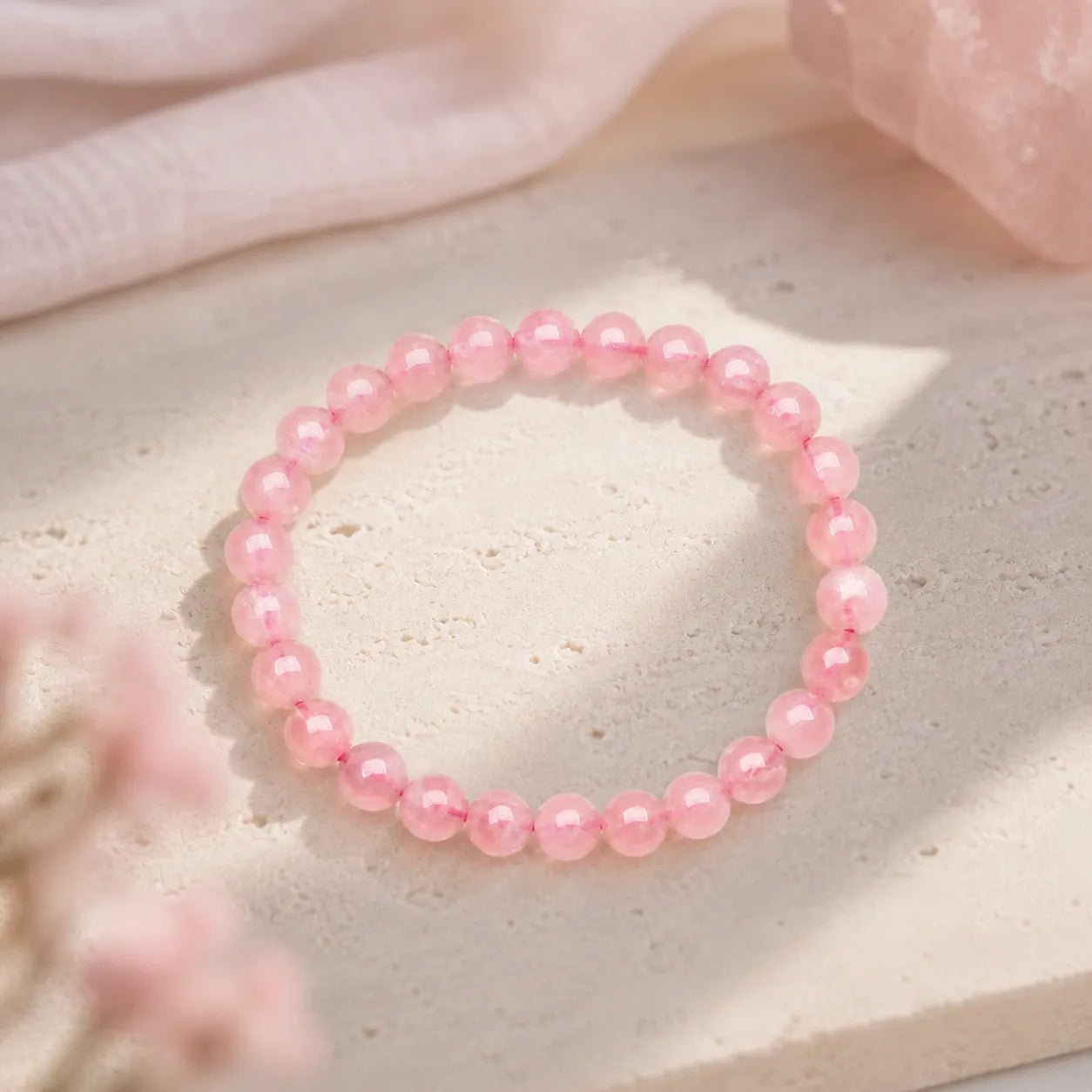
Rose Quartz Love Bracelet
Rose quartz can become a soft daily reminder to return to tenderness, self-trust, and emotional ease.
Shop This Authentic Piece →For a gentle heat check, warm the stone in your hand or under lukewarm water and notice whether any coating feels tacky or leaves residue on your fingers. Avoid open flame or rapid temperature change, which can crack natural quartz and are unnecessary for a basic authenticity check.
Common Rose Quartz Fakes and Treatments to Watch For
Knowing what you are looking for matters more than any single test, because most fakes imitate a specific weakness in buyer expectations — usually extra-vivid color. Watch for these categories:
- Dyed crackle quartz. Clear or pale quartz is heated and quenched to crack it, then soaked in pink dye. The crack lines look like a spiderweb and the color collects inside them.
- Dyed calcite. Calcite is much softer (Mohs 3) and will scratch easily; it may mimic the color but not the hardness.
- Dyed glass. Often too clear, too even, and prone to air bubbles. It will not scratch glass.
- Irradiation or resin filling. Some stones are treated to deepen color or hide fractures. These treatments complicate the "natural" claim even when the base material is quartz.
This is where Lumina Grade AAA Integrity Standard matters: it represents natural earth-mined origin, zero chemical resin filling, and no irradiation or dye treatment. When a listing cannot confirm those points, the burden falls on your own checks.
Step-by-Step Authenticity Checklist
Use this ordered checklist when you have a stone in hand and need a defensible decision, rather than a vague "it feels real."
- Inspect in daylight. Confirm soft translucency and blue-white or gently rose tone. Reject uniform, glass-clear vivid pink.
- Look for bubbles and dye pooling. Round bubbles point to glass; color concentrated in cracks points to dye.
- Run the glass scratch test. Use an edge and a spare glass surface. A passing result means the stone scratches glass and shows no surface damage itself.
- Swab with alcohol. A clean cotton pad should stay clean; any pink transfer is a fail.
- Check the listing wording. Look for "natural," "earth-mined," "untreated," and a stated grade. Vague claims such as "best quality" carry no measurable meaning.
- Compare price to hardness reality. Deeply saturated, glassy pieces sold cheaply rarely match natural quartz.
- Seek a lab opinion when the stakes are high. For expensive pieces, a gemological report is the only definitive confirmation.
Boundary note: these checks confirm physical characteristics. They do not establish a stone's cultural or emotional role, and they cannot rule out all sophisticated treatments.
How to Spot Real Rose Quartz Jewelry and Beads
Jewelry and bead strands add their own tells, because manufacturing methods leave patterns. On beads, check whether the pink is deeper in drill holes or imperfections — a common dye sign — and whether neighboring beads vary slightly in tone. Natural stone is rarely perfectly uniform across a strand.
In crystals used for personal and somatic practices, rose quartz is often associated with the Heart Chakra (Anahata) and is traditionally worn on the left wrist to nurture internal emotional restoration and self-compassion. These are cultural traditions rather than physical properties, so keep them separate from authenticity decisions — a strand that supports your daily ritual still needs to pass the hardness and dye checks. For rough or tumbled pieces, look for a soft, waxy luster and fine internal sandy texture; polished beads should have an even finish with no tacky coating.
When to Trust a Jeweler or Lab Test
At-home tests are useful screening tools, not certifications. Bring in a professional when the piece is expensive, when the seller's claims are inconsistent, or when your tests give mixed results. A jeweler can check refractive behavior and hardness, while a gemological laboratory can confirm identity and detect treatments such as irradiation, resin filling, or dye. Ask specifically what was tested and what was ruled out, and keep the written report with the item. For everyday purchases, an honest listing that states natural origin and treatment status, backed by a transparent seller, often matters more than a certificate on a modest bead bracelet.
How to Care for Real Rose Quartz
Because genuine rose quartz has a Mohs hardness of 7.0, it tolerates daily wear well, but it still deserves basic care. Store it in a soft pouch away from harder stones, avoid prolonged direct sun and repeated hot-to-cold shifts, and skip ultrasonic cleaners if the setting has glued components. Clean with lukewarm water, a drop of mild soap, and a soft cloth, then dry fully. Keep perfume, chlorine, and harsh cleansers away, and remember that natural color can change over time with heavy sunlight exposure. Treated or dyed pieces need even gentler handling, since dye may fade or transfer — another reason a natural piece from a clear standard is easier to live with.
Frequently Asked Questions
How can you tell if rose quartz is real at home?
Check that the stone is slightly cloudy, scratches ordinary glass without being scratched itself (Mohs 7.0), and leaves no pink stain when wiped with isopropyl alcohol. Two or three of these checks together give a much stronger answer than one alone.
Is real rose quartz transparent or cloudy?
Most real rose quartz is softly translucent to cloudy rather than glass-clear, and high-grade Madagascar material often shows gentle translucency. Perfectly clear, vivid pink stone is more consistent with glass or dyed material.
Does real rose quartz scratch glass?
Yes. With a Mohs hardness of 7.0 against window glass at about 5.5, a genuine stone can scratch glass while remaining undamaged itself. If the stone is scratched instead, it is probably a softer imitation.
Every stone carries its own small history, and learning to read it is a quiet practice in honoring both the earth and yourself.
© 2026 Lumina Quartz. This guide reflects general mineralogy and commonly reported market patterns; it is not a gemological certification or medical advice.
Product Facts From the Current Catalog
These details come from the active Lumina Quartz catalog record checked on 2026-10-24. They are product-listing facts, not laboratory results or invented wear-test claims.
| Listed product | Rose Quartz Love Bracelet |
|---|---|
| Format | Bracelet |
| Listed price snapshot | 28.80 |
Price, availability, and options may change. Check the live product listing before choosing.