How To Cleanse Obsidian: Complete Practical Guide
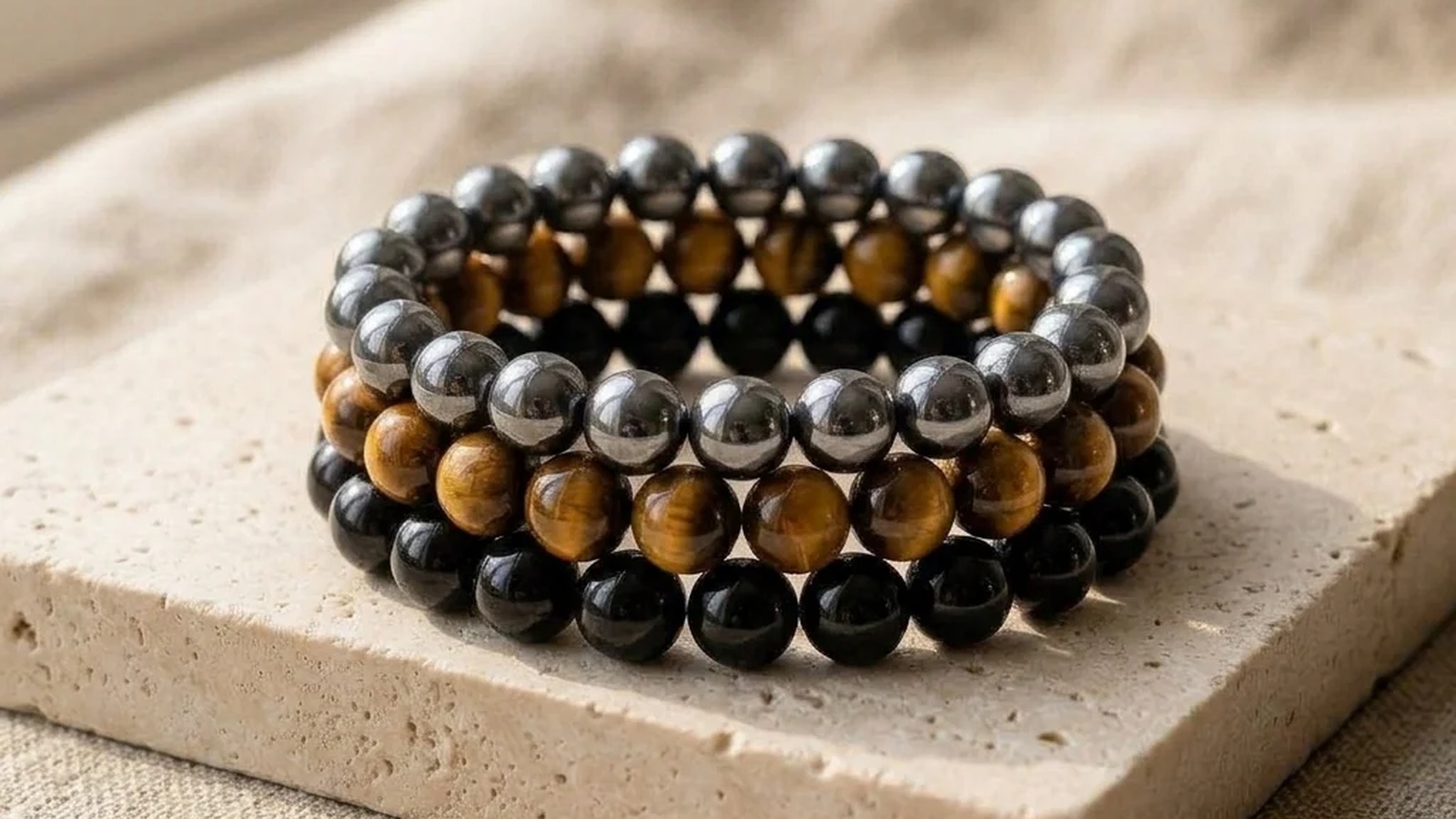
Table of Contents
- What Black Obsidian Is (and Why Its Mohs 5 Matters for Cleansing)
- Quick Answer: The 4 Always-Safe Cleansing Methods
- Moonlight
- Sacred Smoke (Sage, Palo Santo, Incense)
- Sound
- Selenite or Clear Quartz Plate
- Methods That Need Caution: Water, Sunlight, Salt, and Earth Burial
- How to Cleanse by Form: Tumbled Stone, Raw Piece, Bracelet, Pendant, Ring
- How Often to Cleanse Obsidian (and Signs It's Due)
- How to Charge and Program Obsidian After Cleansing
- The Verdict Box: 10-Second Executive Summary
- Decision Table: Choosing a Cleansing Method for Obsidian
- FAQ: Cleansing Obsidian
- Can you cleanse obsidian with water or salt water?
- How often should you cleanse black obsidian?
- How do you cleanse obsidian jewelry or a bracelet without damaging the setting?
- Sources
What Black Obsidian Is (and Why Its Mohs 5 Matters for Cleansing)
Black obsidian is volcanic glass formed when lava cools so quickly that it freezes before crystals can grow. That formation explains almost every cleansing question about it: it is a glass, not a crystal lattice, and it is softer and more brittle than quartz. On the Mohs hardness scale, obsidian sits at roughly 5 to 5.5—meaning steel, quartz, diamond abrasives, and even some ceramic surfaces can scratch it, and a sharp knock can chip its conchoidal (curved, shell-like) fractures.
Why does that matter for cleansing? Because the risk in cleansing obsidian is rarely "energy" and almost always physical damage: thermal shock from hot water, etching from acidic or salty solutions, surface abrasion from salt grains, and loosened settings on jewelry. A cleansing method is "safe" for obsidian when it is gentle on glass and on any metal or cord attached to it. For a verifiable quality baseline, the Lumina Grade AAA Integrity Standard refers to natural, unaltered obsidian—no chemical resin filling, no irradiation, no dye—which also means your piece has no treated surface or filler that could react badly to water, heat, or salt.
Quick Answer: The 4 Always-Safe Cleansing Methods
The four methods below do not require water, heat, salt, or burial, so they cannot scratch, etch, thermally shock, or chip your obsidian. They are the default choices for every form—tumbled, raw, bracelet, pendant, or ring.
Moonlight
Place the piece on a clean windowsill or dry outdoor surface overnight, ideally during a full or new moon if lunar timing is meaningful to you. Moonlight is a cultural and personal ritual practice, not a measurable physical process; what makes it genuinely useful is that it involves zero handling, zero moisture, and zero abrasion. Bring jewelry in before rain, and avoid leaving pendants or rings where condensation or morning dew can collect.
Sacred Smoke (Sage, Palo Santo, Incense)
Pass the piece briefly through or near the smoke, holding it a few inches above the flame rather than in it—obsidian can be damaged by sudden heat, and soot can lodge in raw surface pits. Smoke cleansing is often associated with clearing and resetting in many traditions. Practical cautions: keep the stone far enough from the ember to avoid heat stress, and check that smoke and resins do not stain light-colored cords or silver settings.
Sound
A singing bowl, tuning fork, bell, or drum played near the stone is the most handling-free option of all. Sound cleansing is often associated with restoring a sense of order and calm in personal practice. Physically, it is completely safe for glass—there is no contact, no moisture, and no heat—which makes it the best method for display pieces or heirloom jewelry you would rather not touch repeatedly.
Selenite or Clear Quartz Plate
Resting obsidian on a selenite slab or a clear quartz cluster overnight is a common practice in modern crystal communities. The physical dimension to know: selenite is far softer than obsidian (about Mohs 2), so the stone—not the plate—is the harder object. Keep the contact dry and lift pieces rather than sliding them, so grit does not abrade either surface. Also note that selenite is water-soluble, so never combine this method with wet cleaning.
Methods That Need Caution: Water, Sunlight, Salt, and Earth Burial
These four methods are widely recommended online, but each carries a specific physical risk for obsidian. Use them only with the adjustments below.
Water. A brief rinse in room-temperature water is generally fine for a solid obsidian piece, but avoid hot water (thermal shock can crack glass), avoid long soaks, and dry thoroughly. For bracelets, pendants, and rings, the setting—not the stone—is the real concern: water can degrade glued settings, tarnish silver, and weaken elastic cord. If in doubt, treat jewelry as dry-clean-only.
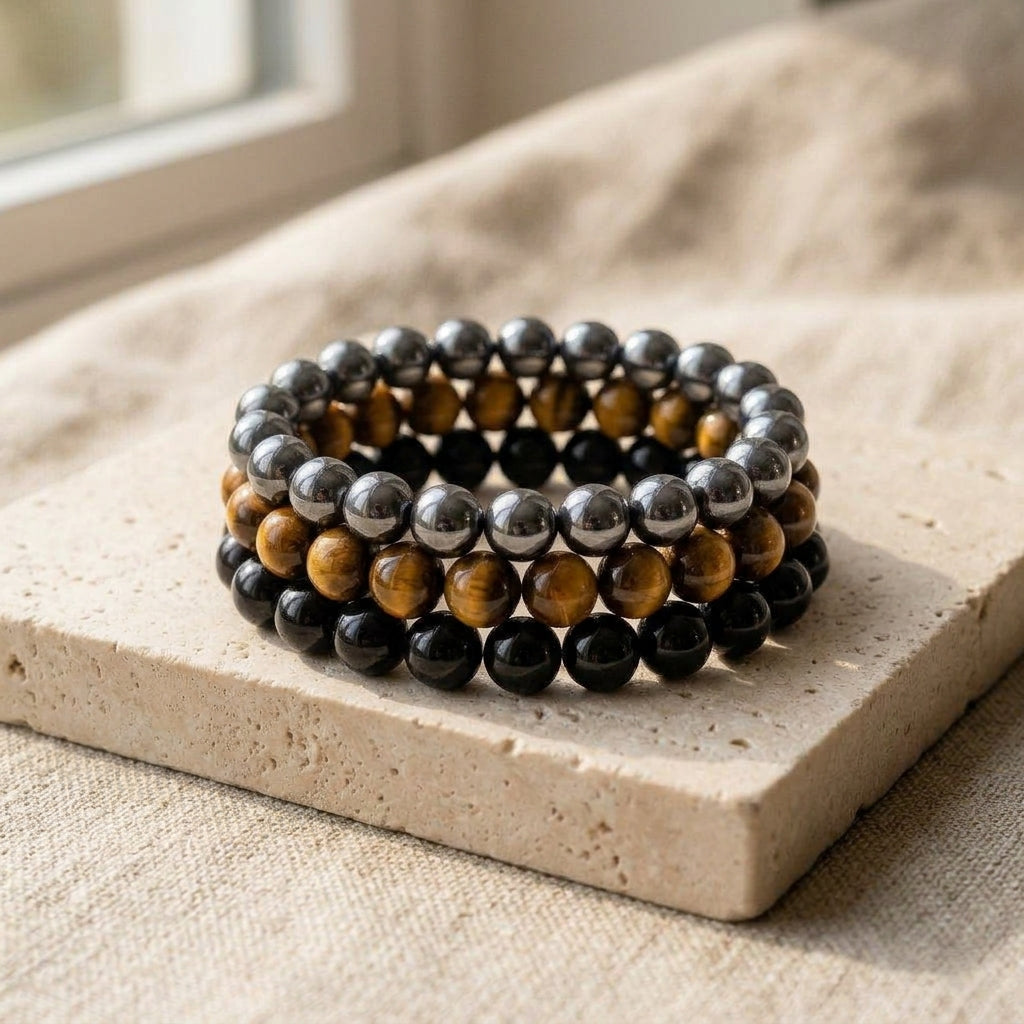
The Master Triple Protection Ritual Stack (Natural Tiger's Eye, Black Obsidian & Hematite)
Black obsidian is often worn as a grounding ritual piece for days that ask for steadier energy.
Shop This Authentic Piece →Sunlight. Sunlight is physically harmless to natural, untreated black obsidian, but prolonged direct sun can heat the stone and fade or dry out cords and leather. Many practitioners also prefer moonlight or indirect light for darker stones. A short, indirect sun session is acceptable; a day-long hot windowsill is not ideal for jewelry.
Salt. Dry salt and salt water are the riskiest common methods. Salt grains are abrasive, salt water can etch polished surfaces over time and corrode metal findings, and salt can leave residue in raw surface pits. If salt is meaningful to your practice, place the obsidian in a sealed glass jar or on a dish above the salt rather than burying it in it.
Earth burial. Burying obsidian is gentle on the stone's surface but hard on jewelry: soil moisture, grit, and lost pieces are real risks. If you bury, use a marked, dry, sheltered spot and never bury a bracelet, ring, or pendant with soft metal or cord. Clean and dry the piece fully afterward.
How to Cleanse by Form: Tumbled Stone, Raw Piece, Bracelet, Pendant, Ring
The safest method depends on what the obsidian is attached to. Use this comparison before choosing a ritual:
- Tumbled stone: Most forgiving form. Moonlight, sound, smoke, or a brief room-temperature rinse all work. Avoid rubbing against other stones, which dulls the polish.
- Raw piece: Pitted, uneven surfaces trap smoke soot, salt, and water. Favor dry methods (moonlight, sound, selenite plate) and skip salt and soaking entirely.
- Bracelet: The cord or elastic is the weak point. Avoid soaking, hot water, and salt water; use moonlight, sound, or brief smoke away from the cord. Check elastic for wear after any handling.
- Pendant: Focus on the bail and chain—water and salt accelerate tarnish and can loosen glue. Cleanse the stone with dry methods, and clean metal separately with a jewelry-appropriate cloth.
- Ring: Highest-risk form because of the setting and daily wear. Dry methods only; never use salt, hot water, or burial. Inspect prongs or glue after cleansing, and remove the ring before any ritual involving water.
Across every form, check for treatment before you choose a method. Pieces that meet the Lumina Grade AAA Integrity Standard—natural, no resin filling, no irradiation, no dye—behave predictably with water and heat because there is no filler or coating to react. Heavily filled or coated pieces can cloud, peel, or discolor when soaked, which is one practical reason to ask about treatment before cleansing.
How Often to Cleanse Obsidian (and Signs It's Due)
There is no scientific schedule for cleansing obsidian; frequency is a personal ritual choice. What is practical is a maintenance rhythm based on use and handling:
- After heavy handling or travel—a quick moonlight or sound session.
- Monthly, or at the full or new moon—a simple reset if lunar timing matters to you.
- Before wearing a piece for a specific intention—a short smoke or sound cleanse to mark the moment.
- Whenever the piece feels dull or sticky to the touch—this is usually surface oil, not "energy"; a dry soft cloth is the fix, and cleansing can follow.
In personal practice, people often describe wanting to cleanse obsidian when they feel "heavy," when a piece has been worn daily for a long stretch, or after a difficult period. Treat those as cultural and personal cues, not physical properties—obsidian does not store or release anything measurable. And if a piece looks cloudy, scratched, or chipped, no cleansing method will restore it; that is a materials issue, best addressed by gentle polishing or by keeping the piece as-is.
How to Charge and Program Obsidian After Cleansing
Charging and programming are intention-setting practices, not physical processes, so the goal is to make them precise and repeatable. A simple sequence:
- Cleanse first, dry fully. Never program a damp or dusty stone—moisture and grit are the real enemies of a polished surface.
- State one specific intention. For obsidian, which is often associated with grounding, honesty, and boundary-setting, choose a single concrete aim (for example, "pause before reacting" or "speak plainly") rather than a vague wish.
- Charge with moonlight or sound. Overnight on a dry windowsill or a few minutes with a singing bowl keeps the process gentle and safe for glass and settings.
- Anchor it. Write the intention down, pair the piece with a daily habit, or wear it for a defined period so the practice has a beginning and an end.
Keep the framing honest: obsidian may support a sense of focus or grounding through ritual and reminder value, and it is often associated with clarity in cultural traditions. It is not a treatment, and wearing or cleansing it does not regulate mood, calm the nervous system, or replace professional care. The most empowering thing a ritual can do is give you a reliable moment to decide how you want to show up.
The Verdict Box: 10-Second Executive Summary
- Direct Verdict: Cleanse obsidian with dry, contact-light methods—moonlight, sound, brief smoke, or a selenite/quartz plate. Avoid hot water, salt, long soaks, and burying jewelry.
- Mohs Hardness: Roughly 5–5.5 (volcanic glass). Softer and more brittle than quartz; prone to scratching and chipping.
- Material: Amorphous volcanic glass, not a crystal lattice; conchoidal fracture.
- Main Risk: Physical damage—thermal shock, salt etching, abrasive grit, and moisture on cords and settings—not "energy loss."
- Best For: Tumbled and raw pieces: dry methods with a brief room-temperature rinse if desired. Bracelets, pendants, rings: dry methods only.
- Frequency: Personal choice; monthly, at lunar phases, or after heavy wear are common rhythms.
Decision Table: Choosing a Cleansing Method for Obsidian
Use the method whose column matches your piece's form and your risk tolerance. "Safe" means no heat, no salt, and minimal handling; "Caution" means the stone survives but attached materials may not.
| Method | Effect on Obsidian (Mohs ~5–5.5) | Effect on Jewelry (cord, glue, silver) | Best For | Decision |
|---|---|---|---|---|
| Moonlight | None; no contact or moisture | None if kept dry | All forms, especially rings and pendants | Safe—default choice |
| Sound (bowl, bell, tuning fork) | None; no contact | None | Display pieces, heirloom jewelry | Safe—least handling |
| Smoke (sage, palo santo, incense) | None if kept out of heat; soot can lodge in raw pits | Resin may stain light cords; heat risk if close to ember | Tumbled and polished pieces | Safe with distance and brief exposure |
| Selenite or quartz plate | Safe; but the plate (selenite ~Mohs 2) is softer—lift, don't slide | None if dry | Any dry piece | Safe with dry contact |
| Room-temperature water rinse | Generally fine for solid pieces; avoid thermal shock | Can tarnish silver, weaken glue and elastic | Tumbled and raw pieces only | Caution—dry immediately, skip jewelry |
| Sunlight | Physically harmless; heat buildup possible | Fades cords and leather over long exposure | Short indirect sessions | Caution—avoid hot, all-day exposure |
| Salt or salt water | Abrasive grains; salt water can etch polish over time | Corrodes metal, leaves residue in pits | Not recommended; if used, keep in a sealed jar or above the salt | Caution—highest risk method |
| Earth burial | Gentle on the surface | Moisture, grit, and loss risk; never bury jewelry | Raw or tumbled pieces in a marked, dry spot | Caution—solid pieces only, clean afterward |
FAQ: Cleansing Obsidian
Can you cleanse obsidian with water or salt water?
A brief room-temperature rinse is generally fine for solid obsidian, but hot water can thermally shock glass, and salt water can etch polish and corrode metal settings. For bracelets, pendants, and rings, choose dry methods instead.
How often should you cleanse black obsidian?
There is no fixed requirement—frequency is a personal ritual choice. Common rhythms are monthly, at the full or new moon, or after heavy wear and travel; a dry soft cloth handles everyday dullness from skin oils.
How do you cleanse obsidian jewelry or a bracelet without damaging the setting?
Use only dry, contact-light methods such as moonlight, sound, or brief smoke held away from the cord, then wipe the metal with a jewelry-appropriate cloth. Avoid soaking, salt, hot water, and burial, which threaten glue, elastic, and silver.
Sources
No external reference links were supplied for this article, so no outside sources are cited. Physical properties described here—obsidian's volcanic-glass origin, Mohs hardness of roughly 5–5.5, conchoidal fracture, and selenite's Mohs hardness of about 2—are standard, widely documented mineral and materials facts.
© 2026 Lumina Quartz. This guide is for informational and cultural interest only and is not medical, psychological, or safety advice for gemstone treatment.
Product Facts From the Current Catalog
These details come from the active Lumina Quartz catalog record checked on 2026-11-10. They are product-listing facts, not laboratory results or invented wear-test claims.
| Listed product | The Master Triple Protection Ritual Stack (Natural Tiger's Eye, Black Obsidian & Hematite) | Grade AAA Set // Lumina Quartz |
|---|---|
| Format | Bracelets |
| Listed price snapshot | 89.00 |
Price, availability, and options may change. Check the live product listing before choosing.