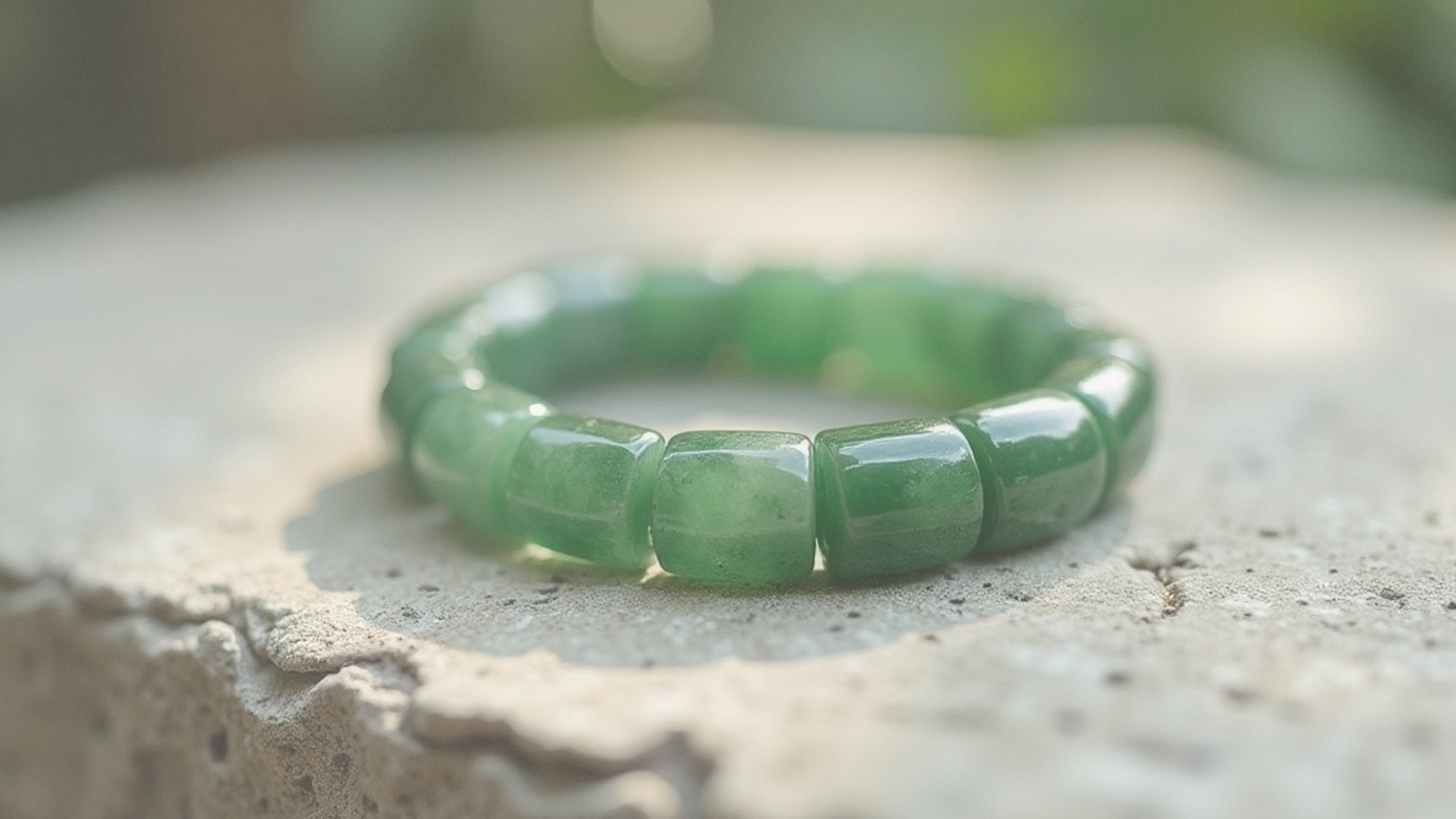
To know whether a jade bracelet is real, confirm both the mineral identity and the treatment history: genuine jade is either jadeite (a pyroxene mineral, Mohs hardness about 6.5–7) or nephrite (an amphibole mineral, Mohs hardness about 6–6.5), and a "real" bracelet should be natural stone that has not been bleached, dyed, or polymer-impregnated. On paper, this means a laboratory certificate, a stated species, and a treatment disclosure—not just the word "jade" on a tag.
10-Second Executive Summary / The Verdict Box
- Direct Verdict: A real jade bracelet is natural jadeite or nephrite with no bleaching, dyeing, or polymer impregnation. Treat "Grade A" language as meaningful only when it is backed by an independent lab report that names the species and confirms no treatment. Lumina Grade AAA Integrity Standard reflects this same discipline: natural rough stone, zero chemical resin filling, no irradiation or dye.
- Mohs Hardness: Jadeite ≈ 6.5–7; nephrite ≈ 6–6.5. Both are softer than quartz (7) and will scratch if cared for carelessly.
- Species Check: Jadeite and nephrite have been recognized as two distinct mineral species since 1863, when French mineralogist Alexis Damour separated them (Mindat). "Jade" alone is not a species name.
- Best For: Buyers who want a wearable, certifiable piece and are willing to pay for natural, untreated stone—budget at least a few hundred USD for a small untreated bangle, and expect steep jumps for fine color and transparency.
- Skip If: The price is implausibly low, the seller cannot name the lab, or the piece is only described as "treated for stability" without a written report.
Quick Answer: What Makes a Jade Bracelet "Real"?
A bracelet is "real jade" when the material is natural jadeite or natural nephrite and has not been chemically altered. Two independent questions decide it: (1) species—is it jadeite, nephrite, or an imitation such as serpentine, quartz, or glass; and (2) treatment—has the stone been bleached, dyed, resin-impregnated, or irradiated? A real piece can be low grade and still be genuine; a beautiful piece can be treated and therefore not "Grade A." Both answers belong on a lab report, not in a sales story.
This distinction matters because the jade market routinely uses "jade" as a trade word. Without a species name and treatment statement, you are buying a look, not a mineral.
Jadeite vs. Nephrite: Know What You're Buying
Jadeite and nephrite differ in chemistry, hardness, and market position. Jadeite—the pyroxene—is the material most associated with fine, glassy, vividly colored bangles and commands the higher prices. Nephrite—the amphibole—is tougher, often more opaque, and traditionally carved in many cultures; it is beautiful but generally less expensive at comparable visual quality.
Use a simple comparison when you shop:
- Hardness: Jadeite (≈6.5–7) resists scratching slightly better than nephrite (≈6–6.5). Neither should be stored loose against harder stones.
- Look: Jadeite often shows finer interlocking crystals and can be highly translucent; nephrite tends toward a softer, oilier luster.
- Price signal: A vividly green, highly translucent bangle at a nephrite-level price is a warning, not a bargain.
- Paperwork: The report should name jadeite or nephrite explicitly. A certificate that only says "jade" is incomplete.
Treatments, Grades, and Certificates: How to Avoid Fakes
Spotting Bleached, Dyed, and Polymer-Impregnated Jade
Treated jade is the most common pitfall. Bleaching removes impurities, dyeing adds color, and polymer impregnation fills cracks to improve appearance; these are standard industry treatments for lower-grade material, and they are not "fake" in the criminal sense—but they are not natural untreated jade, and they should be disclosed and priced accordingly. Look for:
- Color concentrated in cracks or grain lines rather than distributed through the stone.
- An unnaturally uniform, saturated hue across a large piece with no natural mottling.
- A plastic-like sheen or a surface that feels slightly warm and resinous rather than cool and hard.
- Seller language like "stabilized," "enhanced," or "color-locked" without a lab report.
Visual checks are only a first filter. Color description itself is subjective—gemologists use systems such as the Munsell color notation to describe jade, and even professionals note that mottled jade can be challenging to grade consistently (Smithsonian Institution). That is exactly why a certificate, not a photo, decides treatment status.
Why Grade A Certification Matters for Your Purchase
In the jade trade, "Grade A" conventionally means natural, untreated jade—no bleaching, dyeing, or polymer. It is a useful shorthand, but the label has no universal legal definition in every market, so it only carries weight when an independent laboratory report backs it. At Lumina Quartz, our Lumina Grade AAA Integrity Standard applies the same logic to every piece we source: natural rough stone, zero chemical resin filling, no irradiation or dye—and we expect the report to say so.
When you review a certificate, check three things: the lab's name and contact details, the species (jadeite or nephrite), and an explicit "no treatment" statement. The report should match the item's weight and, where applicable, photos.
The Four Quality Factors That Drive Jade Bracelet Value
Color, Texture, Transparency, and Size
Gemological references consistently treat color and texture as the most important factors in jade quality, with transparency also playing a role (GIA). For a bracelet, size compounds all of it—a larger bangle with fine color uses more precious material.
- Color: Hue, saturation, and evenness. Vivid, evenly saturated green is the classic premium; lavender, black, red, and yellow also occur depending on mineralogy and impurities (Mindat).
- Texture: Fine, tightly interlocking crystals give a smooth, dense surface and better luster than coarse, grainy material.
- Transparency: Greater translucency ("water") is prized, but perfectly clear jade at a low price is a red flag.
- Size: A bangle thick in the wall and wide in diameter costs more, but should never be bought oversized just to "look bigger."
Decision Table: How to Judge a Real Jade Bracelet Before You Pay
This table converts the species, treatment, and quality questions above into a practical decision check you can apply at the counter or online.
| What You See | What It Usually Means | Your Decision |
|---|---|---|
| Lab report names jadeite/nephrite + "no treatment" | Best case: natural untreated jade | Proceed; verify weight matches the piece |
| Report says "jade" only, no species | Incomplete paperwork | Request a species-specific report before buying |
| Vivid, even color at a low price | Possible dye or imitation | Walk away unless a reputable lab confirms untreated natural stone |
| Color concentrated in cracks | Dye is a strong possibility | Treat as treated; price should reflect it, or decline |
| Seller says "stabilized" or "enhanced" | Polymer or other treatment | Not Grade A; do not pay natural-stone prices |
| Fine texture, good translucency, modest color | Genuine mid-grade jade | Reasonable value; confirm certificate and sizing |
Bangle or Beads? Choosing the Right Bracelet Style
Bangles are the classic jade bracelet—a single continuous ring that lets the stone's color and texture read uninterrupted. Beaded strands are a different design problem: gemological guidance notes that round beads are carefully selected and matched for color and texture, with transparency, size, and symmetry also matched across the strand (GIA).
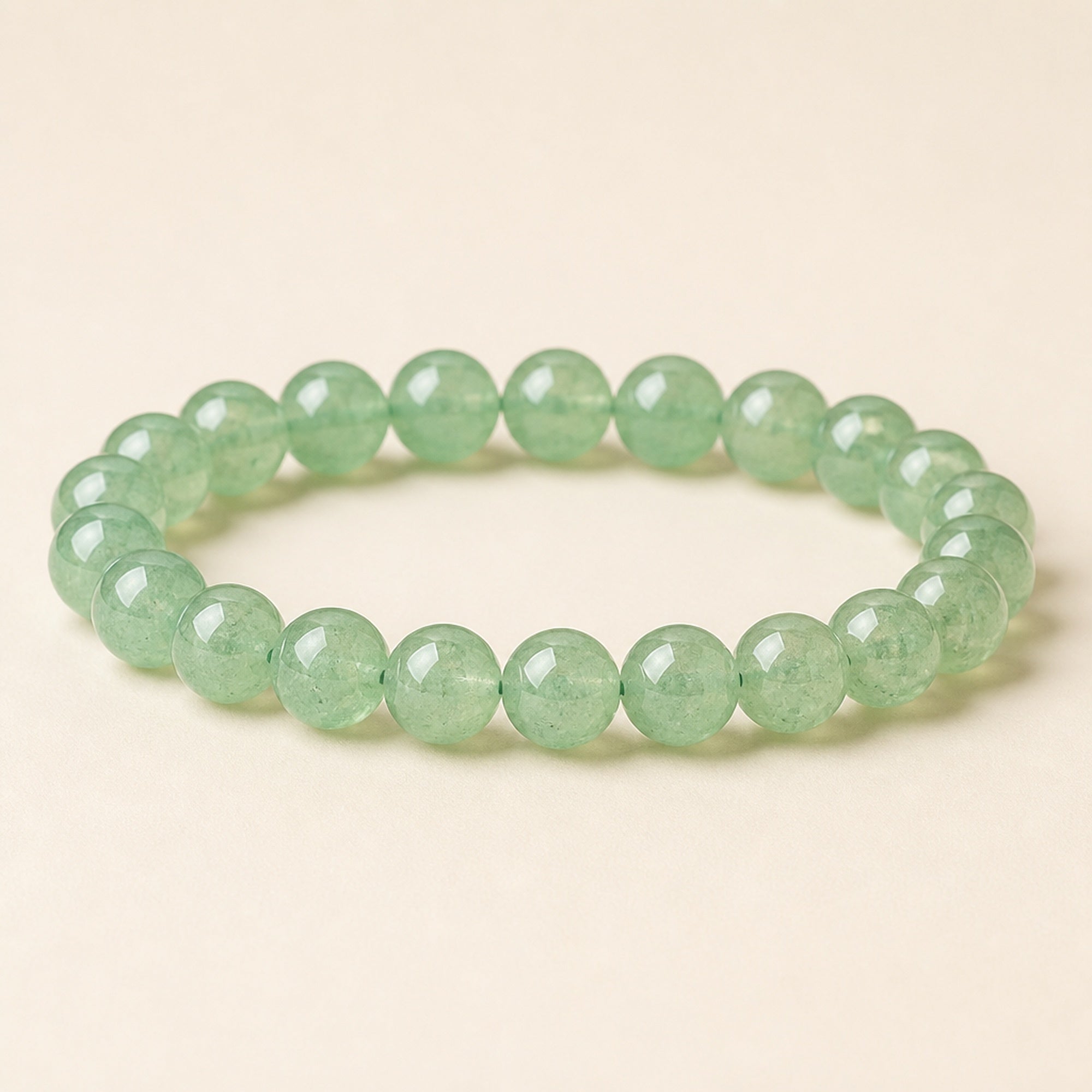
A related color-family option
Green Strawberry Quartz Bracelet – Gentle Renewal
This broader color-family option is not presented as Jade. We only identify jewelry as Jade when that exact material is verified.
Explore this related option- Choose a bangle if you want a traditional, sculptural piece and a clear view of the stone's texture; you accept limited sizing options.
- Choose beads if you want flexibility in fit and enjoy seeing the matching work—but inspect the strand for a single mismatched or treated bead, which weakens the whole piece.
Neither style is inherently more "real." The species and treatment questions above apply equally.
Sizing and Fit: Buying a Jade Bangle You'll Actually Wear
A jade bangle does not stretch or adjust, so sizing is a purchase decision, not a detail. Measure your hand at its widest point—across the knuckles with the thumb tucked—and compare that circumference to the bangle's inner diameter, following the seller's sizing chart. Because jade is a hard, relatively brittle stone, a bangle that is too tight risks stress at the knuckles, and one that is too loose can swing and strike hard surfaces.
Practical steps before you commit:
- Measure twice, once in the morning and once in the evening; hands change slightly.
- Confirm the inner diameter in millimeters, not a vague "medium."
- Ask about wall thickness; a thicker wall feels more substantial but weighs more.
- Plan the removal: if it was hard to put on, it will be hard to take off.
Price Guide: What Real Jade Bracelets Cost and Where to Buy
Expect genuine untreated jade to cost meaningfully more than treated or imitation material. As a working framework: small, modestly colored untreated bangles typically start in the low hundreds of USD; mid-grade pieces with fine texture and pleasing color run into the high hundreds to low thousands; and vivid, highly translucent jadeite can reach five figures. These are ranges, not quotes—color, texture, transparency, and size move the number sharply.
Where to buy: prioritize sellers who provide a named laboratory report, disclose treatment status in writing, and accept returns so you can verify the piece. A fair seller will not object to you confirming the certificate directly with the lab. Apply the same standard you would to any fine gemstone—and if you want a benchmark for natural, untreated sourcing, look for language consistent with the Lumina Grade AAA Integrity Standard: natural rough stone, zero chemical resin filling, no irradiation or dye.
How can I tell if a jade bracelet is real?
Confirm the species (jadeite or nephrite) and the treatment status on an independent lab report, then check that the report matches the piece. Treat suspiciously even color, color pooled in cracks, or a resinous sheen as warning signs.
What is the difference between jadeite and nephrite jade?
Jadeite is a pyroxene mineral (Mohs ≈6.5–7), often finer, more translucent, and more expensive; nephrite is an amphibole mineral (Mohs ≈6–6.5) with a softer, oilier luster. They have been recognized as distinct species since 1863.
What does Grade A jade mean, and why does it matter?
Grade A conventionally means natural, untreated jade—no bleaching, dyeing, or polymer impregnation. It matters because treated stone should never be priced as natural untreated jade, and only a lab report reliably proves the difference.
Sources
- GIA — Jadeite Jade Quality Factors
- Smithsonian Institution — Methods Used for Jade Studies
- Mindat — Jade: Mineral information, data and localities
© 2026 Lumina Quartz. This guide is for buying education and cultural context only. Jade jewelry is a personal reminder and decorative object; it is not a medical device and makes no health claims.