Heart Chakra Crystals Guide: 7 Best Stones Like Rose Quartz for Emotional Balance
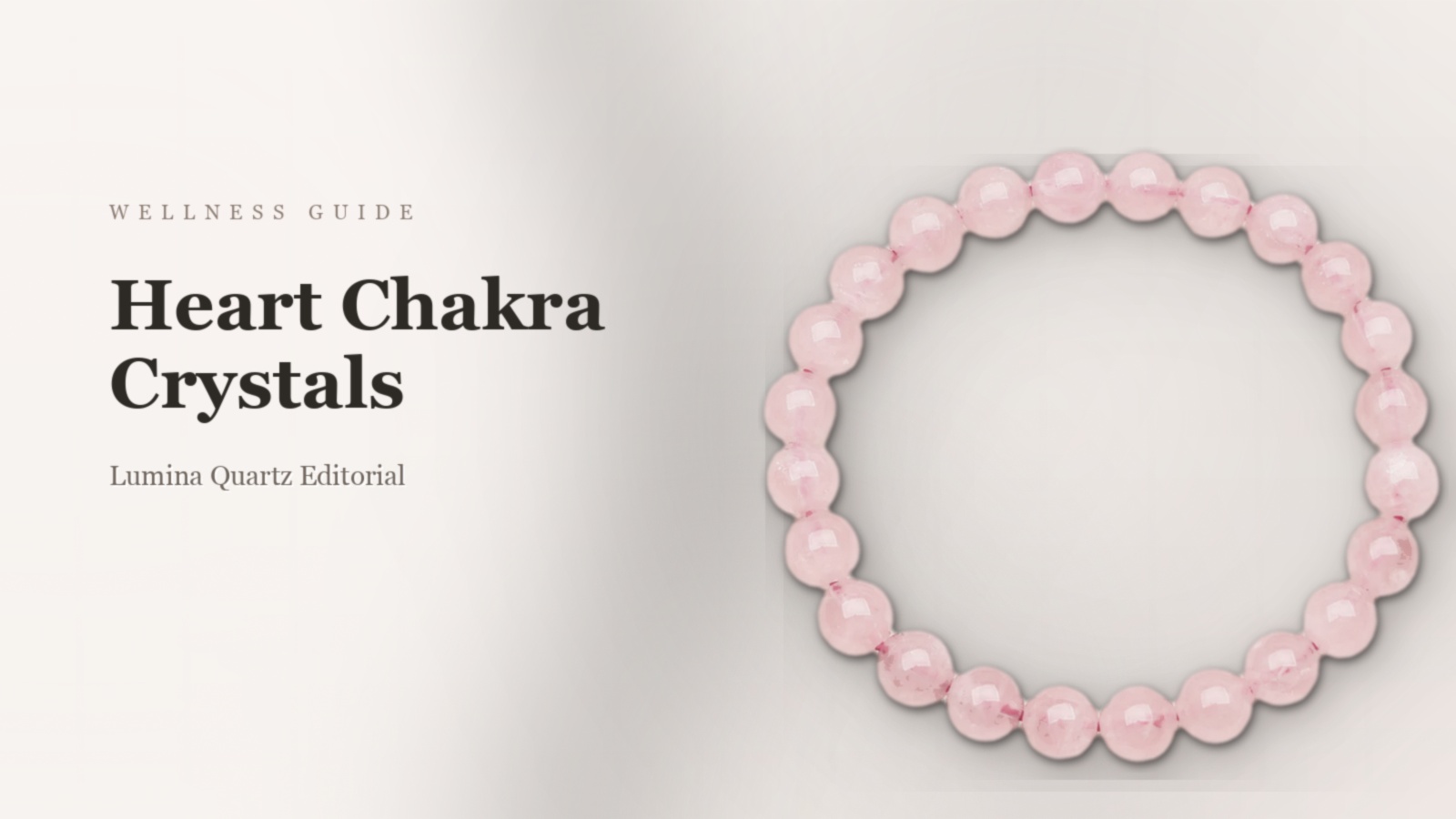
Table of Contents
- Introduction to Heart Chakra Crystals
- Understanding the Heart Chakra (Anahata)
- Location and Significance
- Signs of Imbalance
- Stones for Heart Chakra: How to Choose
- Top Heart Chakra Crystals and Their Meanings
- Rose Quartz
- Green Aventurine
- Rhodonite
- Malachite
- Pink Tourmaline
- Emerald
- Jade
- Rhodochrosite
- How to Use Heart Chakra Crystals
- Meditation Practices
- Wearing as Jewelry
- Placing in Your Environment
- Cleansing and Charging Your Crystals
- Incorporating Heart Chakra Crystals into Daily Life
- Where to Buy High-Quality Heart Chakra Crystals
- Conclusion: Open Your Heart with Lumina Quartz
- Key Takeaways
- Frequently Asked Questions
- What are heart chakra crystals?
- Which crystals are best for the heart chakra?
- Are heart chakra stones and heart chakra gemstones the same thing?
- How do you use heart chakra crystals?
- What are the benefits of heart chakra crystals?
- Related Reading
Introduction to Heart Chakra Crystals
There is a quiet kind of courage in opening your heart. It is not the loud kind. It is the soft courage that arrives when you choose to love, to forgive, to receive, and to remain tender in a world that sometimes asks you to be otherwise.
Heart chakra crystals have long been companions on this journey. These stones, in shades of rose, green, and pink, are often associated with the gentle unfolding of emotional balance, self-compassion, and connection. They are not quick fixes. They are quiet reminders, held in the palm or placed near the chest, of the deeper rhythms of the heart.
At Lumina Quartz, we believe in the slow, honest power of crystals. We do not promise miracles. We offer presence. And presence, as it turns out, is where healing often begins.
This guide will explore what the heart chakra is, the crystals that are often associated with its energy, and the simple, grounding ways you may support your emotional well-being with their companionship.
Understanding the Heart Chakra (Anahata)
In the subtle energy traditions of yoga and Ayurveda, the heart chakra is known as Anahata, a Sanskrit word that translates to "unstruck" or "unhurt." It is the fourth of the seven primary chakras, and it sits at the center of the chest, in the space where the physical heart resides and where the emotional heart feels most deeply.
Location and Significance
Anahata is located in the center of the chest, near the sternum, at the level of the heart. It is the bridge between the lower chakras, which govern survival and personal identity, and the upper chakras, which invite higher consciousness and spiritual connection. To be balanced in the heart chakra is to move through life with compassion, empathy, and a sense of belonging.
The element often associated with Anahata is air. Like air, the heart chakra is connected to breath, to the exchange that happens when we inhale and exhale, and to the invisible threads that connect one being to another. When your heart chakra is open and balanced, you may feel a sense of ease, a capacity to both give and receive love, and a willingness to be vulnerable.
Signs of Imbalance
When the heart chakra is out of balance, it may show up in ways that are subtle and profound at once. Some people notice a tendency to close off, to feel guarded, or to struggle with trust. Others may feel overly giving, pouring energy into everyone else while feeling depleted themselves. There may be a heaviness in the chest, a difficulty forgiving, or a persistent sense of loneliness. These experiences are not flaws. They are signals, gentle invitations to return to the heart.
Stones for Heart Chakra: How to Choose
The phrase "stones for heart chakra" covers a wide field, and it is easy to end up collecting more crystals than you can meaningfully sit with. A simpler approach is to start from what you are actually reaching for, and then choose one or two stones that match. Most healing crystals for the heart chakra fall into two colour families — rose and pink, or green — and the distinctions between them are more about tone and temperament than about rank.
- If you are working on self-acceptance: rose quartz is the gentlest starting place. It is often chosen when the inner voice has turned unkind.
- If you want optimism and forward motion: green aventurine is often reached for when you are rebuilding after a setback and want to feel open to what comes next.
- If you are carrying an old hurt: rhodonite is often associated with forgiveness — of others, and more quietly, of yourself.
- If you feel stuck in a pattern you have outgrown: malachite is a stone of honest change. Some people find it intense at first, so a small piece is usually enough.
- If you find it hard to let love in: pink tourmaline is often chosen for matters of trust and emotional safety.
- If you want steadiness in a long-term bond: emerald and jade are both associated with loyal, unhurried love and quiet commitment.
- If you are learning to hold joy and grief together: rhodochrosite is often described as a stone for the heart's softer memories.
A gentle boundary worth keeping: crystals are companions, not treatments. They do not replace therapy, medical care, or an honest conversation with the people in your life. If you are moving through grief, trauma, or a low mood that will not lift, please lean on qualified support. A stone can sit beside that work. It cannot do it for you — and it is not meant to.
Top Heart Chakra Crystals and Their Meanings
Below are some of the crystals most often associated with the heart chakra. Each one carries a distinct energy, a particular shade of the heart's wide and beautiful spectrum.
Rose Quartz
Rose quartz is perhaps the most beloved of the heart chakra crystals. Its soft pink glow is often associated with unconditional love, self-acceptance, and emotional tenderness. Rose quartz may support the practice of giving and receiving love with less fear, and it is often used in meditation to soften self-criticism and invite gentleness.
Green Aventurine
Green aventurine is a stone of chance and the heart. It is often associated with emotional healing, optimism, and the courage to take a leap of faith. Its gentle green hue resonates with the heart chakra and may support a sense of calm, balanced optimism, and openness to new beginnings.
Rhodonite
Rhodonite, with its rose-pink tones and dark inclusions, is a stone of compassion and emotional depth. It is often associated with forgiveness, particularly the kind that allows us to move forward without carrying the weight of old wounds. Rhodonite may support you in forgiving not only others but yourself.
Malachite
Malachite is a striking green stone with swirling bands of color. It is often associated with transformation and the courage to face what is real. Malachite may support emotional risk-taking, helping you move through patterns in the heart that no longer serve you. It is a stone for the brave, the honest, the ones willing to grow.
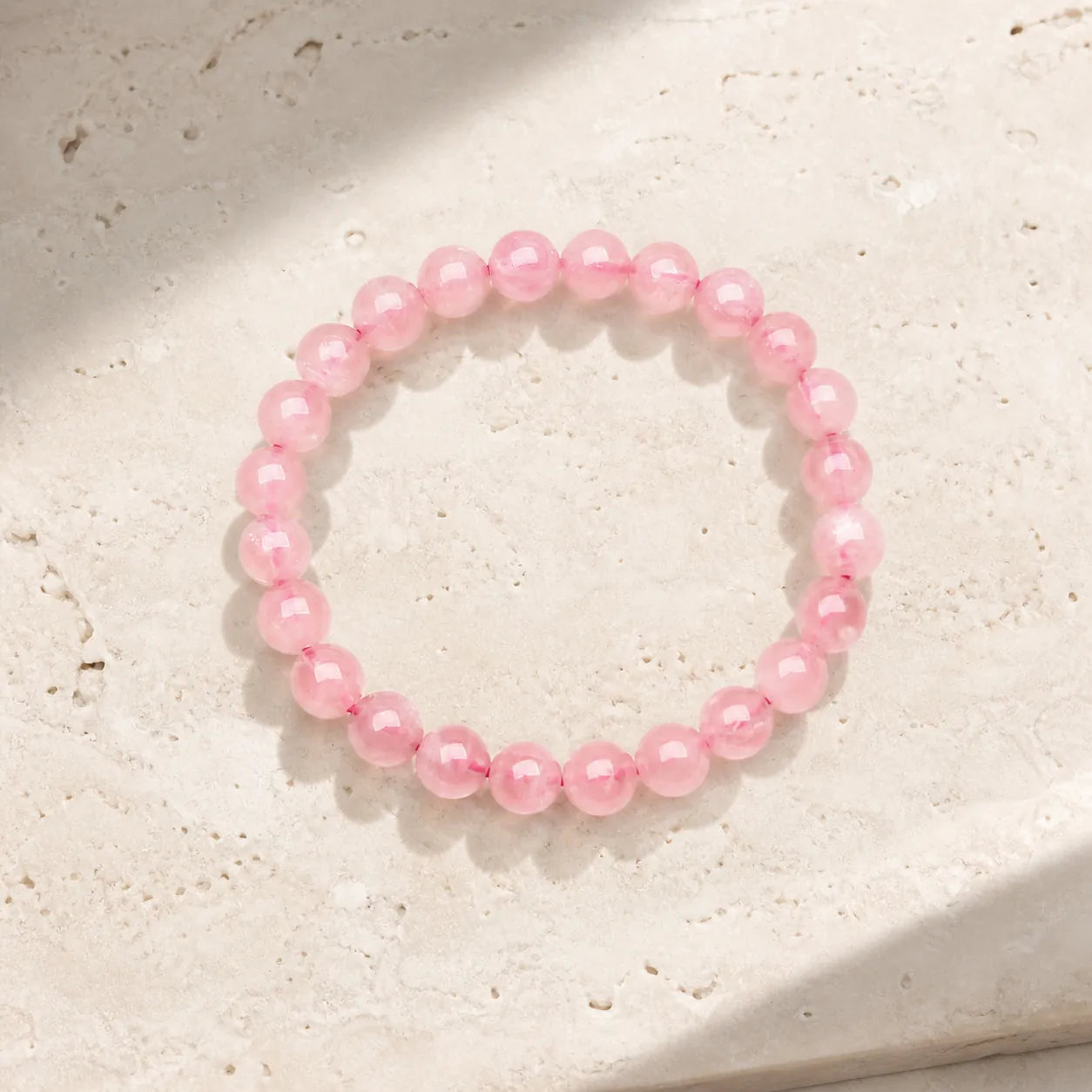
Rose Quartz Bracelet
A gentle ritual piece for bringing this intention into your daily routine.
Shop This Authentic Piece →Pink Tourmaline
Pink tourmaline is a stone of deep emotional connection. It is often associated with the capacity to feel pleasure, joy, and tenderness in relationships. Pink tourmaline may support a sense of safety in matters of the heart, encouraging you to let your guard down and let love in.
Emerald
Emerald is a stone of refined and grounded love. It is often associated with loyalty, partnership, and the kind of love that endures. Emerald resonates with the heart chakra and may support clarity in relationships, a deepened sense of commitment, and an appreciation for the beauty of slow, steady connection.
Jade
Jade is a stone of tranquil wisdom and long-lasting harmony. Across many traditions it has been treasured as a symbol of peace, protection, and gentle endurance. For the heart chakra, jade is often associated with a settled, unhurried kind of love — the kind that does not need to prove itself. It may support a feeling of calm within relationships and a quieter sense of being at peace with where you are.
Rhodochrosite
Rhodochrosite, with its bands of rose and cream, is a stone of the heart's memory. It is often associated with the tender work of holding joy and sorrow at the same time, without asking either one to disappear. Rhodochrosite may support emotional resilience — the ability to feel deeply and still remain steady — and is often chosen by those doing gentle inner work.
How to Use Heart Chakra Crystals
There is no single correct way to work with heart chakra healing stones. What matters most is consistency and sincerity. A short, simple practice you return to often will usually feel more meaningful than an elaborate one you attempt once.
Meditation Practices
Begin by sitting comfortably and breathing slowly. Hold your chosen stone in your left hand, or rest it over the center of your chest. Let your breath move in and out, and allow the stone to be a point of focus. If your mind wanders, return to the weight and coolness of it in your palm. Even five minutes of this can feel like a small homecoming.
Wearing as Jewelry
Wearing a crystal as a bracelet, pendant, or ring keeps its reminder close to the body. A rose quartz bracelet on the wrist is easy to notice during the day, which is precisely the point: each glance becomes a small pause, a chance to soften. Choose a piece you genuinely enjoy wearing, because you will wear it more often.
Placing in Your Environment
A stone near your bed, on a desk, or beside a favourite chair can quietly shape the mood of a room. Many people keep a small arrangement of heart chakra gemstones in a bedroom or a space where they rest and reflect. Place them where you will actually see them rather than where they simply look decorative.
Cleansing and Charging Your Crystals
Over time, many people like to refresh their stones — a simple ritual of care rather than a strict requirement. Rinsing a water-safe stone under cool running water, resting it in sunlight or moonlight, or passing it through the smoke of dried herbs are all traditional approaches. Softer stones such as selenite or malachite are best kept dry and cleansed with smoke or sound instead.
Charging is equally unhurried. Placing a stone on a windowsill overnight, or simply holding it with a clear intention for a few quiet breaths, is enough. The gesture matters more than the method.
Incorporating Heart Chakra Crystals into Daily Life
The most meaningful practice is the one woven into ordinary moments. You might keep a small stone in your pocket and touch it before a difficult conversation. You might place one beside your journal and write a single line about how your heart feels today. You might carry a stone in your bag for the commute and use the walk to breathe rather than scroll.
None of this is dramatic, and that is exactly why it works. Small, repeated acts of attention gradually become a way of living — one in which you notice your own heart rather than passing it by.
Where to Buy High-Quality Heart Chakra Crystals
When choosing heart chakra stones, look for sellers who describe their stones honestly, photograph them accurately, and can tell you something about where they come from. Natural variation — inclusions, colour shifts, small internal landscapes — is a sign of authenticity, not a flaw.
At Lumina Quartz, we keep our descriptions grounded and our sourcing considered. We would rather you choose one stone you truly love than a dozen you feel indifferent about.
Conclusion: Open Your Heart with Lumina Quartz
Opening the heart is not a single decision. It is a practice, returned to again and again, often in small and unglamorous ways. A crystal cannot do that work for you, but it can sit beside you while you do it — a quiet object that reminds you to breathe, to soften, and to stay open a little longer than you thought you could.
Whether you are drawn to rose quartz, green aventurine, or any of the other heart chakra stones in this guide, let your choice be guided by what you genuinely need rather than what you think you should want. The heart has its own timing.
Key Takeaways
- The heart chakra, or Anahata, sits at the center of the chest and is often associated with compassion, connection, and emotional balance.
- Heart chakra crystals are most often rose, pink, or green, and each carries a slightly different tone.
- Choose stones for your heart chakra based on what you are actually working through — self-acceptance, forgiveness, trust, or steadiness.
- Crystals are companions, not treatments, and work best alongside honest self-care and qualified support where needed.
- Consistent, simple practice matters more than collecting many stones.
Frequently Asked Questions
What are heart chakra crystals?
Heart chakra crystals are stones traditionally associated with Anahata, the fourth chakra, located at the center of the chest. They are most commonly rose, pink, or green in colour, and are often used in meditation, worn as jewelry, or kept in a living space as a gentle reminder of compassion, self-acceptance, and emotional openness.
Which crystals are best for the heart chakra?
Rose quartz, green aventurine, rhodonite, malachite, pink tourmaline, emerald, jade, and rhodochrosite are among the most frequently named. There is no single "best" stone — the most useful one is usually the one whose qualities match what you are currently working on. If you are unsure, rose quartz is a gentle and welcoming starting point.
Are heart chakra stones and heart chakra gemstones the same thing?
In everyday use, yes. "Stones," "crystals," and "gemstones" are often used interchangeably when people talk about heart chakra healing stones. Strictly speaking, a gemstone is a mineral that has been cut and polished for use in jewelry, while a stone may be left raw or tumbled. Both terms describe the same family of materials, and both can be used in the same ways.
How do you use heart chakra crystals?
Common approaches include holding a stone during meditation or while breathing slowly, wearing it as jewelry so it stays close to the body, and placing it somewhere you will see it often, such as a bedside table or desk. Cleansing and charging the stone periodically is a traditional part of the practice, though the most important element is simply returning to it with some regularity.
What are the benefits of heart chakra crystals?
People often describe feeling calmer, more patient with themselves, or more open in their relationships when they work with these stones. These are personal, subjective experiences rather than guaranteed outcomes. Crystals are best understood as supportive companions for emotional well-being, not as substitutes for therapy, medical care, or professional advice.
Related Reading
- Rose Quartz Crystal: A Gentle Guide to Meaning, Benefits, and Uses