The Complete Everyday Guide to Labradorite Moonstone: Meaning and Uses
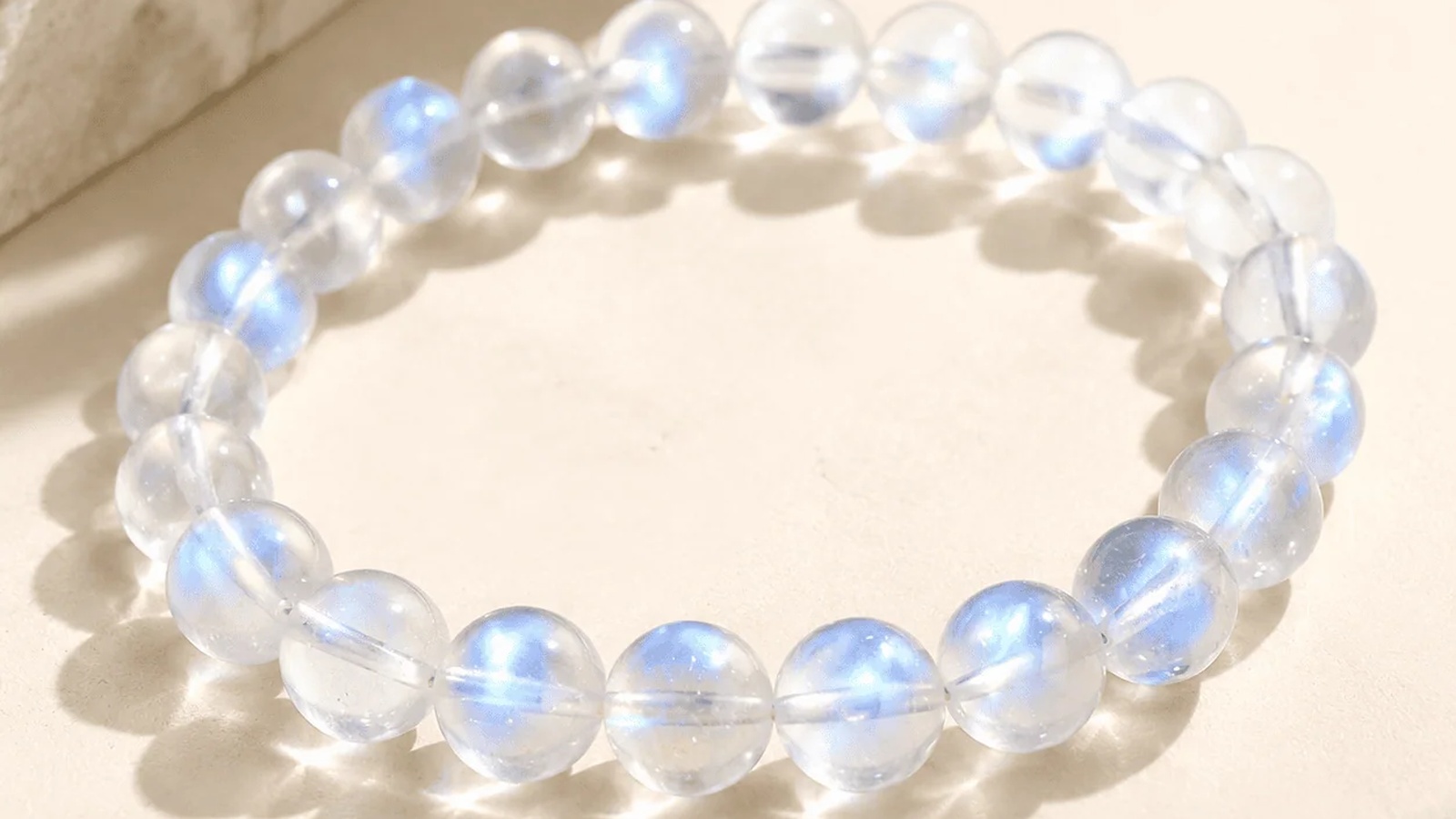
Table of Contents
- The 10-Second Executive Summary
- What Is Labradorite Moonstone? The Name Explained
- Labradorite Moonstone vs. Traditional Moonstone: Key Differences
- Comparison Table: Labradorite Moonstone vs. Traditional Moonstone
- Adularescence vs. Labradorescence
- Meaning and Symbolism of Labradorite Moonstone
- Everyday Uses: Jewelry, Styling, and Metaphysical Practices
- How to Choose Quality Labradorite Moonstone (Color, Clarity, Cut, Carat)
- Care, Cleaning, and Durability for Daily Wear
- Buying Checklist: Authenticity, Treatments, and Price Guide
- Frequently Asked Questions
- Is labradorite moonstone the same as moonstone?
- What does labradorite moonstone mean and what is it used for?
- How can you tell real labradorite moonstone from fakes?
- Sources
"Labradorite moonstone" is not a separate mineral species: it is a trade name for transparent labradorite, a feldspar that shows a floating blue-to-rainbow sheen, and it is the same material the gem trade often sells as "rainbow moonstone." If you searched that phrase wondering whether you were buying true moonstone, the short answer is no, and that distinction changes what you should look for, pay, and expect from daily wear.
The 10-Second Executive Summary
- Direct Verdict: Labradorite moonstone is transparent labradorite, a feldspar mineral, marketed as "rainbow moonstone." It is not the orthoclase moonstone that GIA describes in its moonstone buyer's guide.
- Mohs Hardness: About 6–6.5, typical for feldspar — fine for earrings and pendants, more vulnerable on rings.
- Key Optical Effect: Labradorescence (a spectral flash from below the surface), not adularescence (the soft moonlit glow of true moonstone).
- Best Uses: Statement pendants, beaded bracelets, earrings, and display pieces where the flash can catch light.
- Buying Standard: Look for natural, untreated rough under the Lumina Grade AAA Integrity Standard: no chemical resin filling, no irradiation, no dye.
What Is Labradorite Moonstone? The Name Explained
The name describes a stone, not a category. Labradorite is a member of the feldspar mineral group, alongside the orthoclase species that regular moonstone belongs to, as the International Gem Society explains in its overview of feldspar gem species. Within that group, labradorite contains several distinct gem varieties, including rainbow moonstone — the transparent material sold as "labradorite moonstone."
The "moonstone" half of the name is a marketing bridge. True moonstone is prized for a pale, floating glow, while rainbow moonstone shows brighter, more directional flashes of blue, violet, and gold. Both effects are beautiful, but they are produced differently and valued on different criteria. Knowing which stone you hold is the first step toward choosing well.
Labradorite Moonstone vs. Traditional Moonstone: Key Differences
These two stones can look like cousins in a jewelry case, yet they differ in mineral species, optical effect, and price logic.
Comparison Table: Labradorite Moonstone vs. Traditional Moonstone
| Feature | Labradorite Moonstone (Rainbow Moonstone) | Traditional Moonstone |
|---|---|---|
| Mineral species | Labradorite (feldspar group) | Orthoclase (feldspar group) |
| Optical effect | Labradorescence: sharp spectral flash, often blue or rainbow | Adularescence: soft, floating, moonlit glow |
| Typical body | Transparent to near-transparent, often with visible internal structure | Translucent to semi-transparent, often milky or colorless |
| Value drivers | Strength, color range, and evenness of the flash; transparency | Sheen strength and color, bodycolor, and clarity, per GIA's moonstone buyer's guide |
| Best worn as | Pendants, earrings, beaded bracelets | Cabochon rings and pendants |
Adularescence vs. Labradorescence
Adularescence is the billowy light that appears to move beneath a moonstone's surface, like moonlight on water. GIA notes that a slight translucency actually helps accentuate it. Labradorescence is different: it is a confined, often angular flash that appears when light interacts with internal layers in labradorite. Where moonstone glows, labradorite answers — a distinct, colored reply rather than a diffuse haze. When you shop, tilt the stone slowly; a true spectral flash that shifts position with the light points to labradorescence.
Meaning and Symbolism of Labradorite Moonstone
Symbolism here is cultural and personal, not scientific. Labradorite has long been associated with transformation and inner strength in folk traditions, while moonstone is often linked to intuition and lunar cycles. A "labradorite moonstone" therefore carries a blended story: the flash of something hidden becoming visible, and the quiet of moonlight as a companion for reflection.
These meanings may support personal rituals — a stone kept on a desk, worn on a day you want to feel grounded, or placed beside a journal. They are reminders and anchors, not treatments. Labradorite moonstone is not known to stabilize mood or regulate the nervous system, and no gemstone should be relied on for health. Used honestly, its symbolism is a small, poetic prompt to pause and pay attention.
Shop available crystals from this guide
Explore matching stones from this guide that are currently available in our collection.

Everyday Uses: Jewelry, Styling, and Metaphysical Practices
With a Mohs hardness of roughly 6–6.5, labradorite moonstone sits in the middle of the jewelry spectrum: hard enough for daily pendants and earrings, soft enough to scratch against harder stones. That makes it a natural choice for pieces worn close to the face, where the flash catches light with every turn of the head.
- Pendants and necklaces: The safest daily format; the stone rests against fabric rather than knocking against surfaces.
- Earrings: Small cabochons or drops show labradorescence beautifully and avoid most impact risk.
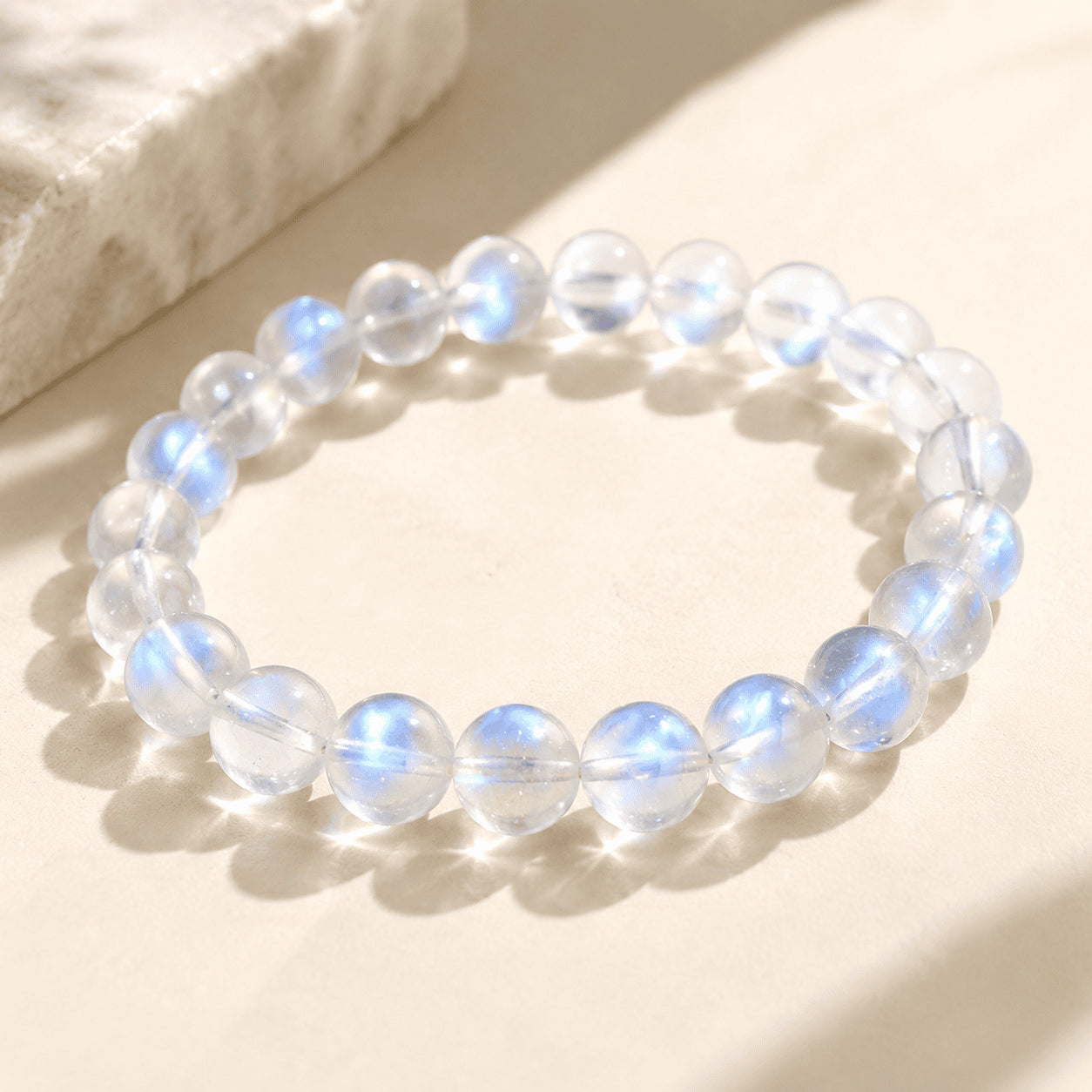
- Beaded bracelets: Lovely and tactile, but remove them for gym sessions, gardening, and dishwashing.
- Rings: Best reserved for occasional wear or protected with a bezel setting, since feldspar edges can chip.
In styling, the stone's cool blue flash pairs naturally with silver, white gold, denim, and linen. For metaphysical practice, many people hold a piece during meditation or keep one on an altar as a symbol of transition — a use that is personal and cultural rather than medical.
How to Choose Quality Labradorite Moonstone (Color, Clarity, Cut, Carat)
Quality in labradorite moonstone is judged by the flash first and the body second. GIA's moonstone guidance is a useful parallel: sheen strength and color, bodycolor, and clarity drive value in feldspar gems generally. Applied to this stone, here is what to examine.
- Color of the flash: A vivid, saturated blue is the most sought-after; violet, green, and gold flashes are also valued, especially when several colors appear in one stone.
- Coverage and evenness: The flash should cover most of the face and remain visible from more than one angle. Dead zones lower value.
- Clarity: Some internal structure is normal in labradorite. Heavy fractures or cloudy patches that dull the flash are drawbacks.
- Cut: A smooth cabochon shows labradorescence best; faceted stones are increasingly popular but demand a cleaner rough.
- Carat: Large, clean pieces with strong flash are uncommon, and value rises with size accordingly.
At Lumina, we apply the Lumina Grade AAA Integrity Standard when selecting stones: natural rough, zero chemical resin filling, and no irradiation or dye enhancement. Ask any seller direct questions about treatment, and expect clear answers.
Care, Cleaning, and Durability for Daily Wear
Feldspar rewards gentle habits. Clean labradorite moonstone with lukewarm water and a drop of mild soap, using a soft cloth or brush, then pat dry. Avoid ultrasonic cleaners and steam, which can stress existing fractures, and keep the stone away from household acids and harsh chemicals. Store it separately in a soft pouch so harder gems do not scratch its surface. Remove jewelry before swimming, exercising, or cleaning, and check settings periodically — a loose bezel or prong is the most common cause of chipped feldspar.
Buying Checklist: Authenticity, Treatments, and Price Guide
Use this step-by-step check before you commit to a piece.
- Tilt test: Rotate the stone under light. Authentic labradorite moonstone shows a flash that moves and changes with angle; painted or coated fakes look flat or static.
- Surface inspection: Look for an unnatural film or dyed cracks. Color concentrated in fractures is a sign of dye.
- Ask about treatment: Inquire whether the stone is natural, resin-filled, or irradiated. A reputable seller answers plainly and stands behind the Lumina Grade AAA Integrity Standard or an equivalent natural guarantee.
- Compare price to quality: Modest flashes in small sizes are affordable; vivid blue flash with high transparency commands a premium. A price far below market for a "perfect" stone is a warning, not a bargain.
- Confirm the name: Because "labradorite moonstone" and "rainbow moonstone" describe the same labradorite material, have the seller confirm the mineral species in writing.
Frequently Asked Questions
Is labradorite moonstone the same as moonstone?
No. Labradorite moonstone, also sold as rainbow moonstone, is transparent labradorite, while traditional moonstone is orthoclase. They share the feldspar family but are different species with different optical effects.
What does labradorite moonstone mean and what is it used for?
It is often associated with transformation and intuition in folk traditions and is most commonly used in pendants, earrings, beaded bracelets, and personal meditation or journaling rituals. These meanings are cultural and symbolic, not medical.
How can you tell real labradorite moonstone from fakes?
Tilt the stone and watch the flash: genuine labradorescence shifts and moves with the light, while glass or coated imitations look flat. Also inspect for dye in fractures and ask the seller directly about filling or irradiation.
Sources
- GIA — What Is Moonstone Gemstone: Moonstone Buyer's Guide
- International Gem Society — Is Feldspar Expensive? (Feldspar Species and Labradorite Varieties)
This guide shares mineral facts and cultural symbolism for general information only. Gemstone meanings are personal and traditional, and jewelry is not a substitute for professional health care. © 2026 Lumina Quartz.
Product Facts From the Current Catalog
These details come from the active Lumina Quartz catalog record checked on 2026-11-11. They are product-listing facts, not laboratory results or invented wear-test claims.
| Listed product | Labradorite Bracelet – Reflective Change |
|---|---|
| Format | Bracelet |
| Listed price snapshot | 69.00 |
Price, availability, and options may change. Check the live product listing before choosing.