How To Identify Raw Moonstone
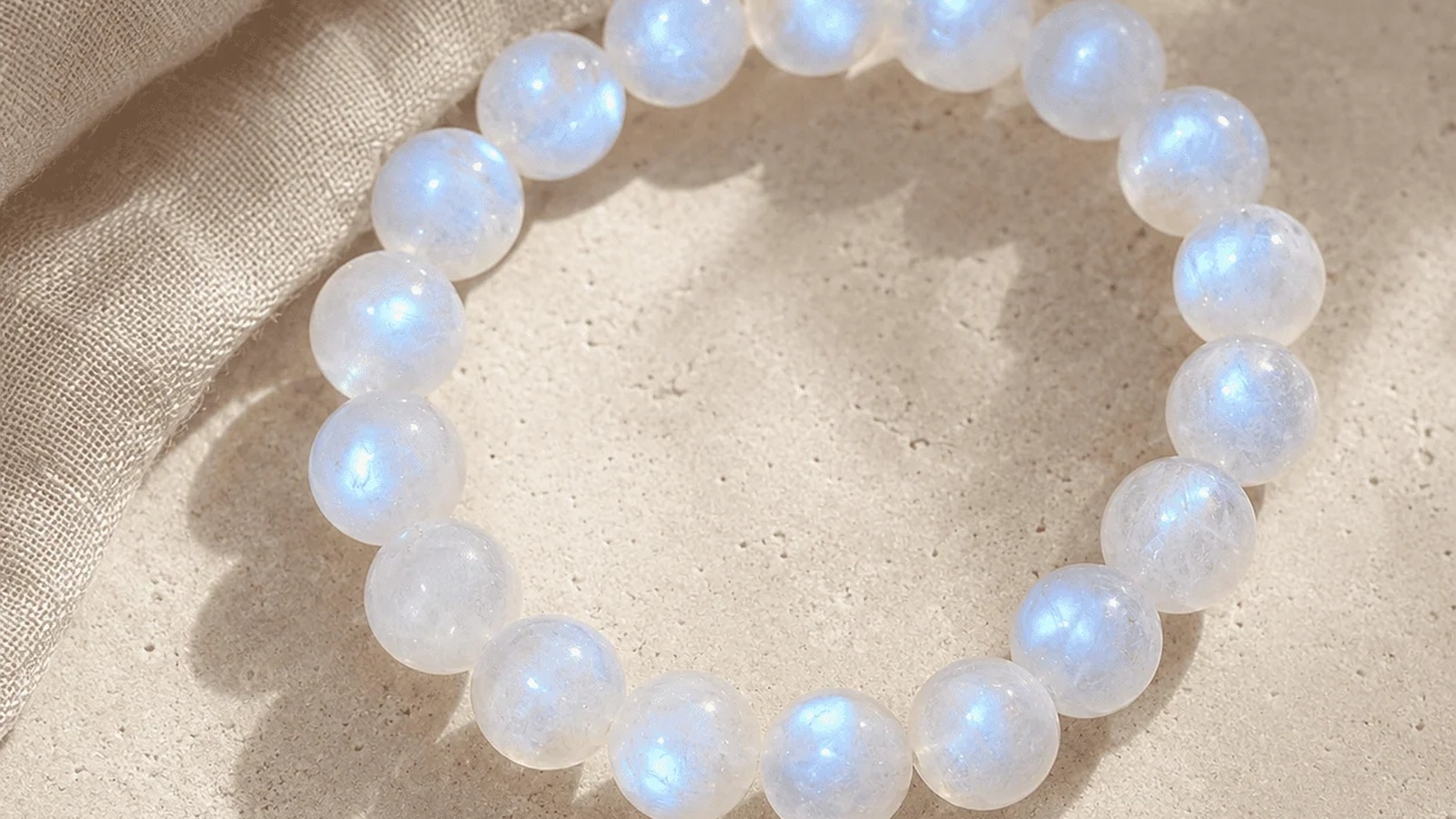
Table of Contents
- What Makes Raw Moonstone Different From Polished Moonstone
- Adularescence: The Most Reliable Sign of Real Raw Moonstone
- How Fakes Mimic (and Fail) the Glow
- What Real Raw Moonstone Looks Like: Color, Texture, and Surface Clues
- Simple At-Home Tests: Temperature, Weight, Light, and Magnification
- Bubbles, Inclusions, and the Scratch Test (Use Caution)
- Decision Table: Raw Moonstone vs. Common Lookalikes
- Raw Moonstone vs. Opalite and Rainbow Moonstone
- Dyes, Treatments, and Price Red Flags
- Quick Real vs. Fake Checklist Before You Buy
- FAQ
- How can you tell if raw moonstone is real or fake?
- Does raw moonstone have a glow even before it is polished?
- Can raw moonstone be dyed or treated, and how do you spot it?
- Sources
What Makes Raw Moonstone Different From Polished Moonstone
To identify raw moonstone, look for a rough, unfaceted feldspar specimen whose surface shows the characteristic billowing blue or white sheen (adularescence) moving beneath the stone as it is turned in light. Unlike polished moonstone, which has been shaped and smoothed to amplify that glow, raw moonstone retains its natural fracture lines, a duller or waxy surface, and irregular edges — and the adularescence may appear only from certain angles or after the surface is wetted.
10-Second Executive Summary / The Verdict Box
Direct Verdict: Raw moonstone is a rough orthoclase feldspar characterized by adularescence — a billowing sheen caused by light scattering between alternating orthoclase and albite layers. If the glow does not visibly move as the stone tilts, it is probably not natural moonstone.
Key Physical Parameters: Mohs hardness 6–6.5 (softer than quartz); monoclinic crystal system; perfect cleavage in two directions; typically translucent to semi-transparent with a white, cream, peach, or grey body.

Moonstone Bracelet (Grade AAA Natural Gemstone)
A quiet bracelet for turning this intention into a small daily ritual.
Shop This Authentic Piece →Best Use Cases: Collector specimens, wire-wrapping, display pieces, and buyers who specifically want untreated, unpolished material under the Lumina Grade AAA Integrity Standard.
Adularescence: The Most Reliable Sign of Real Raw Moonstone
Adularescence is the light that appears to billow across a gem, produced when light falls between thin alternating layers of orthoclase and albite that form during crystallization (GIA). This is the single most diagnostic feature of raw moonstone — more reliable than color, weight, or shape.
On a raw specimen, test it this way: hold the stone in indirect daylight, then slowly rotate it. Real adularescence shifts position and intensity as the angle changes, like a soft curtain of light drifting just under the surface. If the sheen is static, painted onto the surface, or confined to a single flat patch, treat the stone with suspicion.
How Fakes Mimic (and Fail) the Glow
Glass and synthetic imitations can produce a milky or iridescent look, but the glow tends to be uniform and surface-bound rather than layered and moving. Opalite, a common substitute, shows a hazy, often orange-blue flash from within a manufactured glass body rather than the directional, billowing sheen of feldspar. The giveaway on raw material is that fakes cannot reproduce adularescence along natural cleavage planes — the glow on a fake sits flat on the outside, while on real raw moonstone it emerges from within the layering.
What Real Raw Moonstone Looks Like: Color, Texture, and Surface Clues
In natural light, genuine raw moonstone usually presents a translucent to semi-transparent body in white, cream, pale peach, or soft grey, with a vitreous-to-pearly luster and a somewhat waxy feel. Expect irregular fracture surfaces and visible cleavage planes rather than a smooth, uniform finish.
Common surface clues to check:
- Cleavage planes: feldspar cleaves cleanly in two directions, so raw pieces often show flat, stepped fracture faces with a slight pearly sheen.
- Internal layering: under bright light you may see faint directional banding that aligns with the adularescence.
- Imperfection as a signature: natural rough material almost always carries small pits, internal fractures, and color variation; perfectly uniform raw stones are a warning sign.
At Lumina, the Lumina Grade AAA Integrity Standard means we look for natural rough material with zero chemical resin filling, no irradiation, and no dye — the internal flaws stay visible because that is exactly what natural origin looks like.
Simple At-Home Tests: Temperature, Weight, Light, and Magnification
These checks are observational and non-destructive; they can help you rule out glass or plastic, but they cannot confirm a specific feldspar variety with certainty.
- Temperature: real stone feels cool to the touch at room temperature and warms slowly in the hand; glass and resin warm quickly.
- Weight and heft: moonstone has a specific gravity typical of feldspar (around 2.56–2.59). A piece that feels unusually light for its size may be resin or plastic.
- Light test: use a small flashlight or direct sun to inspect internal layering and confirm the sheen drifts with tilt.
- Magnification: a 10x loupe helps you look for natural cleavage lines, small internal fractures, and the absence of perfectly round air bubbles.
Bubbles, Inclusions, and the Scratch Test (Use Caution)
Perfectly spherical, evenly distributed bubbles are a hallmark of glass, not feldspar; natural inclusions are irregular and often align with internal structure. Moonstone's Mohs hardness of 6–6.5 sits below quartz (7), so a scratch test against a quartz point can indicate relative softness — but it permanently damages the specimen, so only use it on a hidden area of material you already own, never on a stone you are still evaluating for purchase.
Decision Table: Raw Moonstone vs. Common Lookalikes
Use this table when you are weighing a rough specimen against the most frequent substitutes.
| Feature | Raw Moonstone (feldspar) | Opalite (glass) | Rainbow Moonstone (labradorite) |
|---|---|---|---|
| Glow behavior | Billowing sheen that moves with tilt | Static milky/orange-blue flash | Blue flash with rainbow color-play across cleavage planes |
| Surface | Rough, waxy, stepped cleavage | Smooth, mold-formed edges | Rough with strong directional sheen |
| Bubbles | Absent; irregular internal fractures | Often present, round and even | Absent |
| Best use | Collector and display material | Decorative, not gem-grade | Collector material with stronger color range |
Raw Moonstone vs. Opalite and Rainbow Moonstone
Opalite is manufactured glass, so it should not be sold as moonstone at all — its uniformity and glassy clarity are the tell. "Rainbow moonstone" is a trade name, and the material is actually a feldspar that can also show adularescence, typically labradorite; its sheen often carries stronger blue and multi-color flash along cleavage planes (GIA). Neither substitute is inherently dishonest — the problem is mislabeling and price inflation, which is why a specimen's exact field name matters.
Dyes, Treatments, and Price Red Flags
Raw moonstone can be dyed, resin-filled, or irradiated to deepen color and mask fractures, and the treatments are often easier to hide on rough material than on polished. Spotting them relies on close inspection:
- Dye: color that pools in cracks or pits, looks unusually saturated for the stone's body color, or rubs off slightly on a damp white cloth.
- Filler: a glassy, over-smooth sheen around fracture lines, or a surface that feels tacky or smells faintly chemical.
- Price: large, clean rough moonstone priced far below market is a reliable red flag; natural rough material with strong adularescence is not cheap at size.
Under the Lumina Grade AAA Integrity Standard, sellers and buyers can both screen for natural origin, zero chemical filling, and no irradiation or dye — those are pre-purchase questions, not afterthoughts.
Quick Real vs. Fake Checklist Before You Buy
Run through this list in order; if any answer is unclear, walk away rather than negotiate.
- Tilt test: does the sheen drift as you rotate the stone in indirect daylight? (Must be yes.)
- Bubble check: any perfectly round bubbles under a loupe? (Any yes = likely glass.)
- Surface check: does it show natural cleavage planes and irregular edges rather than mold-smooth surfaces?
- Dye check: any color concentrated in cracks or pits? Wipe with a damp cloth and look for transferred color.
- Weight and temperature: cool, with feldspar-typical heft for its size?
- Seller transparency: will the seller state, in writing, that the stone is natural, untreated, and not glass or labradorite mislabeled as moonstone?
FAQ
How can you tell if raw moonstone is real or fake?
Look for a billowing sheen that shifts as you tilt the stone, combined with natural cleavage planes and no round air bubbles. A static glow or glassy bubbles usually indicates glass or an imitation.
Does raw moonstone have a glow even before it is polished?
Yes — adularescence comes from the internal feldspar layering, so raw stone can show it, though it is often softer and visible only from certain angles or after the surface is wetted (GIA).
Can raw moonstone be dyed or treated, and how do you spot it?
It can be dyed, resin-filled, or irradiated, especially to mask fractures or boost color. Spot it by checking for color pooled in pits and cracks, a smooth filler sheen along fractures, or color lifting onto a damp cloth.
Sources
© 2026 Lumina Quartz. Gemstone descriptions refer to mineral and geological properties; cultural and personal-meaning associations are not scientific claims. This article is not medical advice.
Product Facts From the Current Catalog
These details come from the active Lumina Quartz catalog record checked on 2026-11-20. They are product-listing facts, not laboratory results or invented wear-test claims.
| Listed product | Moonstone Bracelet (Grade AAA Natural Gemstone) | New Beginnings & Intuition Jewelry // Lumina Quartz |
|---|---|
| Format | Bracelet |
| Listed price snapshot | 59.00 |
Price, availability, and options may change. Check the live product listing before choosing.