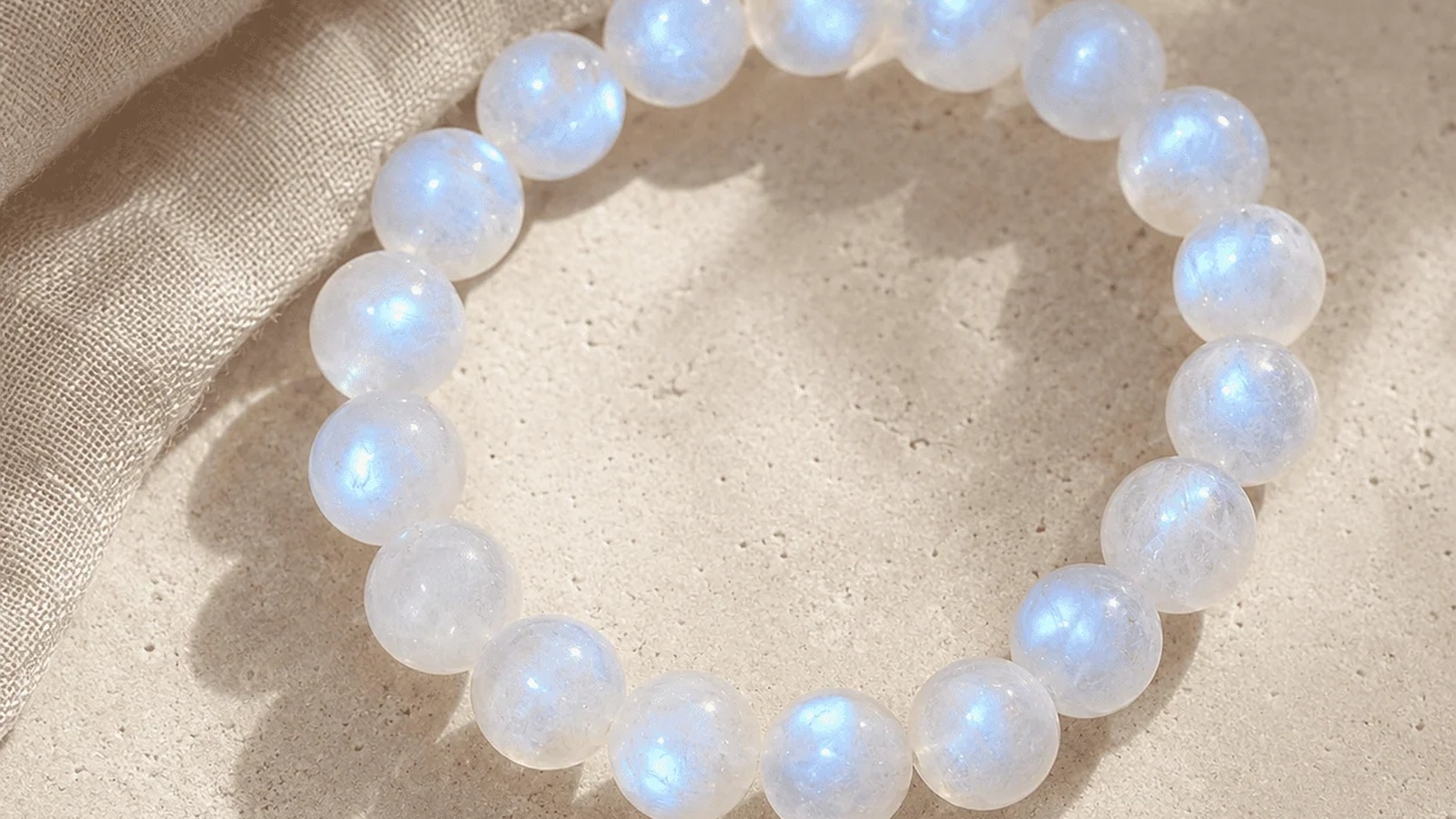
Moonstone is one of three official June birthstones, alongside pearl and alexandrite, and it is the only one prized for adularescence: a billowing blue-white glow that appears to float inside the stone. For most buyers, it is the most affordable and most wearable of the three for daily jewelry, provided you choose a well-cut stone and treat it with care.
The 10-Second Executive Summary
- Direct Verdict: Moonstone is a genuine, officially recognized June birthstone and a beautiful everyday choice if you accept its limits: it is a feldspar, softer than quartz, and it rewards gentle wear.
- Mohs Hardness: 6 to 6.5 (reference: gem mineralogy of the feldspar group). This makes it noticeably softer than quartz (7) and significantly softer than sapphire (9).
- Key Optical Trait: Adularescence, a light effect that appears to billow across the gem, most prized as a blue sheen on a near-colorless background.
- Best Everyday Settings: Pendants, earrings, and bezel-set rings; avoid open prongs on high-impact rings.
- Best For: June birthdays, lovers of soft luminous color, and anyone seeking an affordable alt-birthstone with real history.
- Skip If: You want a no-maintenance stone for hands-on work, gym wear, or rough daily use.
Why June Has Three Birthstones — and Where Moonstone Fits
June is one of only three months (along with August and December) that offers three birthstones, which gives June-born buyers unusual freedom of choice across color and budget, according to GIA. The trio is pearl, alexandrite, and moonstone.
Within that set, moonstone occupies a distinct position. Pearl is organic and softer; alexandrite is rare and expensive; moonstone is a mineral gemstone with a luminous, shifting sheen and a moderate price point. If your priority is a stone with visible character that you can wear often without alexandrite-level investment, moonstone is usually the practical pick. If you want maximum toughness or maximum rarity, look to the other two.
What Is Moonstone? Adularescence, Colors, and the Science of the Glow
Moonstone is the best-known gem of the feldspar mineral group, and its signature visual effect is called adularescence: light that appears to billow across the stone, giving it a soft internal glow, as described by GIA. The finest examples show a blue sheen against a colorless background.
- The glow, explained plainly: adularescence is an optical effect created by light scattering from fine internal layers within the feldspar structure. It is a physical property of the stone, not a coating or treatment — and it should move with the stone as you tilt it.
- Color range: the most valued is blue sheen on a near-colorless body. White, cream, peach, and rainbow-sheen varieties also exist and are often more affordable.
- Hardness: roughly 6 to 6.5 on the Mohs scale — a defining fact for how you should wear and clean it (more below).
This is where cultural symbolism and mineralogy should be kept separate. The glow is geology. The meaning people assign to it is tradition. Both matter, but they are not the same claim.
Moonstone Meaning and Symbolism: Love, Intuition, and Lunar Lore
Moonstone has been associated with both Roman and Greek lunar deities, and Hindu mythology describes it as made of solidified moonbeams, per GIA's birthstone guide. It is often associated with love, passion, and fertility, and is believed by some to bring good luck. Art Nouveau designers such as René Lalique and Louis Comfort Tiffany famously worked with the stone.
These are cultural and historical associations, not health claims. Many wearers treat moonstone as a personal reminder of calm, intuition, or a meaningful date — a quiet ritual rather than a functional effect. If you value symbolism, moonstone may support a sense of intentionality in your day. What the stone's properties have been shown to do is glow, refract light, and hold up to gentle wear; emotional outcomes remain a matter of personal meaning.
Decision Table: Moonstone vs. Pearl vs. Alexandrite for a June Birthday
| Consideration | Moonstone | Pearl | Alexandrite |
|---|---|---|---|
| Origin | Mineral gem (feldspar group) | Organic gem | Mineral gem (chrysoberyl) |
| Signature feature | Adularescent blue-white sheen | Nacre luster and natural tone | Color change under different lighting |
| Typical budget position | Moderate — the most affordable of the three in most size ranges | Moderate, varies widely with size and luster | Highest — fine stones are rare and costly |
| Everyday durability | Good with care; avoid hard knocks | Good but sensitive to chemicals and abrasion | Excellent for everyday wear |
| Best pick if you… | Want a luminous, characterful stone on a moderate budget | Prefer classic, organic elegance | Want rarity and a true color-change stone |
How to use this table: start with your budget line, then cross out any row where durability matters most (for example, a ring worn to work with hands). The remaining column is your answer.

Moonstone Bracelet (Grade AAA Natural Gemstone)
A quiet bracelet for turning this intention into a small daily ritual.
Shop This Authentic Piece →Moonstone vs. Pearl vs. Alexandrite: Choosing Your June Birthstone
Comparing Color, Meaning, and Budget
GIA notes that the three June birthstones span different colors and price points, which lets a June-born person choose based on mood or budget. In practice:
- Choose moonstone if you are drawn to blue-white shimmer and want a moderate-budget mineral stone. It is the middle path in cost and the most visually distinctive of the three in soft light.
- Choose pearl if you prefer a classic, organic look and plan to wear it for occasions rather than constant contact. Pearls need extra care around perfume and abrasives.
- Choose alexandrite only if rarity and color change outweigh budget — fine alexandrite is significantly more expensive and is best bought with documentation.
A useful boundary: if this is a gift for someone who works with their hands, moonstone in earrings or a pendant may be the better choice than a ring; if the goal is an heirloom investment, alexandrite is the topic to research properly. Moonstone's strength is not toughness — it is personality per dollar.
Buying Moonstone: Quality Factors, Origins, and Price Points
What to Look For in a Moonstone
Adularescence is what you are buying. Use this checklist at the counter or on a listing:
- Sheen behavior: tilt the stone in natural light. A genuine moonstone's glow should appear to float and shift across the surface, not sit flat like a printed layer.
- Body color and sheen contrast: the most valued stones show a strong blue sheen on a near-colorless background. A crisp, centered effect is more important than a large stone.
- Cut: a well-proportioned cabochon presents the glow evenly. Off-center or too-high domes can hide the effect.
- Clarity check: avoid stones with visible internal fractures running through the sheen area; these are weak points in a 6–6.5 hardness stone.
- Treatments: ask directly whether the stone has been fracture-filled with resin or irradiated. At Lumina Quartz we apply the Lumina Grade AAA Integrity Standard: natural rough, zero chemical fracture-filling, no irradiation or dyeing. Any reputable seller should answer these questions plainly.
Origins and price: moonstone is mined in several regions, including Sri Lanka (historically associated with the finest blue sheen) and India (often the source of rainbow and white material). Because origin claims are hard to verify without documentation, treat them as a soft signal and let the glow, clarity, and treatment disclosure drive the decision. Within a moderate price band, prioritize sheen quality and honest treatment disclosure over a romanticized origin story.
Everyday Wear Guide: Durability, Setting Types, and Care Tips
Moonstone is a good everyday stone for some jewelry and some days. At 6–6.5 on the Mohs scale it is softer than quartz, so it scratches more easily than a sapphire or diamond and can chip at a sharp edge. That makes setting choice the single most important durability decision.
- Best settings: bezel-set rings, pendants, and stud or drop earrings. A bezel protects the stone's edge and turns a delicate gem into a daily-wear piece.
- Use with caution: tall prong-set rings on the dominant hand, bracelets that knock against desks, and anything worn during exercise or gardening.
- Pair mindfully: avoid stacking a moonstone ring directly against a harder diamond or sapphire band, which can abrade it over time.
Cleaning and Storing Moonstone Jewelry
- Clean with lukewarm water and a drop of mild soap, using a soft brush or cloth.
- Never use ultrasonic cleaners, steam cleaners, or harsh chemical dips on moonstone — especially any stone with visible fractures.
- Rinse and dry fully before storing; moisture trapped in a setting can dull the finish.
- Store in a soft pouch or a compartment separated from harder stones, so nothing scratches the surface.
- Put jewelry on last and take it off first, before perfume, hairspray, or lotion.
These steps are standard gem-care practice for a stone of this hardness, not a guarantee against damage. If you notice a chip or a dulled sheen area, have it assessed by a jeweler before wearing it again.
Styling Moonstone for Everyday: Necklaces, Earrings, Rings, and Stacking
Moonstone's soft glow works with the way light moves through a room, so it often reads best in pieces you see catch the light: pendants, drops, and moderately sized rings.
- Necklaces: a single bezel-set oval or round pendant in white or blue sheen pairs naturally with both warm and cool metals. It is the lowest-risk way to wear moonstone daily.
- Earrings: studs and small drops keep the stone out of harm's way; the sheen stays visible with head movement.
- Rings: choose a low, bezel-set profile for daily wear; reserve high-dome prong settings for occasional wear.
- Stacking: keep moonstone next to softer metals or bands with rounded edges, and separate it from harder stones with a spacer or a different finger. A moonstone worn beside a diamond eternity band will show wear over time.
The overall rule is simple: the more often you plan to wear a piece, the more protection the setting should offer. A moonstone that is protected can be a quiet, grounding everyday companion; one that is exposed is better saved for gentle days.
Frequently Asked Questions
What does the June birthstone moonstone mean?
Historically, moonstone has been associated with lunar deities and is often associated with love, passion, and good luck. These are cultural associations, not proven effects — many wearers use it as a personal reminder of intuition or calm.
Is moonstone a good everyday stone for jewelry?
Yes, with care — it is 6–6.5 on the Mohs scale, so it is best worn in bezel-set rings, pendants, and earrings, and it should be kept away from hard knocks and scratch-prone stacking.
How can I tell real moonstone from fake or low-quality moonstone?
Look for adularescence that moves and floats as you tilt the stone; flat, printed-looking sheen or visible resin-filled cracks are warning signs. Ask directly about fracture-filling and irradiation, and expect a clear answer under a standard such as the Lumina Grade AAA Integrity Standard.
Sources
This guide shares mineral information, cultural associations, and care practice for general interest. It is not medical or health advice. © 2026 Lumina Quartz.