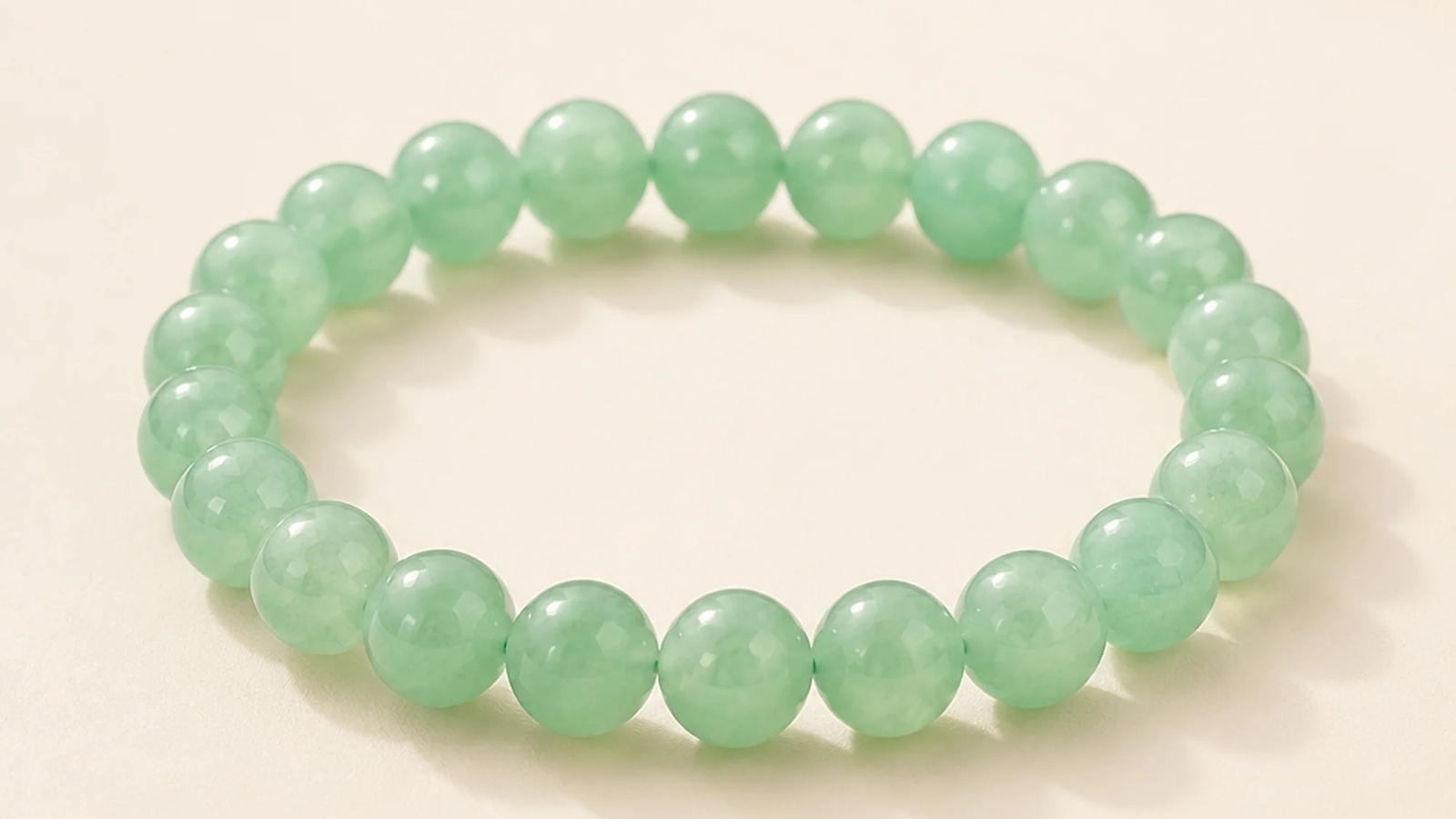
A blue aventurine bracelet is a beaded bracelet made from quartz that contains tiny, reflective mineral inclusions, and its meaning in everyday practice is most often tied to inner strength, honest boundaries, and steady self-expression. Whether it suits you comes down to three practical questions: is the color natural or dyed, how does the stone wear day to day, and does the bracelet’s fit and design match your life. This guide answers each of those questions directly, then gives you a step-by-step way to choose, wear, and care for one.
10-Second Executive Summary
- Direct Verdict: A blue aventurine bracelet is best understood as a grounding, everyday stone with cultural associations around quiet confidence and boundaries; it is not a treatment for emotional or mental health conditions.
- Stone Identity: Aventurine is a variety of quartz (silicon dioxide, SiO₂) with reflective mineral inclusions such as muscovite.
- Mohs Hardness: Approximately 7 (standard for quartz), so it resists daily scratches but can chip on hard impacts.
- Sparkle: Caused by aventurescence — reflections from small, flat mineral flakes inside the stone.
- Natural vs. Treated: Blue is a rarer natural tone than green; vivid, uniform blue is often dyed or heat-treated, so ask directly.
- Best For: Daily wear, work and study settings, gifting, and stackable layering with other bracelets.
- Care Basics: Wipe with a soft damp cloth, avoid harsh chemicals and ultrasonic cleaners, and store separately from harder stones.
What Is a Blue Aventurine Bracelet?
A blue aventurine bracelet is a piece of jewelry strung with polished beads of blue aventurine, a quartz variety that shows a subtle internal glitter. The stone’s name comes from aventurescence, the optical effect created when light reflects off small, flat inclusions suspended inside the material. That effect is the same visual phenomenon the gem trade first named after “aventurine glass” (goldstone), a man-made glass with metallic copper crystals that introduced the term to mineralogy, as documented by Mindat.
In practice, a blue aventurine bracelet is a simple, comfortable object: usually round beads on an elastic cord, worn on the wrist as a reminder stone, an accessory, or both. Its appeal is partly aesthetic — soft blue with flashes of light — and partly cultural, since aventurine and other shimmering stones have long been associated with calm and good fortune in folk traditions.
Aventurescence: Why the Stone Sparkles
The sparkle in genuine aventurine comes from inclusions inside the quartz, often tiny flakes of minerals like muscovite, which catch light and produce a glinting, sugar-like shimmer. The same physical principle — oriented metallic or reflective inclusions creating a play of light — is described in gemological literature on aventurine feldspar, where it is called aventurescence and sometimes schiller (GIA, Fall 2023 Gems & Gemology).
This matters for buyers because the shimmer should look internal and irregular, not painted on. If a bracelet glitters only on the surface, or the sparkle looks like a metallic coating, it is probably not natural aventurescence.
Natural vs. Treated: Reading the Color Honestly
Green is the most common natural aventurine color; blue occurs too, but a deeply saturated, perfectly even blue is often the result of dyeing or heat treatment. Color alone cannot prove treatment, but a few signals are worth checking:
- Look at the drill holes: dye often pools darker inside bead holes and along cracks.
- Compare beads: natural stone varies slightly from bead to bead; uniform identical blue across a whole strand is a caution sign.
- Ask for specifics: a trustworthy seller will say plainly whether color is natural, dyed, or heat-treated.
- Check for coatings: surface films can dull or flake over time and are not part of the stone.
At Lumina Quartz, the Lumina Grade AAA Integrity Standard means we describe a bracelet as natural only when the stone is un-dyed, free of chemical resin filling, and not color-enhanced by irradiation — and we say so on the listing rather than leaving you to guess.
Blue Aventurine Meaning in Everyday Practice
The meaning of blue aventurine is cultural rather than medical. It is often associated with calm communication, personal boundaries, and steady self-trust, and many people wear it as a quiet reminder during busy or emotionally demanding days. These associations are symbolic; they are not claims that the stone changes mood, treats anxiety, or regulates the body.
Inner Strength, Boundaries, and Quiet Communication
In everyday use, blue aventurine is most often chosen as a “speak clearly, stay kind” stone. Wearing it may support a personal intention to pause before responding, to say no without apology, or to hold a steady tone in difficult conversations. The bracelet itself does nothing mechanical — it works as a tactile cue. Touching the beads before a meeting or a hard conversation can serve as a simple grounding ritual, and rituals of this kind are a widely used personal practice, not a clinical intervention.
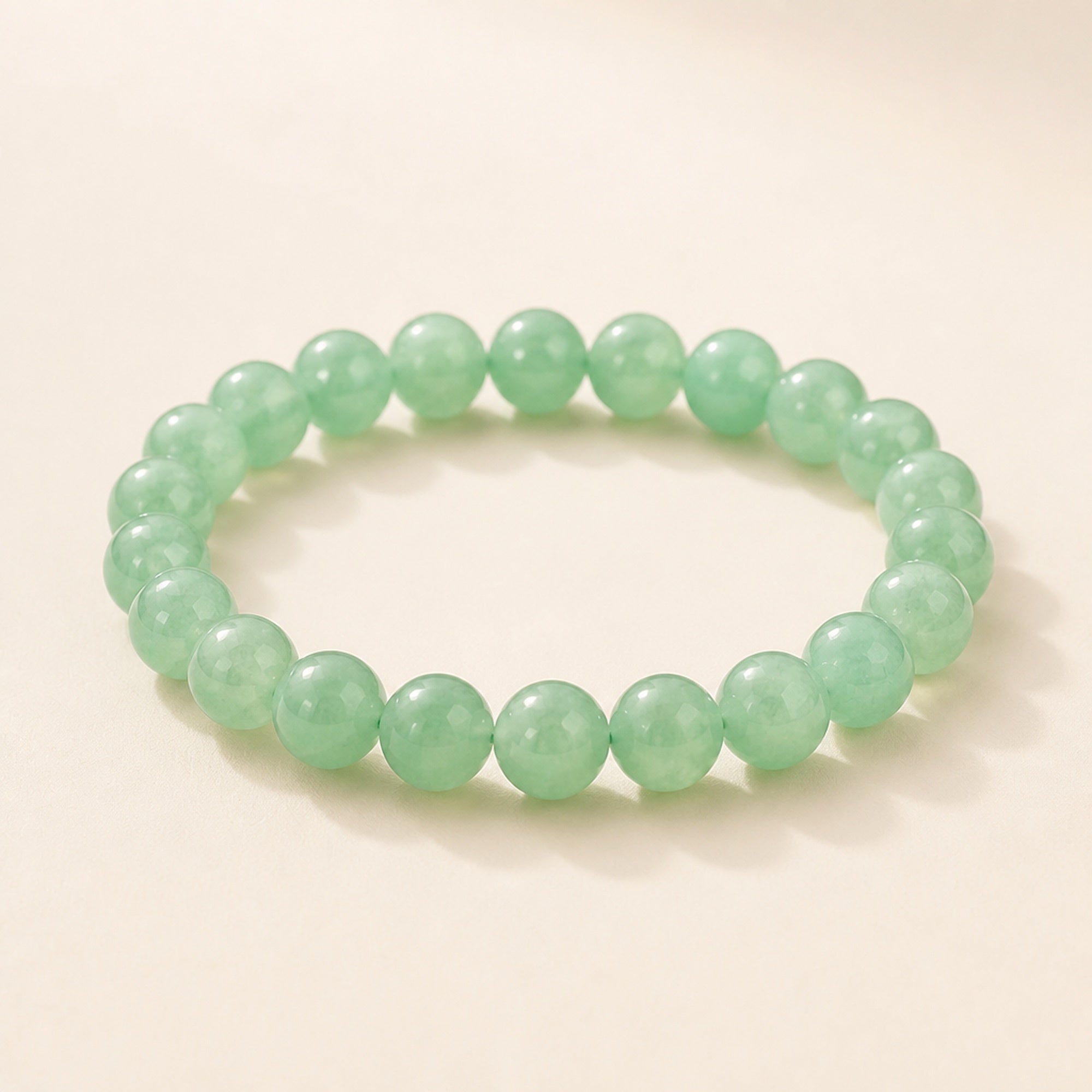
Green Aventurine Opportunity Bracelet
A quiet bracelet for turning this intention into a small daily ritual.
Shop This Authentic Piece →Emotional Balance and Mental Clarity
Blue tones are often associated with calm in color psychology and in crystal traditions alike, and blue aventurine is frequently described as a stone for mental clarity and even temper. Treat this as symbolic framing rather than a guaranteed effect. If you are looking for practical support, the bracelet may serve as a reminder to take a breath, step outside, or write down what is actually on your mind. It is not a substitute for professional care, and it should not be relied on to manage obsessive thoughts, anxiety, or low mood.
Decision Table: Is a Blue Aventurine Bracelet Right for You?
Use this table to match the bracelet to your actual need before you buy.
| If your goal is… | Choose… | Because… | Watch out for… |
|---|---|---|---|
| A calm daily reminder for work or study | 6–8 mm beads, natural or clearly labeled color, snug elastic fit | Smaller beads sit comfortably under sleeves and during typing | Overly tight elastic that leaves marks on the wrist |
| A visible statement piece | 10–12 mm beads with strong internal shimmer | Larger beads show aventurescence more clearly | Very uniform, vivid blue that may indicate dyeing |
| Layering with other bracelets | Round, smooth 6–8 mm beads, natural finish | Smooth quartz is about Mohs 7 and layers without scratching softer metals | Metal charms or abrasive spacers rubbing against the beads |
| A gift for someone new to crystals | Natural blue aventurine with a plain card explaining care | The meaning is gentle and easy to explain without overpromising | Listings that imply health benefits |
| An heirloom-style keepsake | Natural color, knotted or sturdy elastic, spare cord | Untreated quartz is more stable long-term than dyed stone | Dye that may fade with sun and water exposure |
How to Choose a Blue Aventurine Bracelet
Choosing well is mostly about three things: honest color, comfortable fit, and bead size that matches how you live. Follow this short checklist before you add one to your cart.
- Confirm the color story. Ask whether the blue is natural, dyed, or heat-treated. Under the Lumina Grade AAA Integrity Standard, natural means no dye, no resin filling, and no irradiation.
- Inspect the shimmer. Hold the bracelet in daylight. Genuine aventurescence appears as small internal flashes that shift as you rotate the bead.
- Match bead size to wrist. As a rough guide, 6 mm suits small wrists and fine layering, 8 mm is the most versatile everyday size, and 10–12 mm reads as a statement piece.
- Check the fit. The bracelet should slide slightly but not rotate loosely or leave deep pressure marks. Measure your wrist and add about 1–1.5 cm for comfort.
- Look at the cord. Elastic should be double-knotted and slightly hidden inside a bead; a visible knot at the surface wears out faster.
- Read the listing language. A seller who describes treatments plainly is more likely to be accurate about the stone itself.
If you are choosing between green and blue aventurine, note that green is the more common natural color, so a natural blue strand is rarer and should be priced and described accordingly. A blue bracelet that costs far less than a green one of the same size is a reason to ask questions, not necessarily to walk away.
How to Wear and Stack It
Blue aventurine is easy to wear daily. Most people wear it on the non-dominant wrist so it interferes less with writing, cooking, and typing, but there is no rule. On the wrist, it pairs naturally with silver and white-gold tones, with denim and neutral clothing, and with other quiet stones such as clear quartz or moonstone.
- Single statement: one 10–12 mm blue aventurine bracelet, alone or with a slim metal bangle on the other wrist.
- Layered look: a 6 mm blue aventurine strand next to a 6 mm clear quartz or a thin silver chain — keep bead sizes close so the stack sits flat.
- Workday setup: wear it under a sleeve or push it up slightly when you need a tactile reminder before a conversation.
- What to avoid: stacking it tightly against sharp metal charms or harder stones like sapphire, which can scratch even quartz over time.
Styling is personal, and the “right” combination is the one you will actually wear. If a stack feels fussy, a single bracelet is the most honest choice.
How to Care for a Blue Aventurine Bracelet
Quartz is durable at about Mohs 7, but it is not indestructible. A little routine care keeps the color and shimmer looking their best.
- Clean gently: wipe beads with a soft, damp cloth. For deeper cleaning, use lukewarm water and a drop of mild soap, then dry fully.
- Skip harsh methods: avoid ultrasonic cleaners, steam cleaners, bleach, and acidic cleaners, which can affect dye or surface polish.
- Manage sun and water: remove the bracelet before long sun exposure, swimming, or showering, especially if the color is dyed, since dye may fade.
- Protect from impact: take it off for gym sessions, heavy lifting, or gardening, where a hard knock can chip a bead.
- Store separately: keep it in a soft pouch away from harder stones to prevent surface scratches.
- Refresh the elastic: if the cord feels stretched or frayed, restring it before it breaks; elastic has a limited lifespan even with good care.
Who Is a Blue Aventurine Bracelet For? Gift and Everyday Use
This bracelet suits people who like quiet, meaningful accessories rather than loud statement jewelry. It is a thoughtful gift for a graduate starting a job, a friend going through a transition, or anyone who appreciates a daily reminder to speak clearly and hold their ground. Because the stone’s associations are symbolic, it is a safe gift for people who are skeptical of crystal claims — it stands on its own as a pretty, wearable object.
For children and teens, check that elastic is secure and beads are not a choking size for very young children. For anyone with metal sensitivities, a pure elastic strand with no metal components is the simplest choice. And for anyone using crystals as part of a personal mindfulness practice, be clear with yourself about the boundary: the bracelet may support a ritual, but it does not replace medical or mental health care.
Frequently Asked Questions
What does a blue aventurine bracelet mean?
It is most often associated with calm communication, personal boundaries, and steady inner strength, and many people wear it as a daily reminder rather than for any physical effect. These meanings are cultural and symbolic, not medical.
Is blue aventurine natural or dyed, and what causes its sparkle?
Natural blue aventurine exists but is less common than green, so vivid, uniform blue is often dyed or heat-treated; the sparkle itself is aventurescence, caused by light reflecting off small mineral inclusions inside the quartz. Ask the seller directly about treatments, and check drill holes for pooled dye.
How should I wear and care for a blue aventurine bracelet?
Wear it on whichever wrist feels comfortable, keep it away from hard impacts and long sun or water exposure, and clean it with a soft damp cloth and mild soap. Avoid ultrasonic cleaners and harsh chemicals, and restring the elastic when it starts to stretch.
Sources
- Mindat — “Goldstone” – Aventurine Glass
- GIA — Fall 2023 Gems & Gemology: Special Colors and Optical Effects of Oregon Sunstone
This article describes mineral properties and cultural associations only. It is not medical advice, and crystal jewelry should not be used in place of professional care.
© 2026 Lumina Quartz