7 Journal Prompts to Use With Fluorite for Calm
Table of Contents
- Introduction: Why Pair Fluorite with Journaling?
- Understanding Fluorite: The Stone of Clarity and Calm
- How to Prepare for a Calming Journaling Session with Fluorite
- 7 Journal Prompts to Use With Fluorite for Calm
- Key Takeaways
- Tips for Making Fluorite Journaling a Sustainable Ritual
- Conclusion: Cultivate Lasting Peace with Fluorite and Journaling
- Frequently Asked Questions
There are moments when the mind feels like a room full of open windows—everything moving at once, nothing settling. In those moments, we search for something to hold onto. A stone. A page. A single gentle question. Fluorite, with its layered bands of green and violet, has long been admired for its quiet visual presence. When paired with the slow practice of journaling, it can become a small, personal ritual—a tangible object that invites you to pause and return to yourself.
Introduction: Why Pair Fluorite with Journaling?
Journaling is one of the oldest and most accessible tools for self-understanding. It asks nothing of you except honesty. You do not need perfect handwriting, a beautiful notebook, or profound thoughts. You simply need a willingness to meet yourself on the page. Fluorite, on the other hand, is a mineral many people enjoy keeping nearby for its layered colors, smooth weight, and the quiet sense of order its geometric formations seem to suggest. Together, they form a simple ritual: the stone gives your senses something to rest on while the pen gives voice to your inner world.
When you write with fluorite nearby, you are not asking the stone to fix anything. You are simply allowing its physical presence to serve as a reminder that you have set aside a few minutes to slow down. This practice is less about achieving a perfect state of calm and more about returning, again and again, to a gentle rhythm of reflection. In a world that constantly asks for more of your attention, this pairing invites you to pause, breathe, and set your thoughts down softly.
Understanding Fluorite: The Stone of Clarity and Calm
Fluorite is a mineral known for its striking geometric formations and its wide range of colors—purple, green, blue, yellow, and occasional clear bands. It forms in cubic crystals that seem almost too perfect to be natural, as if nature herself decided to carve order out of chaos. In crystal traditions, fluorite has long been associated with focus and clear thinking, and some people call it the "genius stone" as a traditional nickname. These are cultural and historical associations, not scientific claims about the mineral's effects.
Many people find that keeping a piece of fluorite nearby feels pleasant and grounding to look at. Its regular geometry and layered color bands can act as a visual anchor: something steady to rest your eyes on when your thoughts feel tangled. For those who journal, holding a piece of fluorite can serve as a simple physical cue to breathe, pause, and be present with whatever arises. It is a personal ritual object, not a remedy. As with any supportive personal practice, it works best alongside—not instead of—the care and professional support you may already rely on.
What Fluorite Is and Isn't: A Gentle Boundary Guide
Keep expectations grounded so your journaling ritual can genuinely support you.
| What fluorite is often used for | What fluorite does not do |
|---|---|
| A visual and tactile cue to pause, breathe, and settle into a journaling ritual | Replace professional mental health care, therapy, or medical advice |
| A traditional symbol of clarity and calm that many find pleasant to hold or display | |
| A companion to stillness and self-reflection on the page | Take the place of sleep, movement, community, or professional support |
When to deprioritize this ritual: If you are experiencing persistent low mood, overwhelming anxiety, sleeplessness, or thoughts of harming yourself, the journaling-plus-crystal setup is not the right first step. Please reach out to a qualified health professional or a trusted person in your life. This ritual is a small personal comfort, never a substitute for real care.
How to Prepare for a Calming Journaling Session with Fluorite
Creating a ritual around your journaling practice can deepen the experience. You do not need anything elaborate—just a notebook, a pen, and your chosen piece of fluorite. Begin by finding a quiet space where you are unlikely to be interrupted. Light a candle if you enjoy that, or open a window to let fresh air in. The ritual itself is simple, but its repetition is what makes it meaningful.
Hold your fluorite in your hands for a few moments. Close your eyes and take three slow breaths. Notice the temperature of the stone, its weight, its texture against your skin. Then place it beside your journal, or rest it on the page near the lines you plan to fill. As you write, let the stone serve as a gentle visual reminder to stay grounded. If your mind wanders—and it will—you can return your attention to the stone and begin again. This act of returning is the essence of the practice.
Step-by-Step Checklist for Your Session
- Set the space (1 minute): Clear a small surface, silence notifications, and put your notebook, pen, and fluorite within reach.
- Anchor the breath (1 minute): Hold the stone, take three slow breaths, and notice its weight and texture.
- Choose one prompt (30 seconds): Pick a single prompt from the list below rather than trying to complete them all.
- Write without editing (5–10 minutes): Keep the pen moving and skip any prompt that feels too heavy.
- Close gently (1 minute): Read back one sentence you wrote, set the stone down, and note how you feel.
7 Journal Prompts to Use With Fluorite for Calm
The following prompts are designed to guide you gently into a calmer, clearer state of mind. Write freely. There is no right or wrong answer. Allow your words to be messy, honest, and kind. If a prompt feels too heavy, skip it and move to the next one. The purpose is not to complete every prompt perfectly—it is to let the practice meet you where you are.
Prompt 1: What Does Calm Feel Like in My Body Right Now?
Before you write, place one hand on your chest and one on your stomach. Feel the rhythm of your breath moving through you. Now, describe what calm feels like in your body in this very moment. If calm feels far away, describe what its absence feels like. Naming physical sensations is a simple way to shift from spiraling thoughts into a grounded bodily awareness. When you bring your awareness to the body, you step out of the constant hum of the mind and into the present moment.
Prompt 2: What Is One Worry I Can Release Today?
We often carry worries that are not ours to resolve in this moment. Choose one—just one—and write it down. Then imagine placing it in a small wooden box and closing the lid. You do not need to solve it today. Releasing is not forgetting; it is simply giving yourself permission to rest. Many people find a physical object like fluorite a helpful companion for this prompt—something to hold while you set the worry down on the page. Letting go can be tender work, but it is also a gift you give to yourself—a moment of relief, a softer breath.
Prompt 3: What Is a Moment of Peace I Experienced Recently?
Peace rarely announces itself. It arrives quietly—a shaft of morning light on the kitchen counter, the first sip of tea, a few minutes of silence before the day begins. Close your eyes and search your recent memory for one such moment. Write down where you were, what you could hear, and how your body felt. Revisiting a moment of peace is not nostalgia; it is training your attention to notice that these moments exist. The more you write about them, the more readily you may begin to spot them as they happen.
Prompt 4: What Would My Ideal Calm Day Look Like?
Imagine a day with nothing urgent in it. How would it begin? What would you eat, read, or do? Who would you spend time with, if anyone? Write the day in the present tense, as though you are living it: "I wake up slowly. I open the curtains. I make coffee and sit by the window." This prompt is not about planning a vacation. It is about noticing which elements of calm you truly crave, so you can invite small pieces of them into ordinary days.
Prompt 5: What Positive Thought Can I Focus On Instead of Stress?
Stress tends to be loud, and it is easy to let it crowd out everything else. Pick one thought that feels steady and true—something like "I am doing what I can today" or "This feeling will pass, and I can be gentle with myself in the meantime." Write it down, then write about why it matters to you. You are not denying difficulty by choosing a positive focus; you are simply giving your mind another place to rest when the worry loop starts again.
Prompt 6: What Do I Need to Let Go of to Feel Lighter?
Sometimes what weighs us down is not a single big thing but a collection of small ones: an old grudge, a self-critical habit, an expectation we never agreed to. List the things that feel heavy right now, then circle the one that no longer deserves the space it takes up. Write about what letting it go might actually look like—not all at once, but in small daily choices. Letting go is usually a practice, not a single moment.
Prompt 7: What Message Does My Inner Voice Need to Hear?
If your inner voice could ask for one thing, what would it be? More patience? Fewer harsh judgments? A little encouragement? Write the message it needs to hear, as if you were speaking to someone you love. Then read it back to yourself slowly. Many people find this prompt the most tender of the seven, so give yourself time with it. Keep the message somewhere you can return to on harder days.
Prompt Comparison Table: Choose the Right Prompt for Today
Use this quick comparison to match a prompt to how much time and emotional energy you have available.
| Prompt | Best for | Time | Emotional weight |
|---|---|---|---|
| 1. Calm in my body | Busy, scattered days | 3–5 min | Light |
| 2. One worry to release | Anxious or overthinking days | 5 min | Moderate |
| 3. A moment of peace | Low-energy days | 5 min | Light |
| 4. Ideal calm day | Planning and motivation | 10 min | Light |
| 5. A steady thought | Stressful afternoons | 5 min | Moderate |
| 6. Letting go | Weekly reset | 10 min | Deeper |
| 7. A message for my inner voice | Hard days, self-compassion | 10 min | Deeper |
Key Takeaways
- Pairing fluorite with journaling creates a simple grounding ritual: the stone gives your senses something to rest on while the pen gives shape to your thoughts.
- Preparation matters more than perfection—hold the stone, take three slow breaths, and write without judgment.
- The seven prompts move gently through body awareness, release, gratitude, imagination, reframing, letting go, and self-compassion.
- Skip any prompt that feels too heavy; the practice should meet you where you are, not strain you.
- Fluorite is a personal ritual companion, not a treatment or a substitute for professional care.
Tips for Making Fluorite Journaling a Sustainable Ritual
Consistency matters more than duration. A few honest minutes a day will serve you better than an hour once a month. Try anchoring the practice to something you already do—your morning coffee, the moment you sit down after work, or the minutes before bed—so the ritual has a natural place to land.
Keep your supplies simple and visible. A notebook and pen that stay on a nightstand or beside your favorite chair lower the effort of beginning. Let your fluorite live with them; a small tray or dish can turn a loose stone into a small, waiting invitation. You may also enjoy pairing a bracelet with the practice, so the intention travels with you through the day. Our Fluorite Bracelet – Organized Focus is a piece many readers choose to keep on hand for this quiet rhythm.
Resist the urge to grade your sessions. Some days the page will fill easily; other days you may write one sentence and close the notebook. Both count. If you miss a day or a week, simply return—without commentary, without catching up. The act of returning is the practice.
Conclusion: Cultivate Lasting Peace with Fluorite and Journaling
Calm, in the end, is not a destination you reach once and keep. It is a room you return to—sometimes daily, sometimes after long absences. Fluorite and journaling make that room a little easier to find: a stone on the page, a breath in the body, a question waiting patiently for your answer. Begin with one prompt, one honest paragraph, one slow breath. That is enough to start. And when the mind fills again with open windows, you will know where to come back to.
Frequently Asked Questions
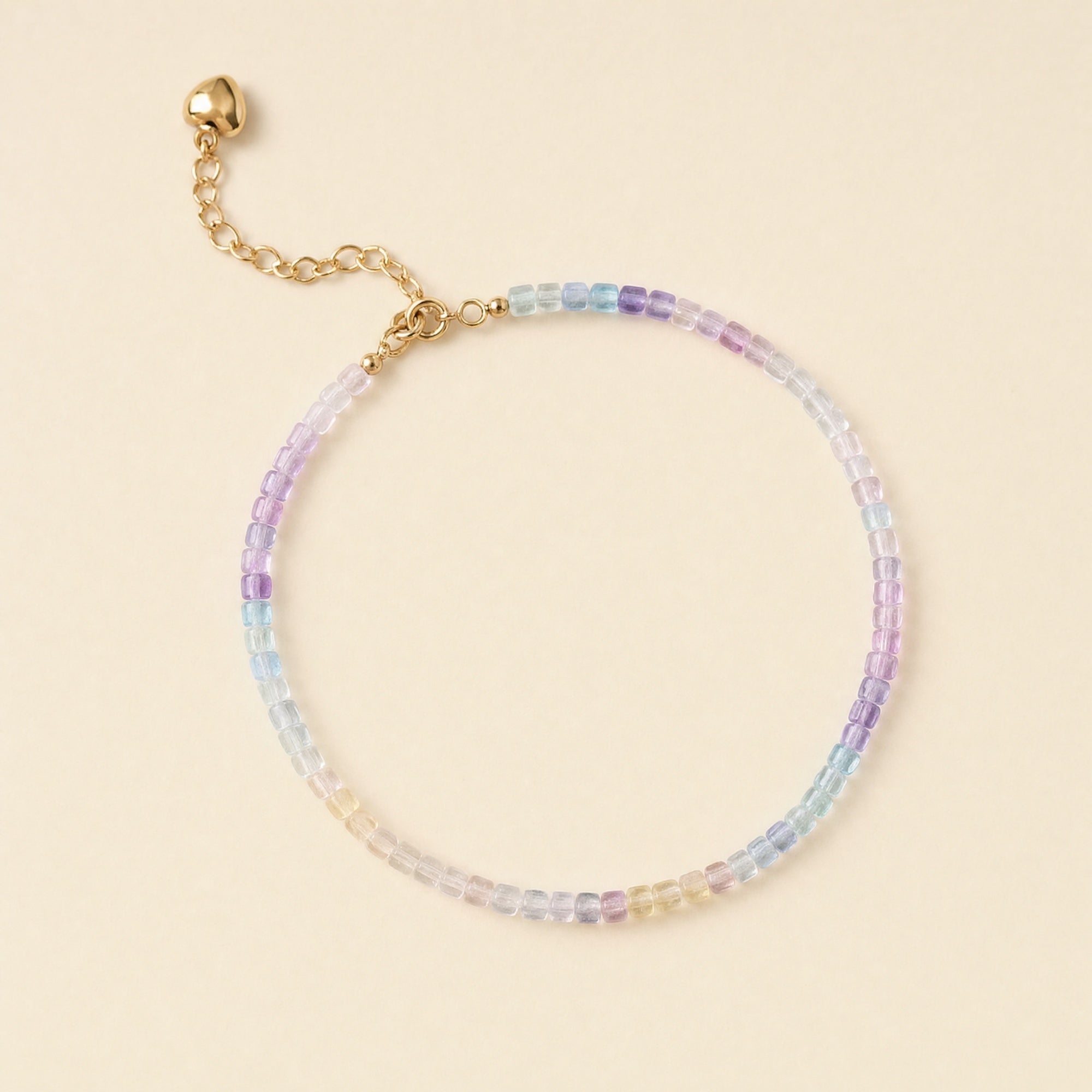
Fluorite Bracelet
A gentle ritual piece for bringing this intention into your daily routine.
Shop This Authentic Piece →What is fluorite traditionally associated with?
In crystal traditions, fluorite has long been associated with focus and clear thinking—some people call it the "genius stone" as a traditional nickname. Its layered colors and geometric cubic formations also make it a popular piece to hold or display. These are cultural and historical associations, not scientific claims about health effects. Many people simply find it a pleasant, steady object to keep near their journal.
How do you use fluorite in a journaling practice?
Hold the stone for a few slow breaths before you write, then place it beside your notebook or on the page. Let it serve as a visual anchor: when your mind wanders, return your attention to the stone and continue writing. The goal is simply to slow down and give your thoughts room, not to perform any particular technique.
What are some settling journal prompts for a busy mind?
Prompts that bring attention to the body and to the present tend to feel most settling. Try "What does calm feel like in my body right now?", "What is one worry I can release today?", or "What message does my inner voice need to hear?" Write freely and skip anything that feels too heavy. If low mood or anxiety feels persistent or overwhelming, reaching out to a qualified professional is always a wise step.
Can fluorite help me focus?
There is no scientific evidence that a mineral improves concentration. What many people find helpful is the ritual itself: having a specific object on your desk or journal creates a simple physical cue to settle in and focus on one thing at a time. Think of the stone as a reminder for your attention, not a guarantee of mental sharpness.
Can combining fluorite with journaling support mindfulness?
It can support a mindfulness habit by giving you a tangible anchor and a quiet, repeated ritual. The stone invites you to pause and breathe; the page invites you to notice what is actually present. Together they create a small daily practice of returning to the moment. Consistency is what matters—many people find the pairing makes that consistency easier to keep.
Related Reading
- Fluorite Meaning: Meaning, Properties, and Everyday Uses
- A 5-Minute Fluorite Meditation for Calm
- A Simple Morning Routine With Fluorite for Calm
- Where to Place Fluorite Crystals at Home for a More Calm Space
- Best Crystals to Pair with Fluorite for Calm
Crystal traditions are presented here as symbolic, cultural, and personal ritual practices. They are not medical tools; consult a qualified professional for health concerns.