The Complete Everyday Guide to Blue Fluorite: Meaning and Uses
Table of Contents
- The 10-Second Executive Summary
- What Is Blue Fluorite? A Clear, Everyday Explanation
- The Meaning of Blue Fluorite: Calm, Clarity, and Focus
- Real-World Uses: How People Wear and Work With Blue Fluorite
- How Blue Fluorite Gets Its Color (and Why It Glows)
- Blue Fluorite vs. Blue John and Other Lookalikes
- Decision Table: Which Fluorite Format Fits Your Life?
- Caring for Blue Fluorite: Everyday Wear, Cleaning, and Storage
- Buying Blue Fluorite: Quality, Price, and Red Flags
- FAQ: Quick Answers to Common Blue Fluorite Questions
- What are the healing properties of blue fluorite?
- Is blue fluorite safe to wear every day?
- How can you tell if blue fluorite is real?
- Sources
Blue fluorite is a calcium fluoride (CaF₂) mineral that appears in shades from pale sky blue to deep teal, ranks 4 on the Mohs hardness scale, and is best suited to pendants, earrings, and collector pieces rather than everyday rings. Its color comes from chemical impurities and natural radiation during formation, and it may glow under UV light—a trait that gave the word "fluorescence" its name.
The 10-Second Executive Summary
- Direct Verdict: Blue fluorite is a genuine, widely available mineral best used as a pendant, earring, or display specimen. It is too soft and brittle for daily ring wear.
- Chemical Formula: CaF₂ (calcium fluoride)
- Mohs Hardness: 4 — soft; scratches easily and has perfect cleavage
- Specific Gravity: 3.175–3.56
- Crystal System: Isometric (cubic); commonly forms cubes and octahedra
- Best Use Cases: Occasional-wear jewelry in protective settings, pendants, earrings, and mineral collections
- Buying Note: Look for natural color zoning and inert, untreated stone — the Lumina Grade AAA Integrity Standard represents natural rough, zero chemical stabilization, and no irradiation or dye.
What Is Blue Fluorite? A Clear, Everyday Explanation
Blue fluorite is the blue color variety of fluorite, a calcium fluoride mineral that crystallizes in the cubic system and is found worldwide, including in England, Germany, Mexico, China, Pakistan, and the United States. It is typically transparent to semi-transparent, with color zoning—bands or zones of different color within one stone—being very common.
The name fluorite comes from the Latin fluere, "to flow," referring to its historical use as a flux in steelmaking. The word "fluorescence" itself derives from fluorite, which often shows a marked glow under ultraviolet light. Despite its softness, fluorite can take a high polish, so faceted stones can display exceptional brilliance.
The Meaning of Blue Fluorite: Calm, Clarity, and Focus
In crystal lore, blue fluorite is often associated with calm, mental clarity, and focused thinking—associations that are cultural and symbolic rather than scientifically established. Many people use it as a personal reminder stone: something to hold or glance at when they want to pause, breathe, and refocus during a busy day.
It is important to keep these two layers separate. The mineral facts are real and verifiable: fluorite is inert, poses no health risk from normal wearing or handling, and has a distinctive softness and cleavage. The meaning layer—calm, clarity, focus—is a cultural and personal tradition. Blue fluorite may support a sense of grounded routine for those who use it that way, and it is often associated with quiet focus in crystal literature, but it is not a medical or therapeutic tool, and no gemstone should be relied on to manage health conditions.
Real-World Uses: How People Wear and Work With Blue Fluorite
Because fluorite is brittle with perfect cleavage and low hardness, gemological guidance is clear: ring use is not recommended. Protective settings, occasional wear, and use in pendants and earrings let you enjoy the stone without constant abrasion and impact.
Practical ways people work with blue fluorite:
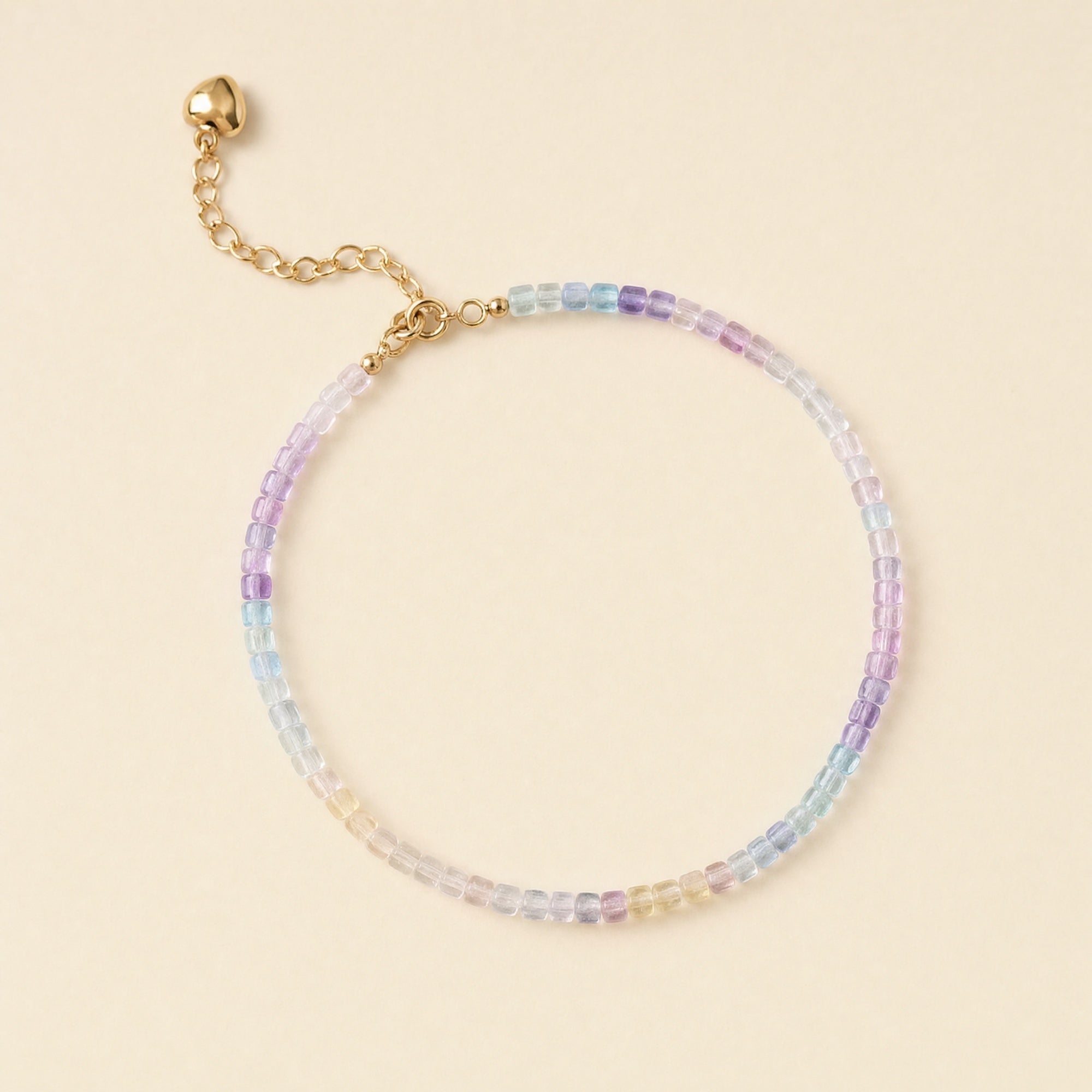
Fluorite Bracelet
A quiet bracelet for turning this intention into a small daily ritual.
Shop This Authentic Piece →- Pendants and earrings: The safest jewelry formats—away from the knocks and scratches that rings and bracelets absorb.
- Occasional-wear rings: Possible in a fully protective bezel setting, worn sparingly and removed for cleaning, gardening, or exercise.
- Display specimens: Cubic and octahedral fluorite crystals are prized by collectors; a small cluster on a desk or shelf is a common way to keep the stone present without wear risk.
- Pocket or desk stones: For those who use it as a focus reminder, a tumbled piece kept in a dish or bag works well—just avoid storing it loose against harder stones.
How Blue Fluorite Gets Its Color (and Why It Glows)
Fluorite's colors—including pale green, purple, yellow, orange, blue, pink, and colorless—arise from chemical impurities and natural radiation during formation. Multi-colored specimens arrange their hues in bands or zones, which is why a single crystal can show a clear outer layer around a colored core.
The glow is equally natural: fluorite often exhibits fluorescence under UV light, an effect so characteristic that the phenomenon was named after the mineral. Neither the color nor the glow requires any treatment—both are part of the stone's natural history, which matters when you are evaluating a seller's claims.
Blue Fluorite vs. Blue John and Other Lookalikes
The most famous blue-adjacent fluorite is Blue John, a banded purple-and-blue fluorite from England traditionally carved into ornamental objects. It is the same mineral (CaF₂) but a specific banded variety—if a seller offers "Blue John," the color banding and English origin should be evident and disclosed. Beyond that, buyers most often encounter confusion with:
- Blue lace agate and blue chalcedony: Harder (6.5–7 on Mohs), typically more opaque or waxy, and without fluorite's perfect cleavage.
- Glass and synthetic imitations: Can mimic color but usually lack natural color zoning; glass may show bubbles and feels different in weight.
- Dyed or irradiated fluorite: Unnatural, overly uniform blue is a warning sign—natural blue fluorite tends to show zoning and subtle variation.
Decision Table: Which Fluorite Format Fits Your Life?
| Format | Wear Frequency | Breakage Risk | Best For |
|---|---|---|---|
| Pendant in closed or prong setting | Daily, gentle use | Low—no direct impact zone | Everyday wearers who want the stone close |
| Earrings (stud or drop) | Several times a week | Low to moderate—removed before sports | Those who remove jewelry before activity |
| Ring in protective bezel | Occasional only | High—hands take constant knocks | Special occasions, not daily wear |
| Tumbled stone or specimen | No wear | None if stored separately | Reminder-stone users and collectors |
Practical rule: If you would not wear it while carrying groceries or typing, do not wear it every day. Fluorite's Mohs 4 hardness and perfect cleavage mean a single firm knock can chip or split a stone.
Caring for Blue Fluorite: Everyday Wear, Cleaning, and Storage
Fluorite is inert—wearing or holding it poses no health risk—but it is fragile. A simple routine keeps it intact:
- Remove before risky activity: Exercise, cleaning, gardening, and swimming should be jewelry-free moments.
- Clean gently: Wipe with a soft, damp cloth. Avoid ultrasonic cleaners, steam, and harsh chemicals, which can stress the stone.
- Store separately: Keep fluorite in its own pouch or compartment; harder stones stored loose in the same box will scratch it.
- Check settings monthly: Loose prongs on a soft stone invite chips—have a jeweler tighten them before wear.
Buying Blue Fluorite: Quality, Price, and Red Flags
Because fluorite is a widely occurring mineral, blue material is affordable relative to many gemstones; price climbs mainly with size, transparency, saturation, and clean crystal form. When selecting, apply the Lumina Grade AAA Integrity Standard as your filter: natural rough, zero chemical stabilization or resin filling, and no irradiation or dye to force color.
Use this checklist at the point of sale:
- Look for zoning: Bands and zones of slightly different blue or clear-to-blue transition are a sign of natural formation.
- Ask about treatment: A straight answer about dye, irradiation, or resin is a good sign; evasion is not.
- Inspect the cut edges: Soft stones chip at facet junctions—small chips under magnification suggest rough handling.
- Match setting to stone: A bezel or closed setting is the honest way to sell fluorite as jewelry; a thin prong ring for daily wear is a red flag.
- Prefer transparent, well-polished faceted stones or clean specimens: Fluorite takes a high polish, so dull surfaces usually mean wear or poor finishing.
FAQ: Quick Answers to Common Blue Fluorite Questions
What are the healing properties of blue fluorite?
Blue fluorite is often associated with calm, clarity, and focus in crystal tradition, but these are cultural and symbolic meanings—not scientifically established benefits. It is not a substitute for medical care.
Is blue fluorite safe to wear every day?
Yes in pendants and earrings, but not recommended in rings for daily wear. At Mohs 4 with perfect cleavage, it chips and scratches easily, so daily rings should use protective settings and occasional wear only.
How can you tell if blue fluorite is real?
Look for natural color zoning, cubic crystal form, and honest treatment disclosure. Overly uniform blue color may indicate dye or irradiation—the Lumina Grade AAA Integrity Standard favors natural rough with no chemical stabilization or color treatment.
Sources
- Gem Society — Fluorite Value, Price, and Jewelry Information
- Smithsonian Insider — National Gem Collection acquires a yellow fluorite from Tanzania
- Smithsonian National Museum of Natural History — Fluorite
- Mindat — Fluorite: Mineral information, data and localities
- Webmineral — Fluorite Mineral Data
© 2026 Lumina Quartz. This guide shares mineral information and cultural tradition, not medical advice; crystal meanings are symbolic and individual experiences may vary.
Product Facts From the Current Catalog
These details come from the active Lumina Quartz catalog record checked on 2026-11-05. They are product-listing facts, not laboratory results or invented wear-test claims.
| Listed product | Fluorite Bracelet – Organized Focus |
|---|---|
| Format | Bracelet |
| Listed price snapshot | 39.99 |
Price, availability, and options may change. Check the live product listing before choosing.