Hematite Bracelet: Which Wrist to Wear for Grounding & Protection?
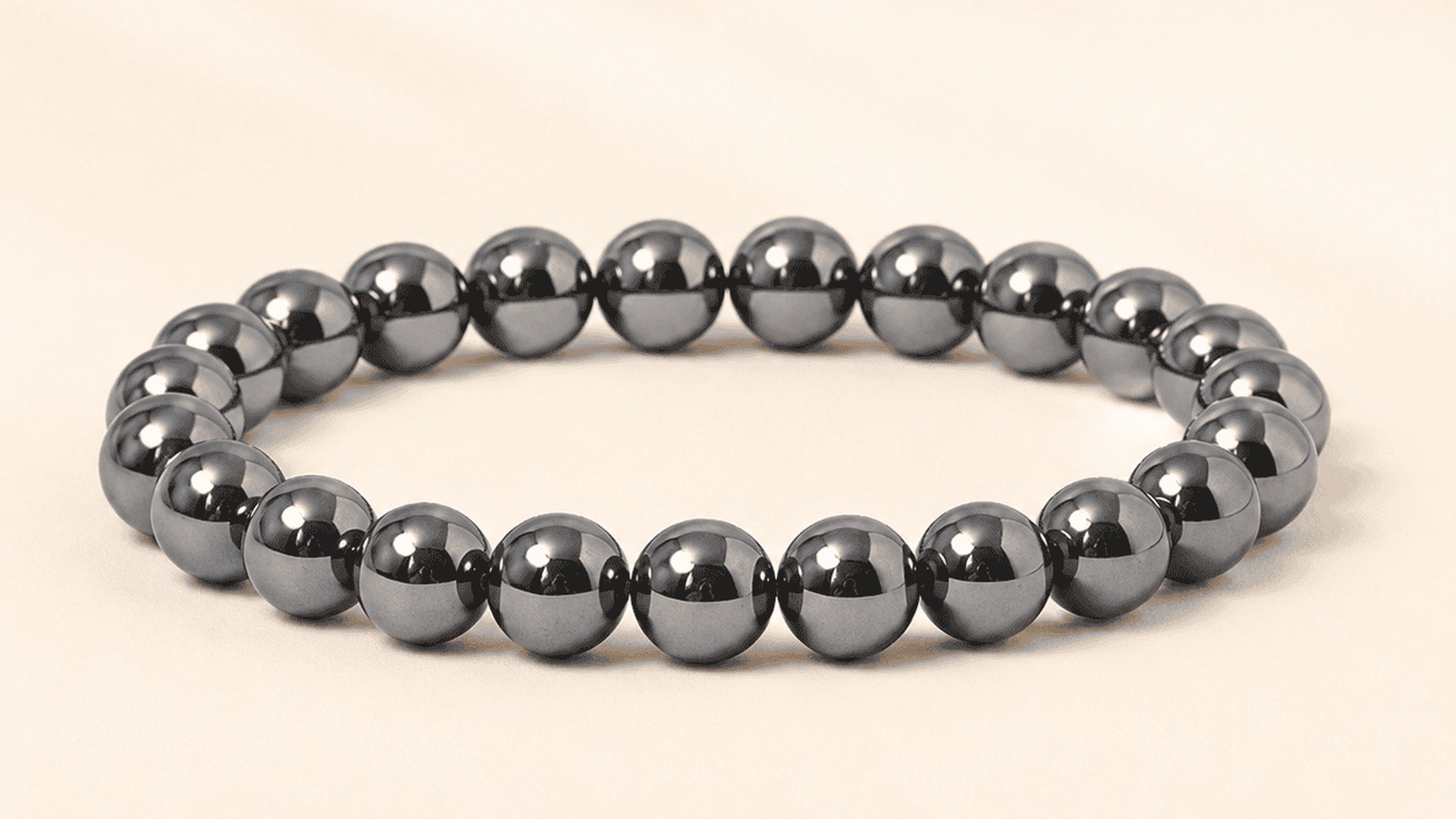
Table of Contents
- Introduction to Hematite Bracelets
- Key Takeaways
- Understanding Hematite’s Energy
- The Meaning of Left vs. Right Wrist
- Receiving vs. Projecting Energy
- Which Wrist Should You Wear Hematite On?
- Wearing Hematite on the Left Wrist
- Wearing Hematite on the Right Wrist
- Wearing on Your Dominant Hand
- How to Choose Based on Your Intention
- For Grounding and Calming
- For Protection and Strength
- For Emotional Balance
- Final Thoughts on Hematite Bracelet Placement
- Frequently Asked Questions
- Sources
There is a quiet gravity to hematite. When you first hold a bracelet of smooth, dark beads, you notice its weight before it settles against your skin — and then the surprising, mineral coolness of iron stone. It feels less like an accessory and more like an anchor, as if the earth itself had been shaped into something small enough to carry on your wrist.
For centuries, humans have been drawn to hematite’s shimmering, gunmetal surface. Ancient civilizations crushed it into pigment, polished it into mirrors, and wore it as a talisman. In the gentle language of crystal practice, it has long been called a stone of grounding. But once the bracelet is in your hands, a quieter question surfaces: where should you actually wear it?
Because the body keeps its own kind of knowledge. The choice between your left and right wrist is more than a matter of symmetry — it is a way of speaking to the part of you that still listens to symbols.
Introduction to Hematite Bracelets
Hematite is an iron oxide mineral with the chemical formula Fe₂O₃, and it appears naturally in soils and rocks around the world, forming through the weathering of iron-bearing minerals or inheriting from parent material.[1] Its metallic luster shifts between silver, charcoal, and deep bronze as the light moves across it. The name itself comes from the Greek haima, meaning blood — because when the stone is ground into powder, it leaves behind a striking red streak. It is a stone of the earth in the truest sense, dense and unassuming until you stop to notice it.
Historically, hematite appears across many cultures. In ancient Egypt, small amulets were carved from it and placed in tombs, often to accompany the dead on their journey. Roman soldiers are said to have carried it into battle, believing it offered strength and protection. Indigenous traditions from the Americas also used hematite for ceremonial paint and grounding practices. Whether as armor, pigment, or prayer, this stone has long been linked with ideas of survival, courage, and returning to one’s roots.
In modern crystal healing traditions, hematite is often associated with the root chakra — that deep sense of being anchored at the base of the body, safe inside your own skin. Many people wear it when they are feeling scattered, unsteady, or overwhelmed by the pace of daily life. Its cool, dense presence can serve as a tactile reminder to slow down and breathe.
And yet, honesty matters just as much as poetry. Crystals are not medicine. Hematite does not promise to fix anything, and it does not need to. Its value is quieter — it may support a felt sense of centeredness simply by being there, an object to touch when the mind becomes loud. That kind of comfort is real, even if it is subtle.
Quick Decision Guide: Left Wrist, Right Wrist, or Both
Use this table as a starting point, then let your own experience guide the final choice.
- Choosing the left wrist: best when your priority is inner calm, emotional steadiness, or settling your attention inward before rest or reflection.
- Choosing the right wrist: best when your priority is outward presence, composure in meetings or conversations, or a sense of resolve during busy, demanding days.
- Wearing on your dominant hand: best when you want the bracelet to catch your attention often through movement, though expect slightly more friction and wear on the beads over time.
- Switching wrists by intention: best when your needs change week to week — there is no rule that says the bracelet must stay in one place.
- Taking it off: best whenever the weight, sound, or sensation distracts you. Comfort comes first, always.
A simple 3-minute check-in: hold the bracelet, notice three steady points of contact with the floor, close one small open loop in your day (a tab, a note, a breath), then place the bracelet on the wrist that matches the intention you just named. Repeat tomorrow if it feels right.
Key Takeaways
- There is no universal rule. The question of which wrist to wear a hematite bracelet on is best answered by your own intention, not by tradition alone.
- The left wrist is often associated with receiving. Wearing hematite here may support inner grounding, calm, and emotional absorption.
- The right wrist is often associated with projecting. Wearing hematite here may support outer-facing strength, protection, and confident presence in the world.
- Your dominant hand matters. It may amplify your active energy, but it also experiences more movement, friction, and wear.
- Experimentation is welcomed. Try a placement for a few days, notice how you feel, and adjust. The bracelet will meet you wherever you are.
Understanding Hematite’s Energy
In crystal practice, every stone is understood through the feeling it evokes in the body and the energy it seems to carry. Hematite is most often described as grounding, cooling, and inward-drawing. It does not sparkle or lift the way clear quartz might; instead, it settles. Like a smooth stone pressed into the palm of your hand on a difficult day, hematite invites your attention down — out of the swirling thoughts and into the solid reality of your body.
There is a practical note worth knowing here, too. Much of what is sold today as “magnetic hematite” is not natural hematite at all — it is an artificially created material often marketed under that name. Natural hematite, by contrast, is a dense iron oxide with a specific gravity of roughly 5.3, which is why it feels noticeably heavier than most stones of a similar size.[2] That weight is part of what people mean when they call it grounding: the bracelet genuinely has mass.
People who work with hematite often describe its presence as a kind of quiet scaffolding. It does not shout. It simply gives you something to hold onto when your inner world feels unsteady. Some say it helps them feel less reactive and more deliberate. Others say it supports their ability to stay present during difficult conversations or long, draining days.
None of these experiences are medically proven, and they do not need to be. What matters is how the stone makes you feel. When approached with an open heart and a grounded mind, hematite can become a small ritual object — a gentle anchor in a life that asks you to move quickly.
The Meaning of Left vs. Right Wrist
Across many contemplative traditions, the human body is understood to have two distinct sides of energetic expression. The left side of the body is often seen as the receptive side — closely tied to the heart, to the inner world, and to what you take in. The right side is often seen as the active side — associated with the yang, the outward expression, and how you move through the world.
You may already sense this in daily life. When you place a hand over your heart to steady your breathing, it is often the left hand. When you shake someone’s hand, open a heavy door, or sign your name, it is often the right. The body has been living this left–right language long before any crystal arrived on your wrist.
So when you ask “which wrist to wear a hematite bracelet on,” you are really asking a deeper question: am I working on my inner world right now, or my outer one? Both answers are valid. Neither is more spiritual than the other.
Receiving vs. Projecting Energy
The clearest way to think about placement is through the lens of receiving and projecting.
- Receiving (left wrist): this placement is often chosen when you want to absorb qualities — calm, steadiness, patience, a sense of being held. Think of it as inviting something in.
- Projecting (right wrist): this placement is often chosen when you want to send qualities outward — composure, resolve, clear boundaries. Think of it as carrying something forward into the world.
Neither direction is “better.” A day spent absorbing is not more advanced than a day spent projecting. They are simply two different needs, and a hematite bracelet can serve either one depending on where you place it.
Which Wrist Should You Wear Hematite On?
Most teachers of crystal practice suggest a simple starting point: wear hematite on the left wrist for grounding and calm, and on the right wrist for protection and strength. From there, treat your own felt experience as the final authority.
Wearing Hematite on the Left Wrist
The left wrist is the classic choice for people who want hematite’s grounding quality to settle inward. If your mind races at night, if you tend to absorb other people’s emotions, or if you simply want a physical reminder to breathe before reacting, the left wrist is often the most natural home.
Try it during restful, reflective, or restorative parts of your day — before sleep, during journaling, or in the quiet moments after work when you are trying to come back to yourself.
Wearing Hematite on the Right Wrist
The right wrist is often chosen when you want hematite to accompany you outward — into meetings, difficult conversations, commutes, or long days that ask for steadiness under pressure. Placing it on the active side may help you feel more deliberate and less reactive as you move through the world.
Try it on days when your role asks you to lead, hold a boundary, or simply stay calm when things get loud.
Wearing on Your Dominant Hand
If your right hand is your dominant hand, wearing hematite there can feel more present — the bracelet moves with you, catches your attention, and becomes a more constant tactile cue. The trade-off is practical: your dominant hand gets more use, so the bracelet experiences more friction and may show wear sooner. Many people rotate wrists for this reason alone.
How to Choose Based on Your Intention
If you are still unsure, name the intention first. The wrist usually becomes obvious once you do.
For Grounding and Calming
Choose the left wrist. This is the most common placement for people who want hematite’s cool, dense quality to support a felt sense of being settled and less scattered.
For Protection and Strength
Choose the right wrist. When your priority is composure, boundary-setting, or carrying a stronger presence into a demanding situation, the active side is often the better fit.
For Emotional Balance
Try either wrist, and alternate. Some people find that switching placement each week helps them stay aware of what they actually need rather than following a rule out of habit. Noticing the shift is part of the practice.
Final Thoughts on Hematite Bracelet Placement
The honest answer to “which wrist should I wear hematite on?” is this: the one that helps you remember your intention. Crystal traditions offer a useful starting map — left for receiving, right for projecting — but the territory is your own body, your own days, your own sense of what feels steady.
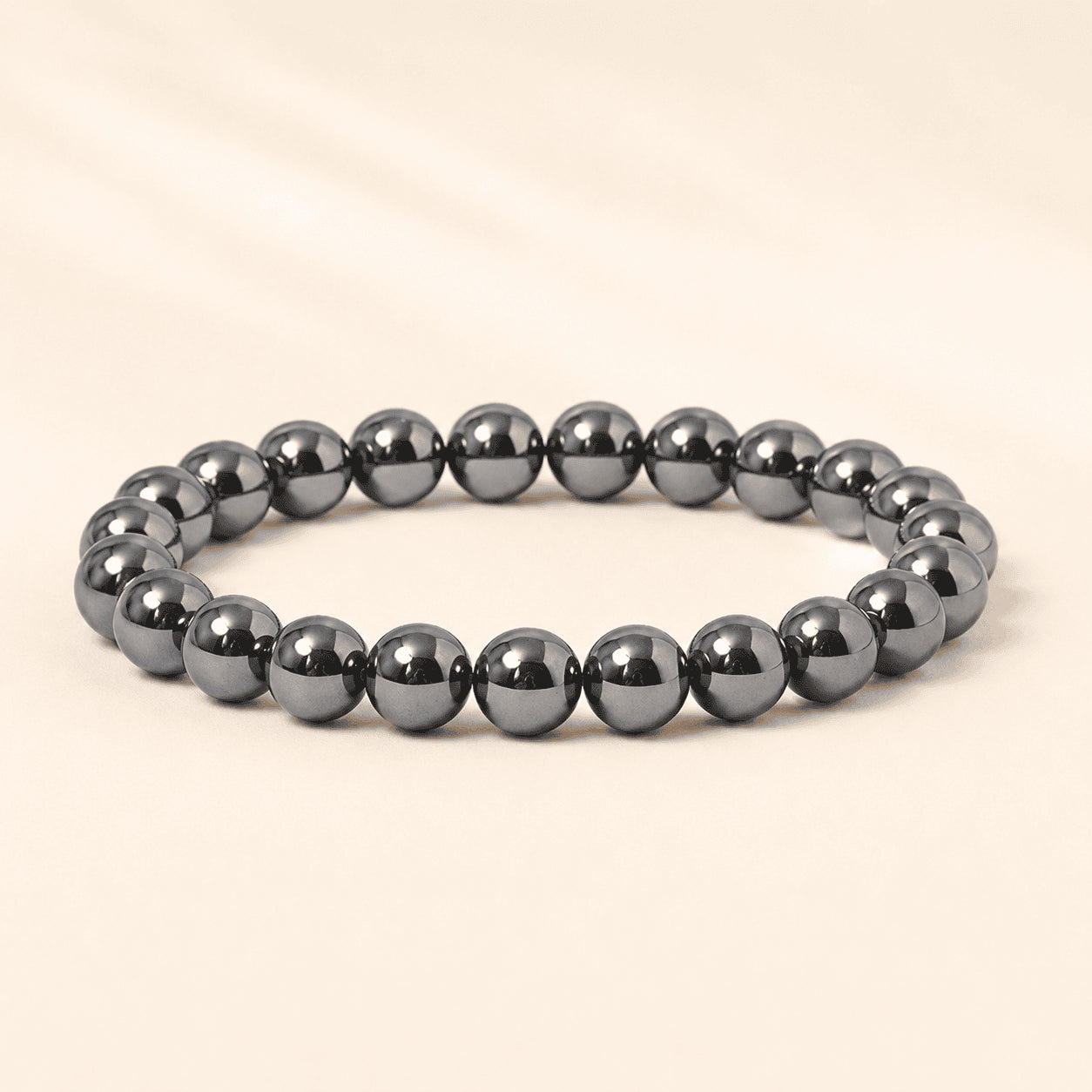
If you are looking for a simple daily anchor, a Hematite Bracelet can serve as a quiet reminder to return to that intention, wherever on your wrist it happens to rest.
Frequently Asked Questions
Hematite Bracelet
A gentle ritual piece for bringing this intention into your daily routine.
Shop This Authentic Piece →Should you wear a hematite bracelet on your left or right wrist?
There is no fixed rule. Many crystal traditions suggest the left wrist for receiving qualities like calm and grounding, and the right wrist for projecting qualities like protection and strength. The best choice is the one that matches what you are hoping to feel — and you are free to switch.
What does wearing hematite on your left wrist mean?
The left wrist is commonly associated with receptivity and the inner world. Wearing hematite there is often chosen by people who want to feel more settled, less reactive, and more anchored in their own body during quiet or reflective parts of the day.
What does wearing hematite on your right wrist mean?
The right wrist is commonly associated with outward expression. Wearing hematite there is often chosen when someone wants a sense of composure, boundary, or steady presence in situations that require them to be active, visible, or under pressure.
Can you wear hematite on your dominant hand?
Yes. Wearing it on your dominant hand can make the bracelet feel more present because it moves with you throughout the day. The practical trade-off is that it also experiences more friction, so the beads may show wear sooner than on your non-dominant wrist.
How do you choose the right wrist for your hematite bracelet?
Name your intention first. If you want to feel calmer and more inward, start with the left wrist. If you want support staying composed and steady in outward situations, start with the right. Wear it for a few days, notice how you feel, and adjust freely.
Is natural hematite the same as magnetic hematite?
No. Natural hematite is an iron oxide mineral (Fe₂O₃) that forms in rocks and soils. Much of what is sold as “magnetic hematite” is an artificially created material, not natural hematite, which is worth knowing if you are choosing based on the stone’s natural character.