Which Wrist Should You Wear Your Citrine Ritual Crystal Duo On?
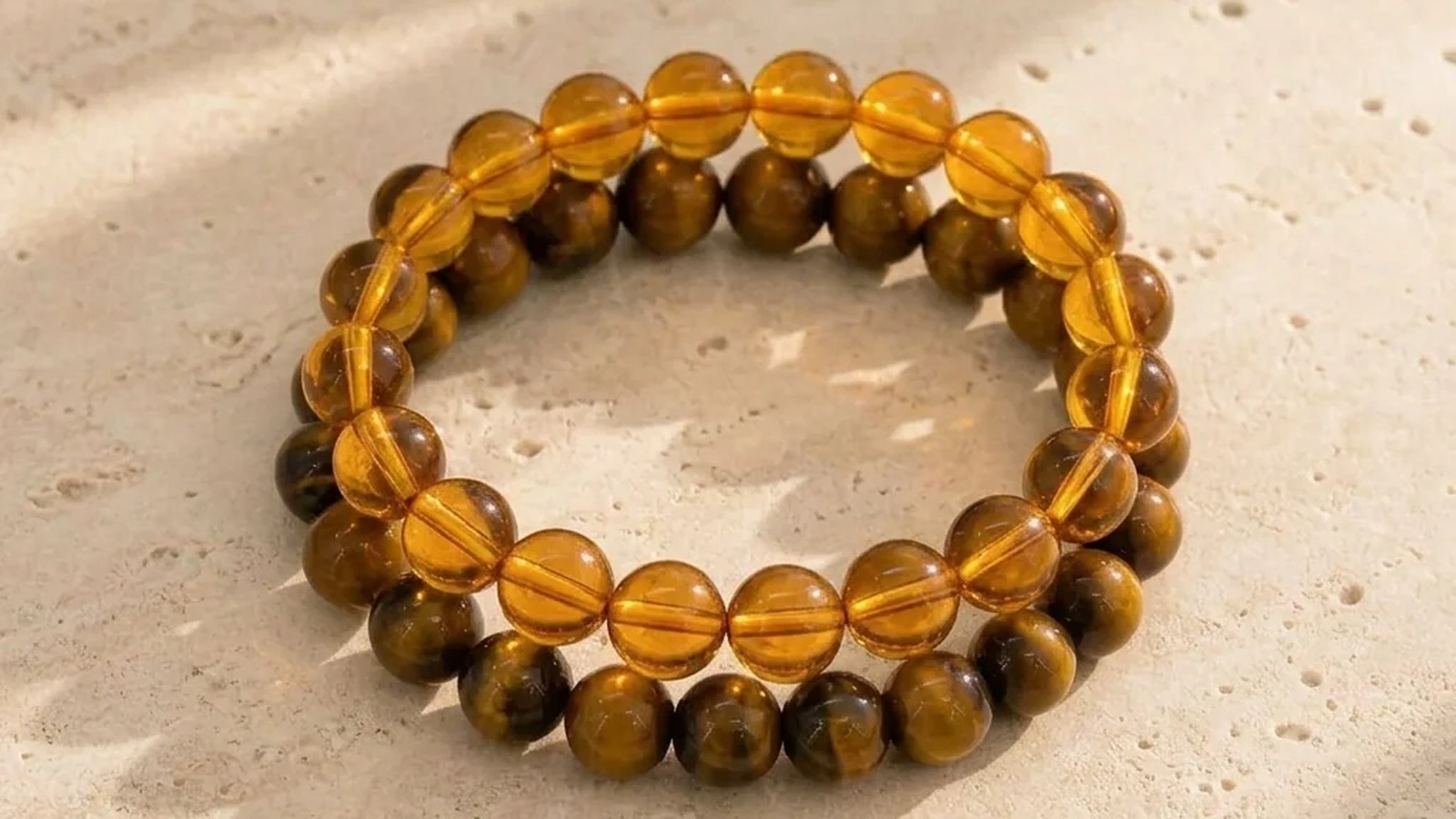
Table of Contents
- The Short Answer: Which Wrist for Your Citrine Ritual Crystal Duo
- 10-Second Executive Summary — The Verdict Box
- Left vs Right in Crystal Tradition: Receiving and Projecting
- Why Citrine Leans Left — And When Your Ritual Duo Should Go Right
- Left Wrist: Drawing Warmth, Prosperity, and Personal Power Inward
- Right Wrist: Projecting Confidence, Action, and Professional Presence
- How to Position a Duo Set: One Stone per Wrist or Both Together
- Matching the Wrist to Your Intention: A Simple Test for Your Duo
- Placement Decision Table — Citrine Ritual Crystal Duo
- Reading Your Citrine Before You Commit to a Wrist
- Frequently Asked Questions About Citrine and Wrist Placement
- Which wrist should I wear my citrine ritual crystal duo on — left or right?
- Can I wear one crystal on each wrist, and which side goes to which stone?
- Does switching wrists change the intention of my citrine ritual crystal duo?
- Caring for Your Citrine Ritual Crystal Duo by Wrist and Wear Style
- Sources
The Short Answer: Which Wrist for Your Citrine Ritual Crystal Duo
Wear your Citrine Ritual Crystal Duo on the left wrist if your intention is to draw warmth, prosperity, and personal power inward — and on the right wrist if your ritual is about projecting confidence, action, or professional presence outward. In the traditional left-receives / right-projects framework, citrine is most often placed on the left because its work is fundamentally receptive: it is associated with attracting abundance and steadying inner warmth rather than broadcasting energy to the world. The rest of this guide explains when that default should change, how to split a two-stone duo across both wrists, and how to read your own citrine for authenticity before you commit to a side.
10-Second Executive Summary — The Verdict Box
- Direct Verdict: Default to the left wrist for a citrine ritual duo (receiving prosperity, warmth, personal power). Switch to the right wrist only when the ritual is deliberately about projecting confidence, action, or professional presence.
- Mohs Hardness: 7.0 — durable enough for daily wrist wear, but still softer than diamond and subject to surface wear against harder stones.
- Quality Benchmark: Lumina Grade AAA Earth-Mined Integrity Standard — natural, un-irradiated, un-baked silica with even iron oxidation states and natural micro-veil inclusions.
- Traditional Rule: Left = receiving (citrine's default). Right = projecting. The test: does the stone bring something in, or send something out?
- Best Use Cases: Left wrist for abundance rituals, gratitude practice, and inner steadiness. Right wrist for presentations, negotiations, launches, and boundary-setting.
- Authenticity Note: Over 90% of commercial "citrine" is heat-treated amethyst (HTA). Natural citrine holds a champagne-to-honey tone throughout the matrix and never forms on an opaque chalky white quartz base.
Left vs Right in Crystal Tradition: Receiving and Projecting
Crystal practice divides the body into two symbolic sides. The left hand is traditionally read as the receiving side — the hand that draws energy, healing, and abundance toward you. The right hand is the projecting side — the hand that sends energy outward into your actions, decisions, communication, and presence. As one widely cited guide puts it, "whenever your intention begins with 'I wish to feel…', 'I want to receive…', or 'I need internal healing…', your crystal bracelet belongs strictly on your left wrist" (Lumina Quartz).
For your duo, the wrist question is really a question about which direction you want the ritual to point in your own routine. Many people treat their left wrist as a side for noticing or receiving and their right wrist as a side for acting or sending. That is a personal habit, not a rule about what citrine itself does. Citrine is a transparent to brownish-orange variety of quartz, and natural citrine is rare; it can also form through heating of smoky quartz, according to gemological sources such as the GIA and Mindat.
Why Citrine Leans Left — And When Your Ritual Duo Should Go Right
Left Wrist: Drawing Warmth, Prosperity, and Personal Power Inward
Choose the left wrist when your ritual is about receiving — meaning you simply want the placement to serve as a personal cue for pausing, noticing, or setting an intention for the day. Some wearers find it easier to keep a reminder on the left wrist because they use that hand less for tasks that might scratch the bracelet. For a Citrine Ritual Crystal Duo, this can be a practical choice during:
- Morning gratitude or abundance journaling
- Money-mindset rituals and savings goals
- Building steady personal confidence from the inside out
- Any intention phrased as "I want to feel…" or "I wish to receive…"
Right Wrist: Projecting Confidence, Action, and Professional Presence
Choose the right wrist when your ritual is about sending — meaning you prefer a placement that reminds you to act, decide, communicate, or carry yourself with confidence in daily situations. Since citrine comes in warm yellow to reddish-orange hues, many wearers like the right wrist as a visible personal cue before meetings or presentations. This is a personal habit rather than a claim about the stone influencing outcomes.
- Presentations, pitches, and negotiations
- Public speaking or teaching
- Setting boundaries in a professional setting
- Launching a project and acting on decisions already made
The left/right question, then, is not about which wrist is "correct." It is about which gesture your ritual is making — open to receive or ready to project.
How to Position a Duo Set: One Stone per Wrist or Both Together
A duo set gives you three placement options, and each tells a different story.
- Both stones on the left wrist. This doubles down on the receiving intention — useful when your ritual is inward and reflective, such as abundance work or calming a busy mind.
- Both stones on the right wrist. This doubles down on projection — useful when the whole practice is about action, visibility, and outward confidence.
- One stone on each wrist. This is a common way to wear a paired ritual set, and it simply keeps the two roles separate in your own routine. A frequent example: citrine on the left as a personal cue for receiving or noticing, and a second stone on the right as a cue for acting with confidence. Choose this split only if it feels comfortable and practical for you.
If your duo contains a stone meant for protection or action — a pyrite accent, for example — note that pyrite reacts slowly with moisture, so it should stay off the wrist during bathing or water-based rituals. When in doubt, keep the pairing simple: place citrine on the left as a personal cue to receive or notice, and the companion on the right as a cue to act. Treat the placement as a habit you choose, not as a claim that either stone produces a specific effect.
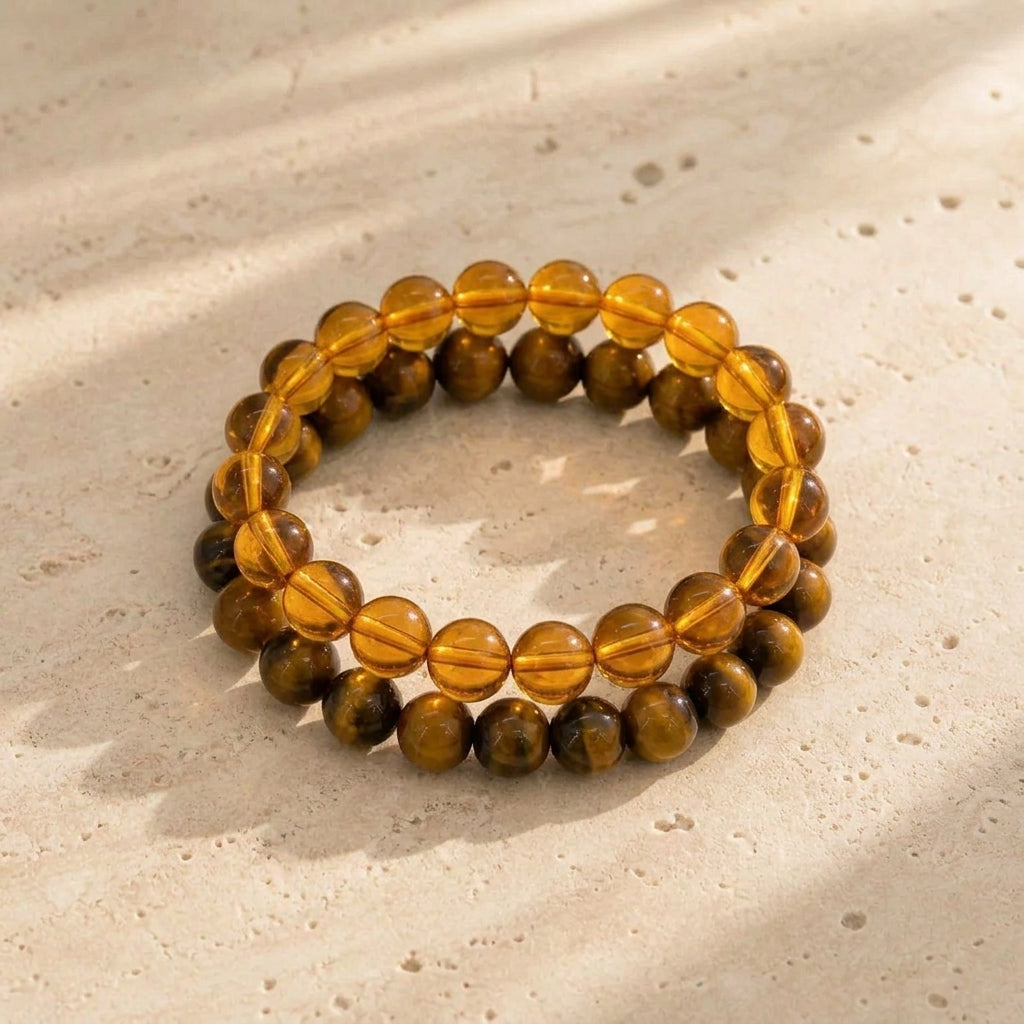
The Abundance & Prosperity Ritual Duo (Natural Citrine + Golden Tiger Eye)
Tiger eye is often worn as a quiet focus ritual for grounded confidence and steady attention.
Shop This Authentic Piece →Matching the Wrist to Your Intention: A Simple Test for Your Duo
Before you fasten anything, run one sentence through your head: Does this ritual bring something in, or send something out?
- Name the intention in one verb. "Receive," "feel," "soothe," and "restore" are inward words. "Speak," "lead," "decide," and "protect" are outward words.
- Match the verb to the wrist. Inward verb → left wrist. Outward verb → right wrist.
- Decide whether the duo splits. If both stones serve the same verb, keep them together. If they serve opposite verbs, wear one per wrist.
- Hold it for a full week before switching. Switching wrists changes only the reminder you give yourself, not the stone. Give one placement enough time to feel habitual before you move it, so the ritual stays a consistent personal cue rather than a frequent change.
There is no penalty for changing your mind. On this point, crystal tradition is clear: nothing is undone by moving a bracelet. The stone simply follows the intention you set.
Placement Decision Table — Citrine Ritual Crystal Duo
| Your Primary Intention | Wrist Placement | Duo Arrangement | Why |
|---|---|---|---|
| Receive abundance, warmth, gratitude | Left wrist | Both stones on left | Citrine's default; left is the receiving side in crystal tradition |
| Project confidence, lead, negotiate | Right wrist | Both stones on right | Right is the projecting side — actions, decisions, communication |
| Receive AND project at once | One per wrist | Citrine left, companion right | Keeps the two jobs separate and legible |
| Protection or boundary work alongside citrine | One per wrist | Citrine left, protective stone right | Projecting stones (e.g., pyrite, black tourmaline) belong on the right |
| Just beginning, no clear intention yet | Left wrist | Both stones on left | Most forgiving default; matches citrine's receptive character |
Physical note: citrine ranks 7.0 on the Mohs hardness scale, durable for daily wear but still vulnerable to scratching against harder stones. If your duo stacks citrine with a harder accent, place the softer stone away from direct contact.
Reading Your Citrine Before You Commit to a Wrist
Which wrist you choose depends on a stone you can trust. This is where authenticity matters more than placement. Independent gemological sources note that natural citrine "is very rare in nature" — a transparent, pale yellow to brownish orange quartz that occurs in sizes up to about 20 carats (GIA). In the commercial market, however, more than 90% of what is sold as citrine is actually common purple amethyst baked in industrial kilns at roughly 450°C–550°C — a material known as Heat-Treated Amethyst, or HTA.
The two are geologically distinguishable. Here is what to look for:
- Color consistency. Natural earth-mined citrine maintains a gentle champagne or golden honey color throughout its crystal matrix. HTA often shows a burnt orange or brownish-amber tone concentrated in zones.
- The base. Natural citrine never forms with an opaque, chalky white quartz base. A burnt orange crystal cluster or geode with a white quartz bottom is geologically guaranteed to be baked amethyst.
- Internal structure. Natural citrine exhibits subtle dichroism (pleochroism) under polarized light and possesses even iron oxidation states. Baked quartz instead shows thermal stress fracture lines — the fingerprint of rapid kiln heating.
- Inclusions. In gemological classification, genuine Grade AAA natural citrine represents un-irradiated, un-baked raw silica with natural micro-veil inclusions. The presence of natural veils is not a flaw; it is evidence.
This is the standard Lumina Quartz applies as the Lumina Grade AAA Earth-Mined Integrity Standard — natural earth-mined origin, zero chemical resin infusion, and no irradiation or dyeing. A stone that meets this benchmark is one whose color tells the truth, which is a sensible foundation for any ritual placed on either wrist.
Note also that citrine and smoky quartz sit on a close continuum. Mineralogical records describe natural transitions such as "smoky citrine," and document that some smoky quartz can be turned into citrine through careful heating (Mindat). That overlap means color alone is never sufficient — combine color, base, and internal structure before you decide.
Frequently Asked Questions About Citrine and Wrist Placement
Which wrist should I wear my citrine ritual crystal duo on — left or right?
Default to the left wrist for receiving intentions like abundance, warmth, and personal power, and switch to the right wrist when the ritual is about projecting confidence, action, or professional presence. The deciding question is simple: does the ritual bring something in, or send something out?
Can I wear one crystal on each wrist, and which side goes to which stone?
Yes — one stone per wrist is a common and clear way to wear a duo set. The usual pattern is citrine on the left to receive abundance and its companion on the right to project confidence or protection, which keeps the two intentions separate and legible.
Does switching wrists change the intention of my citrine ritual crystal duo?
Switching wrists changes the intention, not the stone — and nothing that came before is undone. Moving citrine from left to right simply reorients the ritual from receiving toward projecting, so choose the side that matches your current goal.
Caring for Your Citrine Ritual Crystal Duo by Wrist and Wear Style
Wrist placement affects how a bracelet meets the world, so care should follow placement.
- Left-wrist wear (receiving rituals). This side typically meets fewer surfaces during daily tasks. A weekly rinse in lukewarm water and a soft dry cloth is usually enough, since the stone is not being knocked against desks or gym equipment.
- Right-wrist wear (projecting rituals). The dominant hand encounters more doors, keyboards, and surfaces. Check the cord or elastic monthly, and keep harder stones — which can scratch citrine at Mohs 7.0 — from stacking directly against it.
- Water-based rituals. If your duo includes a pyrite accent, remove it before bathing or any water ceremony, as pyrite reacts slowly with moisture. Citrine itself tolerates brief contact with water, but repeated soaking is unnecessary.
- Switching sides. When you move your duo between wrists, treat it as a deliberate reset: clean the stones, state the new intention, and wear it on the new side for at least a week before deciding again.
Ultimately, the wrist is a small decision with a clear logic behind it. Citrine receives on the left and projects on the right; your duo splits when its two stones serve two directions. When the stone itself is natural and honestly colored — measured against a standard like Lumina Grade AAA — the placement becomes the easy part. Let the warmth come in, or let it move outward. Either way, the ritual belongs to you.
Sources
© 2026 Lumina Quartz. This guide reflects traditional crystal practices and gemological material facts; it is not medical advice. Crystal wear is a personal ritual, and individual experiences may vary.
Product Facts From the Current Catalog
These details come from the active Lumina Quartz catalog record checked on 2026-10-12. They are product-listing facts, not laboratory results or invented wear-test claims.
| Listed product | The Abundance & Prosperity Ritual Duo (Natural Citrine + Golden Tiger Eye) |
|---|---|
| Format | Ritual Crystal Duo |
| Listed price snapshot | 79.90 |
Price, availability, and options may change. Check the live product listing before choosing.