The Complete Everyday Guide to What Is Selenite: Meaning and Uses
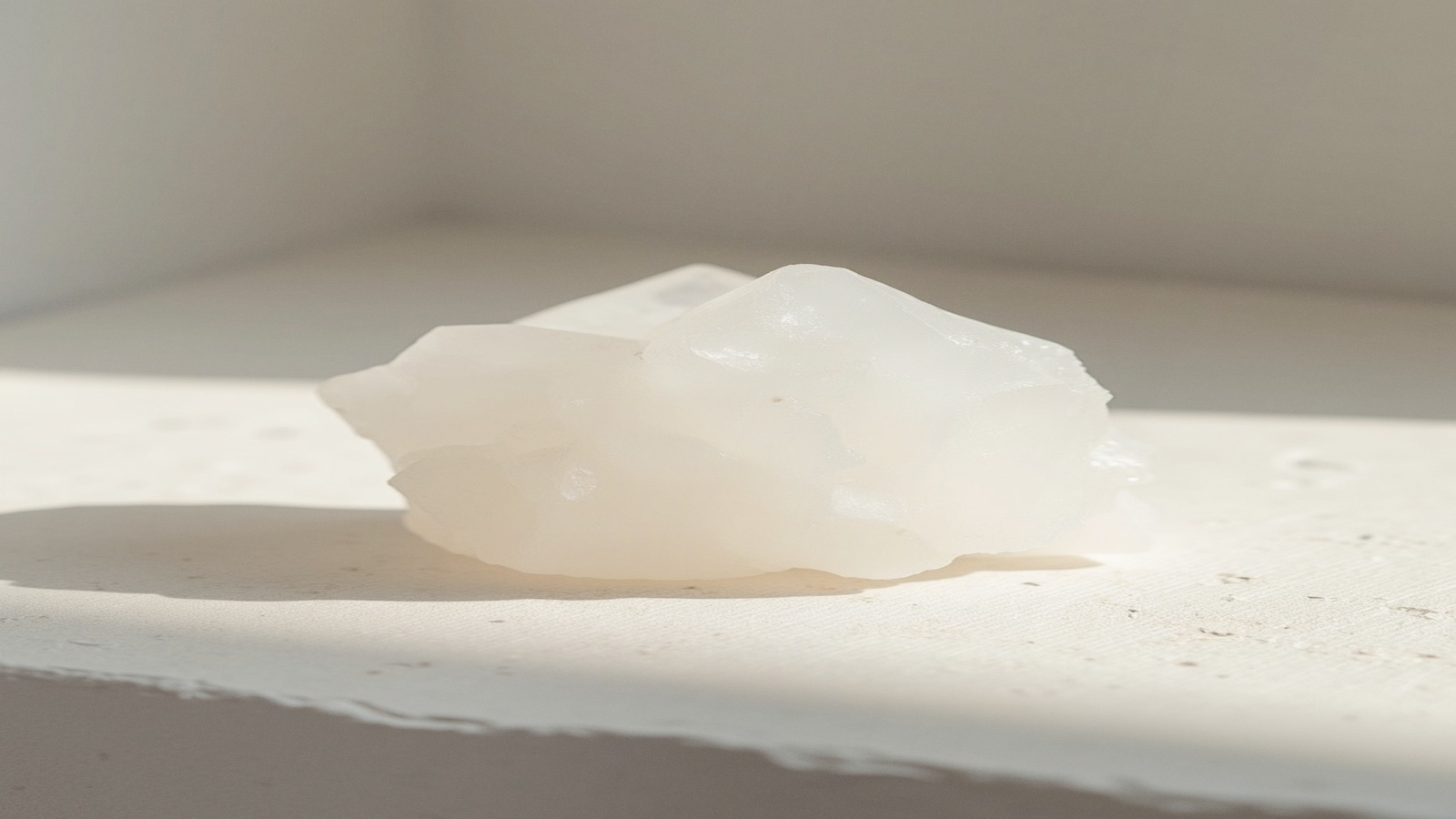
Table of Contents
- 10-Second Executive Summary / The Verdict Box
- What Is Selenite? A Clear Definition
- Selenite vs. Satin Spar vs. Gypsum Rose: What's the Difference?
- Comparison Table: Telling Selenite Varieties Apart
- Why the Name Confusion Matters
- The Meaning and Metaphysical Properties of Selenite
- Practical Everyday Uses of Selenite
- Cleansing and Charging Other Crystals
- Home and Workspace Placement
- How to Cleanse, Charge, and Care for Selenite
- Is Selenite Safe? Handling, Water Sensitivity, and Kids
- Buying Selenite: What to Look For and Red Flags
- Frequently Asked Questions
- What is selenite made of and is it safe to use?
- What is the difference between selenite, satin spar, and gypsum?
- How do you cleanse and care for selenite without damaging it?
- Sources
Selenite is the transparent, crystalline variety of the mineral gypsum (calcium sulfate dihydrate), and it is generally safe for everyday handling as long as you keep it away from water and do not ingest it or use it as a food utensil. Its soft nature — only 2 on the Mohs hardness scale — explains both its luminous, moonlit look and its fragility, and it is this same chemistry that makes it dissolve rather than merely scratch.
10-Second Executive Summary / The Verdict Box
- Direct Verdict: Selenite is a form of gypsum. It is beautiful and safe to handle, but it is water-soluble and very soft, so it belongs on a dry shelf, not in a bathroom or a water bowl.
- Chemical formula: CaSO4·2H2O (calcium sulfate dihydrate) — gypsum.
- Mohs hardness: 2 (you can scratch it with a fingernail or a copper coin).
- Water behavior: Soluble in water; prolonged soaking or scrubbing may dull, pit, or erode the surface.
- Best use cases: Dry-room display, décor, gentle visual ambiance, and (by tradition, not medicine) crystal-cleansing rituals kept off water.
- Skip it if: You want a stone for a humid bathroom, a garden, or a salt-lamp-style water-adjacent setting.
- Quality baseline: Look for natural, un-dyed, un-resin-filled pieces — the standard we hold as the Lumina Grade AAA Integrity Standard.
What Is Selenite? A Clear Definition
Mineralogically, selenite is mostly synonymous with gypsum, with the name historically used for the transparent crystalline variety. So when a shop labels a clear, striated blade "selenite," it is technically describing gypsum in one of its clearer forms — not a separate mineral species.
That single fact resolves most of the confusion buyers bring to this stone. Gypsum is a very common calcium sulfate mineral; selenite is one of its crystalline expressions, and satin spar is another. The word "selenite" comes from the Greek selene, meaning moon, a reference to the soft, pearly, moonlit gleam that shows up when light enters the crystal.
Selenite vs. Satin Spar vs. Gypsum Rose: What's the Difference?
All three are gypsum. The differences are about crystal habit, transparency, and how the material formed — not about three unrelated stones.
Comparison Table: Telling Selenite Varieties Apart
| Trade name | What it actually is | Visual signature | Common use |
|---|---|---|---|
| Selenite (clear) | Transparent crystalline gypsum | Clear, glassy, can be split into thin sheets | Display, optical décor, collector specimens |
| Satin spar | Fibrous gypsum variety | Silky, chatoyant, parallel white fibers | Wands, towers, lamps, carved pieces |
| Gypsum rose ("desert rose") | Gypsum formed in blade-like clusters | Rosette or petal shapes, often sandy inclusions | Decorative clusters, region-specific collectibles |
| Alabaster | Fine-grained massive gypsum | Opaque, creamy, carvable | Sculpture, carving, ornamental objects |
Reading the table: If a piece is silky and fibrous rather than clear, it is usually satin spar being sold under the selenite name — which is common and generally accepted in the trade, though it is imprecise. If it is opaque and carved, it is likely alabaster gypsum. None of these are "fake," but a seller who tells you a satin spar wand is clear crystalline selenite is describing the habit loosely.
Why the Name Confusion Matters
The naming looseness matters for two practical reasons. First, care instructions: almost all gypsum varieties share the same water sensitivity and low hardness, so the care advice transfers across the family. Second, honesty in buying: knowing that "selenite" is a variety name rather than a separate mineral helps you evaluate claims about rarity and price, and it helps you notice when a listing leans on vague terms instead of describing the actual material.
The Meaning and Metaphysical Properties of Selenite
In modern crystal culture, selenite is often associated with clarity and cleansing symbolism — the moon-name and its translucent look inspire associations with calm, clear space, and gentle reset. These are cultural and personal meanings, not physical properties. Selenite does not demonstrably stabilize emotions, relieve anxiety, or regulate the nervous system, and we should not blur that line.
What we can say honestly: many people use selenite as a visual cue for slowing down — a bright, quiet object on a desk that reminds them to breathe and reset their attention. That use is a personal ritual, and it may support a sense of calm in the way any intentional, meaningful object can, without making any medical claim.
Practical Everyday Uses of Selenite
Because selenite is soft and water-sensitive, the most sensible everyday uses keep it dry, stable, and out of reach of moisture and hard knocks.
- Desk and shelf display: A dry, shaded spot where it catches daylight without direct sun exposure that could fade or heat it.
- Bedside or reading nook: A small satin spar tower or carved piece as a quiet visual anchor, kept away from the water glass.
- Entryway styling: Grouped with harder stones on a tray — but only if the tray stays dry.
- Gift and ritual objects: Because of its associations, many people keep a piece near their meditation or journaling space.
Cleansing and Charging Other Crystals
In crystal tradition, selenite is often associated with cleansing other stones — the idea being that a selenite slab or bowl can "reset" a small stone placed on it. This is a cultural practice, not a measured effect, and it deserves honest framing. If you follow the tradition, use a dry selenite plate and place only dry, harder stones on it briefly; avoid wet methods, salt water, or anything that would leave mineral residue or stress the soft surface.
Home and Workspace Placement
The guiding principle is simple: dry, stable, and safe from knocks. Think of a shelf in a living room or office, a windowsill that does not get rain or condensation, or a covered display cabinet. Keep selenite out of kitchens and bathrooms, away from humidifiers, and off surfaces where drinks are routinely set down.
How to Cleanse, Charge, and Care for Selenite
The single most important care rule is to avoid water. Selenite is a hydrated sulfate mineral: it can dissolve and soften in water, and repeated soaking or scrubbing may dull or erode the surface. Salt-water "cleansing" methods are especially risky for this stone.
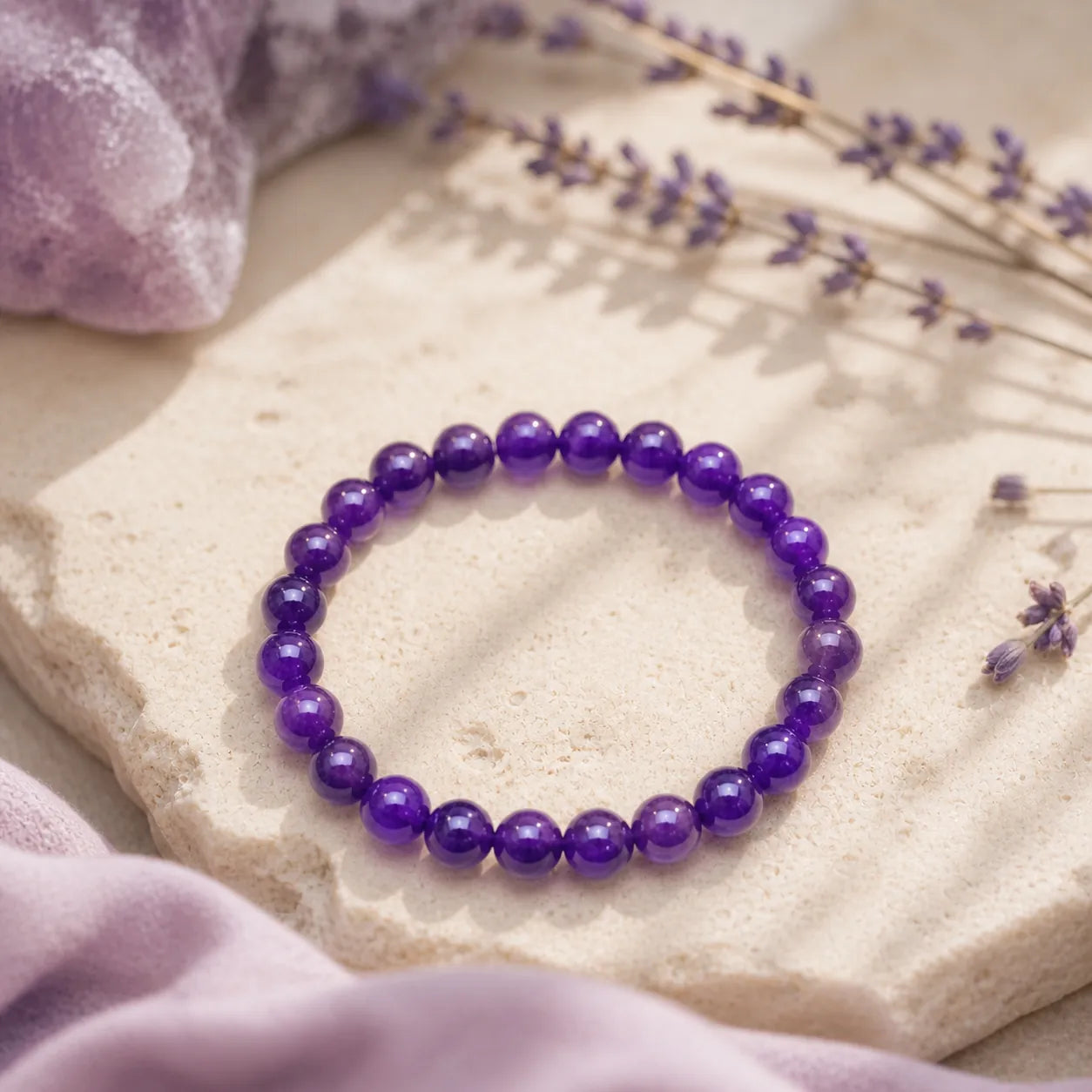
A related intention option
Amethyst Calm Bracelet
This is a related calm, meditation option, not a Selenite product. We only identify jewelry as Selenite when that exact material is verified.
Explore this related option- Dust with a soft, dry cloth or brush. A makeup brush works well for carved pieces and grooves.
- Wipe, do not soak. If a spot must be addressed, use a barely damp cloth on a small area, then dry immediately.
- Keep it out of running water, ultrasonic cleaners, and salt water. These can damage or dissolve the surface.
- Recharge by daylight, not heat. Many people place selenite in soft daylight or moonlight; avoid intense direct sun and heat sources.
- Handle with care. At Mohs 2, it scratches easily — store it apart from harder stones and avoid abrasive cloths.
- Skip chemical polishes. Most household cleaners are unnecessary and may leave residue on the porous surface.
Is Selenite Safe? Handling, Water Sensitivity, and Kids
Handling selenite is generally safe. The main cautions are physical rather than mystical. Do not lick it, do not use it as a stirring stick or food utensil, and keep small pieces away from children who mouth objects — a small carved point is a choking hazard and should not be chewed. Wash hands after handling dusty or freshly carved pieces, and avoid inhaling dust from broken or drilled material.
The water issue is the practical safety point most people underweight: soaking selenite in a water bowl for decoration or "cleansing" will slowly break down the stone, and repeated exposure can leave a gritty residue. If you want a water-adjacent display, choose a different, harder and water-insensitive mineral.
Buying Selenite: What to Look For and Red Flags
Good selenite is judged on naturalness, integrity, and honest description. Our own standard, the Lumina Grade AAA Integrity Standard, is a useful checklist: natural and un-dyed, no chemical resin filling or stabilizing, and no irradiation used to change color. Here is what to check in a listing or in person:
- Color should be natural. Clear, white, and pearly tones are typical. Vivid pink, blue, or neon colors usually indicate dye or treatment.
- Surface and structure should look like gypsum. Satin spar shows fine fibers; clear selenite shows glassy layers that can split into sheets.
- Weight and feel: lightweight for its size (gypsum is relatively soft and not dense), and easy to scratch with a fingernail.
- Red flags: claims that it "must be cleaned in water," "recharges" devices, or has scientifically proven emotional or medical benefits; also, hard coating or glued assembled pieces presented as single natural crystal.
- Ask about treatment: a straight answer on dye, resin, and irradiation is a sign of an honest seller.
Two practical tests at home: a fingernail or copper coin can lightly mark a hidden spot (confirming the Mohs 2 softness), and a small drop of water on an inconspicuous area will bead up initially but, over minutes, show the stone softening or dulling — a clear reminder to keep it dry. Do these only on a hidden spot, and dry immediately afterward.
Frequently Asked Questions
What is selenite made of and is it safe to use?
Selenite is gypsum, a calcium sulfate dihydrate mineral (CaSO4·2H2O). It is safe to handle in everyday use, but it is soft (Mohs 2) and water-soluble, so keep it dry and do not ingest it or use it with food.
What is the difference between selenite, satin spar, and gypsum?
All three refer to the same mineral family: gypsum is the species, transparent crystalline gypsum is traditionally called selenite, and the silky fibrous form is satin spar. The names describe crystal habit, not different minerals.
How do you cleanse and care for selenite without damaging it?
Use dry methods only: dust with a soft brush or dry cloth, wipe sparingly with a barely damp cloth if needed, and dry immediately. Avoid soaking, salt water, ultrasonic cleaners, and abrasive polish, and store it away from harder stones that could scratch it.
Sources
Selenite is a mineral object. Cultural and metaphysical associations described here are personal and traditional, not scientifically established health effects. This article makes no medical claims and is not a substitute for professional advice. © 2026 Lumina Quartz