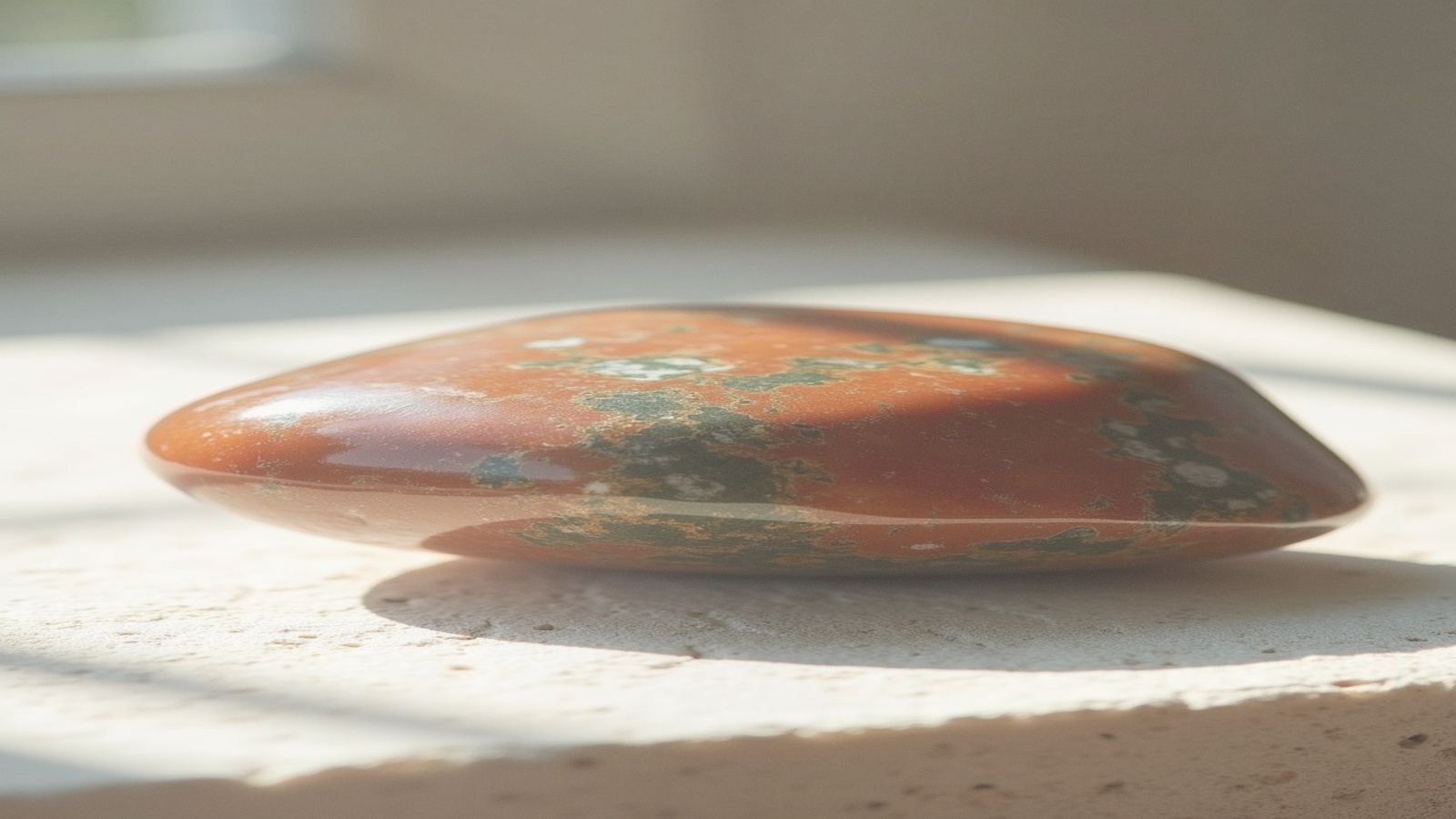
Unakite jasper is not, strictly speaking, a jasper at all — it is a metasomatic rock composed mainly of green epidote, pink orthoclase feldspar, and translucent quartz, and it is classified as an altered granite rather than a chalcedony. If you searched for a straight answer: unakite is a rock, not a true jasper, and the "jasper" label is a trade habit rather than a geological fact.
10-Second Executive Summary / The Verdict Box
- Direct Verdict: Unakite is a genuine, recognizable ornamental rock — but it is not a true jasper (microcrystalline quartz). Expect mottled pink-and-green stone, not a solid opaque quartz.
- Composition: Epidote (green) + K-feldspar (pink) + quartz (clear/grey), per Mindat's rock classification.
- Mohs Hardness: Roughly 6–7 depending on the mix of quartz and feldspar — durable enough for everyday jewelry with reasonable care.
- Best For: Beaded bracelets, tumbled stones, cabochons, and small decorative slabs; gentle grounding and "balance" symbolism in personal practice.
- Buying Standard: Look for natural, untreated color contrast — the Lumina Grade AAA Integrity Standard helps you evaluate natural origin, no chemical resin filling, and no irradiation or dyeing.
What Is Unakite Jasper? The Pink-and-Green Rock Explained
Unakite is a low- to medium-temperature metasomatic rock formed when granitic rock is altered by hydrothermal fluids, as documented by Mindat. Its three essential minerals are epidote (the pistachio-green component), potassium feldspar (the salmon-pink component), and quartz (the translucent filler between them). Because the minerals are distributed unevenly, no two pieces look alike — some lean green with pink flecks, others show broad pink patches.
The name has a specific origin. According to Smithsonian records, a specimen from the Blue Ridge area of Virginia was entered under the caption "unakite" in the late 19th century, and the region remains associated with the stone's naming history. Today unakite is found at many localities worldwide, including South Africa, Australia, Mexico, and the United States.
Unakite vs. Jasper: Why the Name Is Misleading
The word "jasper" is used loosely in the bead and jewelry trade, but geologically jasper refers to an opaque, microcrystalline variety of quartz. Unakite does not meet that definition: it is a coarse, granular rock with visible separate minerals, not a uniform silica mass. Calling it "unakite jasper" is a marketing convenience that helps shoppers find it alongside other ornamental stones — it is not a mineralogical classification.
Key Geological Differences
- True jasper: microcrystalline quartz (chalcedony family), typically one dominant color, hardness around 6.5–7, breaks with a smooth, conchoidal fracture.
- Unakite: a composite rock of epidote, feldspar, and quartz; visibly granular and multi-colored; hardness varies with mineral proportion.
- Texture test: jasper looks like solid wax or enamel; unakite looks like a mosaic of distinct crystals.
How to Tell Them Apart (Field Checklist)
- Hold it to light: unakite often shows translucent quartz zones between opaque green and pink grains; jasper stays uniformly opaque.
- Look for grain boundaries: if you can see individual mineral patches, you are likely holding unakite.
- Check the color pattern: pink-plus-green is the signature of unakite; jasper rarely pairs those two colors naturally.
- Feel the surface: polished jasper feels glassy and even; polished unakite can feel slightly more "granular" under the thumb.
Meaning and Metaphysical Properties of Unakite Jasper
In crystal and folk traditions, unakite's pink-and-green pairing is often associated with balance, integration, and gentle grounding. The green epidote is traditionally linked with renewal and growth, while the pink feldspar is linked with warmth and compassion — a combination that many people use as a personal reminder stone rather than a treatment of any kind. It is worth being clear: these are cultural and symbolic associations, not medical claims. Unakite's documented properties are mineralogical — its composition, hardness, and formation — and its symbolic meaning is a separate layer of human tradition.
Everyday Uses: Jewelry, Beads, Tumbled Stones, and Décor
Unakite's moderate hardness (a mix of epidote, feldspar, and quartz) makes it practical for everyday wear, with a few sensible limits:
- Beaded bracelets and necklaces: The most common use; choose smooth, well-matched beads with clear pink-green contrast.
- Cabochons and pendants: Unakite takes a good polish and shows off its mottled pattern in flat-backed cuts.
- Tumbled stones: Popular for pocket or desk stones; ideal for symbolic "grounding" reminders.
- Décor and slabs: Small polished slabs and spheres suit shelves and plant stands; avoid prolonged direct sun, which can fade some feldspar over time.
For rings or pieces exposed to daily knocks, treat unakite as a medium-durability stone — beautiful, but not indestructible.
Decision Guide: Choosing the Right Unakite Piece
Use this suitability checklist to match the stone to your use case:
- Daily-wear bracelet: Choose tight, well-drilled beads rated for regular wear; avoid very thin or hairline-cracked beads.
- Statement pendant: Favor a larger cabochon with balanced pink-green zoning — the pattern is the point of unakite, so pick one that reads clearly at arm's length.
- Tumbled pocket stone: Size and smoothness matter more than color intensity; small chips or matrix are acceptable here.
- Display piece: A polished slab or sphere showing the full mineral mosaic is the best showcase; avoid pieces with heavy filler or cloudy resin lines.
- Not ideal: High-impact rings or pieces worn during sports — the stone can chip along grain boundaries.
How to Identify and Grade Quality Unakite Jasper
Quality in unakite is judged by natural color contrast, clarity of the mineral pattern, and the absence of artificial treatment. A strong piece shows distinct pistachio-green epidote and salmon-pink feldspar without muddy blending, with translucent quartz adding depth. At Lumina Quartz, we apply the Lumina Grade AAA Integrity Standard when selecting stones: natural rough origin, no chemical resin filling, and no irradiation or dyeing. Here is what to check:
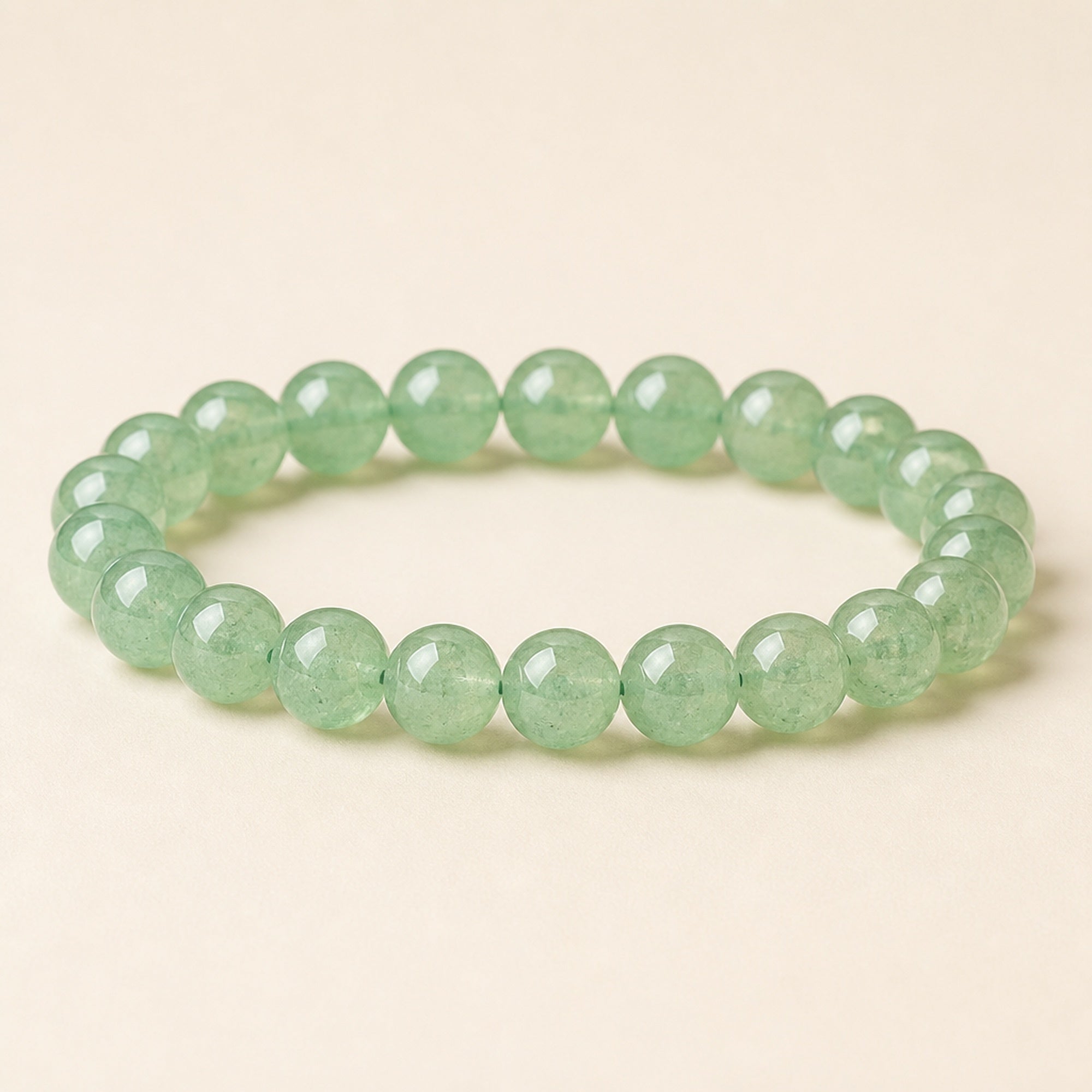
A related color-family option
Green Strawberry Quartz Bracelet – Gentle Renewal
This broader color-family option is not presented as Unakite. We only identify jewelry as Unakite when that exact material is verified.
Explore this related option- Color authenticity: Examine crevices — dye tends to pool in cracks and fissures.
- Natural grain: Real unakite has grainy mineral boundaries; a perfectly uniform surface can signal imitation or heavy treatment.
- Surface finish: Look for even polish with no waxy resin smell or cloudy patches.
- Consistency: Within a strand of beads, natural variation is normal — suspiciously identical pieces may be treated or synthetic.
Care and Cleansing Tips for Unakite Jasper
Care for unakite as you would any feldspar-bearing stone: gently and without harsh chemicals. Wipe with a soft damp cloth after wear, dry fully, and store separately from harder stones to avoid scratches. Avoid ultrasonic cleaners and steam, which can stress existing fractures. Warm water with a drop of mild soap is sufficient. For the symbolic "cleansing" many collectors practice, moonlight, sound, or a brief rinse under running water are common, gentle options — these are tradition, not chemistry. If you wear unakite as a personal reminder, treat that intention with kindness; it may support a sense of steadiness, and that is a symbolic benefit, not a medical one.
Where Unakite Jasper Comes From and What It Costs
Unakite occurs where granitic rocks have been altered by hydrothermal activity. Documented localities include Virginia in the United States, South Africa, Australia, and Mexico, per Mindat's locality records. Because it is relatively abundant and easy to cut, unakite is an accessible stone: tumbled pieces are typically inexpensive, while large, high-contrast polished specimens and matched bead strands command a premium. Price should reflect pattern quality and integrity of treatment, not rarity — unakite is not scarce.
FAQ: Quick Answers About Unakite Jasper
Is unakite jasper a real jasper?
No — geologically, unakite is a metasomatic rock of epidote, feldspar, and quartz, not a true microcrystalline quartz jasper. The "jasper" label is a trade name.
How can you tell unakite jasper from real jasper?
Look for visible granular pink-and-green mineral patches and translucent quartz zones; true jasper is evenly opaque and usually single-colored with a glassy, conchoidal fracture.
What is unakite jasper used for?
Most commonly for beaded jewelry, cabochons, tumbled stones, and small polished décor pieces, valued for its distinctive color pattern rather than rarity.
Sources
- Mindat — Unakite (composition, classification, localities)
- Smithsonian Institution — Unakite naming history
Disclaimer: This article shares mineralogical information and cultural symbolism only. It is not medical advice. Crystal traditions are personal practices and are not a substitute for professional care. © 2026 Lumina Quartz.