The Complete Everyday Guide to Throat Chakra Crystals: Meaning and Uses
Table of Contents
- 10-Second Executive Summary / The Verdict
- What Is the Throat Chakra (Vishuddha)?
- Signs of a Blocked or Overactive Throat Chakra
- The Best Throat Chakra Crystals and What Each One Does
- Aquamarine and Blue Lace Agate: Gentle, Calming Communication
- Lapis Lazuli and Sodalite: Truth, Insight, and Confident Expression
- Amazonite, Angelite, and Blue Apatite: Peace, Guidance, and Clarity
- Decision Table: Which Throat Chakra Crystal Fits Your Practice?
- How to Use Throat Chakra Crystals Every Day
- Wearing, Carrying, and Placing Crystals
- Pairing Crystals with Voice Practices, Breathwork, and Journaling
- Cleansing, Charging, and Caring for Blue Crystals
- Frequently Asked Questions
- Which crystals are best for the throat chakra?
- How do I know if my throat chakra is blocked?
- How do I tell if a throat chakra crystal is authentically and ethically sourced?
- Sources
Throat chakra crystals are blue and blue-green stones — most commonly aquamarine, blue lace agate, lapis lazuli, sodalite, amazonite, angelite, and blue apatite — used in meditation, journaling, or worn as personal reminders during moments when clear, honest speech matters. In crystal traditions these stones are often associated with vishuddha, the throat center linked to expression and truth; no scientific evidence shows that any stone can open, unblock, or rebalance a chakra, so treat them as symbolic tools and mindful reminders rather than remedies.
10-Second Executive Summary / The Verdict
- Direct Verdict: Blue and blue-green crystals — aquamarine, blue lace agate, lapis lazuli, sodalite, amazonite, angelite, and blue apatite — are most commonly chosen for throat chakra work. They function as reminders and ritual objects for clearer self-expression, not as medical or energetic guarantees.
- Quantitative Checkpoint: Mohs hardness ranges widely — lapis lazuli is about 5–6, amazonite about 6–6.5, aquamarine 7.5–8, and blue lace agate and angelite around 6.5–7 or softer (angelite is notably soft, around 3.5). Softer stones need gentler handling.
- Best For: Aquamarine for calming, measured communication; lapis lazuli for insight and confident speaking; amazonite for peace and emotional steadiness in conversations; angelite for quiet reflection.
- What to Avoid: Dyed, irradiated, or resin-filled stones sold as “natural.” Look for the Lumina Grade AAA Integrity Standard — natural rough material, no chemical stabilization, no irradiation or dye.
What Is the Throat Chakra (Vishuddha)?
In yoga and tantric traditions, chakras are described as centers or “wheels” within the subtle body, and vishuddha — the throat center — is traditionally linked with speech, truth, and expression. The concept is cultural and spiritual rather than scientific; major museum collections hold historic chakra-related art and diagrams, such as the Smithsonian’s National Museum of Asian Art exhibition “Yoga: The Art of Transformation”, which documents chakra practices including posture work. The word “chakra” itself also appears in entirely different contexts, such as the Buddhist wheel of dharma seen in the museum’s chakra (wheel of Dharma) object, and even as a place name in Punjab Province, Pakistan — a reminder that the term carries multiple meanings and should be read in context.
In everyday crystal practice, the throat chakra is associated with the color blue. When people say a stone “supports” the throat chakra, they usually mean it serves as a tactile cue to pause, breathe, and speak with intention. That framing is honest: it is about attention and ritual, not a physical mechanism.
Signs of a Blocked or Overactive Throat Chakra
Crystal and energy traditions describe throat chakra imbalance in two directions: blocked (difficulty speaking up, swallowing words, a sense of tightness) and overactive (talking over others, over-explaining, or speaking more sharply than intended). These are traditional interpretive labels, not clinical symptoms. If you experience persistent throat tightness, voice changes, or anxiety, those concerns belong with a qualified healthcare professional.
For reflective purposes, a simple self-check may help: notice which moments in your week you leave a conversation feeling unheard or overexposed. Crystals can anchor that reflection in a concrete ritual — but the work itself is the observation and the practice of adjusting.
The Best Throat Chakra Crystals and What Each One Does
Choose based on the tone of communication you are practicing, not only the color. Each of the following stones is often associated with a particular quality of expression.
Aquamarine and Blue Lace Agate: Gentle, Calming Communication
Aquamarine (beryl; Mohs 7.5–8) is often associated with calm, measured speech — useful for difficult conversations where you want to stay steady rather than sharp. Blue lace agate, with its pale banded lines, is traditionally chosen for gentle, reassuring expression and pairs well with journaling prompts about speaking kindly to yourself.
Lapis Lazuli and Sodalite: Truth, Insight, and Confident Expression
Lapis lazuli (Mohs ~5–6) has a long cultural history of being linked with truth and insight in various traditions and is commonly used when you want to speak with conviction. Sodalite, often called a quieter cousin, is associated with clear thinking and honest self-expression without overexposure.
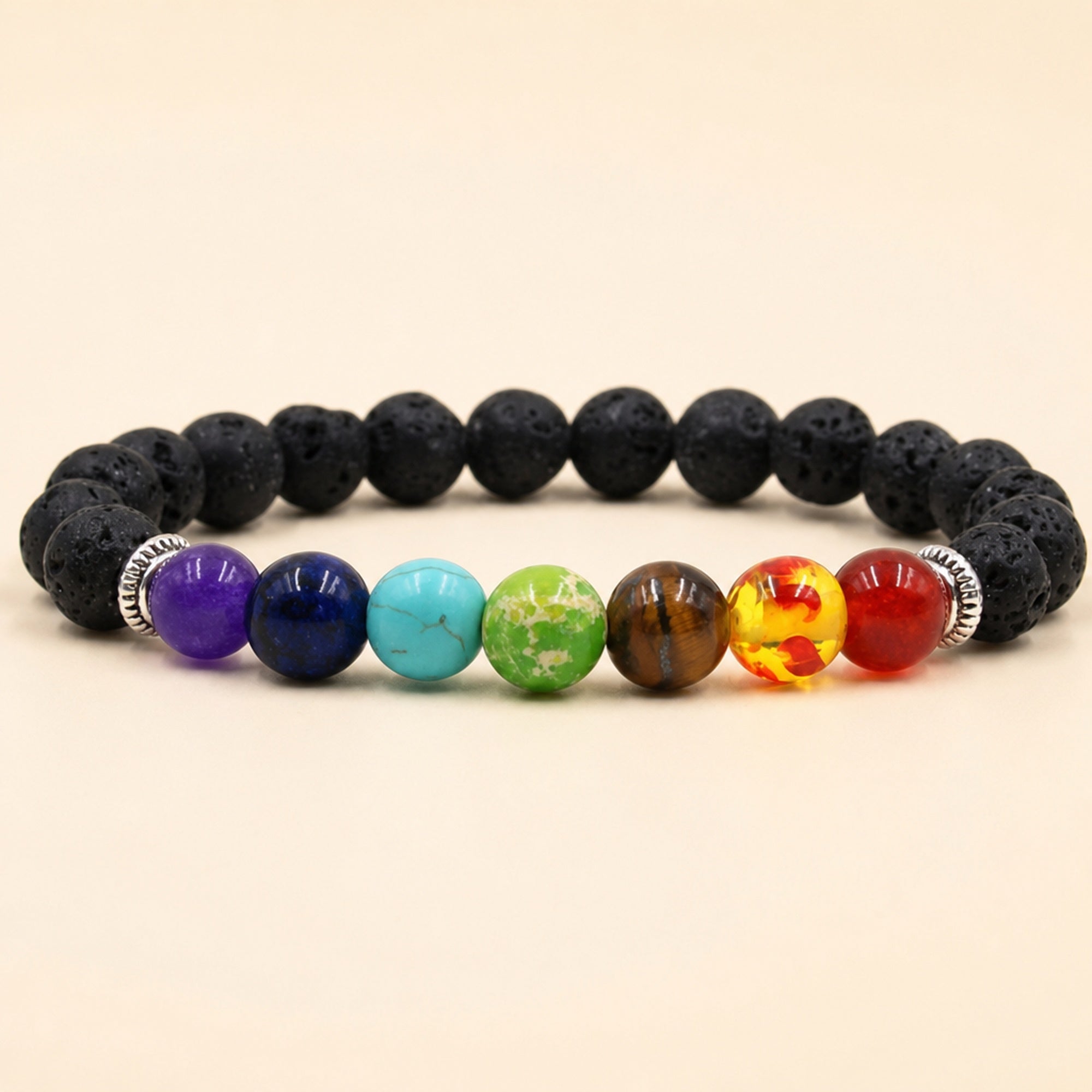
Seven Chakra Bracelet
A quiet bracelet for turning this intention into a small daily ritual.
Shop This Authentic Piece →Amazonite, Angelite, and Blue Apatite: Peace, Guidance, and Clarity
Amazonite (Mohs ~6–6.5) is often associated with emotional steadiness in difficult exchanges; angelite is connected with quiet reflection and gentleness but is soft (Mohs ~3.5), so handle it with care; blue apatite is linked in crystal tradition with clarity and motivation for honest communication.
Decision Table: Which Throat Chakra Crystal Fits Your Practice?
Use this comparison to choose a first stone. All hardness figures are approximate gemological ranges and should guide how you handle and store each piece.
| Crystal | Mohs Hardness (approx.) | Communication Tone | Best Used For |
|---|---|---|---|
| Aquamarine | 7.5–8 | Calm, steady | Difficult conversations; worn daily; water-safe enough for gentle cleansing |
| Blue Lace Agate | ~6.5–7 | Gentle, kind | Self-kindness journaling; pocket-carry |
| Lapis Lazuli | ~5–6 | Truth, conviction | Public speaking; kept dry — porous and often treated with oil historically |
| Sodalite | ~5.5–6 | Clear, private | Honest self-expression without oversharing |
| Amazonite | ~6–6.5 | Peaceful steadiness | Staying composed in conflict |
| Angelite | ~3.5 | Quiet reflection | Meditation altar piece; keep away from water and knocks |
| Blue Apatite | ~5 | Clarity, motivation | Planning conversations in advance |
How to Use Throat Chakra Crystals Every Day
Wearing, Carrying, and Placing Crystals
A practical routine may look like this: choose one stone and carry it in a pocket or wear it near the throat as a reminder to pause and breathe before speaking. Before an important call, hold it for one minute and set an intention — for example, “I will speak clearly and listen fully.” Afterward, note how the conversation went. For altar or desk use, place the stone near where you journal or make calls; angelite and softer stones are better placed than carried, because handling increases chipping risk.
When you buy, look for natural, untreated material. At Lumina Quartz we apply the Lumina Grade AAA Integrity Standard: natural rough stone, zero chemical resin filling, no irradiation or dye. Ask sellers whether a blue stone has been dyed — deep saturation with cracks darker than the surface is a common sign.
Pairing Crystals with Voice Practices, Breathwork, and Journaling
Crystals are more useful as anchors for an actual practice than as objects alone. Three simple pairings:
- Voice practice: hold your stone and read a short passage aloud slowly; notice where you rush or swallow words. Repeat for five minutes several times a week.
- Breathwork: breathe in for four counts, out for six, with the stone resting against the base of the throat; let the rhythm settle before you speak in a meeting.
- Journaling: write one sentence you wish you had said, then one sentence you are glad you said. Keep the stone beside the page as a ritual marker.
These are mindfulness techniques, not medical treatment; results are about attention, and the crystal is often associated with the intention rather than causing it.
Cleansing, Charging, and Caring for Blue Crystals
Care depends on hardness and porosity. Hard, water-tolerant stones such as aquamarine can be rinsed briefly in cool water and dried with a soft cloth. Porous or treated stones — lapis lazuli in particular — should stay dry and be wiped with a soft cloth; submerging them can dull the surface over time. Soft stones like angelite should only be dusted. Avoid ultrasonic cleaners, harsh chemicals, and long direct sun, which can fade some blue tones.
Cleansing practices tied to moonlight or sound are traditional and symbolic; they are not measurable effects. Store each stone separately to prevent scratching, and check necklaces regularly for loose settings.
Frequently Asked Questions
Which crystals are best for the throat chakra?
Aquamarine, blue lace agate, lapis lazuli, sodalite, amazonite, angelite, and blue apatite are the most commonly used throat chakra stones, chosen for their blue tones and traditional associations with expression.
How do I know if my throat chakra is blocked?
Crystal traditions describe blockage as difficulty speaking up or a tendency to swallow words, and overactivity as talking over others — these are interpretive labels, not clinical diagnoses, so persistent throat concerns are best discussed with a healthcare professional.
How do I tell if a throat chakra crystal is authentically and ethically sourced?
Ask for natural, untreated material and confirm the stone has not been dyed, resin-filled, or irradiated — that is what the Lumina Grade AAA Integrity Standard represents — and request sourcing details from the seller rather than relying on product labels alone.
Sources
- Yoga: The Art of Transformation — National Museum of Asian Art
- Chakra (wheel of Dharma) with attending pair of deer — National Museum of Asian Art
- Chakra, Punjab Province, Pakistan — Mindat
© 2026 Lumina Quartz. This article shares cultural and crystal traditions for reflective, personal use. Crystal practices are not medical care and are not a substitute for professional advice; statements about chakras and stone qualities are traditional associations, not scientific claims.
Product Facts From the Current Catalog
These details come from the active Lumina Quartz catalog record checked on 2026-10-22. They are product-listing facts, not laboratory results or invented wear-test claims.
| Listed product | Seven Chakra Bracelet – Balanced Ritual (8mm Natural Stones) |
|---|---|
| Format | Bracelet |
| Listed price snapshot | 34.99 |
Price, availability, and options may change. Check the live product listing before choosing.