The Complete Everyday Guide to Peridot Crystal: Meaning and Uses
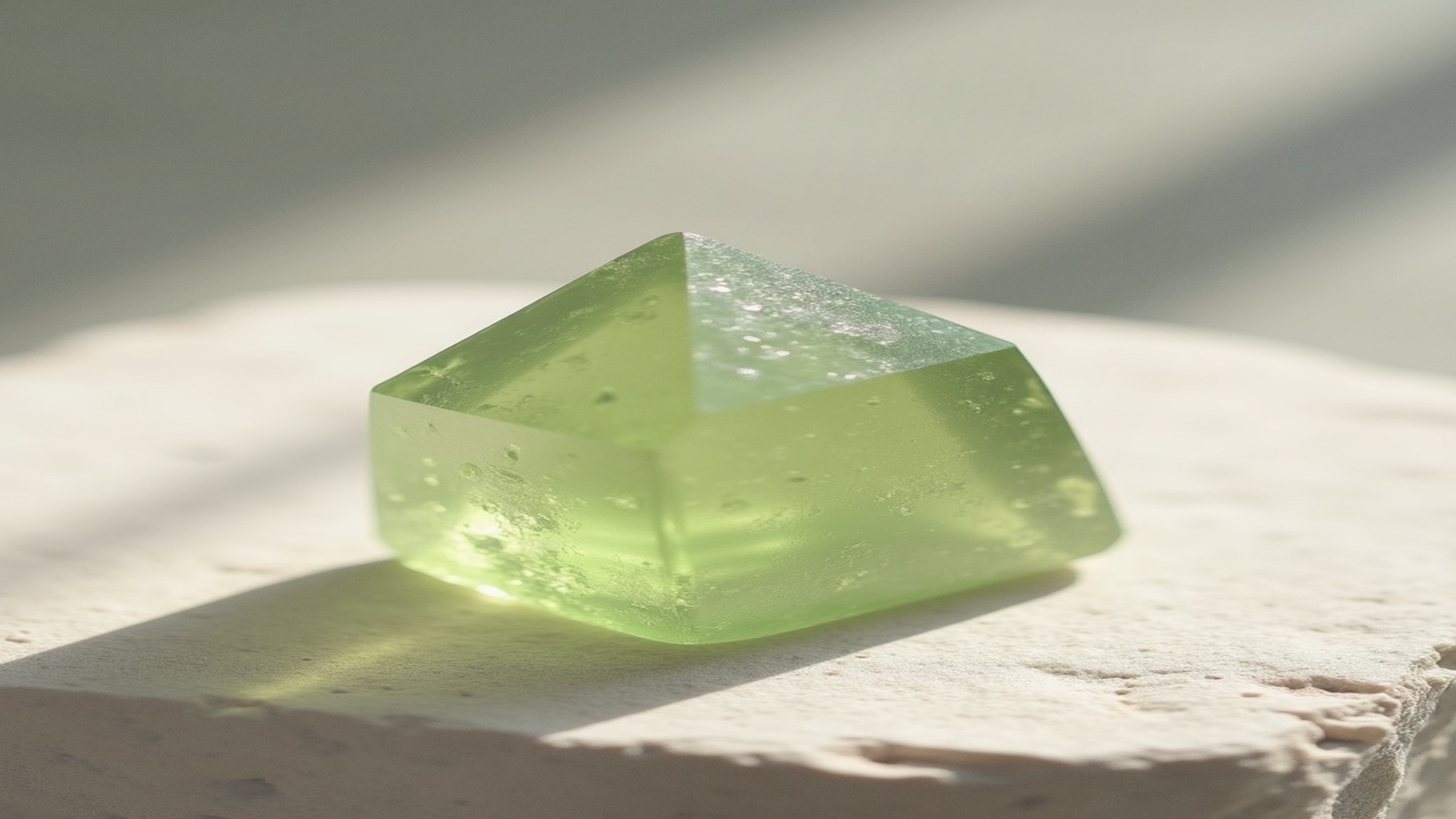
Table of Contents
- What Is Peridot Crystal? Formation, Composition, and Color
- The Meaning and Symbolism of Peridot: The Gem of the Sun
- 10-Second Executive Summary / The Verdict Box
- Peridot Healing Properties and Everyday Uses
- Peridot vs. Other Green Gemstones: Key Differences
- How to Choose, Cleanse, and Care for Peridot Crystal
- Practical Decision Checklist: Is Peridot Right for This Use?
- Wearing Peridot Every Day: Jewelry Styles, Styling, and Gifting
- Frequently Asked Questions About Peridot Crystal
- Is peridot suitable for everyday wear?
- What is the best way to cleanse peridot?
- Is peridot a good gift for August birthdays?
- Sources
What Is Peridot Crystal? Formation, Composition, and Color
Peridot is the gem variety of the mineral forsterite, a magnesium-rich member of the olivine group, and it forms in high-temperature environments such as the upper mantle and certain basaltic rocks. It is one of the few gemstones that occurs in a single, defining color family — green — though that green ranges from a pale yellow-green to a deep olive depending on iron content. The Smithsonian notes that peridot is most prized when it is a medium-dark green without yellow or brown undertones. Unlike many gems that form in the Earth's crust over long cooling periods, peridot-rich material is often brought to the surface by volcanic activity or tectonic processes, which is part of why historically important sources carried such mystique.
The Meaning and Symbolism of Peridot: The Gem of the Sun
Across cultures, peridot has long been tied to light and the sun. The Gemological Institute of America records that the Egyptians called it the "gem of the sun," and that some believed it protected its owner. In early times, peridot was associated with the sun and was believed to possess medicinal powers, according to the Smithsonian. These are cultural and historical associations rather than scientifically demonstrated effects — useful as a frame for personal meaning, not as a health claim. In modern crystal practice, peridot is often associated with renewal, clarity, and a grounded sense of optimism. Many people keep a piece as a reminder of warmth and steadiness during transitional seasons of life. If you work with intention, treat peridot as a symbolic anchor — a small, tangible cue for the mindset you want to cultivate — rather than as a substitute for care or professional support.
10-Second Executive Summary / The Verdict Box
- Direct Verdict: Peridot is a durable-enough green gem (Mohs hardness 6.5–7) that works well in everyday jewelry when protected from hard knocks and stored separately; as a crystal, its value lies primarily in its mineral beauty and symbolic meaning, not in clinically proven effects.
- Mohs Hardness: 6.5–7 — suitable for pendants, earrings, and occasional rings, but prone to scratching and chipping if worn on hands during heavy activity.
- Composition: Forsterite (magnesium-rich olivine), colored green by iron; gem-grade peridot is prized in medium-dark green without yellow/brown undertones.
- Best For: August birthstone gifting, sun-themed personal symbolism, green-gem comparison shopping, and low-impact daily jewelry (pendants/earrings first).
- Buying Note: Choose natural, untreated peridot under the Lumina Grade AAA Integrity Standard — natural rough, no chemical resin filling, no irradiation or dye treatment.
Peridot Healing Properties and Everyday Uses
When you read about peridot "healing properties," it helps to separate three things: documented mineral facts, historical lore, and contemporary personal practice. The historical record is clear on lore — early cultures associated peridot with the sun and believed it carried protective and medicinal powers (GIA; Smithsonian). What is not established is any physiological or psychological effect. So the honest position is this: peridot may support a sense of calm or focus as a personal mindfulness cue, and it is often associated with renewal and optimism in crystal traditions — but it does not replace medical care and should not be presented as a treatment.
In everyday practice, peridot is most often used in four grounded ways:
- As a visual anchor: keeping a stone on a desk or windowsill as a reminder to pause and reset attention.
- As intention-setting jewelry: a pendant associated with "warmth" or "fresh starts" that functions as a personal ritual.
- As part of a meditation corner: paired with a journal or a short breathing practice; the stone is a cue, not the mechanism.
- As a seasonal object: many people bring out peridot in late summer, tying it to the sun symbolism of the August birthstone.
Peridot vs. Other Green Gemstones: Key Differences
Peridot is often compared with emerald, green tourmaline, and tsavorite, and the differences matter when you are choosing. Emerald is beryl and typically carries inclusions described as "jardin"; it is more fragile in practice and usually more expensive at comparable carat weights. Green tourmaline is broader in color range and somewhat tougher in the hand. Peridot's own signature is an idiochromatic green — the color comes from iron in the mineral itself rather than from trace impurities borrowed from surrounding rock — which gives it a distinct, straight-on olive brightness and often a subtle doubling of facet edges under loupe.
Practically: if you want a stone whose color is intrinsic to the mineral and whose history is solar rather than pastoral, peridot is the clearer choice. If you want maximum scratch resistance for a daily-worn ring, look toward stones higher on the Mohs scale and treat peridot as a pendant or earring stone instead.
How to Choose, Cleanse, and Care for Peridot Crystal
Peridot sits at Mohs 6.5–7, which is respectable for a gem but well below quartz or sapphire. That single number shapes almost every care decision you will make. The Lumina Grade AAA Integrity Standard is a useful sorting lens here: it means the piece is natural rough, free of chemical resin filling, and not irradiated or dyed. Those criteria matter because treated green stones can look brighter in photos but behave differently over time.
When you shop, ask for these specifics in writing:
- Origin and whether the stone is natural or lab-grown.
- Whether the stone has been filled, dyed, or irradiated.
- A photo under neutral light, not warm studio light, to judge undertone.
- Whether the setting protects the girdle on a ring.
For cleansing and care, use the gentlest method that gets the job done: lukewarm water, a drop of mild soap, and a soft brush, then pat dry. Avoid ultrasonic cleaners and steam, which can loosen settings and stress inclusions. For energetic cleansing practices, moonlight, sound, or resting the stone on dry salt-free cloth are common and low-risk; skip saltwater soaks and harsh sun for long periods, and never use chemical dips.
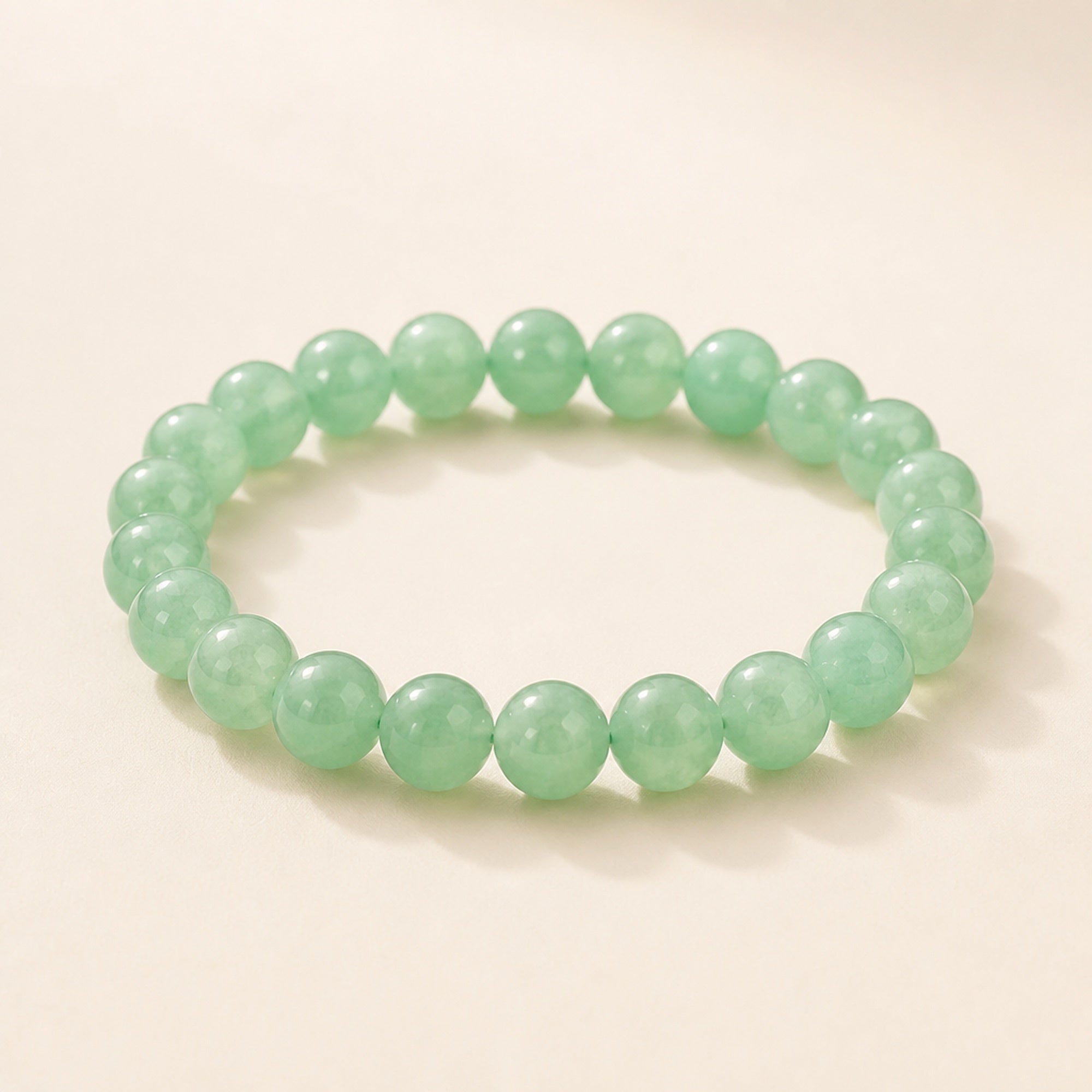
A related intention option
Green Aventurine Opportunity Bracelet
This is a related growth option, not a Peridot product. We only identify jewelry as Peridot when that exact material is verified.
Explore this related optionPractical Decision Checklist: Is Peridot Right for This Use?
Use this checklist before you commit to a piece for a specific purpose. Each item reflects peridot's real physical properties, not general crystal advice.
- Daily-wear ring? Choose a protective setting and accept that the stone may scratch; peridot's 6.5–7 hardness is below quartz and sapphire.
- Pendant or earring? Strongly suitable — less contact with hard surfaces means far less risk of chipping.
- Hot water, dishwashing, or gym use? Remove the piece first; thermal shock and impact are the main realistic hazards.
- Sleeping or swimming? Remove it; chlorine and abrasion shorten the life of the setting.
- Cleaning? Lukewarm water, mild soap, soft brush only — no ultrasonic or steam.
- Storage? Keep separately from harder stones (diamond, sapphire, quartz) in a soft pouch or divided tray.
- Symbolic use? Treat peridot as a personal reminder of renewal and clarity — associations common in crystal traditions — not as a health intervention.
Wearing Peridot Every Day: Jewelry Styles, Styling, and Gifting
Peridot reads beautifully in warm metals — yellow and rose gold pick up its olive brightness — and also in white metals where the green stands out more sharply. Because the stone is softer than quartz, the most wearable everyday formats are pendants, stud earrings, and bezel-set rings that guard the edge. A bezel setting is the practical choice if you want a ring you can wear often without worrying about the girdle.
Styling is simpler than it looks: peridot pairs naturally with earth tones, cream, olive, and denim, and it works as a single accent rather than competing with other bold colored stones. As a gift, peridot is the August birthstone, which makes it a natural choice for late-summer birthdays, but its sun symbolism gives it broader appeal as a "new beginnings" gift. When gifting, include care instructions — the recipient will thank you later.
Frequently Asked Questions About Peridot Crystal
Is peridot suitable for everyday wear?
Yes, with care — peridot has a Mohs hardness of 6.5–7, so it holds up well in pendants and earrings but can scratch or chip in a ring worn during heavy activity. Choose a protective setting and remove the piece for sports, cleaning, and swimming.
What is the best way to cleanse peridot?
Cleanse it physically with lukewarm water, a drop of mild soap, and a soft brush, then dry with a cloth; avoid ultrasonic cleaners, steam, and saltwater soaks. For symbolic cleansing, moonlight or sound are gentle, low-risk options.
Is peridot a good gift for August birthdays?
Yes — peridot is the traditional August birthstone, and its long association with the sun makes it a fitting gift for late-summer birthdays. Pair it with simple care guidance so the recipient can keep the stone looking its best.
Sources
- Peridot History and Lore — GIA
- Peridot gemstones — Smithsonian National Museum of Natural History
- Peridot from St. John's / Zabargad Island — Mindat
© 2026 Lumina Quartz. This guide shares mineral facts and cultural history for general interest; peridot is not a medical treatment, and personal crystal practices are best treated as symbolic rather than therapeutic.