The Complete Everyday Guide to Orca Agate: Meaning and Uses
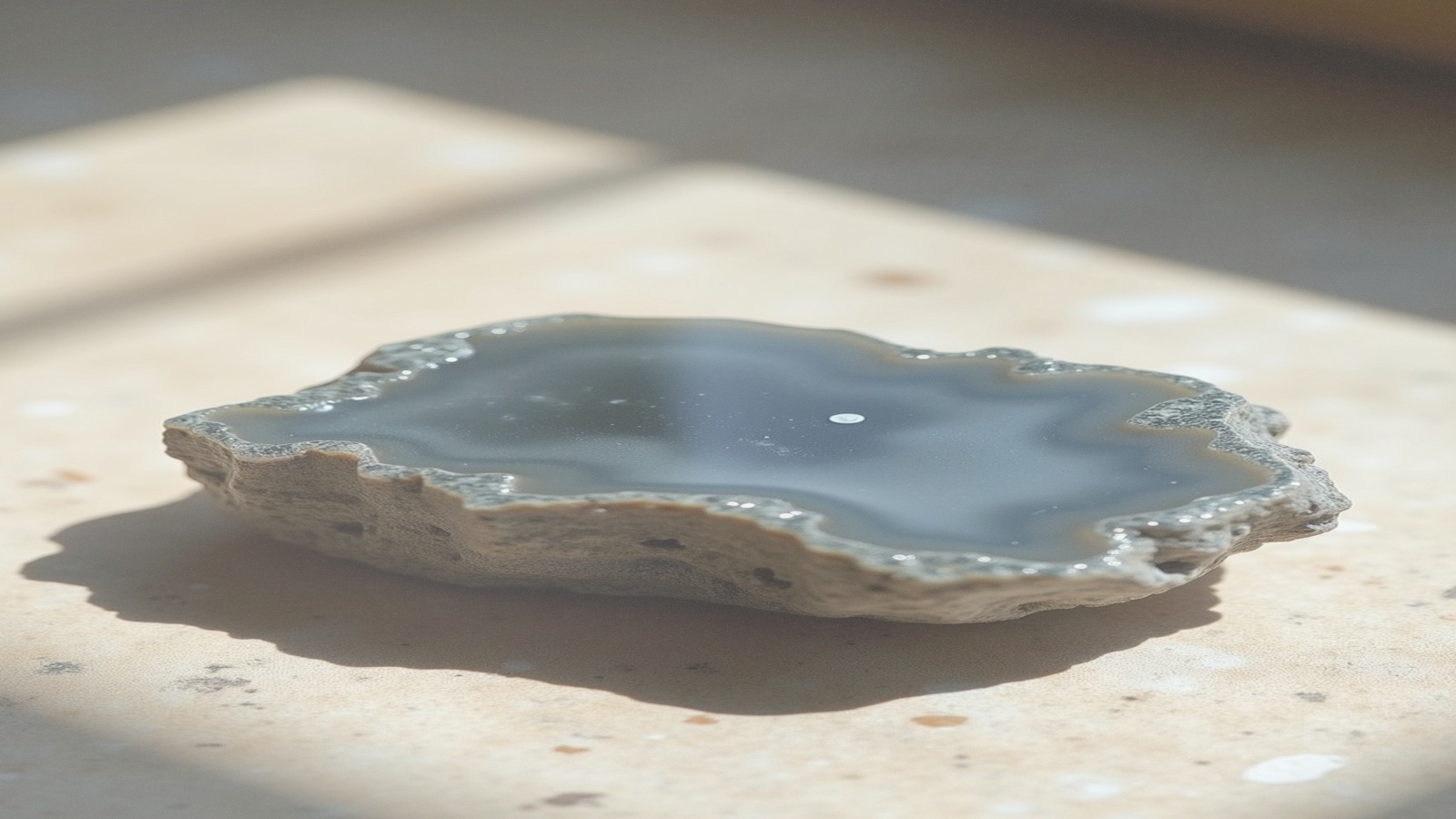
Table of Contents
- What Is Orca Agate?
- 10-Second Executive Summary / The Verdict Box
- How Orca Agate Forms and Why It's Found Only in Madagascar
- Orca Agate Meaning and Symbolism
- The Orca Connection: Calm Communication and Inner Truth
- Orca Agate Healing Properties
- Emotional Balance, Self-Doubt, and Forgiveness
- Everyday Uses: How to Wear and Work with Orca Agate
- Jewelry, Palm Stones, and Home Décor
- Decision Table: Which Orca Agate Format Fits Your Day?
- How to Choose and Care for Orca Agate
- Frequently Asked Questions About Orca Agate
- What is orca agate and what does it mean?
- What are the healing properties of orca agate?
- How can you tell if orca agate is real?
- Sources
What Is Orca Agate?
Orca agate is a banded chalcedony—a fine-grained variety of quartz—recognized by its flowing black, white, and grey patterns that resemble the markings of an orca whale. It is a variety of agate, which the Smithsonian describes as chalcedony showing concentric color banding, with colors often caused by microscopic mineral inclusions such as iron oxide within the quartz (Smithsonian National Museum of Natural History). In the market, orca agate is most often associated with Madagascar, and the sections below separate what is geologically documented from what is cultural symbolism so you can decide how to use it with clear eyes.
10-Second Executive Summary / The Verdict Box
- Direct Verdict: Orca agate is a banded chalcedony (quartz) valued for its bold black-and-white patterning, its grounding symbolism, and its everyday wearability. Buy it for beauty and personal meaning—not as a medical treatment.
- Mineral Family: Chalcedony / quartz (fine-grained silica).
- Mohs Hardness: Approximately 6.5–7 (typical for quartz-family agate), making it suitable for pendants, palm stones, and gentle daily wear.
- Typical Origin: Commonly marketed as Madagascar material.
- Best Use Cases: Palm stones for calm-focused routines, pendants and cabochons for everyday wear, and display pieces for grounding home décor.
- Buying Standard: Look for natural, untreated banding consistent with the Lumina Grade AAA Integrity Standard—natural rough, no chemical stabilization, no irradiation or dye.
How Orca Agate Forms and Why It's Found Only in Madagascar
Agates form in cavities within volcanic rock, where silica-rich water slowly deposits quartz in successive layers (Smithsonian). Each band records a stage of that deposition, which is why agate often shows concentric or parallel lines. Orca agate's high-contrast black-and-white banding is the visual signature collectors seek.
A word of honest caution: the claim that orca agate is found only in Madagascar is a strong market convention rather than a geologically proven exclusivity. Banded chalcedony occurs worldwide; Madagascar is widely cited as the primary source for the specific black-and-white material sold as orca agate. Treat "only Madagascar" as a sourcing convention, and ask sellers for origin documentation when it matters to you.
Orca Agate Meaning and Symbolism
In crystal lore, orca agate is often associated with calm communication, inner truth, and steady emotional footing. These are cultural and personal meanings, not scientific claims. What is documented is the material itself: agate has a long history as an ornamental and amulet stone, and museum collections preserve agate amulets as cultural artifacts (National Museum of American History).
The Orca Connection: Calm Communication and Inner Truth
The orca association is symbolic: whales are often linked in popular imagination with deep social intelligence and clear vocal communication. People drawn to orca agate frequently use it as a tangible reminder to speak honestly and listen well. If that reminder helps you pause before a difficult conversation, that is a legitimate personal practice—separate from any claim that the stone changes your body or mind.
Orca Agate Healing Properties
Orca agate's "healing properties" belong to the language of crystal tradition. Responsible framing is important: no stone is a substitute for medical or mental health care. Within that boundary, orca agate is often associated with emotional steadiness, self-forgiveness, and the courage to tell the truth gently.
Emotional Balance, Self-Doubt, and Forgiveness
Many people keep orca agate nearby during journaling or reflection. The practice may support a calmer ritual—holding a smooth palm stone, breathing slowly, writing one honest sentence. The stone is a cue, not a cure. If self-doubt or difficult emotions are persistent, please speak with a qualified professional; a crystal can accompany that work but should never replace it.
Everyday Uses: How to Wear and Work with Orca Agate
Orca agate is practical because it is durable and visually versatile. With a Mohs hardness in the quartz range, it holds up well in jewelry and decorative pieces, though it can still scratch softer materials and should be kept away from harsh chemicals.
Jewelry, Palm Stones, and Home Décor
- Jewelry: Pendants, beaded bracelets, and cabochon rings suit daily wear. Choose bezel settings for pieces you wear often.
- Palm stones: A smooth, flat stone fits the hand for morning check-ins or a pause before a meeting.
- Home décor: A polished slice or tower on a desk or entryway shelf works as a grounding visual anchor.
- Desk companion: Keep a small tumbled piece next to your keyboard as a reminder to breathe and speak clearly.
Decision Table: Which Orca Agate Format Fits Your Day?
Use this table to choose a format based on how you actually live, not on generic crystal advice.
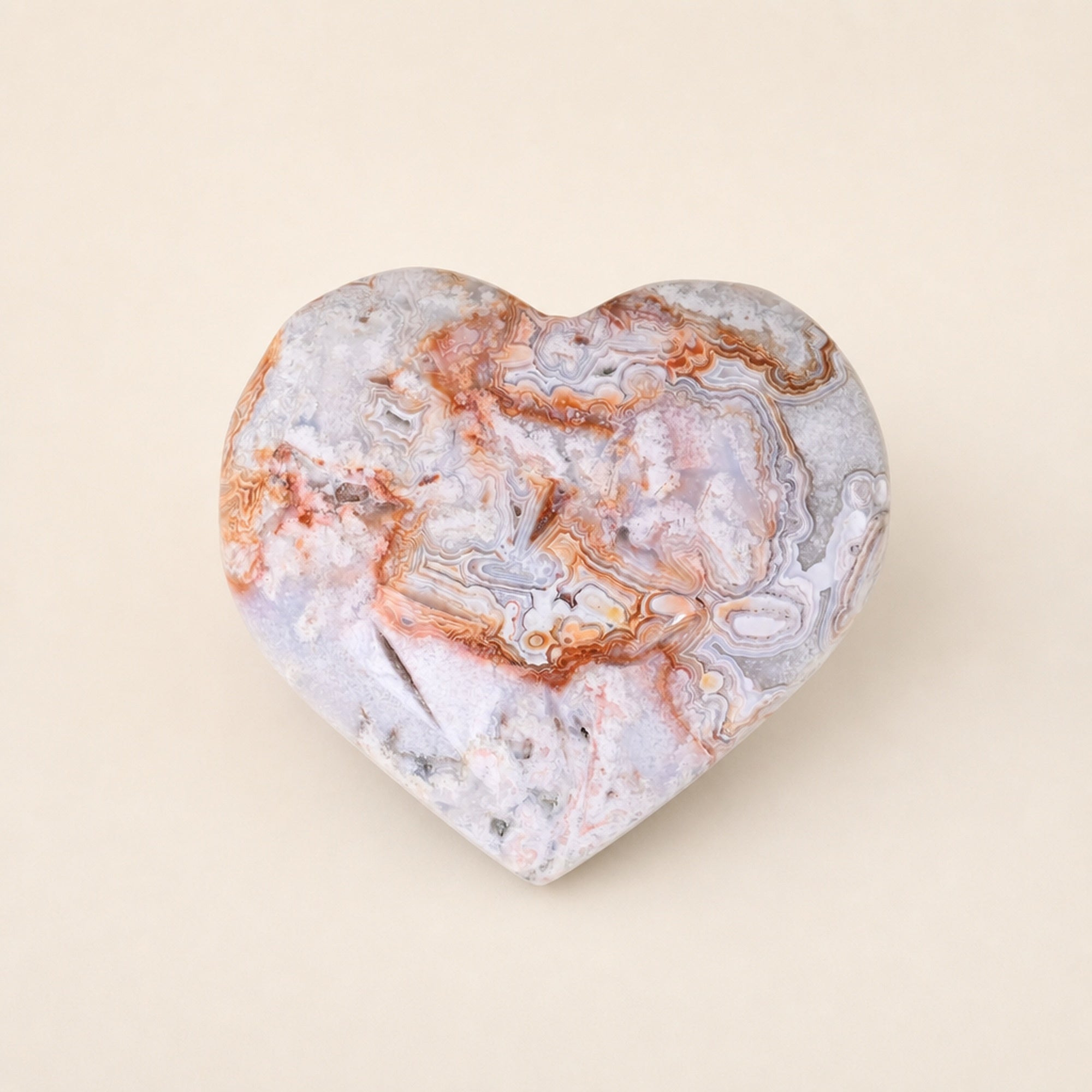
A related stone-family option
Crazy Lace Agate Heart Stone – Joyful Movement
This is a related variety in the same stone family, not a Agate product. We only identify jewelry as Agate when that exact material is verified.
Explore this related option| Format | Durability for Daily Use | Best For | Watch-Out |
|---|---|---|---|
| Pendant / necklace | High (quartz-range hardness) | Wearing close to the body; workdays and travel | Check the bail and chain quality more than the stone |
| Beaded bracelet | Moderate | Visible daily reminder; stacking with other bracelets | Beads can chip against metal; restring worn elastic |
| Palm stone | High for handling | Journaling, breathing pauses, pre-conversation centering | Larger stones are not pocket-friendly |
| Polished slice / tower | High as décor | Desk, entryway, or shelf display | Keep out of direct sun and away from dropping risk |
| Rough specimen | Low for wear, high for display | Collectors and raw-mineral lovers | Rough edges; not for children or pockets |
How to Choose and Care for Orca Agate
The most common question is authenticity. Because agate is porous, it has historically been dyed and artificially colored—19th-century sources already describe coloring agate through penetrable dye fluids (Mindat: Historic Methods of Artificially Coloring Agates). That history means "black and white" alone is not proof of natural color.
Follow this step-by-step check when you shop:
- Look at the banding. Natural orca agate usually shows organic flow, slight irregularity, and grey transition zones. Uniform, high-contrast black-and-white with no grey often signals dye.
- Check the edges. Dye can concentrate in cracks and surface pits. Look for darker color pooling in fissures.
- Ask about treatment. A trustworthy seller will confirm natural rough and disclose any stabilization, dye, or irradiation. This is the heart of the Lumina Grade AAA Integrity Standard: natural rough, zero chemical stabilization, no irradiation, no dye.
- Compare price to rarity. Large, flawless, vividly black-and-white pieces priced unusually low deserve scrutiny.
- Care gently. Wipe with a soft damp cloth; avoid ultrasonic cleaners, harsh detergents, and long sun exposure. Store separately from harder stones like sapphire or diamond.
Frequently Asked Questions About Orca Agate
What is orca agate and what does it mean?
Orca agate is a banded chalcedony (quartz) with black, white, and grey patterns resembling an orca's markings. In crystal tradition it is often associated with calm communication and inner truth.
What are the healing properties of orca agate?
Tradition links it to emotional steadiness, self-forgiveness, and honest self-reflection. These are symbolic and personal meanings, not medical effects—it is not a treatment for any condition.
How can you tell if orca agate is real?
Look for organic, slightly irregular banding with grey transitions, and ask whether the stone is natural or dyed. Natural, untreated material aligned with the Lumina Grade AAA Integrity Standard is the safest benchmark.
Sources
- Smithsonian National Museum of Natural History — Quartz (var. agate)
- Mindat — Daniel Russell, Historic Methods of Artificially Coloring Agates
- National Museum of American History — Agate Amulet
© 2026 Lumina Quartz. This article shares geology and cultural symbolism only and is not medical advice. Crystals are best used as personal reminders alongside, never instead of, professional care.