The Complete Everyday Guide to Orange Kyanite: Meaning and Uses
Table of Contents
- 10-Second Executive Summary / The Verdict Box
- What Is Orange Kyanite?
- Why Orange Kyanite Is So Rare
- Orange Kyanite Meaning and Metaphysical Properties
- Sacral Chakra, Creativity, and Momentum
- How to Use Orange Kyanite Every Day
- Jewelry, Pocket Stones, and Home Display
- Caring for Your Orange Kyanite
- How to Spot a Genuine Orange Kyanite
- A Practical Buying Checklist: Natural Orange Kyanite vs. Treated Look-Alikes
- Choosing and Buying Orange Kyanite
- Frequently Asked Questions
- What is orange kyanite and what makes it rare?
- What are the healing properties and meaning of orange kyanite?
- How can you tell if orange kyanite is real or fake?
- Sources
Orange kyanite is the rare warm-colored variety of kyanite, an aluminum silicate mineral (Al₂SiO₄O) that is most often blue but occasionally occurs in yellow, orange, pink, white, and green. Its orange hue is the rarity that drives most of the interest: kyanite's common color is blue, and orange material is documented only as an uncommon occurrence, traced in gem trade reporting to sources such as Tanzania. Because it is scarce and softer than quartz, everyday use should lean on careful handling, and buyers should look for natural, untreated rough rather than resined or dyed pieces.
10-Second Executive Summary / The Verdict Box
- Direct Verdict: Orange kyanite is a genuine but uncommon color variety of kyanite — real, collectible, and best treated as a gentle, mindful companion stone rather than a high-durability everyday ring stone.
- Hardness (Mohs): Roughly 5½–7, with directional hardness variation — softer along cleavage directions, so it scratches more easily than quartz (7) or corundum (9).
- Formula & System: Al₂SiO₄O, triclinic crystal system; vitreous to pearly luster.
- Color Cause: Blue is the dominant kyanite color; orange occurs rarely. Documented Tanzanian sources have produced orange kyanite, but availability is limited and inconsistent.
- Best Use Cases: Pocket stones, pendants, wire-wrapped pieces, display specimens, and short-wear jewelry — not heavy daily rings or bracelets.
- Buying Standard: Look for pieces matching the Lumina Grade AAA Integrity Standard — natural rough, no chemical resin filling, no irradiation or dye treatment.
What Is Orange Kyanite?
Kyanite is a naturally occurring aluminum silicate mineral that typically forms as bladed crystals, and occasionally as radiating masses of crystals, according to the Smithsonian National Museum of Natural History. The name comes from the Greek word kyanos, meaning "blue" — which tells you how strongly blue is associated with the species. Orange kyanite is the same mineral with an uncommon warm body color, appearing as translucent to semi-transparent rough or cut stones in shades from pale peach to deep tangerine.
One important distinction: orange kyanite is not a separate mineral species. It is kyanite whose color falls outside the dominant blue range. Mindat lists kyanite's color as blue, white, light gray, green, and rarely yellow, orange, or pink. That word "rarely" is the honest anchor for everything that follows.
Why Orange Kyanite Is So Rare
Kyanite's best-known color is blue, and the blue is generally attributed to iron charge transfer between Fe(II) and Fe(III) states, as documented in mineralogical literature referenced by Mindat. When the chemistry or formation environment shifts, other colors can appear — but orange remains an occasional byproduct rather than a reliable supply.
Source geography matters here. GIA's gem news reporting notes that greenish blue, blue, and orange kyanite from Tanzania have been previously documented. That is a factual trade record, not a promise of abundance. In practice, orange kyanite tends to appear in small parcels, often as smaller rough or cabochon material, and disappears from the market for stretches at a time. If you find a consistent, large, uniform supply of vivid orange kyanite at low prices, treat that as a prompt for closer inspection rather than a bargain.
Orange Kyanite Meaning and Metaphysical Properties
In crystal-community tradition, orange kyanite is often associated with warmth, creative momentum, and gentle self-expression, and is frequently linked with the sacral chakra. These are cultural and personal-reminder meanings, not established physical effects. Kyanite's documented properties are geological — composition, hardness, crystal system, and color — and those are what you can verify.
Where tradition meets honest practice: an orange kyanite stone may serve as a tactile cue for pausing, breathing, and refocusing during a creative block or a busy day. It is a reminder object. It does not regulate the nervous system, stabilize mood, or substitute for care from a qualified professional.
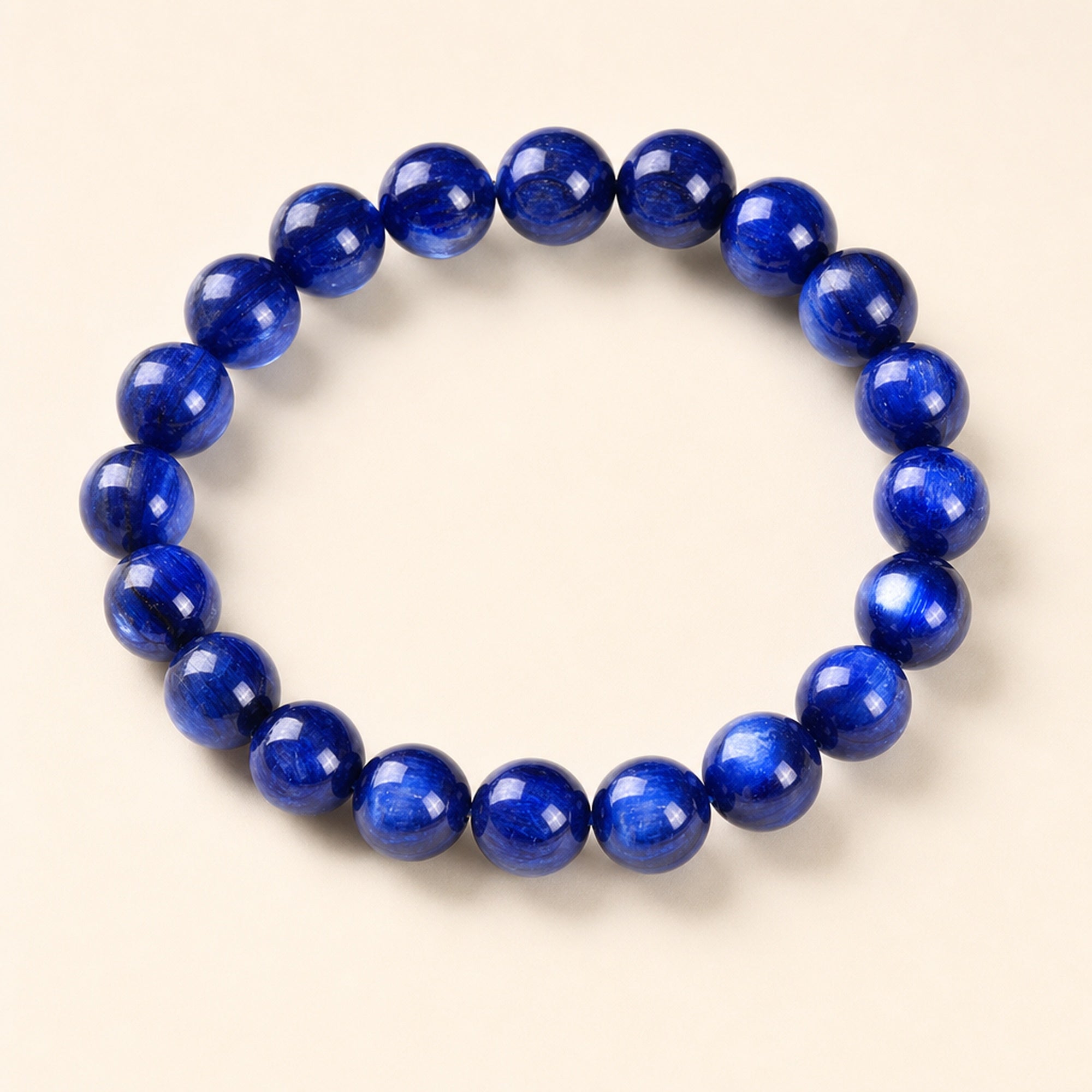
Kyanite Bracelet
A quiet bracelet for turning this intention into a small daily ritual.
Shop This Authentic Piece →Sacral Chakra, Creativity, and Momentum
The sacral chakra association is a modern energy-work convention rather than an ancient fixed doctrine, and orange is the color most often mapped to it. People who work with orange kyanite often describe using it as a "start" stone — held before beginning a project, sketching session, or difficult conversation. That framing is culturally meaningful and personally useful, and it stays within the bounds of symbolism. The stone itself is a mineral; the momentum is yours.
How to Use Orange Kyanite Every Day
Because kyanite shows directional hardness and perfect cleavage, daily use should favor low-impact formats over high-contact ones. Kyanite can be cut en cabochon, faceted, or fashioned into beads, but variability in hardness and color zoning can make it difficult to fashion, per the Smithsonian. That same variability is why kyanite jewelry deserves gentler wear than quartz or sapphire pieces.
Jewelry, Pocket Stones, and Home Display
- Pendants and wire-wrapped pieces: The best everyday jewelry choice — the stone sits protected against the body rather than striking surfaces.
- Pocket stones: A tumbled or smooth orange kyanite piece is ideal for pockets and palms; keep it in a soft pouch so it does not rub against keys or coins.
- Display specimens: Bladed orange kyanite rough is striking on a shelf or small dish; keep it out of direct sun and away from damp windowsills.
- What to avoid: Rings, stacked bracelets, and anything worn during gardening, gym sessions, or dishwashing. Impact and abrasion are the main risks for a 5½–7 hardness stone with cleavage.
Caring for Your Orange Kyanite
Clean orange kyanite with lukewarm water, a drop of mild soap, and a soft cloth or very soft brush. Rinse and pat dry. Skip ultrasonic cleaners, steam cleaners, and harsh chemical dips, since kyanite's cleavage and directional hardness make it vulnerable to mechanical and thermal stress. Store it separately from harder stones — quartz, sapphire, and diamond will scratch it — ideally in its own soft pouch. Remove jewelry before swimming, showering, or applying lotions that can dull the surface.
How to Spot a Genuine Orange Kyanite
Real orange kyanite shows natural variation: subtle color zoning, translucent-to-semi-transparent body, vitreous to pearly luster, and visible bladed or crystalline structure in rough. Under the Lumina Grade AAA Integrity Standard, a trustworthy piece is natural rough with zero chemical resin filling and no irradiation or dye treatment. Resin filling is used to stabilize fractured kyanite, so a suspiciously clean, glassy, uniformly saturated stone at a low price deserves scrutiny.
A Practical Buying Checklist: Natural Orange Kyanite vs. Treated Look-Alikes
| Check | Natural Orange Kyanite (Lumina Grade AAA Integrity Standard) | Treated or Misrepresented Piece |
|---|---|---|
| Color distribution | Uneven, with gentle zoning and a slightly milky interior | Flat, uniform saturation edge to edge |
| Surface and luster | Vitreous to pearly shine; natural surface texture in rough | Plastic-like gloss or an oily sheen from resin |
| Hardness feel | Softer than quartz; an inconspicuous spot can be lightly tested | Unusually hard or unusually soft for kyanite |
| Rough structure | Visible bladed crystals or radiating habit | Amorphous, dyed-quartz or glass-like consistency |
| Treatment disclosure | Seller states natural, untreated, with no resin, dye, or irradiation | Vague answers or silence on treatment |
| Supply story | Small parcels, inconsistent availability, often smaller sizes | Endless identical stock at a low price |
Applicability boundary: This checklist covers rough, tumbled, and cabochon material. For faceted or certified gem-grade stones, rely on independent gemological testing rather than a visual checklist alone.
Choosing and Buying Orange Kyanite
Start with the format that matches your actual life: a pendant or pocket stone for everyday contact, a rough specimen for display. Ask direct questions — origin if known, treatment status, and whether the piece is filled. Given that orange kyanite is documented from Tanzania in gem trade reporting, a stated African origin is plausible, but no source guarantees every piece's provenance, so treat provenance claims as helpful context rather than certification.
Budget realistically. A rare color variety in a mineral that is already less commonly faceted will cost more per carat than blue kyanite jewelry, and small natural pieces are the honest entry point. Prioritize pieces that meet the Lumina Grade AAA Integrity Standard: natural, untreated, and honestly described. A modest, genuine orange kyanite you can wear and care for is worth more than a large, treated stone you are afraid to touch.
Frequently Asked Questions
What is orange kyanite and what makes it rare?
Orange kyanite is the orange-colored variety of the aluminum silicate mineral kyanite. It is rare because kyanite is predominantly blue, and Mindat documents orange only as an uncommon color occurrence; gem trade reporting also notes limited orange material from Tanzania.
What are the healing properties and meaning of orange kyanite?
In crystal tradition, orange kyanite is often associated with warmth, creativity, and sacral chakra symbolism. These are cultural and personal-reminder meanings, not scientifically verified physical effects, so enjoy them as symbolism rather than medical benefit.
How can you tell if orange kyanite is real or fake?
Look for natural color zoning, vitreous-to-pearly luster, visible bladed structure in rough, and a hardness of about 5½–7. Uniform, glassy, vividly saturated stones at low prices may be dyed quartz or resin-filled material, so ask for treatment disclosure before buying.
Sources
- Kyanite | Smithsonian National Museum of Natural History
- Kyanite | Mindat
- Green Kyanite | Gems & Gemology, GIA
© 2026 Lumina Quartz. This guide shares mineral facts sourced above and cultural symbolism for personal reflection. It is not medical advice; crystal meanings may support your own rituals and intentions.
Product Facts From the Current Catalog
These details come from the active Lumina Quartz catalog record checked on 2026-11-16. They are product-listing facts, not laboratory results or invented wear-test claims.
| Listed product | Kyanite Bracelet – Clear Alignment |
|---|---|
| Format | Bracelet |
| Listed price snapshot | 69.90 |
Price, availability, and options may change. Check the live product listing before choosing.