The Complete Everyday Guide to Moss Green Agate: Meaning and Uses
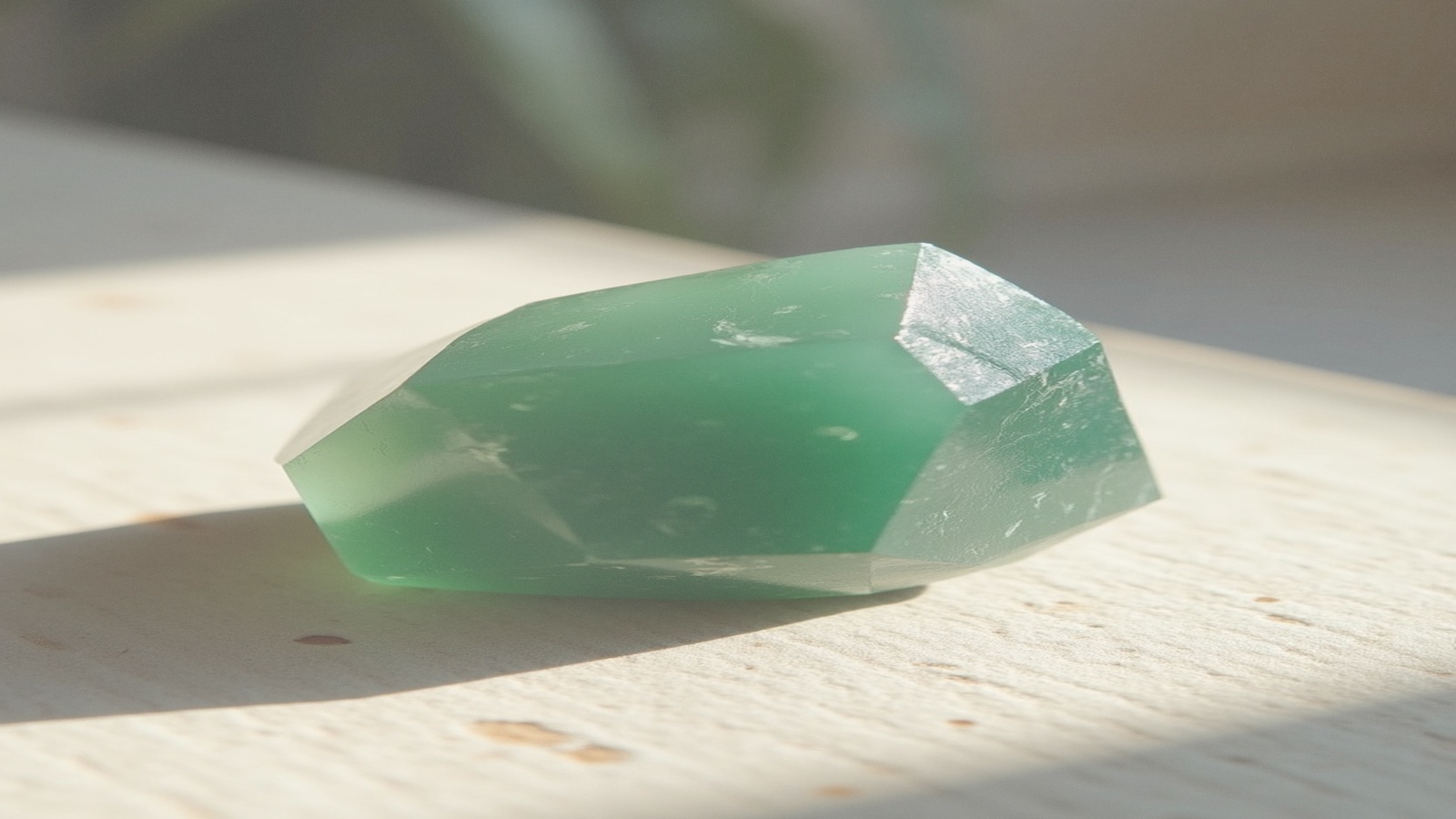
Table of Contents
- The Verdict Box — 10-Second Executive Summary
- What Is Moss Green Agate?
- The Science Behind the Green: Formation and Composition
- Agate vs. Moss Agate: What's the Difference?
- Moss Green Agate Meaning and Healing Properties
- Emotional and Spiritual Benefits
- Physical Healing Associations
- How to Use Moss Green Agate in Everyday Life
- Jewelry and Fashion
- Home Decor and Feng Shui
- Real, Dyed, or Imitation? A Step-by-Step Check
- Caring for Your Moss Green Agate
- Frequently Asked Questions
- Is moss green agate natural or is it dyed?
- How can I tell real moss green agate from fake or imitation stones?
- How do I care for and cleanse moss green agate jewelry?
- Sources
Moss green agate is a translucent-to-opaque variety of chalcedony (microcrystalline quartz, SiO₂) whose white or clear base is threaded with green mineral inclusions—most often chlorite or hornblende—creating the moss-like, dendritic patterns it is named for. Its green color comes from those inclusions rather than from the quartz itself, and it is generally a durable, natural, and affordable stone for everyday wear.
The Verdict Box — 10-Second Executive Summary
- Direct Verdict: Moss green agate is a natural chalcedony (SiO₂) distinguished by green mineral inclusions, not by growth banding. It is a genuine, common gem material—select pieces with clear, natural-looking inclusions to avoid dyed or imitation stones.
- Mohs Hardness: Approximately 6.5–7 (quartz-family hardness), making it suitable for rings, pendants, and beads with reasonable care.
- Composition: Silicon dioxide (SiO₂); green patches from chlorite, hornblende, or similar inclusions; brown/black dendrites from iron or manganese oxides.
- Transparency: Translucent to opaque, with a waxy luster typical of chalcedony.
- Best For: Everyday jewelry, grounding home accents, and personal intention-setting—not for high-impact wear or ultrasonic cleaning.
What Is Moss Green Agate?
Moss green agate is a chalcedony variety in the quartz family. Agate and jasper are both varieties of chalcedony, made up of quartz crystals too small to see with the unaided eye, and they have fascinated people since antiquity—agate was described as a highly valued stone by Theophrastus in the fourth century BCE and later by Pliny the Elder (GIA). What sets moss agate apart is its appearance: a pale base scattered with green, moss-like patches, described by mineral databases as a chalcedony frequently containing green mineral inclusions such as chlorite and hornblende (Mindat).
In everyday language, "moss green agate" and "moss agate" usually refer to the same material. The "green" in the name describes the inclusions, not a solid body color. Because each stone's inclusions fall differently, no two pieces look alike—agates and jaspers form in infinite varieties of multicolored patterns, each a unique creation of nature's art (GIA).
The Science Behind the Green: Formation and Composition
Chemically, moss agate is silicon dioxide. Its ideal formula is SiO₂, with oxygen at about 53% and silicon at about 47% by weight (Mindat). The green color is a secondary feature: mineral inclusions grew within the silica gel as it solidified, and the resulting patches range from soft sage to deep forest green depending on the mineral involved and its concentration.
Where green is absent, the same stone may show brown to black dendritic patterns from iron or manganese oxides (Mindat). This is why moss agate specimens can look quite different from one another while sharing the same mineral identity.
Agate vs. Moss Agate: What's the Difference?
Classic banded agate is defined by layered or banded color patterns. Moss agate belongs to the same chalcedony family but is classified by its inclusions rather than its bands—its "moss" is a scattered, organic-looking pattern rather than concentric rings. Both are microcrystalline quartz; the difference is visual structure, not chemistry. For buyers, this matters because a moss agate's value rests on the clarity of its base and the beauty of its inclusions, while a banded agate's value rests on crisp, even banding.
Moss Green Agate Meaning and Healing Properties
In crystal traditions, moss green agate is often associated with nature, growth, and steadiness. These meanings are cultural and symbolic—they are widely used as personal reminders, not as medical claims. With that distinction in mind, the stone's associations are typically described in two overlapping areas.
Emotional and Spiritual Benefits
Moss green agate is often associated with feelings of calm and connection to the natural world, and many people keep it as a grounding touchstone during busy days. It may support a sense of patience and renewal, especially when used alongside quiet reflection or journaling. In spiritual practice, its green inclusions are sometimes linked to growth and balance, and its earthy palette makes it a popular stone for intention-setting, meditation altars, and nature-focused rituals.
Physical Healing Associations
Folk and crystal traditions sometimes link moss green agate with vitality and the natural rhythms of the body, and some wearers keep it as a symbolic companion for rest and recovery. These are traditional associations, not verified effects. Moss agate should be treated as a mineral specimen and a personal talisman—not a substitute for professional care.
How to Use Moss Green Agate in Everyday Life
Because moss agate sits at roughly 6.5–7 on the Mohs scale, it can handle daily wear well when protected from hard knocks. Its waxy translucence and natural green patterning make it unusually versatile—equally at home in minimalist jewelry and in a windowsill bowl of stones.
Jewelry and Fashion
Moss agate reads as quietly earthy rather than flashy, so it pairs easily with linen, denim, wool, and warm neutral palettes. Rings and bracelets are the most exposed pieces, so choose settings that protect the edges of the stone; pendants and earrings are lower-risk and let the inclusion pattern take center stage. When buying, favor stones that show crisp, varied green inclusions against a clean translucent base—the same qualities that define Lumina Grade AAA Integrity Standard, which means natural, untreated rough, no chemical resin filling, and no irradiation or dye enhancement.
Home Decor and Feng Shui
In feng shui practice, green stones are often placed in spaces associated with growth—desks, entryways, or plant-filled corners—as a symbolic accent rather than a cure-all. A small tray of moss agate palm stones beside a plant, or a polished slice on a work desk, keeps the stone visible without turning it into an ornament. Because agate forms in swirling, galaxy-like patterns (GIA), larger slices can also work as quiet natural art.
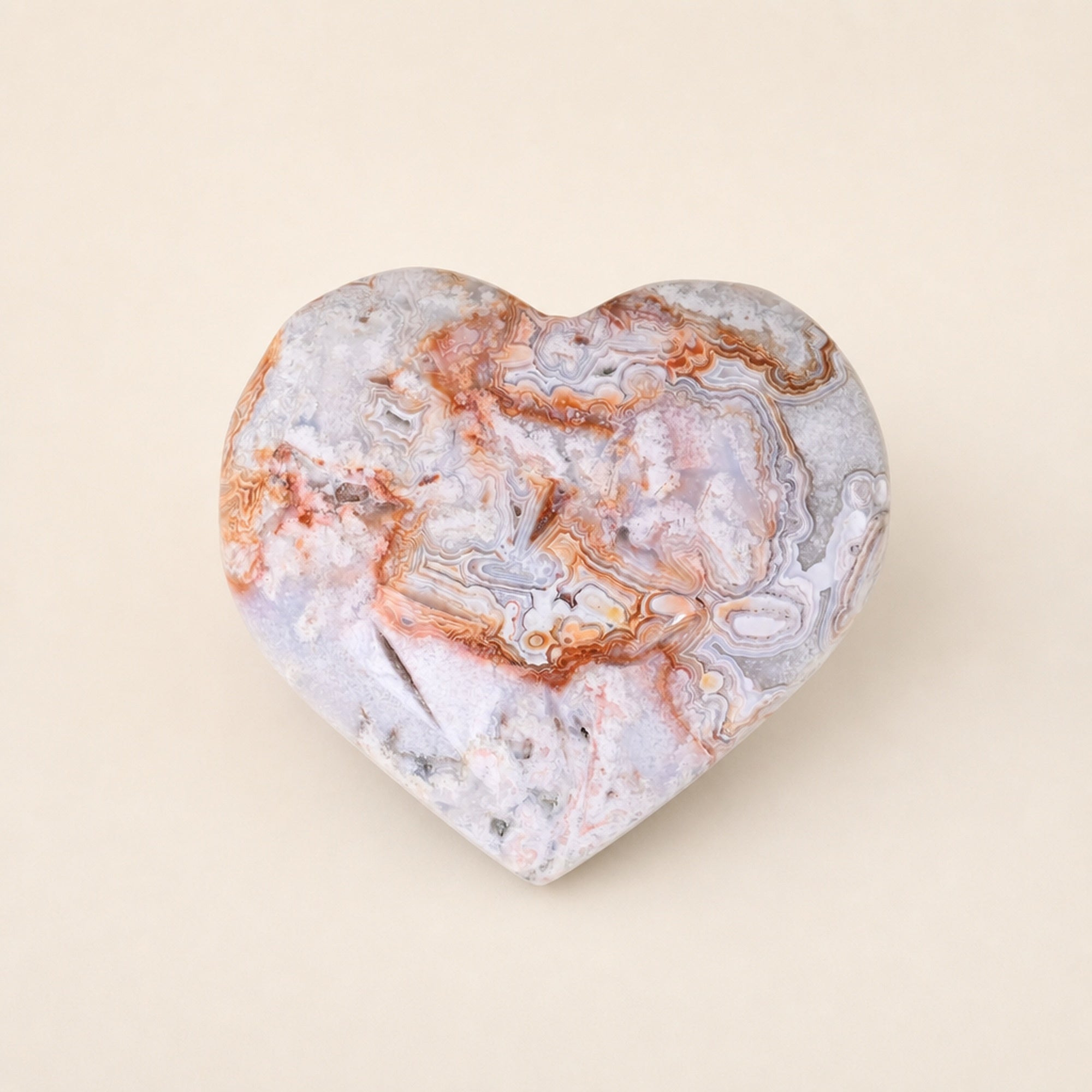
A related stone-family option
Crazy Lace Agate Heart Stone – Joyful Movement
This is a related variety in the same stone family, not a Agate product. We only identify jewelry as Agate when that exact material is verified.
Explore this related optionReal, Dyed, or Imitation? A Step-by-Step Check
Use this checklist when evaluating any moss green agate before purchase. It follows how gem cutters and mineralogists describe the material—natural inclusions versus applied color.
- Look for variation in the green. Natural chlorite or hornblende inclusions shift in tone and density; a uniform, paint-like green across the whole stone is a warning sign of dyeing.
- Check where the color sits. Natural inclusions appear within the stone, often touching the surface irregularly. Dye tends to pool in fine surface cracks and looks darker at the edges.
- Inspect the base. Moss agate typically has a white to transparent base with green patches (Mindat). An unnaturally bright green base with little contrast suggests treatment.
- Confirm the pattern type. Expect mossy, dendritic, or "galaxy-like" swirls—not sharp geometric banding, which belongs to classic banded agate.
- Ask about treatment. Untreated material should be described plainly. At Lumina Quartz, the Lumina Grade AAA Integrity Standard means we verify natural rough, no resin or glue filling, and no irradiation or dyeing—so the stone you receive is the stone that formed.
- Weigh cost against rarity. Moss agate is a common, affordable gem material; a modest price is normal, while a premium price should be justified by exceptional clarity and pattern alone.
Boundary to remember: A gemologist's lab report is the only definitive test for treatment. Visual checks are a screening tool, not a certification.
Caring for Your Moss Green Agate
Chalcedony is durable but not indestructible, and its inclusions and any natural surface reaching fractures deserve gentle handling. Clean moss agate with lukewarm water and a soft cloth or brush, and dry it fully. Avoid ultrasonic cleaners and steam cleaners, which can aggravate existing fractures or loosen settings (standard gem-care practice for chalcedony; confirm with your jeweler for set pieces).
Store moss agate separately from harder stones such as sapphire or diamond to prevent scratches, and remove rings before gardening, gym sessions, or heavy cleaning. To "cleanse" the stone in a spiritual sense, many people simply rinse it in cool water, dry it in soft light, and set it on a windowsill or near a plant—simple, repeatable, and gentle on the stone. If you choose to pair cleansing with moonlight or sound, treat it as personal ritual rather than a maintenance requirement.
For dyed or imitation stones, care differs: dye can fade in prolonged sunlight, and resin fillings can cloud with heat. Buying untreated material, as specified under the Lumina Grade AAA Integrity Standard, keeps care simple and predictable.
Frequently Asked Questions
Is moss green agate natural or is it dyed?
Moss agate is a natural chalcedony found with green mineral inclusions, but dyed and imitation versions are common in the market. Look for uneven, inclusion-based green and ask the seller directly about treatment before buying.
How can I tell real moss green agate from fake or imitation stones?
Check for natural variation in the green patches, color that sits inside the stone rather than pooled in cracks, and a white-to-translucent base with organic, moss-like patterns. A uniform, over-bright green with sharp banding is more likely treated or a different material entirely.
How do I care for and cleanse moss green agate jewelry?
Clean it with lukewarm water and a soft cloth, dry it fully, and skip ultrasonic or steam cleaners. Store it apart from harder gems, and if you cleanse it spiritually, a simple cool-water rinse and air-drying is enough.
Sources
- Gemological Institute of America (GIA): Gem Cutters Reveal the Beauty of Chalcedony
- Mindat: Moss Agate
This article shares cultural and mineral information for general interest. Crystal traditions are symbolic and are not medical advice. © 2026 Lumina Quartz.