The Complete Everyday Guide to Lepidolite Pink: Meaning and Uses
Table of Contents
- 10-Second Executive Summary / The Verdict Box
- What Is Lepidolite Pink? A Quick Definition
- Why Lepidolite Is Pink: The Science Behind the Color
- Lepidolite Meaning and Metaphysical Properties
- Emotional Calm and Stress Relief
- Lepidolite Pink in Crystal Healing and Chakra Work
- Lepidolite vs. Pink Quartz and Pink Muscovite: How to Tell Them Apart
- Everyday Uses of Lepidolite Pink
- Jewelry, Home Décor, and Meditation
- Step-by-Step Buying and Care Checklist (Applicable Boundaries)
- Caring for Lepidolite Pink: Hardness, Cleansing, and Storage
- Buying Lepidolite Pink: Quality, Value, and What to Look For
- What is lepidolite pink good for?
- Is lepidolite a quartz or a mica?
- How do you tell real pink lepidolite from pink muscovite?
- Sources
Lepidolite pink is a lithium-rich mica, not a quartz, and its soft pink to lilac color usually comes from trace manganese; it is best used for gentle everyday jewelry, grounded home décor, and meditation rather than for hard-wear rings or water-heavy cleansing routines. If you are deciding whether to buy, wear, or cleanse it, the short answer is: treat it as a soft stone (Mohs hardness around 2.5–3.5) that rewards careful handling and calm, intentional use.
10-Second Executive Summary / The Verdict Box
- Direct Verdict: Lepidolite pink is a genuine mineral specimen and meaningful everyday companion, but it is a mica with low hardness, so it suits jewelry and décor better than rough daily wear. Choose pieces graded under the Lumina Grade AAA Integrity Standard when you want natural, untreated material.
- Mineral Family: Mica (trioctahedral mica group), a field name for lithium-rich micas close to the polylithionite–trilithionite series, per Mindat.
- Mohs Hardness: Approximately 2.5–3.5 (soft; easily scratched).
- Color Cause: Pink to purple tones are usually attributed to divalent manganese, per Mindat.
- Lustre: Sub-vitreous, resinous, greasy, or pearly.
- Best Use Cases: Statement pendants and earrings, display pieces, meditation altars, and bedroom or desk décor.
- Avoid: Rings worn during heavy work, prolonged soaking, ultrasonic cleaners, and harsh chemicals.
What Is Lepidolite Pink? A Quick Definition
Lepidolite pink is a lithium-bearing mica whose name comes from the Greek lepidos ("scale") and lithos ("stone"), a reference to its distinctly scaly, layered appearance. Mindat describes lepidolite as a field name for a group of lithium-rich micas in, or close to, the polylithionite–trilithionite series. In practical terms, that means the material you see sold as "pink lepidolite" is often a mix of closely related mica species rather than one single formula.
This matters for buyers: lepidolite is typically softer and more layered than quartz, and its appearance varies from translucent lilac to opaque rose with shimmering flecks. It is often associated with pegmatite deposits, and the International Gem Society notes fine pink and reddish crystals from Brazil among other localities.
Why Lepidolite Is Pink: The Science Behind the Color
The pink-to-purple color of lepidolite is usually attributed to divalent manganese, according to Mindat. This is a mineralogical explanation, not a mystical one, and it helps explain why the shade can range from pale lavender to deeper rose depending on trace chemistry and lighting.
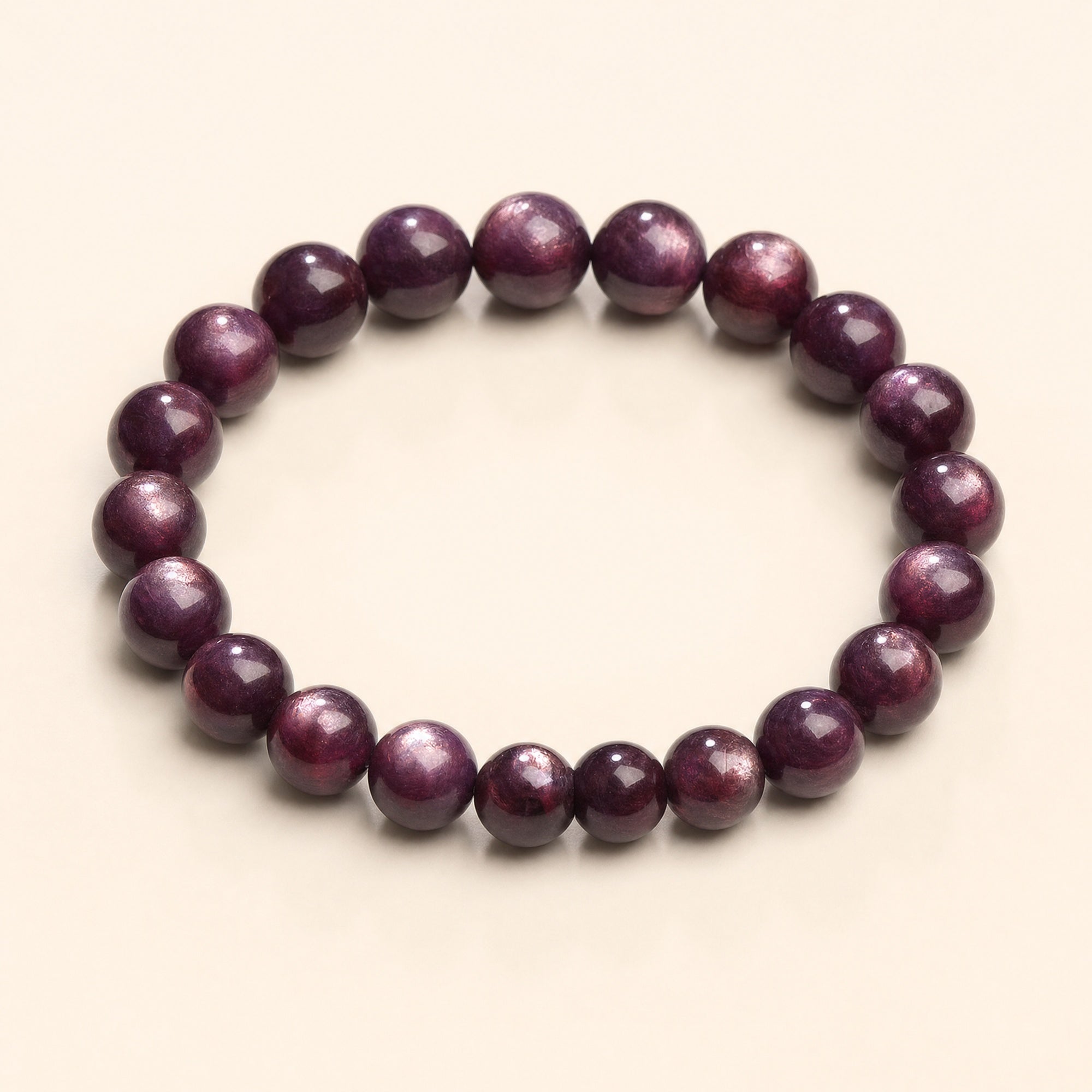
Lepidolite Bracelet
A quiet bracelet for turning this intention into a small daily ritual.
Shop This Authentic Piece →Mindat also notes that the name lepidolite is sometimes incorrectly applied to lithian muscovite, a different mica that can share a similar pink-purple hue from the same manganese cause. That overlap is the single most common source of confusion in the marketplace, and it is why a visual check plus a hardness and cleavage test matters more than color alone.
Lepidolite Meaning and Metaphysical Properties
In crystal literature, lepidolite pink is often associated with calm, emotional balance, and gentle transition, especially around change and rest. These are cultural and symbolic associations, not medical claims. Lepidolite may support a sense of grounding in personal ritual, and it is often associated with soothing routines, but it does not treat, cure, or regulate any physical or mental health condition.
Emotional Calm and Stress Relief
Many people keep a small lepidolite piece on a desk or bedside table as a visual cue for pausing, breathing, and resetting during a busy day. This is a personal reminder practice rather than a clinical intervention; the stone's role is symbolic, and any calming effect you notice likely comes from the pause and attention you bring to it.
Lepidolite Pink in Crystal Healing and Chakra Work
In chakra-based traditions, pink and lilac stones are often associated with the heart and crown centers, and lepidolite is frequently placed in those categories. Treat these as cultural frameworks for reflection. If you use lepidolite in meditation, a simple practice is to hold it during a few minutes of slow breathing, then set it down and note one thing you want to release.
Lepidolite vs. Pink Quartz and Pink Muscovite: How to Tell Them Apart
These three are easily confused, but they differ in structure, hardness, and feel. Rose quartz is a silicate with a glassy lustre and a Mohs hardness of about 7, so it resists scratching and feels cool and hard. Lepidolite is a mica with a layered, pearly-to-greasy lustre and a Mohs hardness of roughly 2.5–3.5, so it scratches easily and often shows thin, sheet-like cleavage. Pink muscovite is another mica, chemically distinct from lepidolite, and Mindat notes the two are frequently confused because both can appear pink to purple.
A practical field check: look for the flaky, book-like layering of mica. Lepidolite tends to flake in thin sheets along its cleavage, while quartz fractures conchoidally and does not peel. If a seller cannot tell you whether a piece is mica or quartz, that is a signal to slow down and ask for clarity.
Everyday Uses of Lepidolite Pink
Lepidolite pink works best where it is seen and touched gently rather than exposed to impact. Because of its low hardness and perfect-ish basal cleavage, it is a poor candidate for rings worn during housework, gardening, or gym sessions, but an excellent candidate for pendants, earrings, display bowls, and small altar pieces.
Jewelry, Home Décor, and Meditation
For jewelry, choose settings that protect the stone, such as bezels or cabochons with a closed back, and remove the piece before showers, swimming, or cleaning. For home décor, a lepidolite sphere or slab on a shelf or nightstand pairs well with soft lighting that brings out its pearly sheen. For meditation, a palm-sized piece is often easier to hold than a small tumbled stone, and it gives your hands something steady to rest on.
Step-by-Step Buying and Care Checklist (Applicable Boundaries)
- Confirm the mineral type first. Ask whether the piece is mica (lepidolite) or quartz (rose quartz). Lepidolite is a lithium-rich mica per Mindat, so it should show layering and a softer feel.
- Check the surface for flaking. Run a fingernail gently along an edge; mica may lift in thin sheets. If the stone feels glassy and hard, you are likely handling quartz.
- Look at the color under neutral light. Pink-to-purple from manganese is typical; extreme neon saturation is a prompt to ask about treatment.
- Ask about treatment and origin. Under the Lumina Grade AAA Integrity Standard, look for natural rough, no chemical resin filling, and no irradiation or dye. A reputable seller should describe the stone's condition plainly.
- Match the piece to the wear pattern. Pendants and earrings are safer than rings; reserve rings for occasional wear and remove them before chores.
- Clean dry-first. Dust with a soft cloth; if needed, wipe with a barely damp cloth and dry immediately. Avoid soaking, ultrasonic cleaners, steam, and harsh chemicals.
- Store separately. Keep lepidolite in a soft pouch away from harder stones like quartz or corundum to prevent scratches.
Boundary: This checklist applies to natural lepidolite specimens and jewelry. It does not validate metaphysical effects, and it does not replace a gemologist's identification for high-value purchases.
Caring for Lepidolite Pink: Hardness, Cleansing, and Storage
With a Mohs hardness of roughly 2.5–3.5 and a layered mica structure, lepidolite asks for gentleness. Mindat lists its lustre as sub-vitreous, resinous, greasy, or pearly, which is a useful clue: it looks softer than quartz and it is. Avoid prolonged water exposure, because water can work into cleavage planes and weaken the stone over time. For energetic or symbolic cleansing, many people prefer smoke, sound, or moonlight rather than water, which also protects the physical specimen.
For storage, keep pieces in individual soft pouches and away from direct sun and heat. If a piece does get wet, blot it dry and let it air out fully before returning it to a closed container.
Buying Lepidolite Pink: Quality, Value, and What to Look For
Quality in lepidolite pink comes down to color saturation, translucency, the presence of attractive shimmer, and the absence of cracks or unstable flaking. Because lepidolite is a mica, some layering and surface character is normal and even desirable; what you want to avoid is a stone that sheds flakes easily or has been heavily filled. Under the Lumina Grade AAA Integrity Standard, the ideal piece is natural rough, free of chemical resin filling, and free of irradiation or dye, with color that reads as a genuine manganese pink rather than a flat artificial tone.
Value is driven more by aesthetics and craftsmanship than by rarity. The International Gem Society notes lepidolite occurs in several colors and localities, and fine pink material exists, so a beautiful piece is often available at a moderate price. If a seller markets an unusually vivid or flawless piece at a premium, ask specifically about treatment and ask for a close-up of the surface texture.
What is lepidolite pink good for?
It is best for gentle everyday uses such as pendants, earrings, display pieces, and meditation, and it is often associated with calm and transition in crystal traditions. Because it is soft, it is less suited to hard-wear rings.
Is lepidolite a quartz or a mica?
Lepidolite is a mica, specifically a lithium-rich mica group member, not a quartz, per Mindat. That is why it feels softer and shows layering rather than a glassy fracture.
How do you tell real pink lepidolite from pink muscovite?
Both are pink micas, and Mindat notes the name lepidolite is sometimes incorrectly applied to lithian muscovite, so color alone is unreliable. Look for the characteristic scaly, layered cleavage and confirm the mineral type with the seller.
Sources
This article is for educational and cultural interest only. Crystal traditions described here are symbolic and are not medical advice. Always consult a qualified professional for health concerns. © 2026 Lumina Quartz.
Product Facts From the Current Catalog
These details come from the active Lumina Quartz catalog record checked on 2026-11-21. They are product-listing facts, not laboratory results or invented wear-test claims.
| Listed product | Lepidolite Bracelet – Evening Ease |
|---|---|
| Format | Bracelet |
| Listed price snapshot | 71.99 |
Price, availability, and options may change. Check the live product listing before choosing.