The Complete Everyday Guide to Lepidolite Jewelry: Meaning and Uses
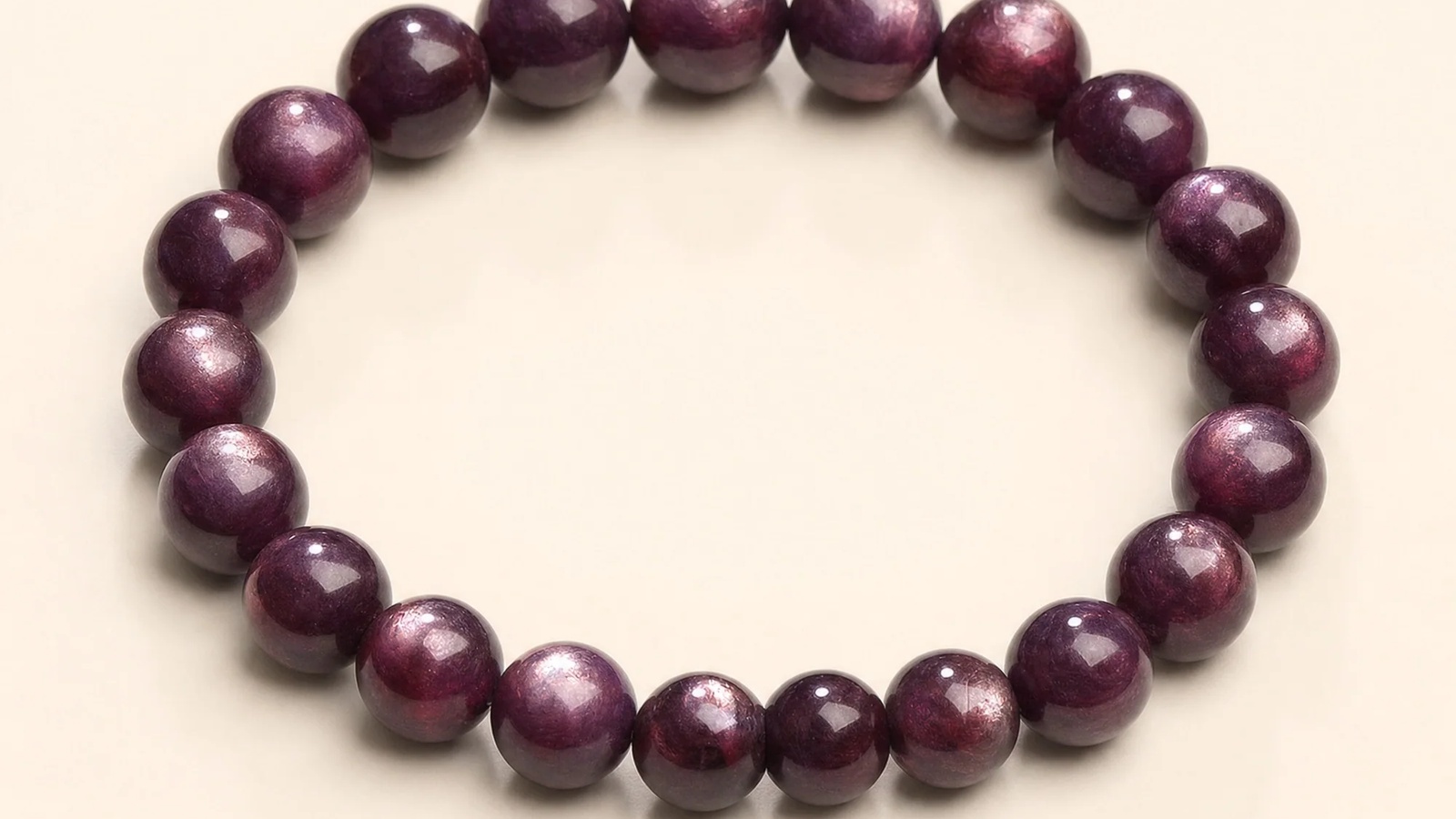
Table of Contents
- What Is Lepidolite? The Lithium-Rich Mica Behind the Lavender Shimmer
- The Meaning of Lepidolite Jewelry: The "Peace Stone" of Transition
- Calm, Mood Balance, and Emotional Release
- Heart and Crown Chakra Connections
- Everyday Uses: How to Wear Lepidolite Without Overthinking It
- Styling by Piece — Bracelets, Necklaces, Pendants, Earrings
- Pairings: Metals, Bead Sizes, and Layering with Amethyst or Rose Quartz
- Is Lepidolite Safe for Daily Wear? Lithium, Mica, and Skin Sensitivity
- How to Spot Quality: Color, Mica Flake, Inclusions, and Treated Stones
- Decision Table: Lepidolite vs. Look-Alikes and Treated Stones
- Care and Cleansing Rituals That Won't Damage Your Jewelry
- What does lepidolite jewelry mean and what is it good for?
- Is lepidolite safe to wear every day (lithium and mica content)?
- How do I tell real lepidolite from fake or dyed stone?
- Sources
What Is Lepidolite? The Lithium-Rich Mica Behind the Lavender Shimmer
Lepidolite is a lithium-rich mica, and the lavender-to-pink shimmer you see in jewelry is the same flaky, layered structure that makes mica distinctive under light. It is not a single rigid mineral species but a field name for a group of Li-rich micas near the polylithionite–trilithionite series, which is why two pieces can look so different in color and transparency (Mindat). The name comes from the Greek for "scale," a nod to the stacked sheets that give lepidolite its soft, glittering character.
Core Diagnostic Verdict: Lepidolite is a lithium-rich mica, and the lavender-to-pink shimmer you see in jewelry is the same flaky, layered structure that makes mica distinctive under light.
- Core Intention: Lepidolite Jewelry
- Authenticity Standard: Grade AAA Genuine Natural // Verified Untreated
- Lumina Standard: Grade AAA Natural Gemstones // Verified Untreated
The Meaning of Lepidolite Jewelry: The "Peace Stone" of Transition
Calm, Mood Balance, and Emotional Release
In crystal traditions, lepidolite is often associated with calm and steadiness during change — a reputation linked to its lithium content and its soothing lavender tone. Here is the honest boundary: lithium is also a critical mineral sourced from lepidolite and other ores (USGS), but wearing a stone is not the same as taking lithium in a measured form. A necklace or bracelet may support a personal ritual of pause; it does not regulate mood or replace professional care. Keep "Lumina Grade AAA Integrity Standard" in mind here: authentic original-material stones carry cultural meaning, while treated or imitated ones may undermine that practice.
Heart and Crown Chakra Connections
In modern crystal symbolism, lepidolite is often placed at the heart and crown — the heart for gentle self-connection, the crown for perspective and pause. These are symbolic associations, not physiological claims. Wearers often treat it as a reminder to breathe before reacting rather than a tool with measurable effects.
Everyday Uses: How to Wear Lepidolite Without Overthinking It
Styling by Piece — Bracelets, Necklaces, Pendants, Earrings
Bracelets suit daily layering because the wrist tolerates minor knocks; necklaces and pendants sit close to the chest and shine in low light; earrings best showcase the mica flake. Choose beads between 6–8mm for unobtrusive daily wear, and 10mm+ for a statement piece that shows the color clearly.
Pairings: Metals, Bead Sizes, and Layering with Amethyst or Rose Quartz
Lepidolite's cool violet tone pairs readily with both silver and gold: silver keeps the look airy, gold warms the lavender. Layer with amethyst for deeper purple contrast, and rose quartz for a softer, warmer palette. Match bead sizes — a 6mm lepidolite strand beside an 8mm quartz strand tends to look intentional rather than cluttered.
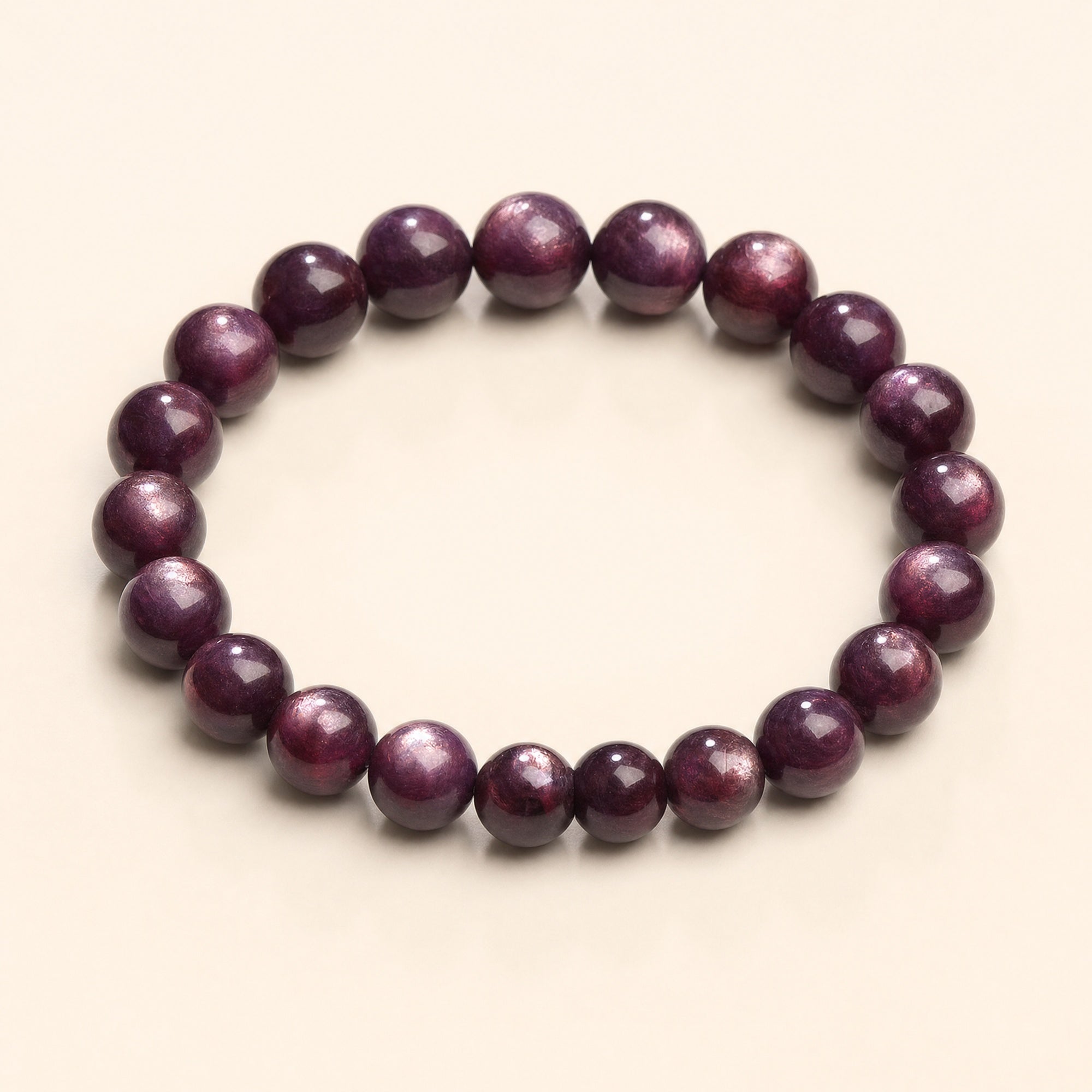
Lepidolite Bracelet
A quiet bracelet for turning this intention into a small daily ritual.
Shop This Authentic Piece →Is Lepidolite Safe for Daily Wear? Lithium, Mica, and Skin Sensitivity
Everyday wear is generally considered low-risk for most adults, but the mica structure matters: lepidolite is soft and layered, so it can flake and chip under impact, and friction against the skin may irritate sensitive wearers. The lithium content is a mineral fact (USGS), not a reason to expect a bodily effect from wearing the stone. If a piece sheds flakes or feels gritty against your skin, stop wearing it and check for cracks. This is where a traceable standard helps — pieces that meet the Lumina Grade AAA Integrity Standard are screened for natural origin material and free of chemical filling that can degrade with wear.
How to Spot Quality: Color, Mica Flake, Inclusions, and Treated Stones
Real lepidolite shows a visible, fine-grained mica flake under light and often contains natural inclusions — lepidolite crystals have even been documented inside gem-quality tourmaline from multiple localities, so inclusions are normal, not a defect that reveals treatment (GIA). Watch for flat, uniform dye that pools in cracks, and for "stone" that feels like plastic or resin. A natural piece has subtle variation between beads; a treated one often repeats the same violet too perfectly across every piece.
Decision Table: Lepidolite vs. Look-Alikes and Treated Stones
| What you see | Most likely explanation | What to do |
|---|---|---|
| Visible fine flake, subtle color shift by angle | Natural lepidolite mica | Good sign; check hardness care before daily wear |
| Uniform violet in every bead, dye in cracks | Dyed or resin-filled material | Prefer pieces meeting the Lumina Grade AAA Integrity Standard |
| Glassy, transparent purple, no flake | Quartz or glass tinted purple | Ask for close-up photos in daylight |
| Chalky, matte surface that rubs off | Low-grade or unstable stone | Avoid for daily wear; soft mica chips easily |
Care and Cleansing Rituals That Won't Damage Your Jewelry
Because lepidolite is soft mica, avoid ultrasonic cleaners, hot water, and harsh chemicals, all of which can loosen flake or dye. Wipe with a dry or barely damp cloth, store separately from harder stones, and remove before swimming or exercise. For ritual cleansing, smoke, moonlight, or sound are gentle options that keep water and heat away; skip saltwater soaks that can dull the surface.
What does lepidolite jewelry mean and what is it good for?
It is often associated with calm, emotional steadiness, and heart–crown symbolism. Wearers may use it as a personal reminder to pause during change, not as a measurable treatment.
Is lepidolite safe to wear every day (lithium and mica content)?
For most adults, daily wear is low-risk, but the soft, flaky mica structure can chip and irritate sensitive skin. Inspect for cracks and stop wearing pieces that shed flakes.
How do I tell real lepidolite from fake or dyed stone?
Look for visible fine mica flake and slight color variation between beads. Uniform dye pooled in cracks, or a perfectly repeated violet, suggests treatment or imitation.
Sources
- Mindat — Lepidolite: Mineral information, data and localities
- USGS — Lepidolite critical mineral coloring sheet
- GIA — Lepidolite in copper-bearing tourmaline
© 2026 Lumina Quartz. Crystal traditions and personal symbolism are shared for reflection, not as medical or health advice.
Product Facts From the Current Catalog
These details come from the active Lumina Quartz catalog record checked on 2026-11-13. They are product-listing facts, not laboratory results or invented wear-test claims.
| Listed product | Lepidolite Bracelet – Evening Ease |
|---|---|
| Format | Bracelet |
| Listed price snapshot | 71.99 |
Price, availability, and options may change. Check the live product listing before choosing.