The Complete Everyday Guide to Green Moss Agate: Meaning and Uses
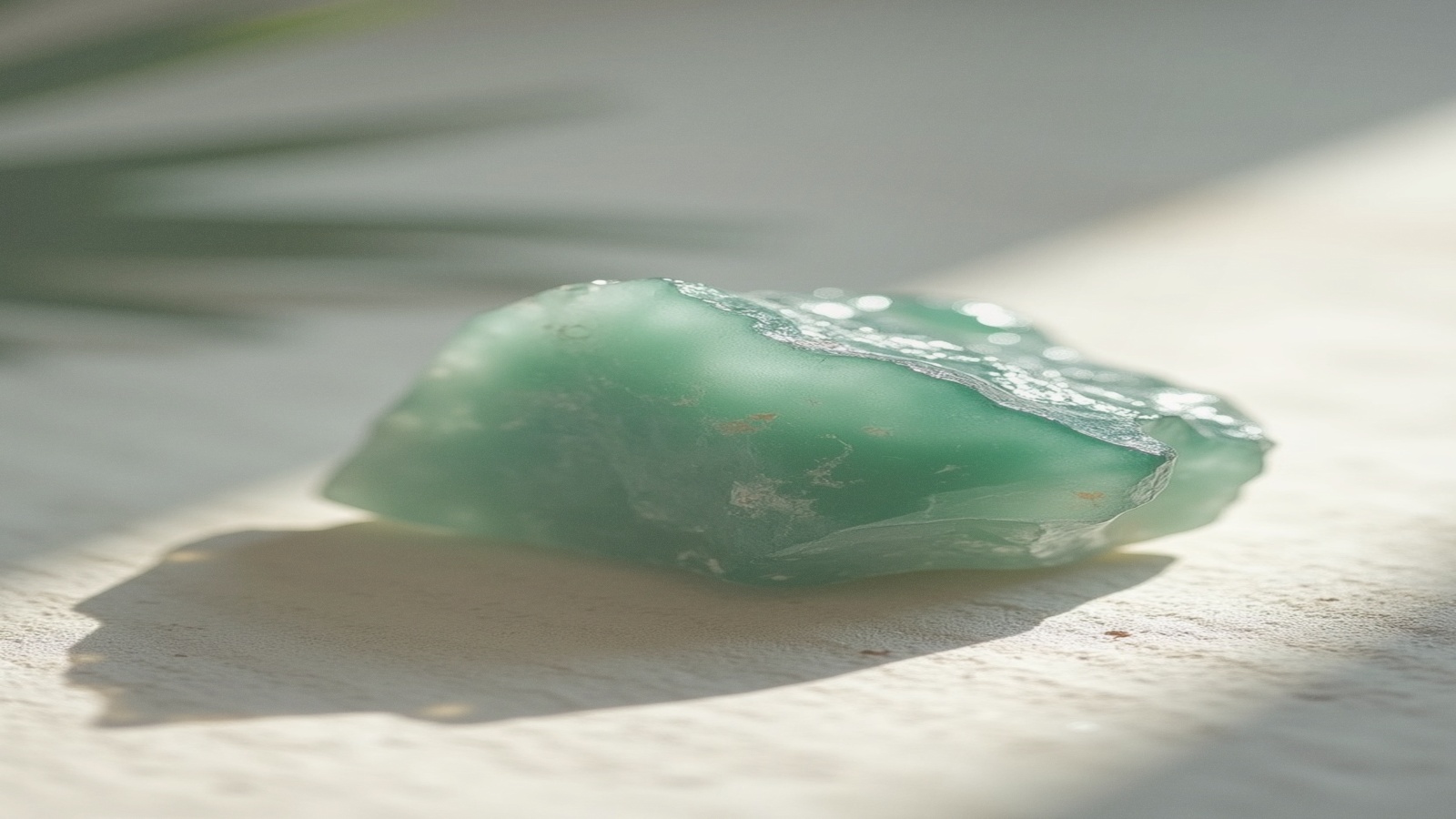
Table of Contents
- What Is Green Moss Agate? Geology, Composition, and Why It Looks Like Moss
- 10-Second Executive Summary / The Verdict Box
- Green Moss Agate Meaning: The Gardener's Stone of Renewal and Grounding
- Healing Properties and Everyday Benefits (Emotional Balance, Stress Relief, Abundance)
- Light Green vs. Dark Green: How Shade Changes the Stone's Energy
- Green Moss Agate and the Chakras, Zodiac Signs, and Birthstone Connections
- How to Use Green Moss Agate Every Day: Jewelry, Desk Stones, Meditation, and Gifting
- Buying Guide: Quality Factors, Natural vs. Treated, and Price Expectations
- Buyer's Step-by-Step Check List
- Care and Cleansing: Keeping Your Green Moss Agate Beautiful for Years
- Green Moss Agate vs. Tree Agate, Dendritic Agate, and Other Lookalikes
- Frequently Asked Questions
- What does green moss agate mean and what is it good for?
- Is green moss agate a real gemstone (and is it the same as moss agate)?
- How do you choose and care for green moss agate jewelry?
- Sources
What Is Green Moss Agate? Geology, Composition, and Why It Looks Like Moss
Green moss agate is a variety of chalcedony—a microcrystalline form of quartz—that contains green mineral inclusions such as chlorite or hornblende, and sometimes brown-to-black dendrites of iron or manganese, which give it the branching, plant-like patterns its name describes (Mindat). It is a real gemstone in the mineralogical sense, though "moss agate" is a trade and variety name rather than a distinct mineral species. Agates generally form in cavities within volcanic rock, where silica-rich water deposits quartz crystals layer by layer along the cavity wall (Smithsonian NMNH).
10-Second Executive Summary / The Verdict Box
- Direct Verdict: Green moss agate is a genuine chalcedony (quartz) variety, valued for its moss-like green inclusions. Buy it for its pattern and durability, not for medical outcomes.
- Mohs Hardness: Roughly 6.5–7 (typical for quartz/chalcedony).
- Composition: Silicon dioxide (SiO₂) with green mineral inclusions (chlorite, hornblende) or iron/manganese dendrites.
- Key Quality Marker: Distinct, natural-looking moss patterns with translucent clarity and no resin-filled cracks (see Lumina Grade AAA Integrity Standard below).
- Best For: Everyday jewelry, desk stones, meditation anchors, and meaningful gifting.
Green Moss Agate Meaning: The Gardener's Stone of Renewal and Grounding
Culturally, green moss agate is often associated with renewal, growth, and a steady, grounded calm—qualities its green, plant-like patterns naturally evoke. In crystal traditions it is sometimes called the gardener's stone, a nickname tied to the imagery of new shoots and fertile soil rather than to any demonstrated physical effect. These meanings are symbolic and personal: they can serve as gentle reminders, but they are not scientific claims.
For readers who want a stone that feels connected to nature and new beginnings, green moss agate may support a sense of intention and focus simply by being a tangible cue. That distinction—between cultural symbolism and confirmed mineral properties—matters when you choose and use the stone.
Healing Properties and Everyday Benefits (Emotional Balance, Stress Relief, Abundance)
Many people are drawn to green moss agate for emotional balance, stress relief, and abundance themes. These are traditional associations, often linked to the color green and to images of flourishing gardens. It is honest to say that the stone may support a calming ritual or a mindful pause; it is not accurate to claim it regulates the nervous system, stabilizes mood, or relieves medical conditions.
What it can do practically: serve as a grounding object during a breathing break, a visual anchor for a journaling habit, or a small reminder of the growth you want to cultivate. Those uses work through attention and routine, not through the mineral itself.
Light Green vs. Dark Green: How Shade Changes the Stone's Energy
Lighter green moss agate tends to read as airy and fresh, with more translucency; darker green stones often look richer and more dramatic, with denser inclusions. In cultural terms, light shades are often associated with gentle beginnings and clarity, while deep greens are linked to steadiness and depth. Neither is "better"—choose the shade that matches the feeling you want your piece to evoke, and judge quality by pattern definition and clarity rather than color alone.
Green Moss Agate and the Chakras, Zodiac Signs, and Birthstone Connections
In chakra traditions, green moss agate is commonly linked to the heart chakra, the center associated with compassion and connection. Astrologically, it is often associated with earth signs such as Taurus and Virgo, and sometimes with Gemini or Aquarius depending on the source—traditions vary, so treat these as cultural frameworks rather than fixed rules. Moss agate is not a traditional modern birthstone; it is sometimes given as an alternative or "nature stone" gift, but this is a custom, not an official designation.
If you use chakra or zodiac frameworks, let them guide your intention. They are meaningful lenses, not measurements.
How to Use Green Moss Agate Every Day: Jewelry, Desk Stones, Meditation, and Gifting
Everyday use is where green moss agate shines, because its hardness (roughly 6.5–7) makes it suitable for rings, pendants, and bracelets with reasonable care. Practical ways to incorporate it:
- Jewelry: Choose pendants or bracelets where the pattern is visible; avoid wearing rings during heavy lifting or gardening.
- Desk stone: Keep a polished piece nearby as a visual cue for a short breathing or reset pause between tasks.
- Meditation: Hold the stone during a few minutes of quiet focus, using the moss pattern as a point of attention.
- Gifting: Its growth-and-renewal symbolism makes it a thoughtful gift for new beginnings—moves, new jobs, or new projects.
Buying Guide: Quality Factors, Natural vs. Treated, and Price Expectations
Quality in green moss agate comes down to pattern, clarity, and integrity of the material. Look for distinct, natural-looking moss or dendritic inclusions, good translucency, and a smooth polish without visible fill lines. Natural stones may show slight irregularities—these are usually signs of authenticity rather than flaws.
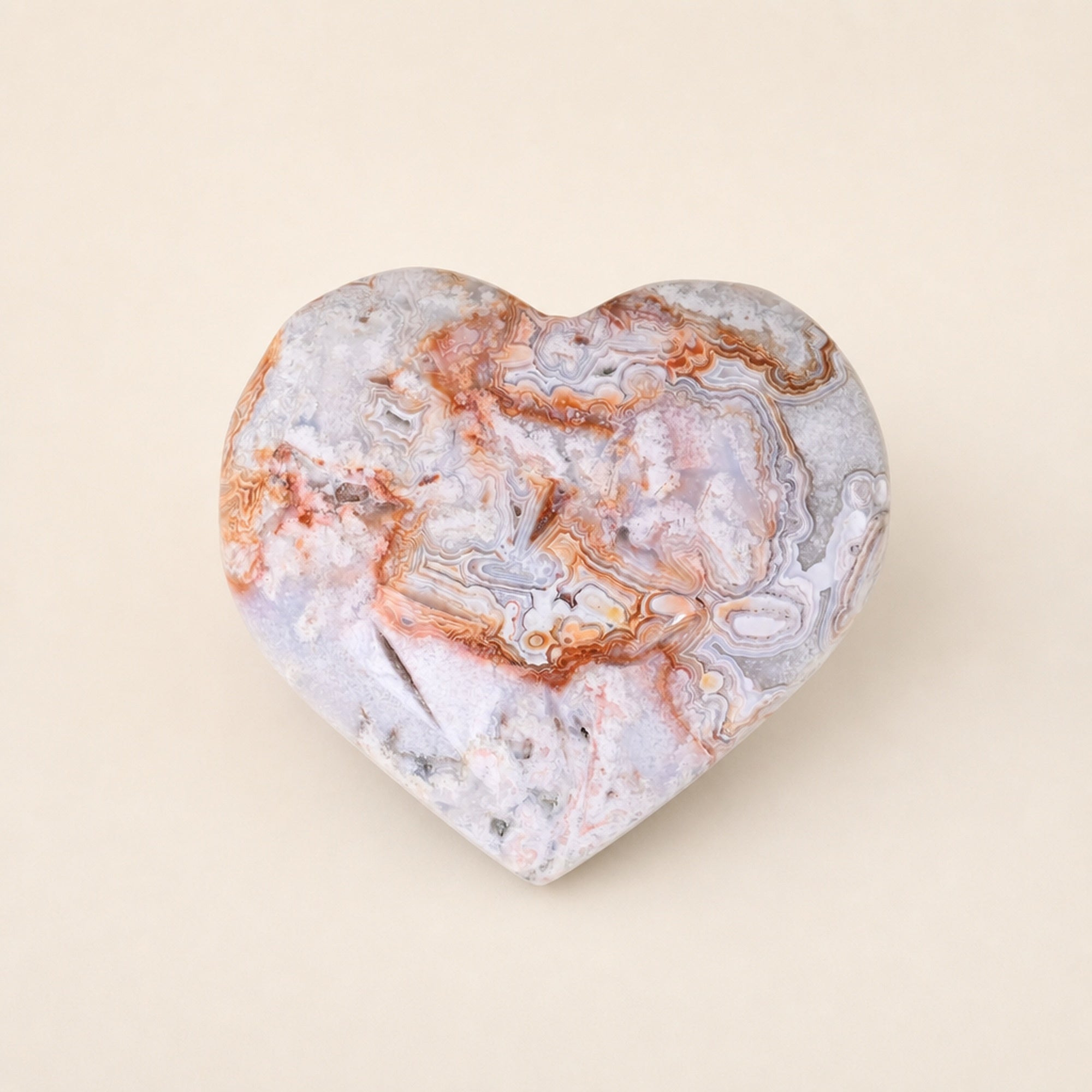
A related stone-family option
Crazy Lace Agate Heart Stone – Joyful Movement
This is a related variety in the same stone family, not a Agate product. We only identify jewelry as Agate when that exact material is verified.
Explore this related optionAt Lumina Quartz, the Lumina Grade AAA Integrity Standard means we prioritize natural, unenhanced material: no chemical resin filling, no irradiation, and no dyeing. When you shop, ask whether the stone is natural or treated, inspect close-up photos for resin-filled cracks, and be wary of unnaturally uniform color. Price varies widely with size, pattern quality, and setting; small polished stones are often affordable, while large, well-patterned cabochons and fine jewelry command more. Expect to pay more for clean, high-contrast patterns and less for pale or heavily included material—but always let the visible pattern, not the label, make the decision.
Buyer's Step-by-Step Check List
- Confirm the species: Green moss agate should be described as chalcedony/quartz with green inclusions (chlorite, hornblende) or dendrites (Mindat).
- Inspect the pattern: Look for branching, moss-like forms rather than flat, uniform color.
- Check for treatment: Ask directly about resin filling, dyeing, or irradiation; the Lumina Grade AAA Integrity Standard is a useful benchmark for "natural, untreated" expectations.
- Examine edges and cracks: Filled cracks often show a slight sheen or color pooling.
- Match hardness to use: At ~6.5–7 Mohs, it suits jewelry but deserves care against hard knocks.
- Verify provenance claims: Montana moss agate is a known collectible material (GIA), but origin claims should be specific and consistent.
Care and Cleansing: Keeping Your Green Moss Agate Beautiful for Years
Care for green moss agate as you would other quartz-family stones: clean with lukewarm water and a soft cloth, avoid harsh chemicals and ultrasonic cleaners if the piece is treated or set with delicate metals, and store it separately to prevent scratches. For energetic cleansing, traditions suggest moonlight, sound, or placing the stone on a natural surface—these are cultural practices, not maintenance requirements. Physically, gentle washing and dry storage are what preserve the stone.
Green Moss Agate vs. Tree Agate, Dendritic Agate, and Other Lookalikes
Green moss agate is often confused with tree agate and dendritic agate. Tree agate typically has opaque white or pale green backgrounds with green dendritic patterns, while green moss agate tends to be more translucent with softer, moss-like inclusions. Dendritic agate refers broadly to agate with tree-like dendrites, often black or brown, and may overlap with moss agate in name and appearance—so the label alone is not enough. Compare translucency, inclusion color, and pattern shape, and ask for natural-material confirmation. These distinctions help you buy the stone you actually want rather than a similar-looking substitute.
Frequently Asked Questions
What does green moss agate mean and what is it good for?
It is culturally associated with renewal, grounding, and growth, and is often used as an everyday reminder stone, jewelry accent, or meditation anchor; these are symbolic uses, not medical benefits.
Is green moss agate a real gemstone (and is it the same as moss agate)?
Yes—it is a genuine chalcedony (quartz) variety with green mineral inclusions, and "green moss agate" is simply a color-specific name for moss agate.
How do you choose and care for green moss agate jewelry?
Choose distinct natural patterns and untreated material (the Lumina Grade AAA Integrity Standard is a helpful benchmark), then clean gently with lukewarm water and store separately to avoid scratches.
Sources
- Mindat – Moss Agate: Mineral information, data and localities
- Smithsonian National Museum of Natural History – Quartz (var. agate)
- GIA – Montana Moss Agate: Collectible Chalcedony from the Yellowstone River (abstract)
© 2026 Lumina Quartz. This guide shares mineral information and cultural traditions; it is not medical advice, and crystal meanings are personal and symbolic.