The Complete Everyday Guide to Chrysoprase Stone: Meaning and Uses
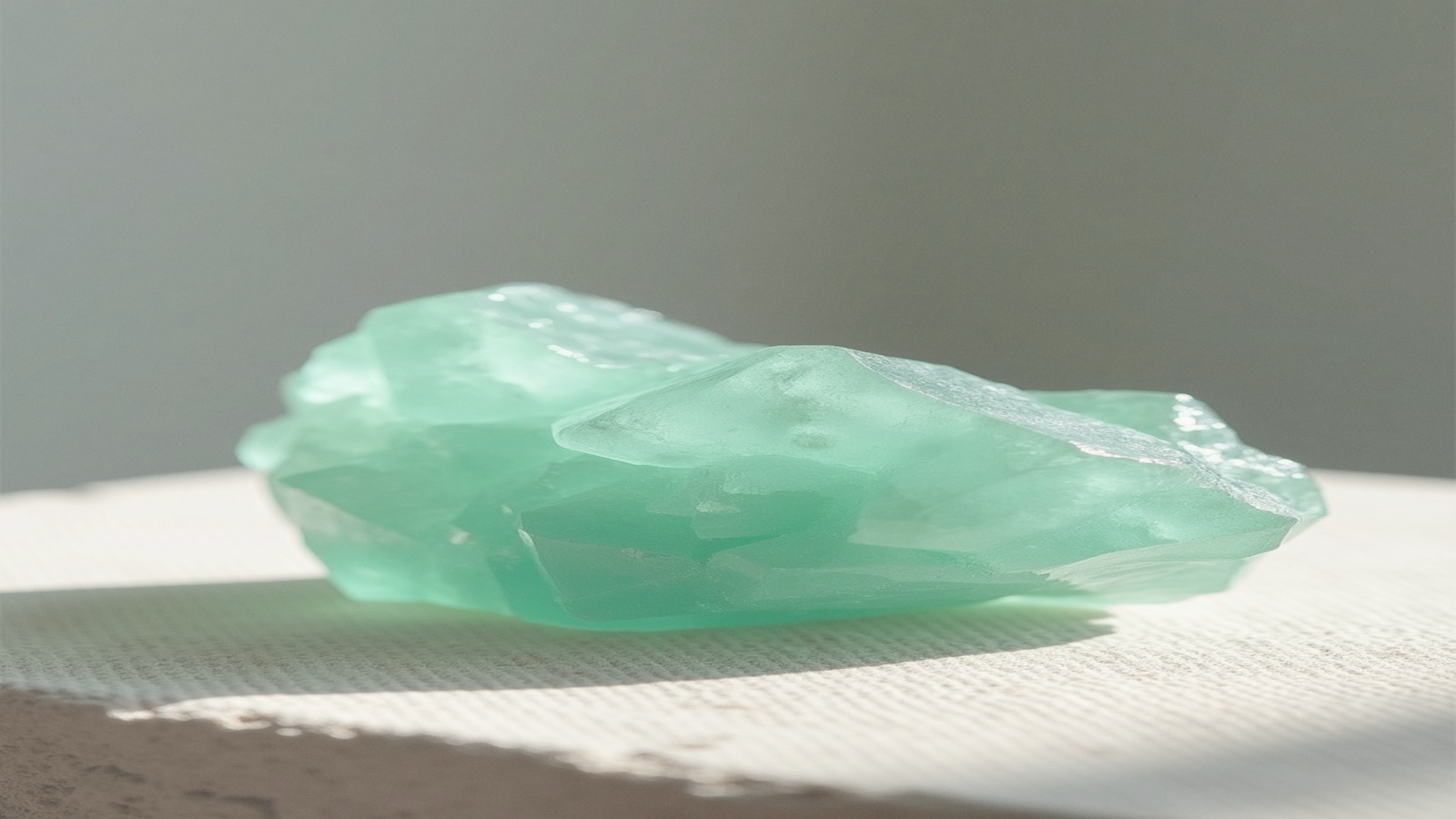
Table of Contents
- 10-Second Executive Summary / The Verdict Box
- What Is Chrysoprase Stone? A Green Quartz Variety Explained
- Scientific Composition: Chalcedony, Nickel, and the Source of Its Color
- Chrysoprase Meaning and Metaphysical Properties
- Heart Chakra, Emotional Healing, and the Stone of Venus
- How to Identify Quality Chrysoprase: Color, Clarity, and Inclusions
- Chrysoprase vs. Similar Green Gemstones: Emerald, Jade, and Prase
- Green Gem Comparison: Which Stone Are You Actually Holding?
- How to Care for Chrysoprase Jewelry for Daily Wear
- Styling Chrysoprase for Everyday Looks: Jewelry and Outfit Pairing
- Chrysoprase Buying Guide: What to Look For and What It Costs
- FAQ: Top Questions About Chrysoprase Stone Answered
- What is chrysoprase stone good for?
- How do you identify real chrysoprase?
- Is chrysoprase expensive?
- Sources
Chrysoprase stone is a natural green variety of chalcedony quartz, colored by nickel-bearing mineral inclusions rather than by copper or dye, and it is most often used in jewelry, as a heart-centered meditation stone, and as a durable everyday gem when cut and cared for properly. Its value rests on two things at once: a verifiable mineral identity and a color so vivid that imitation is common.
10-Second Executive Summary / The Verdict Box
- Direct Verdict: Chrysoprase is a genuine chalcedony (microcrystalline quartz) whose apple-to-leaf green comes from nickel-bearing layer silicates. Buy it for color honesty and everyday wearability, not for hardness above quartz.
- Mineral Identity: Variety of chalcedony; SiO2 with Ni-bearing phyllosilicate inclusions (Mindat; USGS).
- Mohs Hardness: About 6.5–7 (quartz family range); tougher than opal, softer than sapphire or diamond.
- Color Source: Nickel, not dye. This is the single most useful fact for authentication.
- Best For: Rings worn daily with protective settings, pendants, earrings, beaded bracelets, and heart-chakra or intention practice.
- Avoid: Ultrasonic cleaners, steam, acid dips, long sun exposure, and knocking it against harder stones.
- Lumina Grade AAA Integrity Standard: Our benchmark for natural, untreated rough — no chemical stabilizing, no irradiation, no dye.
What Is Chrysoprase Stone? A Green Quartz Variety Explained
Chrysoprase is a green variety of chalcedony, the microcrystalline form of quartz, and it is classified as a gemstone variety rather than a mineral species of its own. Mindat describes it as an apple-green to greenish chalcedony, and USGS lists chrysoprase among the many chalcedony varieties alongside carnelian, agate, and jasper. That family relationship matters: chrysoprase shares quartz's general hardness and toughness, but its color behaves very differently from dyed agate or stained quartz.
In the gem trade, the name is sometimes used loosely for any bright green chalcedony, which is why buyers benefit from asking about origin and treatment rather than relying on the label alone. Gemological literature has documented chrysoprase from specific deposits, including Haneti in central Tanzania, where researchers examined both chrysoprase and the related prase opal (GIA).
Scientific Composition: Chalcedony, Nickel, and the Source of Its Color
Chemically, chrysoprase is silica, but its green is not a pigment added later. According to Mindat, the color is caused by tiny inclusions of nickel-bearing layer silicates such as willemseite or népouite. This is why a true chrysoprase tends to look slightly milky and translucent rather than glass-clear, and why its green can shift subtly under different lighting — a natural phenomenon often described as pleochroism-like variation in appearance.
That nickel origin also explains a practical limitation: some chrysoprase can fade with prolonged heat and strong sunlight, a behavior often associated with the stability of its color centers. Store it away from a sunny windowsill and remove it before prolonged sunbathing or sauna use.
Chrysoprase Meaning and Metaphysical Properties
In crystal and folk traditions, chrysoprase is most often associated with the heart chakra, with renewal, and with gentle emotional honesty. These are cultural and symbolic associations, not medical claims; the stone is not a treatment for anxiety, grief, or any health condition. What makes chrysoprase distinctive within green-stone lore is its tone: where emerald symbolism leans toward majesty and jade toward longevity, chrysoprase is usually framed as the stone of quiet growth and fresh starts.
Heart Chakra, Emotional Healing, and the Stone of Venus
Chrysoprase is frequently linked with Venus in older lapidary traditions, and with the heart chakra in modern practice. Practitioners may hold it during breathwork, keep it on a desk as a visual cue for patience, or wear it as a personal reminder to speak kindly. Its soft green also makes it a natural companion stone for gratitude or intention-setting rituals.
If you use chrysoprase this way, treat it as a ritual object with personal meaning rather than a therapeutic tool. That framing keeps the practice honest and keeps the emphasis where it belongs: on your own attention and intention.
How to Identify Quality Chrysoprase: Color, Clarity, and Inclusions
Quality chrysoprase is judged on three visible factors: color saturation and evenness, translucency, and the absence of distracting fractures or dark specks. The finest material shows a vivid, even apple-green with a gentle glow when backlit, and it looks clean at arm's length. Pale, patchy, or heavily included pieces can still be lovely, but they should be priced as lower grades.
Authenticity is the harder question. Because nickel causes the color, a genuine stone's green usually looks slightly milky and internal rather than painted on. Dyed chalcedony often shows concentrated color in cracks, and glass imitations tend to look too uniform and too cold. A jeweler's loupe and a refractometer check are the reliable next steps for high-value pieces. Our own benchmark, the Lumina Grade AAA Integrity Standard, requires natural rough with no chemical stabilizing, no irradiation, and no dye — the three treatments most often used to fake or intensify green chalcedony.
Chrysoprase vs. Similar Green Gemstones: Emerald, Jade, and Prase
These four greens are confused constantly, yet they differ in origin, hardness, and price by wide margins. A quick comparison table is the fastest way to sort them.
Green Gem Comparison: Which Stone Are You Actually Holding?
| Stone | What It Is | Color Cause | Typical Look | Hardness (Mohs) | Buying Note |
|---|---|---|---|---|---|
| Chrysoprase | Nickel-bearing chalcedony (microcrystalline quartz) | Nickel phyllosilicates | Milky, even apple-green; gently translucent | ~6.5–7 | Fades with heat/sun; check for dye in cracks |
| Emerald | Beryl variety | Chromium/vanadium | Vivid green with visible jardin inclusions | ~7.5–8 | Far more expensive; inclusions are normal |
| Jade (nephrite/jadeite) | Amphibole or pyroxene | Trace elements | Waxy to glassy, often mottled | ~6–7 | Tough but softer than quartz in some forms |
| Prase / prase opal | Green chalcedony or green opal | Nickel in opal; varied in prase | Similar green; opal version is softer | ~5.5–7 | Prase opal needs more careful care |
The practical takeaway: if a green stone is affordable, evenly colored, and slightly milky, chrysoprase is a strong candidate — but only a lab or an experienced gemologist can confirm it. Prase opal, documented alongside chrysoprase in Tanzania, can look nearly identical in photos yet is softer and more fragile.
How to Care for Chrysoprase Jewelry for Daily Wear
Chrysoprase is safe for everyday wear if you respect two limits: heat and impact. Wash it with lukewarm water, a drop of mild soap, and a soft brush, then pat dry. Avoid ultrasonic and steam cleaners, which can aggravate existing fractures, and keep it away from household acids and chlorine. Store it separately from harder gems such as sapphire or diamond so it does not get scratched.
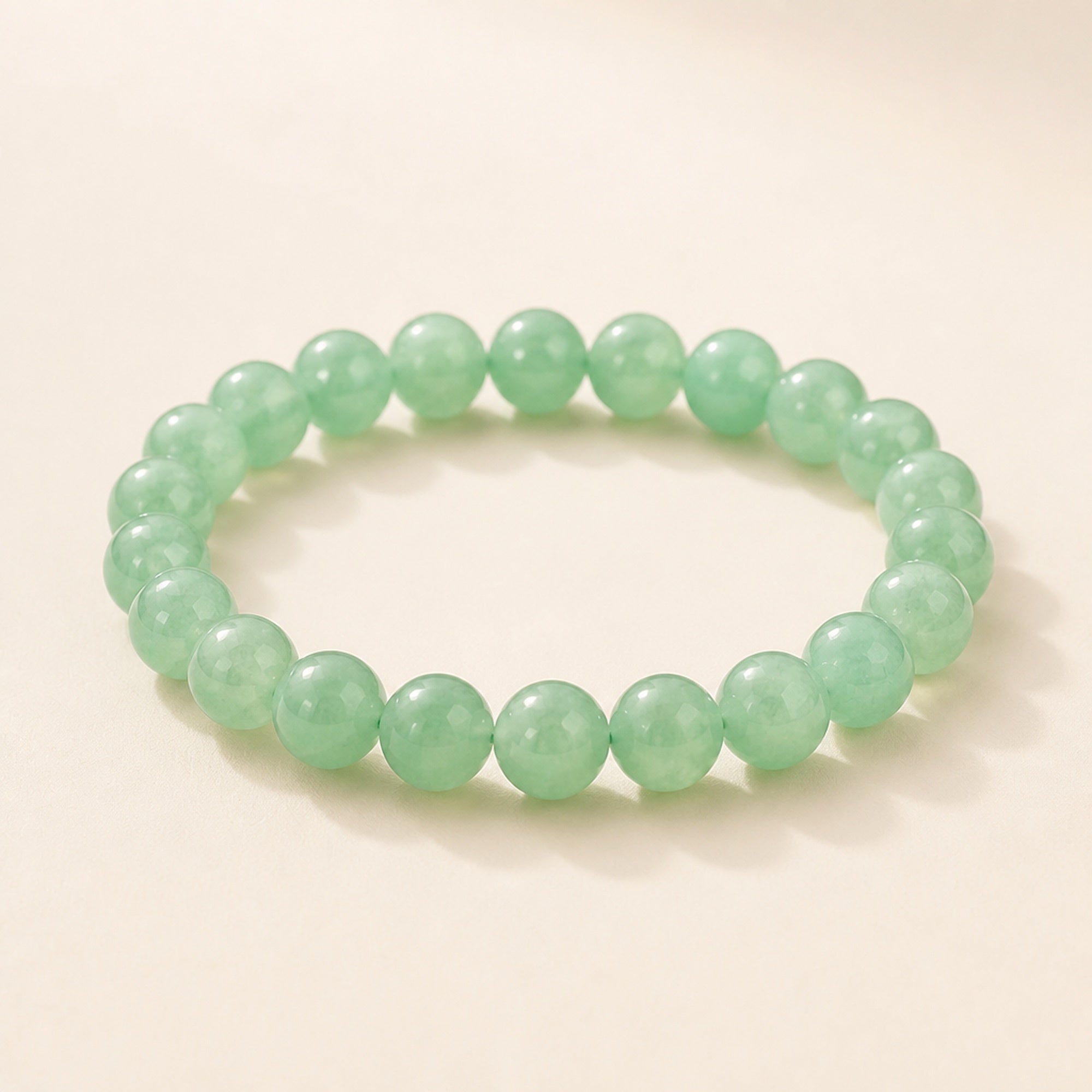
A related intention option
Green Aventurine Opportunity Bracelet
This is a related growth option, not a Chrysoprase product. We only identify jewelry as Chrysoprase when that exact material is verified.
Explore this related optionFor rings, choose a bezel or low-profile setting that shields the stone's edges. Remove chrysoprase before workouts, gardening, or dishwashing, and never leave it on a sunny dashboard. A simple yearly check of the setting will catch loose prongs before a stone is lost.
Styling Chrysoprase for Everyday Looks: Jewelry and Outfit Pairing
Chrysoprase's soft apple-green pairs unusually well with the neutral palette most people already own: cream, oatmeal, charcoal, denim, and warm brown. A single chrysoprase pendant or a pair of small studs reads as a quiet accent against white or navy, while a beaded bracelet adds warmth to an all-black outfit. Its milky translucency makes it less formal than emerald, so it suits linen, cotton, and knitwear better than evening satin.
Metal choice matters too. Yellow gold warms chrysoprase's green, silver cools it, and matte finishes suit its earthy character. For layered looks, keep other stones in the same green family or in plain metal to avoid visual competition.
Chrysoprase Buying Guide: What to Look For and What It Costs
Price tracks color and size more than brand. Deep, even apple-green chrysoprase commands the highest prices per carat, while paler or more included material is far more accessible. Always ask three questions: Where was it sourced? Has it been dyed, stabilized, irradiated, or otherwise treated? Is the listing backed by a stated grading standard?
Compare stones side by side under daylight, not store lighting, and look for a uniform green that does not concentrate in cracks. Be cautious of unusually cheap "chrysoprase" in large sizes — the color is easy to imitate. Lumina's approach is to sell only material that meets the Lumina Grade AAA Integrity Standard, meaning natural origin, no chemical filling, and no color enhancement, so the green you see is the green the earth made.
FAQ: Top Questions About Chrysoprase Stone Answered
What is chrysoprase stone good for?
It is used for everyday jewelry, heart-chakra and intention practices, and as a gentle visual reminder for calm and renewal. These are symbolic and personal uses; the stone is not a medical treatment.
How do you identify real chrysoprase?
Look for an even, milky apple-green with no dye concentrated in cracks, and confirm the nickel-bearing chalcedony identity through a jeweler or lab. Treatments such as dye, stabilization, and irradiation are common in imitations, which is why the Lumina Grade AAA Integrity Standard excludes all three.
Is chrysoprase expensive?
It is generally far less expensive than emerald, with price rising sharply for deep, even color and larger sizes. Pale or included pieces remain an accessible entry point into green gemstones.
Chrysoprase rewards a buyer who values color honesty over spectacle. Learn its nickel-green signature, protect it from heat and hard knocks, and it will remain a quiet, luminous companion for years.
Sources
- Mindat — Chrysoprase: Mineral information, data and localities
- GIA — Chrysoprase and Prase Opal from Haneti, Central Tanzania
- USGS — Gemstones: Chalcedony
© 2026 Lumina Quartz. This guide is for educational purposes and is not medical advice. Crystal traditions are cultural and symbolic; they are not a substitute for professional care.