The Complete Everyday Guide to Chakra Stones Chart: Meaning and Uses
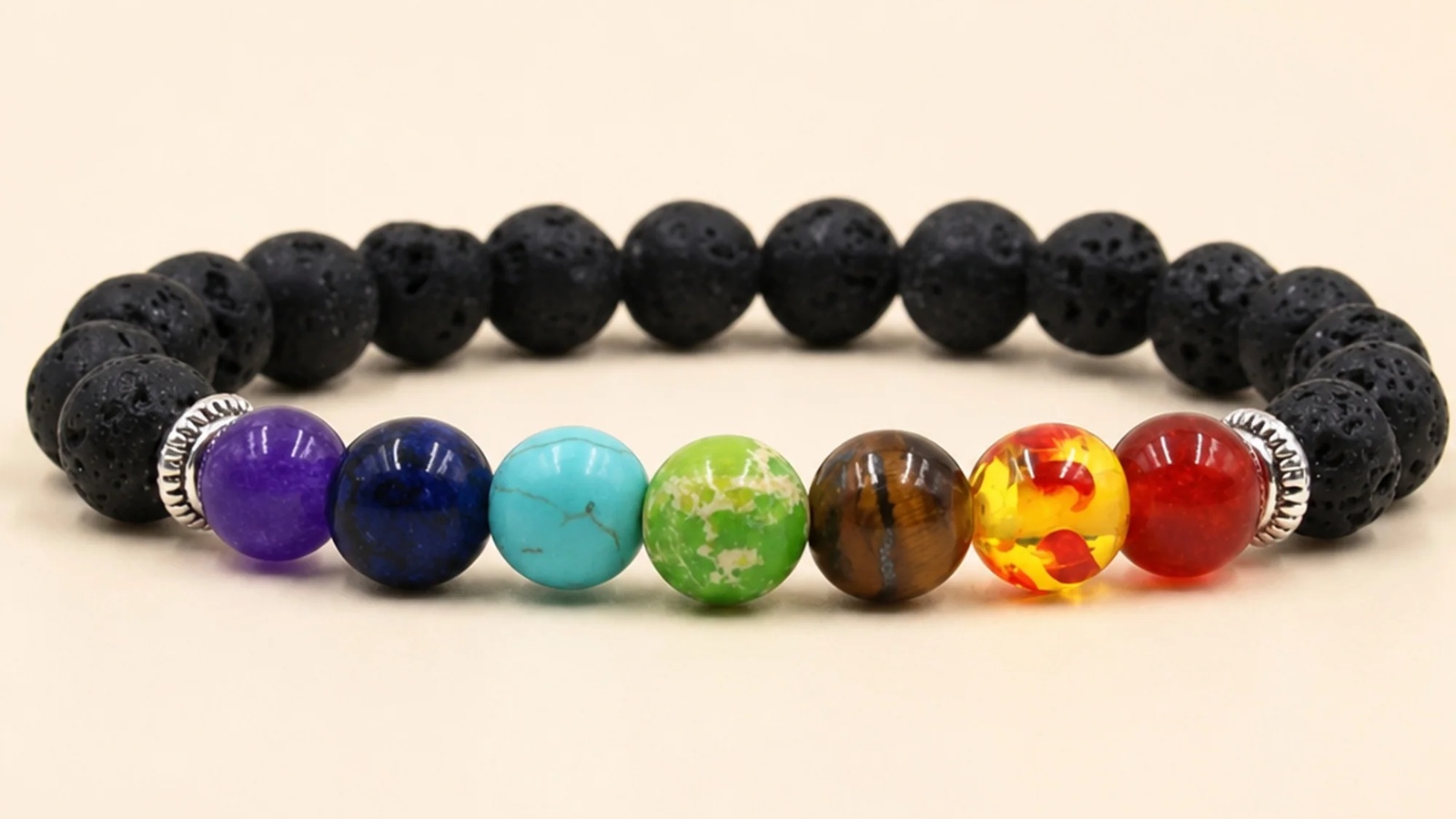
Table of Contents
- What Is a Chakra Stones Chart?
- 10-Second Executive Summary / The Verdict Box
- The 7 Chakras and Their Corresponding Stones
- Root Chakra (Muladhara) – Red Jasper, Black Tourmaline
- Sacral Chakra (Svadhisthana) – Carnelian, Orange Calcite
- Solar Plexus Chakra (Manipura) – Citrine, Yellow Jasper
- Heart Chakra (Anahata) – Rose Quartz, Green Aventurine
- Throat Chakra (Vishuddha) – Blue Lace Agate, Sodalite
- Third Eye Chakra (Ajna) – Amethyst, Lapis Lazuli
- Crown Chakra (Sahasrara) – Clear Quartz, Selenite
- Chakra Stones Decision Table: Hardness, Form & Care Boundaries
- How to Check Stone Quality on Any Chakra Stones Chart
- How to Use Your Chakra Stones Chart for Everyday Balance
- FAQ: Chakra Stones Chart
- What stones are associated with each of the 7 chakras?
- How do I use a chakra stones chart for healing?
- How do I cleanse and recharge my chakra stones?
- Sources
What Is a Chakra Stones Chart?
A chakra stones chart is a reference guide that pairs each of the seven traditional chakras with one or more gemstones commonly associated with that energy center. In practice, it maps a system of subtle body energy (rooted in Indian contemplative traditions) onto the mineral world, so that anyone curious about chakra work has a starting point for choosing, arranging, and caring for stones. Importantly, chakras are a cultural and spiritual framework rather than an anatomical structure recognized by modern medicine; a chart is best used as a reflective and organizing tool, not as a medical device.
10-Second Executive Summary / The Verdict Box
- Direct Verdict: A chakra stones chart is a cultural correspondence table—seven chakras, each paired with stones chosen for color and traditional symbolism. It is a framework for personal reflection, not a clinical tool.
- Structure: 7 chakras, often listed root-to-crown, each with a color family and 2+ commonly associated stones.
- Key Physical Parameter: Mohs hardness varies widely across chart stones—from Selenite (~2) to Clear Quartz (7)—which directly affects how you wear, store, and cleanse them.
- Quality Standard: For any stone on the chart, look for the Lumina Grade AAA Integrity Standard: natural rough origin, no chemical resin filling, no irradiation or dye treatment.
- Best Use Cases: Daily intention-setting, meditation focal points, color-coordinated display, and gifting. Not a substitute for professional care.
- Fastest Action: Match a stone's color to the chakra you want to focus on, confirm its Mohs hardness, then follow a short care routine.
The 7 Chakras and Their Corresponding Stones
Traditional charts run from the root at the base of the spine upward to the crown. The associations below are the ones you will encounter most often. Treat each pairing as a cultural correspondence—a stone may be often associated with a chakra—rather than a fixed law of nature. The historical roots of chakra imagery are visible in museum collections of South Asian art, such as the Smithsonian's National Museum of Asian Art, where chakra concepts appear within yogic and Buddhist contexts.
Root Chakra (Muladhara) – Red Jasper, Black Tourmaline
The root chakra is traditionally linked to the color red and to themes of stability and grounding. Red Jasper (Mohs ~6.5–7) is the classic red anchor stone, while Black Tourmaline (Mohs 7–7.5) is often associated with protection imagery. Both are durable enough for everyday handling.
Sacral Chakra (Svadhisthana) – Carnelian, Orange Calcite
The sacral center is paired with orange and themes of creativity and flow. Carnelian (Mohs ~6.5–7) holds up well to regular wear, whereas Orange Calcite (Mohs 3) is soft and better kept as a display or meditation stone rather than a pocket carry.
Solar Plexus Chakra (Manipura) – Citrine, Yellow Jasper
The solar plexus is associated with yellow and themes of confidence and personal will. Citrine is a quartz variety (Mohs 7) and Yellow Jasper (Mohs ~6.5–7) is similarly robust. Note that natural citrine is less common than heat-treated amethyst sold as citrine—a quality point covered in the checklist below.
Heart Chakra (Anahata) – Rose Quartz, Green Aventurine
The heart chakra bridges the lower and upper centers and is linked to green and pink. Rose Quartz (Mohs 7) and Green Aventurine (Mohs ~6.5–7) are both beginner-friendly and forgiving of daily wear. Rose Quartz is a quartz, so it is harder than many chart stones—useful to know when storing it with softer pieces.
Throat Chakra (Vishuddha) – Blue Lace Agate, Sodalite
The throat center is tied to blue and themes of expression. Blue Lace Agate (Mohs ~6.5–7) is a banded chalcedony with a delicate look, and Sodalite (Mohs 5.5–6) is a deeper blue stone. Sodalite is softer, so it rewards gentler handling than quartz-family stones.
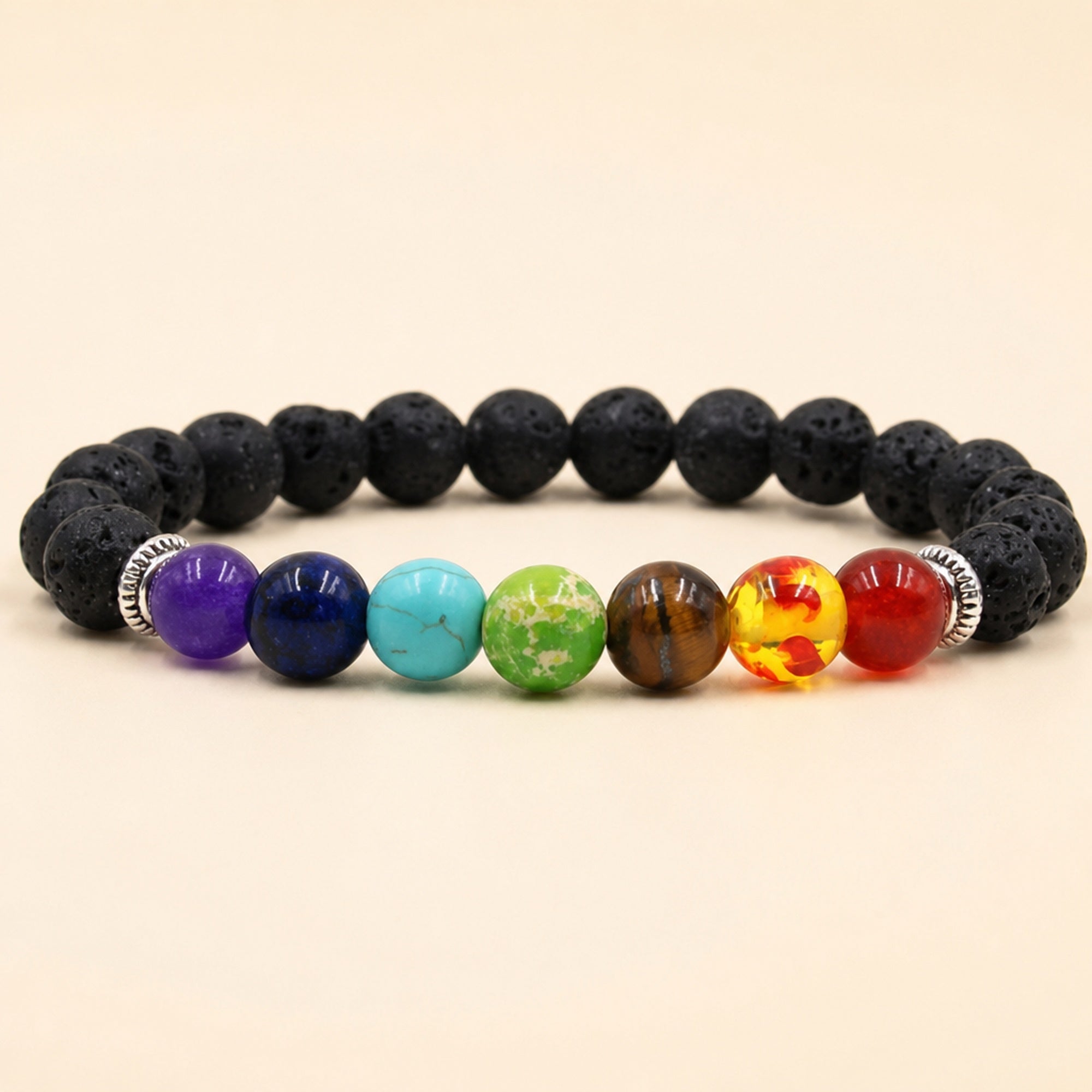
Seven Chakra Bracelet
A quiet bracelet for turning this intention into a small daily ritual.
Shop This Authentic Piece →Third Eye Chakra (Ajna) – Amethyst, Lapis Lazuli
The third eye is associated with indigo and intuition imagery. Amethyst (Mohs 7) is a durable quartz variety, while Lapis Lazuli (Mohs 5–6) is a composite rock that can be more sensitive to scratches and moisture. Keep the two apart in storage.
Crown Chakra (Sahasrara) – Clear Quartz, Selenite
The crown is linked to violet and white and to themes of connection and clarity. Clear Quartz (Mohs 7) is the hardest of the common chart stones, while Selenite (Mohs ~2) is one of the softest—so soft it can be scratched by a fingernail. Treat Selenite as a display-only piece and keep it in a separate pouch.
Chakra Stones Decision Table: Hardness, Form & Care Boundaries
This is the part most charts skip. The same stone can be right for one use and wrong for another because of hardness and treatment. Use this table before you buy or pair stones.
| Chakra / Stone | Mohs Hardness | Best Form & Use | Avoid Pairing With |
|---|---|---|---|
| Root – Red Jasper | ~6.5–7 | Pocket tumble, daily carry | Selenite, Orange Calcite in the same pouch |
| Root – Black Tourmaline | 7–7.5 | Pocket, display, travel stone | Soft stones it can scratch |
| Sacral – Carnelian | ~6.5–7 | Bracelet, pocket | Soft display stones |
| Sacral – Orange Calcite | 3 | Display, meditation only | Anything harder; water and moisture |
| Solar – Citrine | 7 | Daily wear, jewelry | Soft stones in a shared dish |
| Heart – Rose Quartz | 7 | Everyday wear, bedside | Soft stones it can scratch |
| Throat – Sodalite | 5.5–6 | Pocket, display | Quartz stones in the same pouch |
| Third Eye – Lapis Lazuli | 5–6 | Pendant, display | Moisture, harsh cleaners, hard stones |
| Crown – Clear Quartz | 7 | Any form; pairs with meditations | Caution: can scratch softer neighbors |
| Crown – Selenite | ~2 | Display only; never water-clean | All harder stones, water |
Evaluation boundary: This table reflects the standard Mohs scale. It does not claim that any stone "balances" a chakra in a measurable physical sense; the chakra link is a cultural correspondence (see Smithsonian National Museum of Asian Art). Use the hardness column for real decisions: cleaning method, storage, and daily wear.
How to Check Stone Quality on Any Chakra Stones Chart
Whether you use a chart to pick one stone or build a full set, quality matters more than color matching. Apply this step-by-step check:
- Look for natural variation. Natural rough-origin crystals usually show inclusions, color zoning, or uneven banding. Perfectly uniform, unnaturally saturated color is a flag.
- Check for resin filling. Filled or stabilized stones are common in softer materials. Paperwork should state "no chemical resin filling."
- Ask about irradiation and dye. Dyed agate and irradiated quartz are common; a seller should be willing to tell you what treatment, if any, a stone received.
- Verify hardness before you buy. Match the stone to its intended use (display vs. daily carry) using the decision table above.
- Buy from a source that states its standard. At Lumina Quartz, pieces are checked against the Lumina Grade AAA Integrity Standard: natural rough origin, zero chemical resin filling, and no irradiation or dye treatment.
How to Use Your Chakra Stones Chart for Everyday Balance
A chart is most useful when it stops being a chart and becomes a routine. Rather than "using stones to heal," use them as reminders: a stone can serve as a small object that anchors an intention you set for yourself. This is a personal and psychological practice, not a medical one.
- Pick one center per week. Choose one chakra from the chart and one stone from its list. Keep it where you'll see it—desk, car, nightstand.
- Match the stone to your day. If you carry the stone, use a hard quartz-family piece; if it stays home, softer display stones are fine.
- Set the intention, not the claim. A sentence like "This week I want steadiness in my routine" is honest and actionable.
- Clean according to hardness. Hard stones tolerate mild soap and water if the material allows; Selenite, Orange Calcite, and Lapis prefer a dry soft cloth. Always check care guidance first.
- Recharge the practice, not just the stone. A Monday reset of your chosen stone and intention is more effective as a habit than an elaborate ceremony.
If you are charting all seven centers, note the geography: chakra imagery in the museum tradition is artistic and symbolic, and a diagram-oriented approach may be more comfortable if you are a visual learner.
FAQ: Chakra Stones Chart
What stones are associated with each of the 7 chakras?
A common chart pairs Root with Red Jasper and Black Tourmaline, Sacral with Carnelian and Orange Calcite, Solar Plexus with Citrine and Yellow Jasper, Heart with Rose Quartz and Green Aventurine, Throat with Blue Lace Agate and Sodalite, Third Eye with Amethyst and Lapis Lazuli, and Crown with Clear Quartz and Selenite.
How do I use a chakra stones chart for healing?
Use it as a reflective tool: choose one center and stone each week, set a personal intention, and keep the stone as a reminder. A chart is not a medical method and does not treat conditions; see a professional if you have a health concern.
How do I cleanse and recharge my chakra stones?
Cleansing is a traditional practice with no fixed rule. For practical care, follow hardness: quartz-family stones (Mohs 7) tolerate mild soap and water where the piece allows; soft stones like Selenite (~2) and Orange Calcite (3) should be wiped with a dry, soft cloth and kept from moisture and harder stones.
Sources
© 2026 Lumina Quartz. This guide is cultural and educational in nature. Crystal and chakra practices are traditional frameworks, not medical treatments, and should not replace professional care.
Product Facts From the Current Catalog
These details come from the active Lumina Quartz catalog record checked on 2026-10-23. They are product-listing facts, not laboratory results or invented wear-test claims.
| Listed product | Seven Chakra Bracelet – Balanced Ritual (8mm Natural Stones) |
|---|---|
| Format | Bracelet |
| Listed price snapshot | 34.99 |
Price, availability, and options may change. Check the live product listing before choosing.