The Complete Everyday Guide to Blue Tiger Eye: Meaning and Uses
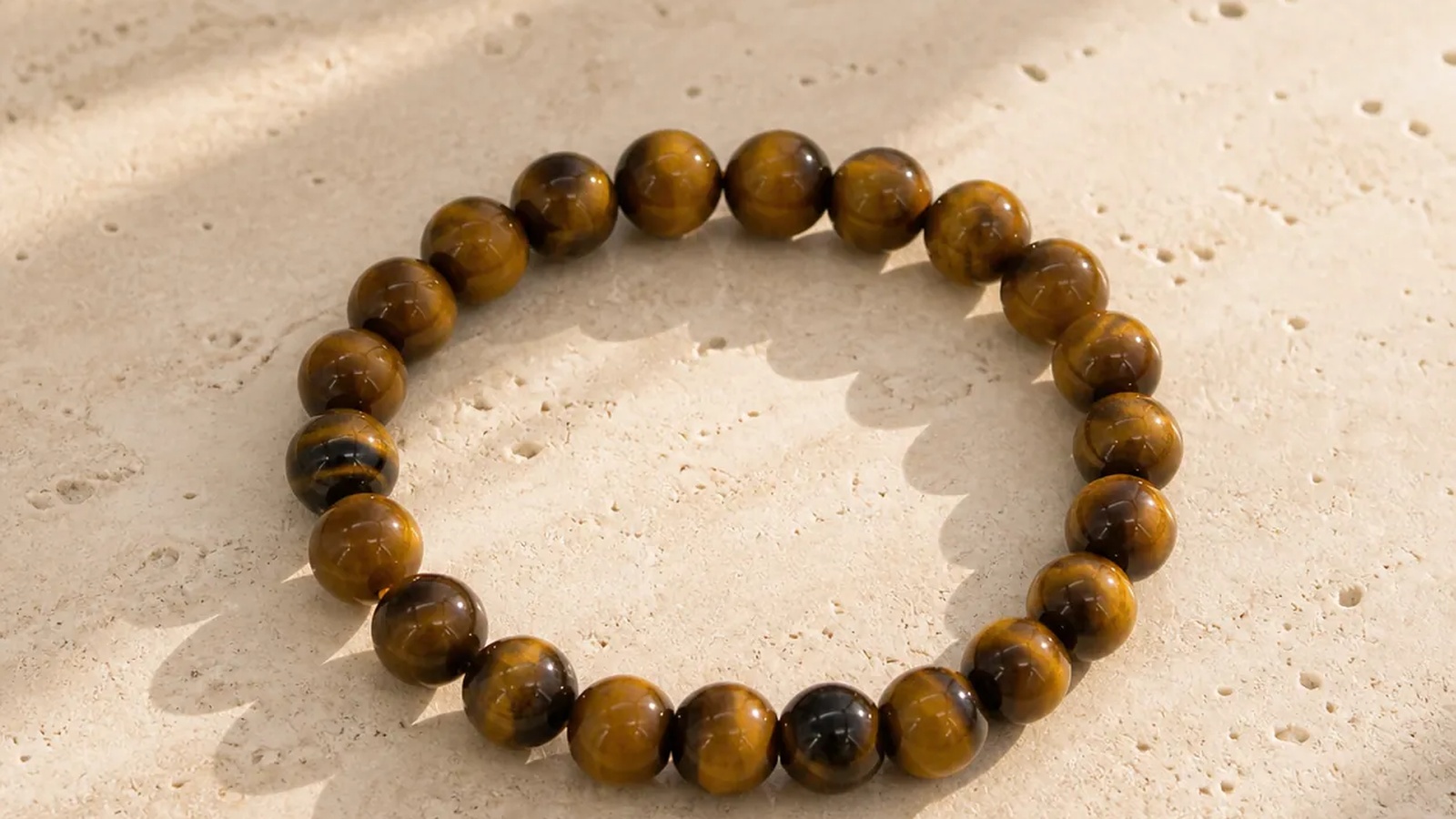
Table of Contents
- 10-Second Executive Summary / The Verdict Box
- What Is Blue Tiger Eye? Hawk's Eye, Falcon's Eye, and the Same Stone Under Many Names
- Why Blue Tiger Eye Is Blue: Crocidolite Fibers, Chatoyancy, and the 2003 Crack-Seal Study
- Natural Hawk's Eye vs. Dyed Blue Tiger Eye: How to Spot the Difference
- Decision Table: Natural Hawk's Eye vs. Dyed Blue Tiger Eye vs. Fiber-Optic Glass
- Step-by-Step Buying Check: Blue Tiger Eye
- Blue Tiger Eye Meaning and Uses: Chakras, Grounding, and Everyday Wear
- How to Tell Real Blue Tiger Eye from Fiber-Optic Glass and Fakes
- How to Care For and Clean Blue Tiger Eye Jewelry
- FAQ: Blue Tiger Eye Questions Answered
- Is blue tiger eye natural or dyed?
- What is blue tiger eye called, and is it the same as hawk's eye or falcon's eye?
- What does blue tiger eye mean spiritually, and which chakras does it support?
- How do you tell real blue tiger eye from fiber-optic glass?
- How should you care for and clean blue tiger eye jewelry?
- The Bottom Line
- Sources
Blue tiger eye is a chatoyant mineral that is more precisely called hawk's eye or falcon's eye: a blue variety of tiger's eye whose fibers remain unreplaced crocidolite, carrying the same shimmer as golden tiger's eye. Its blue-to-grey tone is associated with Fe2+ iron rather than the Fe3+ linked to the oxidised yellow-brown variety (Mindat). Because the fibers sit inside the stone, a genuine piece shows a tight, silky band of light that moves as the stone turns; dyed material and fiber-optic glass may copy the color but rarely reproduce that moving band.
10-Second Executive Summary / The Verdict Box
- Direct Verdict: Blue tiger eye is a natural mineral variety (unreplaced crocidolite), not a purely aesthetic invention — but a large share of cheap "blue tiger eye" on the market is dyed quartz or glass, so buy on visible chatoyancy first and color second.
- Mohs Hardness: Approximately 6.5–7 for the chatoyant quartz-family tiger's eye group (typical for this variety).
- Key Physical Marker: Chatoyancy — a single silky light band that shifts across the surface and stays inside the stone, not painted on top.
- Color Note: Blue/grey tones are associated with Fe2+ iron in unreplaced crocidolite fibers; Fe3+ oxidation is associated with the golden-brown version (Mindat).
- Best Use Cases: Everyday jewelry, desk and workspace stones, short grounding or intention-setting meditation; it is a personal-reminder object, not a medical or psychological treatment.
- Buying Standard: Ask directly about natural origin, dye, polymer filling, and irradiation. A stone chosen for its natural shimmer should not depend on undisclosed enhancements.
What Is Blue Tiger Eye? Hawk's Eye, Falcon's Eye, and the Same Stone Under Many Names
Blue tiger eye, hawk's eye, and falcon's eye are commercial names for essentially the same material: a blue variety of tiger's eye in which the original crocidolite fibers remain unreplaced, and whose blue color is associated with Fe2+ iron compared with the oxidized Fe3+ in yellow-brown tiger's eye (Mindat). "Falcon's eye" is recorded as a trade name for this blue variety, so if a seller uses all three labels interchangeably, that is normal naming practice — not automatically a red flag.
What matters more than the name is the structure. Tiger's eye is famous as a textbook example of pseudomorphism — one mineral replacing another while keeping the old shape. But a 2003 study by Heaney and Fisher found that the shimmer of tiger's eye does not come from quartz replacing pre-existing crocidolite asbestos; instead, the stone exemplifies synchronous mineral growth through a crack-seal vein-filling process (Mindat). That distinction is the reason genuine hawk's eye looks "woven" rather than "painted."
Why Blue Tiger Eye Is Blue: Crocidolite Fibers, Chatoyancy, and the 2003 Crack-Seal Study
The blue is a mineralogical feature, not an optical trick. According to Mindat's entry for the material, the blue-to-grey body color is associated with Fe2+ iron in unreplaced crocidolite; when those fibers oxidize to Fe3+, the same stone family turns yellow-brown (Mindat). Chatoyancy — the moving silky band — is linked to the parallel fibrous structure of the material, and the 2003 crack-seal finding describes that fibrous architecture as growing in place through repeated vein-filling rather than by replacement (Mindat). In practical terms: a blue tiger eye with strong, narrow, single-band chatoyancy is behaving the way the mineral is expected to behave.
Natural Hawk's Eye vs. Dyed Blue Tiger Eye: How to Spot the Difference
Natural hawk's eye tends to show a slightly muted, steely blue with grey and near-black fiber zones, and the chatoyant band stays sharp and narrow across the surface. Dyed material often looks flatter and more uniformly saturated, with color pooling in surface cracks or sitting in the grain rather than emerging from the fibers. Under slight rotation, a natural stone's light band should slide smoothly; a dyed or imitation stone may show a band that looks printed, static, or metallic in an un-mineral way. When buying, treat deep-dye saturation, undisclosed polymer filling, and undisclosed irradiation as points to question rather than accept — ask the seller to state the treatment plainly.
Decision Table: Natural Hawk's Eye vs. Dyed Blue Tiger Eye vs. Fiber-Optic Glass
Use this comparison when you are at a market stall or reading a product page and need to decide quickly. The single most reliable test is motion: turn the stone under ordinary light and watch whether one narrow silky band glides across the surface from inside the material.
| Feature | Natural Hawk's Eye | Dyed Blue Tiger Eye | Fiber-Optic Glass |
|---|---|---|---|
| Color origin | Associated with Fe2+ iron in unreplaced crocidolite fibers | Artificial dye drawn into porous quartz | Colored glass drawn into parallel fibers |
| Chatoyant band | Narrow, sharp, slides smoothly with rotation | Weak or patchy; color pooling in cracks | Uniform, often too perfect, with a synthetic sheen |
| Body tone | Steely blue with grey and near-black fiber zones | Flat, uniformly saturated blue | Bright, even color across the whole piece |
| Surface clues | Fine natural fiber texture, no color residue | Dye residue in pits and fractures | Visible fiber bundles at edges; glassy luster |
| Decision | Buy on visible chatoyancy and natural tone | Avoid if sold as natural | Accept only if sold honestly as glass |
Step-by-Step Buying Check: Blue Tiger Eye
Run through this short checklist before you pay for any blue tiger eye piece, whether online or in person. It is designed to separate natural material from dyed stone and glass without relying on a seller's story.

Tiger Eye Bracelet
Tiger eye is often worn as a quiet focus ritual for grounded confidence and steady attention.
Shop This Authentic Piece →- Rotate for motion. Hold the stone under ordinary room light and turn it slowly. A genuine band should glide across the face as one narrow, silky streak; a static or printed-looking band is a warning sign.
- Check the body tone. Natural hawk's eye reads steely and slightly muted, with grey and near-black fiber zones. Flat, fully saturated blue across the whole stone suggests dye.
- Inspect cracks and pits. Look at surface fractures with a magnifier if available. Concentrated color in pits or along the grain is typical of dye residue.
- Look at the edges. Fiber-optic glass often shows visible fiber bundles and a glassy luster at the rim. Natural material shows a fine fiber texture through the body.
- Ask about treatment. Ask directly: "Is the color natural? Has this been dyed, filled, or irradiated?" A plain, verifiable answer is a better sign than any certificate photo.
- Sanity-check the price. If a piece is remarkably inexpensive and sold as natural, treat the claim with extra caution and apply steps 1–5 more closely.
Applicability boundaries: This checklist works for loose stones and cabochons viewed in person or in clear close-up photos. It cannot confirm treatment history, so for high-value purchases ask for independent laboratory documentation rather than relying on visual checks alone.
Blue Tiger Eye Meaning and Uses: Chakras, Grounding, and Everyday Wear
In popular crystal lore, blue tiger eye is associated with calm focus and steady self-possession, and is commonly linked to the throat and third-eye chakras; some practitioners also place it with the crown. These are traditional attributions, not clinical claims — treat the stone as a personal-reminder object and a visual anchor for intention-setting rather than a treatment for any condition.
In everyday use, the stone earns its place for practical reasons. Its Mohs hardness of roughly 6.5–7 makes it suitable for rings, bracelets, and pendants worn regularly, and its muted steely blue pairs easily with both silver and gold settings. Many people keep a small tumbled piece on a desk or beside a workspace as a tactile cue to pause and refocus, or hold one briefly during short grounding or intention-setting meditation. Because the appeal is the natural shimmer, choose pieces cut so the chatoyant band sits across the face of the stone — a well-oriented cabochon shows the band best.
How to Tell Real Blue Tiger Eye from Fiber-Optic Glass and Fakes
Start with movement. Real hawk's eye shows a single silky band that stays inside the stone and shifts as you rotate it; fiber-optic glass imitates the effect but usually looks too uniform, with a synthetic sheen and visible fiber bundles at the edges. Next, look at the color: natural material is steely and slightly muted, with grey and near-black fiber zones, while dyed quartz is flatly saturated and often shows dye pooled in surface pits or fractures. Finally, consider the price and the claim. If a piece is remarkably inexpensive and sold as natural, ask directly whether the color is natural and whether the stone has been dyed, filled, or irradiated. An honest seller answers plainly; a vague or evasive answer is your cue to walk away.
How to Care For and Clean Blue Tiger Eye Jewelry
Blue tiger eye is durable enough for daily wear but should be treated with the same care as other quartz-family stones. Clean it with lukewarm water and a drop of mild soap, working gently with a soft brush, then rinse and pat dry with a soft cloth. Avoid ultrasonic cleaners, steam cleaners, and harsh chemicals, and keep the stone away from prolonged heat and direct sunlight, which can dull its appearance over time. Store pieces separately from harder stones to prevent scratches, and wipe the surface occasionally to keep the chatoyant band looking crisp. Because the material is fibrous in structure, avoid abrasive polishes and never chip or grind at home.
FAQ: Blue Tiger Eye Questions Answered
Is blue tiger eye natural or dyed?
It can be either. Genuine blue tiger eye is a natural mineral variety — unreplaced crocidolite whose blue color is associated with Fe2+ iron (Mindat). However, a large share of inexpensive "blue tiger eye" on the market is dyed quartz, so judge by chatoyancy and natural tone rather than by the label alone.
What is blue tiger eye called, and is it the same as hawk's eye or falcon's eye?
Yes. Blue tiger eye, hawk's eye, and falcon's eye are commercial names for essentially the same blue variety of tiger's eye, and "falcon's eye" is recorded as a trade name for it (Mindat). Sellers using the names interchangeably is normal practice; what matters is the stone's structure and visible chatoyancy.
What does blue tiger eye mean spiritually, and which chakras does it support?
In popular crystal tradition it is associated with calm focus and steady self-possession, and is most often linked to the throat and third-eye chakras, with some practitioners also placing it with the crown. These are traditional attributions rather than medical or psychological claims.
How do you tell real blue tiger eye from fiber-optic glass?
Watch the band. Real hawk's eye shows one narrow silky band that slides smoothly as the stone turns and stays inside the material; fiber-optic glass tends to look too uniform, with a synthetic sheen and visible fiber bundles at the edges. Natural color is also steely and slightly muted rather than flatly saturated.
How should you care for and clean blue tiger eye jewelry?
Use lukewarm water with a drop of mild soap and a soft brush, then rinse and pat dry. Skip ultrasonic and steam cleaners, avoid harsh chemicals, heat, and prolonged direct sunlight, and store the piece separately from harder stones to prevent scratches.
The Bottom Line
Blue tiger eye is one of the more honest stones in the chatoyant family: a natural mineral variety with a documented structure, a clear color association, and a look that is hard to fake convincingly. Buy on visible chatoyancy and natural tone, ask plainly about dye and treatment, and care for the stone simply. Do that, and a piece of hawk's eye will keep its quiet, shifting shimmer for years of everyday wear.
Sources
Product Facts From the Current Catalog
These details come from the active Lumina Quartz catalog record checked on 2026-11-05. They are product-listing facts, not laboratory results or invented wear-test claims.
| Listed product | Tiger Eye Bracelet – Decisive Focus |
|---|---|
| Format | Bracelet |
| Listed price snapshot | 39.00 |
Price, availability, and options may change. Check the live product listing before choosing.