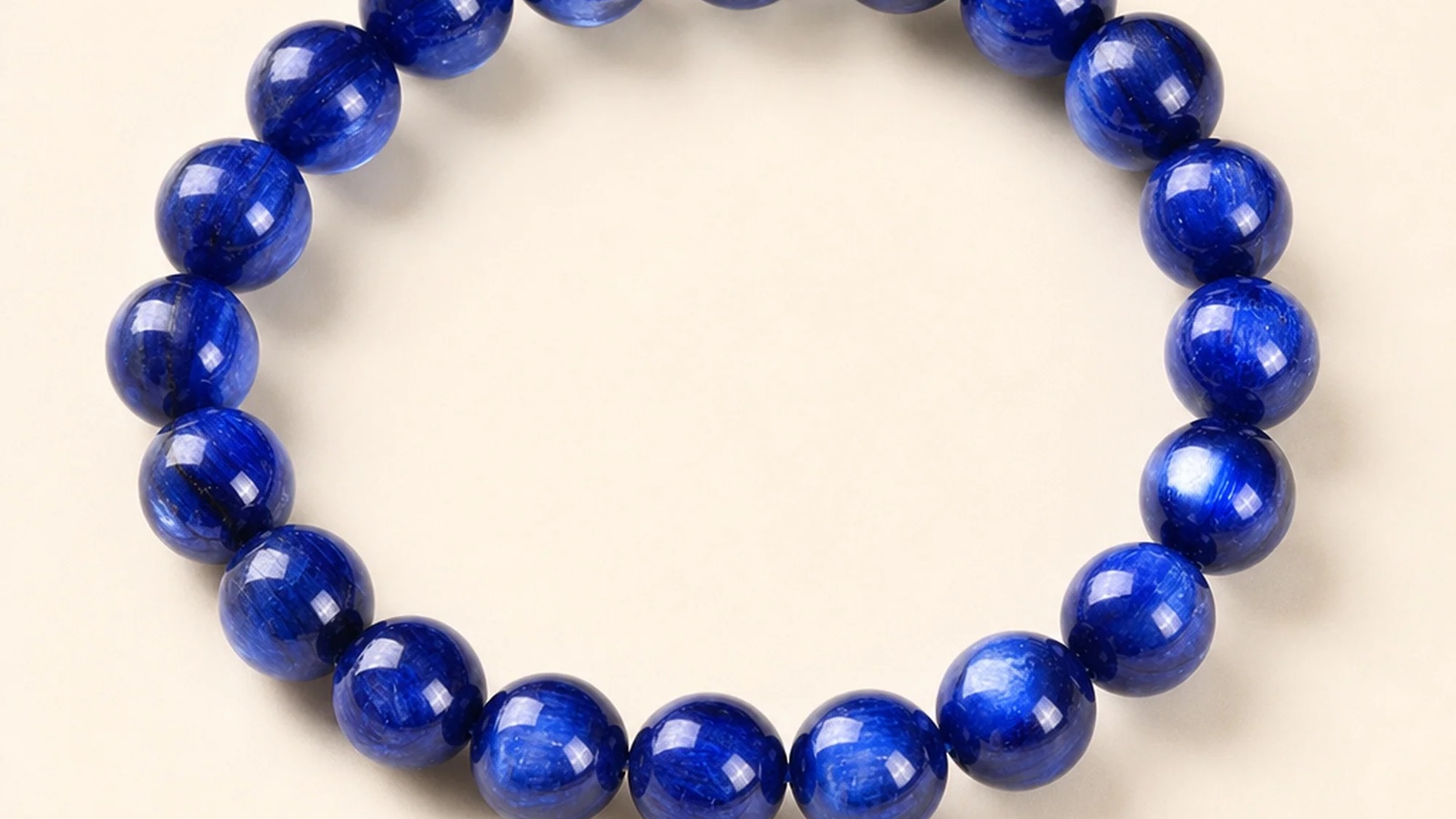
Blue kyanite is a blue aluminum silicate mineral best known for its strong directional hardness, its perfect cleavage, and its calm, saturated blue color. You can think of it as a stone of two natures: delicate in one direction, surprisingly durable in another. It is often associated with clear communication, quiet reflection, and throat, third eye, and crown chakra work in crystal traditions, but those are symbolic and personal uses rather than medically proven effects. If you want the short version before we go deeper: choose blue kyanite for pendants, earrings, and display pieces rather than unprotected rings, confirm its identity by its cleavage and variable hardness, and treat it with the same care you would give a fine, brittle gem.
10-Second Executive Summary / The Verdict Box
- Direct Verdict: Blue kyanite is a genuine gem mineral with a beautiful blue color, but it is a fragile-when-worn stone in certain orientations. It is best suited to pendants, earrings, brooches, and meditative display pieces, not to unprotected everyday rings.
- Mohs Hardness: 4 to 4.5 when tested parallel to the crystal's long c-axis, and 6 to 7.5 when tested perpendicular to it — the same stone can feel soft in one direction and moderately hard in another.
- Cleavage: Perfect cleavage, meaning it can split along flat planes if struck or pressed the wrong way.
- Material Class: Aluminum silicate; polymorphous with andalusite and sillimanite (same chemistry, different crystal systems).
- Best Uses: Pendant necklaces, earrings, brooches, desk or bedside display stones, and meditation or journaling rituals.
- Watch Out For: Rings with exposed settings, ultrasonic cleaners, sudden temperature changes, and stones sold as "sapphire blue" without disclosure of identity.
- Lumina Grade AAA Integrity Standard: Our benchmark for natural, untreated material — no chemical resin filling, no irradiation, no dye — paired with honest disclosure of clarity and cut.
What Is Blue Kyanite? (Meaning, Name Origin, and Formation)
Kyanite is an aluminum silicate mineral, and blue is its most familiar color in the gem trade, though it also occurs in green, gray, black, and colorless forms. The name comes from the Greek word kyanos, referring to a deep blue, which is why the stone's identity is so tightly bound to its color. Kyanite is polymorphous with andalusite and sillimanite: they share the same chemistry but form different crystal systems, which is part of why kyanite's physical behavior feels so distinctive in the hand.
Geologically, kyanite forms under high-pressure, moderate-to-high-temperature metamorphic conditions, which is why it is often found in metamorphic rocks and sometimes in quartz matrices. Notable blue material has come from Brazil and, in the gem trade, from Nepal, where small-scale mining has produced cabochon, bead, and faceted material since the late 1990s. Only a small percentage of mined material is clean enough to facet, which is one reason faceted blue kyanite is a collector's stone rather than a mass-market one (see the GIA overview of Nepalese kyanite).
Blue Kyanite vs. Other Blue Stones: How to Recognize It
Blue kyanite is often compared with sapphire, blue topaz, and blue apatite, but its physical profile is what sets it apart. The most reliable everyday signals are its perfect cleavage, its visible internal structure, and its directional hardness. Blue kyanite has long been used as a sapphire imitation, and bright Nepalese material can look sapphire-like at a glance, but the two are separated by inclusions and optical values rather than surface color alone (per the same GIA report).
The Anisotropic Hardness Test and the Sapphire Lookalike Question
Kyanite's hardness is not uniform. Cut parallel to its long c-axis, it measures 4 to 4.5 on the Mohs scale; cut perpendicular to that axis, it measures 6 to 7.5. This directional hardness — sometimes called anisotropic hardness — is a defining trait and a practical warning. A stone that scratches easily on one face may resist a scratch on another. For buyers, that means a simple scratch test is unreliable and can damage the stone. Instead, rely on cleavage planes, internal inclusions, and professional identification rather than guesswork. Because of this variability, kyanite in rings should have protective settings, while earrings, pendants, and brooches are far more forgiving (Gem Society).
Blue Kyanite Meaning and Metaphysical Properties
In crystal traditions, blue kyanite is often associated with honest communication, mental clarity, and calm reflection. These are cultural and personal associations, not medical claims. The stone's blue color and quiet sheen lend themselves to contemplative use, and many people keep a piece nearby during journaling, meditation, or difficult conversations as a symbolic reminder to speak clearly and listen well.
Third Eye and Crown Chakra Connection, Dreamwork, and Meditation
Blue kyanite is frequently linked in modern crystal literature with the throat, third eye, and crown chakras. In practice, that usually means people hold or wear it during meditation, place it on a bedside table for dream reflection, or keep it on a desk as a cue for focused thought. These uses may support a sense of calm and attentiveness for some people, but they are personal rituals rather than measurable effects. If you are drawn to the stone for dreamwork, a simple practice is to hold it briefly before sleep, note one intention in a journal, and set the stone down — the ritual, not the mineral, does the grounding work.
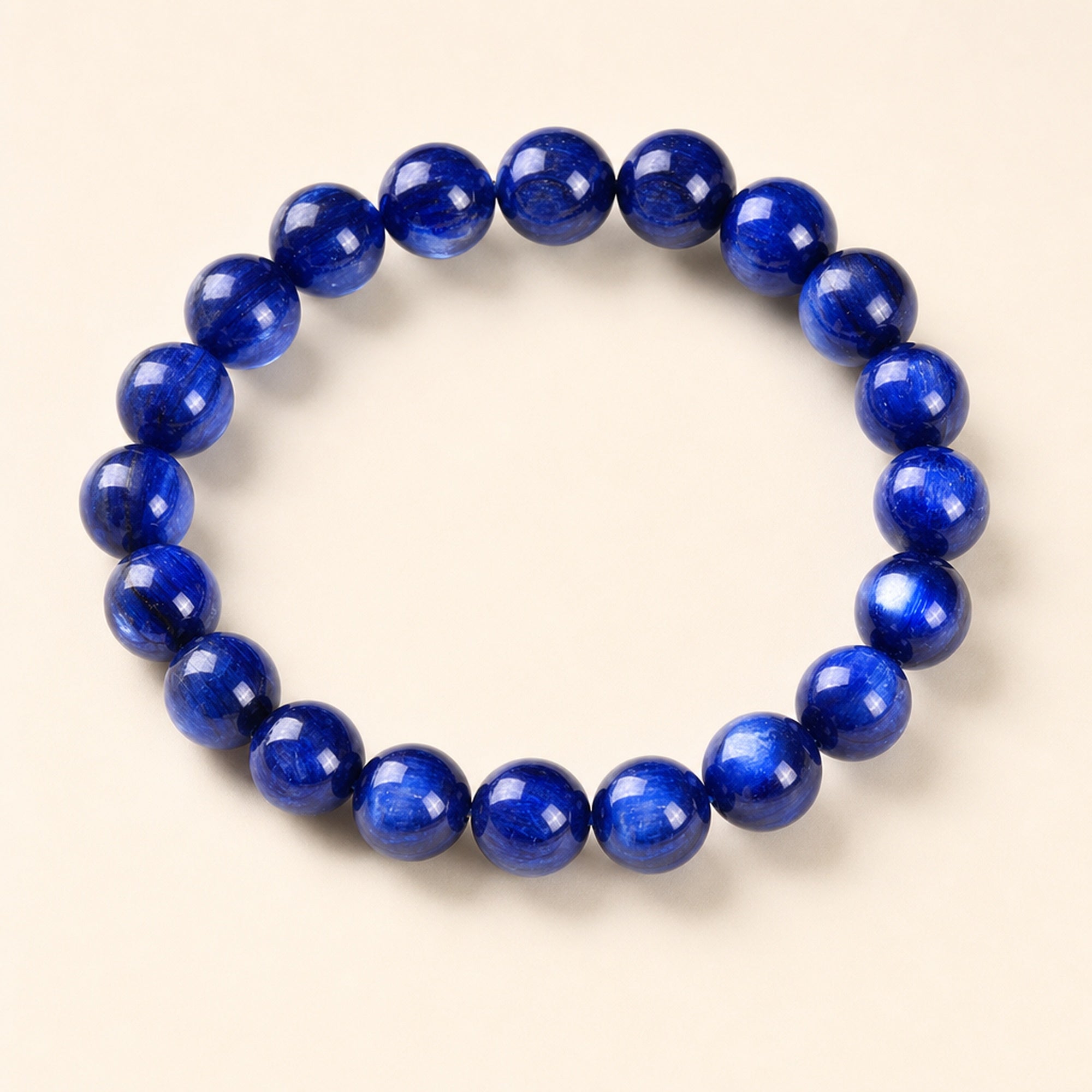
Kyanite Bracelet
A quiet bracelet for turning this intention into a small daily ritual.
Shop This Authentic Piece →Blue Kyanite Buying Checklist: Five Checks Before You Commit
This is a decision checklist, not a generic stone guide. Use it in order when you are comparing two pieces.
- Check the setting before the color. If the piece is a ring, ask whether the setting protects the stone's edges and cleavage planes. Kyanite's perfect cleavage means an exposed ring setting is a real risk; pendants and earrings are the safer first purchase.
- Look for directional structure, not just shine. Real blue kyanite often shows internal growth lines, slight color zoning, and a blade-like crystal habit. A perfectly uniform, glassy blue at a low price deserves a second look.
- Ask about treatment in plain language. Under the Lumina Grade AAA Integrity Standard, a stone should be natural, with no chemical resin filling, no irradiation, and no dye. If a seller cannot confirm this, treat the price as a signal, not a guarantee.
- Match the cut to the use. Faceted kyanite is beautiful but typically contains many flaws and inclusions, especially in larger sizes, so expect visible character rather than diamond-like clarity (Gem Society).
- Confirm identity against sapphire claims. "Sapphire blue" is a color description, not a species claim. A blue kyanite sold as a sapphire imitation is still kyanite, and it should be disclosed as such.
Boundary note: If you want a stone for daily hard wear, unprotected rings, or heavy outdoor work, blue kyanite is the wrong choice regardless of quality grade. Its variable hardness and perfect cleavage make it a display-and-pendant stone first.
Everyday Uses: How to Wear and Place Blue Kyanite
Blue kyanite fits most naturally into low-impact everyday settings. A pendant rests against the body without rubbing against hard surfaces; earrings sit away from desk edges and doorframes; a small display stone on a desk or nightstand keeps the color in view without wear. The goal is to enjoy the stone while respecting its limits.
Jewelry Cautions, Desk Placement, and Bedside Rituals
- Jewelry: Choose pendants, earrings, and brooches for regular wear. If you wear a kyanite ring, reserve it for short, gentle occasions and ask for a protective setting.
- Desk placement: Keep a small piece near your workspace as a visual cue for clear thinking. Place it away from the edge of the desk and away from direct sun and heat.
- Bedside rituals: Set the stone on a soft cloth on your nightstand. Use it as a prompt for a one-line intention or a short breathing pause before sleep — a grounding habit rather than a promise.
- Conversation practice: Some people hold blue kyanite before a difficult conversation as a symbolic reminder to speak honestly and listen fully.
Cleansing, Charging, and Care for Blue Kyanite
Care for blue kyanite is mostly about avoiding mechanical and thermal shock. Because of its perfect cleavage, do not drop it, strike it, or press it against hard edges. Clean it with lukewarm water and a soft cloth, dry it gently, and store it separately from harder stones so it does not get scratched. Avoid ultrasonic and steam cleaners, which are risky for a stone with cleavage and variable hardness.
For cleansing in a symbolic sense, many people prefer gentle methods: a brief rinse in lukewarm water, a soft dry cloth, or simply setting the stone in moonlight. If you choose to "charge" it, a quiet spot away from direct sun and heat is safer than any dramatic method. The honest framing is that cleansing is a ritual of attention — it keeps you connected to the stone without implying the mineral needs maintenance to function.
Buying Blue Kyanite: Quality, Color, and Authenticity Checks
Quality in blue kyanite comes down to four things: color saturation, clarity, cut orientation, and honest treatment disclosure. A deep, even blue is prized, but visible internal structure is normal and not automatically a flaw. Because kyanite is notoriously difficult to facet — its perfect cleavage and variable hardness make cutting a real skill test — a well-cut faceted piece reflects genuine craftsmanship (Gem Society).
For authenticity, look for disclosure of species and treatment. Under the Lumina Grade AAA Integrity Standard, a stone should be natural, with no chemical resin filling, no irradiation, and no dye, and the seller should be willing to say so plainly. Ask whether the piece is faceted, cabochon, or bead material, and ask what its intended use is. A seller who steers a kyanite toward a protected pendant setting rather than an exposed ring is usually a seller who understands the stone.
FAQ: Quick Answers to Common Blue Kyanite Questions
What is blue kyanite crystal good for?
It is best for pendants, earrings, brooches, display pieces, and meditation or journaling rituals. Its perfect cleavage and variable hardness make it a poor fit for unprotected everyday rings.
Does blue kyanite need to be cleansed?
Physically, it needs gentle cleaning with lukewarm water and a soft cloth, not ultrasonic or steam cleaning. Symbolically, many people cleanse it with a brief rinse or moonlight as a ritual of attention.
Is blue kyanite safe to wear in jewelry or water?
It is safer in pendants and earrings than in exposed rings, and brief contact with lukewarm water is fine. Avoid prolonged soaking, hot water, and sudden temperature changes.
How can you tell if blue kyanite is real?
Look for internal growth lines, slight color zoning, and blade-like structure, and confirm with a professional when the stakes are high. A scratch test is unreliable because hardness changes with direction.
Sources
- Gem Society — Kyanite Value, Price, and Jewelry Information
- GIA — Study Helps Identify Nepalese Kyanite
© 2026 Lumina Quartz. This guide shares mineral facts and cultural traditions; it is not medical advice, and crystal associations are personal and symbolic rather than clinically proven.