The Complete Everyday Guide to Black Onyx Stone: Meaning and Uses
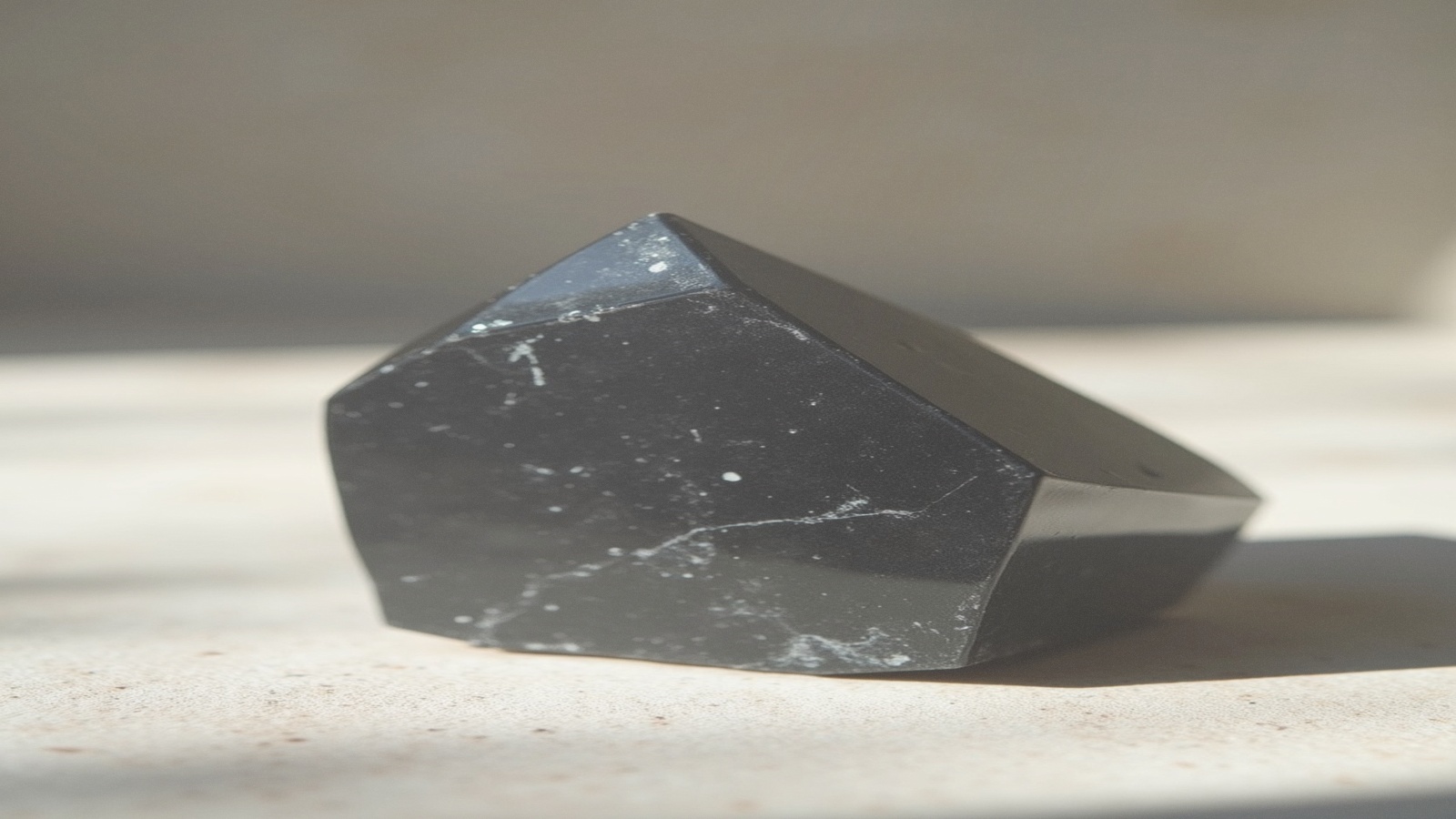
Table of Contents
- 10-Second Executive Summary / The Verdict Box
- What Is Black Onyx Stone?
- Black Onyx Meaning and Symbolism
- Protection and Grounding in Different Traditions
- How to Spot Real Black Onyx vs. Dyed Chalcedony
- Black Onyx Buying Check: A Step-by-Step Verification Checklist
- Everyday Ways to Wear Black Onyx
- Jewelry Styling and Care Tips
- Black Onyx vs. Black Diamond and Other Black Stones
- How to Choose and Care for Your Black Onyx Piece
- FAQ: Black Onyx Meaning, Wearing, and Buying Questions
- What does black onyx stone mean spiritually?
- Is black onyx a real stone or is it dyed?
- What are the benefits of wearing black onyx?
- How do you tell if black onyx is genuine?
- Can you wear black onyx every day?
- Sources
Black onyx is a jet-to-black variety of chalcedony (cryptocrystalline quartz, SiO₂) that ranges about 6.5–7 on the Mohs hardness scale, making it durable enough for daily rings, bracelets, and pendants as long as it is worn with reasonable care. Its deep, light-absorbing color has made it one of the most enduring black gem materials for jewelry — and one of the most commonly imitated, which is why understanding its mineral identity matters as much as its symbolism.
10-Second Executive Summary / The Verdict Box
- Direct Verdict: Black onyx is a genuine gem material — a dark, banded or near-monochrome variety of agate/chalcedony — and it is an excellent everyday stone for bold, grounding jewelry. The main buying risk is not the mineral itself but dyeing, which is common in the trade.
- Scientific Identity: Chalcedony (cryptocrystalline quartz), SiO₂. The name onyx comes from the Greek word for "claw" or "fingernail," likely because banded onyx can resemble a fingernail (Mindat).
- Mohs Hardness: Approximately 6.5–7 — suitable for daily wear in rings, but not scratch-proof.
- Most Common Imitation: Dyed black chalcedony sold as "black onyx." The physical material is often real chalcedony; the color may be treatment.
- Best Use Cases: Everyday rings and bracelets, men's and unisex jewelry, vintage-style and signet pieces, and a stylish, more affordable alternative to black diamond (GIA).
- Buying Standard to Ask For: Natural-origin, zero chemical resin-filling, no irradiation or dyeing — the kind of disclosure we call the Lumina Grade AAA Integrity Standard.
What Is Black Onyx Stone?
In correct gemological usage, onyx refers to a banded variety of agate (itself a form of chalcedony) with parallel bands — classically black and white — though the term is also used for mostly monochromatic agate with dark and light bands, such as brown and white (Mindat). Because chalcedony is cryptocrystalline quartz, black onyx is chemically SiO₂, the same family as agate, carnelian, and sardonyx.
This mineral identity explains two practical facts buyers care about. First, black onyx is a real, naturally occurring stone — not a synthetic invention. Second, the solid black material most commonly sold in jewelry is frequently a dyed form of chalcedony, because fully natural, evenly jet-black onyx is less common than the treated material. That distinction is the heart of most "is it real?" questions.
Black Onyx Meaning and Symbolism
Culturally, black onyx is often associated with protection, grounding, and steady resolve. These are symbolic and traditional associations — not mineral properties — and they should be understood as cultural meaning rather than a physical effect on the body or mind. Many wearers find it a useful personal reminder: a dark, quiet stone chosen to represent focus, boundaries, or composure.
Protection and Grounding in Different Traditions
Across many cultures, deep black stones have long been linked with warding and stability. Onyx's layered structure made it a favored carving material in antiquity; its cousin sardonyx, which alternates brown-red sard with white or black onyx bands, was a popular stone for Roman seals and signet rings because hot wax would not stick to it (GIA). That historical use as a seal — something that secures and authenticates — is a fitting anchor for how many people interpret black onyx today: a stone often associated with keeping things steady and protected.
For a modern wearer, the meaning is best treated as personal: choose black onyx if its symbolism of quiet strength resonates with you, not because you expect it to change your circumstances.
How to Spot Real Black Onyx vs. Dyed Chalcedony
This is the single most useful skill for a black onyx buyer. "Real" and "dyed" are not always opposites: most black onyx jewelry is genuine chalcedony whose color has been enhanced. The question is whether you are being told the truth about that. A stone that is natural-origin, with no chemical resin-filling and no irradiation or dye enhancement, meets the Lumina Grade AAA Integrity Standard — a high bar, and one worth asking sellers to confirm in writing.
Physically, genuine onyx is expected to show parallel banding somewhere under strong light, especially near edges or on the back of a cabochon, because banding is part of the definition (Mindat). Uniform, inky black with zero structure can still be chalcedony, but it is more often the dyed material. Dye may also pool in cracks or look slightly uneven against strong backlighting.
Black Onyx Buying Check: A Step-by-Step Verification Checklist
Use this sequence when evaluating a black onyx piece, whether in person or from a listing.
- Ask for the mineral name and origin. A reliable seller will state "chalcedony/agate (onyx)" rather than only a marketing name. If the origin is unknown, that is a disclosure gap, not automatically a scam.
- Ask specifically about dye and treatment. Confirm whether the color is natural or enhanced, and whether the stone has been resin-filled or irradiated. Request this in the product description or in writing — the Lumina Grade AAA Integrity Standard exists precisely because this information is too often omitted.
- Check for banding. Look at the stone under bright, angled light. Parallel bands, even faint ones, support an onyx identification (Mindat). Perfectly uniform black is possible but more likely dyed.
- Inspect cracks for pooled color. Dye tends to concentrate in fissures and surface pits. A loupe or a phone macro camera is enough to see this.
- Confirm hardness expectations. At Mohs 6.5–7, black onyx may show wear at the edges of high-traffic rings over years. If a listing claims it is "as hard as diamond," treat that as a red flag.
- Match price to claims. Dyed chalcedony is a legitimate, affordable material — but pricing should reflect it. Pay a premium only when natural color and full disclosure are documented.
Boundary of this method: These steps help you judge likelihood and seller honesty; they do not replace laboratory gemological testing, and no visual check can confirm treatment with certainty.
Everyday Ways to Wear Black Onyx
Black onyx's most practical strength is versatility. Its uniform dark tone reads as formal or minimal, so it fits both office wear and casual outfits, and it works for men's, women's, and unisex designs. In vintage and statement jewelry, onyx is valued for its bold, elegant look and is often used as a stylish, affordable substitute for black diamond (GIA).
Because it is durable but not indestructible, the best everyday formats are pendants, earrings, bracelets, and rings with a bezel or protective setting that shields the stone's edges. Save open, high-profile settings for occasional wear.
Jewelry Styling and Care Tips
- Pair with metals deliberately: yellow gold warms the black; silver and white gold keep the look crisp and modern.
- Let it anchor an outfit: black onyx works as a single focal piece against neutral or monochrome clothing rather than competing with other bold stones.
- Clean gently: warm water, mild soap, and a soft brush. Avoid ultrasonic cleaners on dyed or resin-filled stones, and avoid harsh chemicals and perfume directly on the stone.
- Store separately: keep black onyx in its own pouch so harder stones (like diamond or sapphire) do not scratch it.
Black Onyx vs. Black Diamond and Other Black Stones
Black onyx and black diamond are often compared because both are dark, elegant, and popular in signet and statement designs — but they differ in origin, hardness, and price tier. Natural-color black diamonds are prized as "fancy blacks," while onyx serves as the accessible, bold alternative (GIA). Onyx sits in the chalcedony family at Mohs ~6.5–7; diamond is far harder. If you want maximum scratch resistance and a premium budget, choose black diamond; if you want a bold, vintage-inspired look at a friendlier price, black onyx is the practical pick.
A related intention option
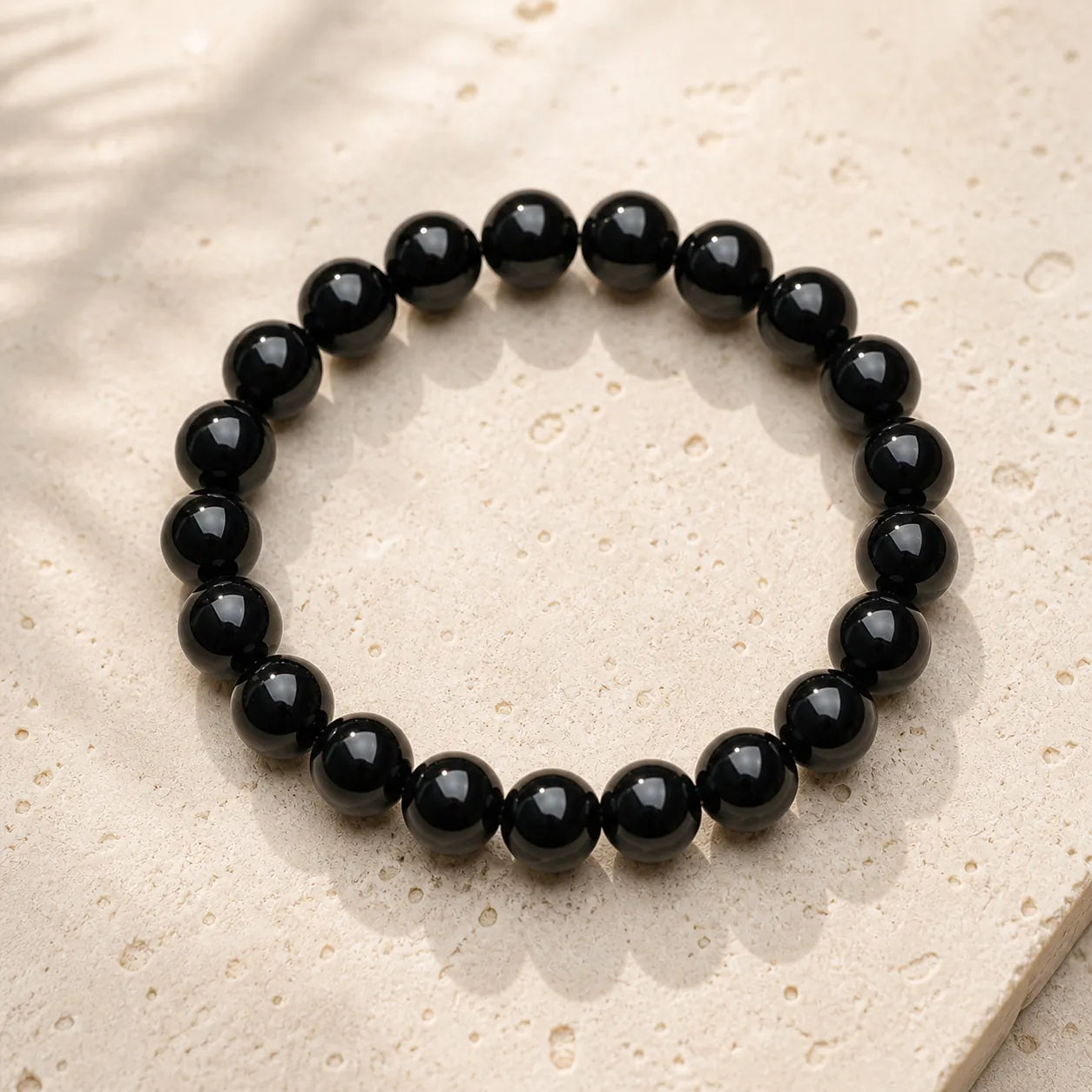
Black Obsidian Protection Bracelet
This is a related grounding, protection option, not a Onyx product. We only identify jewelry as Onyx when that exact material is verified.
Explore this related optionWithin stone-family comparisons, remember that sardonyx — a natural cousin — combines brown-red sard with white or black onyx bands and has its own historical identity as a seal stone (GIA). If you love banded pattern rather than solid black, sardonyx is the more characterful choice.
How to Choose and Care for Your Black Onyx Piece
Choose based on three decisions: intent, setting, and disclosure. If your intent is daily wear, prioritize a protective bezel setting and a seller who clearly states the material's identity and any treatment. If your intent is statement or vintage styling, you can be more flexible on setting but should still ask the disclosure questions above.
For care, treat black onyx as a durable but scratchable stone: clean with mild soap and water, store it away from harder gems, and have prongs checked periodically on rings. Following the Lumina Grade AAA Integrity Standard — natural origin, no chemical resin-filling, no irradiation or dye enhancement — keeps your piece simple to care for, since untreated stone tolerates gentle cleaning best.
FAQ: Black Onyx Meaning, Wearing, and Buying Questions
What does black onyx stone mean spiritually?
It is traditionally associated with protection, grounding, and steady resolve — symbolic and cultural meanings, not physical effects. Many wearers use it as a personal reminder of focus and boundaries.
Is black onyx a real stone or is it dyed?
Black onyx is a genuine mineral — a dark variety of chalcedony/agate (Mindat). However, most solid-black jewelry material has enhanced color, so ask your seller directly whether the stone is natural or dyed, and whether it has been resin-filled or irradiated.
What are the benefits of wearing black onyx?
Practically, it offers a bold, versatile look at Mohs ~6.5–7 durability and an affordable alternative to black diamond. Symbolically, it is often associated with grounding and protection; it is not a health treatment and should not be worn for that purpose.
How do you tell if black onyx is genuine?
Look for parallel banding under angled light, inspect cracks for pooled dye, and confirm the seller's written disclosure of origin and treatment. These checks indicate likelihood only — laboratory testing is the definitive method.
Can you wear black onyx every day?
Yes, in most formats — particularly pendants, earrings, and bezel-set rings. At Mohs 6.5–7 it may wear at exposed edges over years, so protect high-profile stones and avoid harsh chemicals.
Sources
- Mindat — Onyx: Mineral information, data and localities
- GIA — Black Diamond Buying Guide
- GIA — August Birthstones: Peridot & Spinel (sardonyx information)
© 2026 Lumina Quartz. This guide is for informational purposes and reflects mineralogical and cultural information, not medical advice.