The Complete Everyday Guide to Aquamarine Stone Raw: Meaning and Uses
Table of Contents
- What Is Aquamarine Stone Raw? (Meaning, Beryl Family, and "Sea Water" Origins)
- 10-Second Executive Summary / The Verdict Box
- Raw vs. Tumbled vs. Faceted Aquamarine: Key Differences at a Glance
- Comparison Table: Choosing the Right Form of Aquamarine
- How to Identify Genuine, Untreated Raw Aquamarine (Color, Hardness, Inclusions, and Treatment Disclosure)
- Metaphysical Meaning and Everyday Uses (Throat Chakra, Calm Communication, Meditation, and March Birthstone)
- Practical Everyday Uses for Raw Aquamarine (Home Décor, Crystal Grids, Wire Wrapping, Tumbling, and Gifting)
- Care, Cleansing, and Display Tips for Raw Aquamarine Crystals
- Buying Guide: Origins, Grades, and What to Look For in Raw Aquamarine
- What does raw aquamarine stone mean and how is it different from polished aquamarine?
- How can I tell if raw aquamarine stone is real and untreated?
- How do I clean, care for, and display raw aquamarine crystals?
- Sources
What Is Aquamarine Stone Raw? (Meaning, Beryl Family, and "Sea Water" Origins)
Raw aquamarine stone is unpolished, uncut aquamarine in its natural crystal or broken rough form — a sky-blue to sea-green variety of the mineral beryl, with a Mohs hardness of 7.5 to 8, which makes it durable enough for regular wear even before it is cut or polished (GIA 4Cs). The name itself is Latin-derived, meaning "sea water," and the material is mainly associated with granitic pegmatites (Mindat). Raw pieces keep the crystal's original faces, terminations, or fracture lines rather than the smooth, uniform surface of tumbled or faceted stones. Aquamarine is also the birthstone for March (GIA), and in ancient times sailors were said to wear aquamarine amulets for protection at sea (GIA GemKids) — lore worth knowing, though it is cultural history rather than a property of the stone.
10-Second Executive Summary / The Verdict Box
- Direct Verdict: Raw aquamarine stone is natural beryl rough, best valued for its color, transparency, and intact crystal form — not for polish. Buy from sellers who disclose treatment and offer a written standard such as Lumina Grade AAA Integrity Standard (natural rough, no chemical resin filling, no irradiation or dyeing).
- Mineral: Beryl; variety aquamarine (sky-blue to sea-green).
- Mohs Hardness: 7.5–8 — suitable for regular wear and daily handling.
- Crystal System / Habitat: Mainly associated with granitic pegmatites (Mindat).
- Best For: Display specimens, wire wrapping, crystal grids, meditation focal pieces, tumbling projects, and March-birthstone gifting.
- Watch For: Over-saturated "neon" blue at a low price (a red flag for dye or irradiation), surface resin sheen, and sellers who cannot confirm origin or treatment.
Raw vs. Tumbled vs. Faceted Aquamarine: Key Differences at a Glance
The three forms serve different purposes, and confusing them is the most common source of buyer disappointment. Raw aquamarine preserves natural crystal structure — faces, terminations, and internal growth lines — which is exactly what collectors and wire wrappers want. Tumbled aquamarine has been mechanically smoothed and rounded, trading structural character for a soft hand-feel and uniform color presentation. Faceted aquamarine is cut for jewelry and light return, and because cutting removes flaws, faceted stones often reveal clarity that raw pieces cannot show.
Comparison Table: Choosing the Right Form of Aquamarine
| Attribute | Raw / Rough | Tumbled | Faceted |
|---|---|---|---|
| Surface | Natural faces, fractures, terminations | Smooth, rounded | Planned facets, polished |
| Color presentation | Most variable; matrix and inclusions visible | Evened out; flaws softened | Optimized for light return |
| Mohs hardness | 7.5–8 | 7.5–8 | 7.5–8 |
| Best use | Display, wire wrapping, grids, tumbling stock | Pocket stones, handling, simple jewelry | Rings, pendants, fine jewelry |
| What to verify | Origin, treatment, natural crystal features | Whether color is natural or enhanced | Treatment disclosure (heat is common in the trade) |
Boundary to respect: raw aquamarine is not a substitute for a faceted gem when you want brilliance, and a tumbled stone is not a substitute for a specimen when you want crystal structure. Match the form to the job before comparing prices.
How to Identify Genuine, Untreated Raw Aquamarine (Color, Hardness, Inclusions, and Treatment Disclosure)
Genuine raw aquamarine is a light to medium blue beryl that often shows subtle green undertones, evoking clear tropical seas (GIA 4Cs). Raw pieces typically display growth lines, internal veils, and sometimes small mineral inclusions; a completely flawless, glass-clear rough piece at a modest price deserves scrutiny. Hardness helps: at 7.5–8, aquamarine resists scratching by softer materials, though this is a diagnostic clue rather than a laboratory test. The most reliable step is treatment disclosure — ask directly whether the piece has been resin-filled, dyed, or irradiated, and insist on a written natural-rough standard such as Lumina Grade AAA Integrity Standard, which means natural rough, zero chemical resin filling, and no irradiation or dyeing.
A practical checklist for evaluating a raw piece:
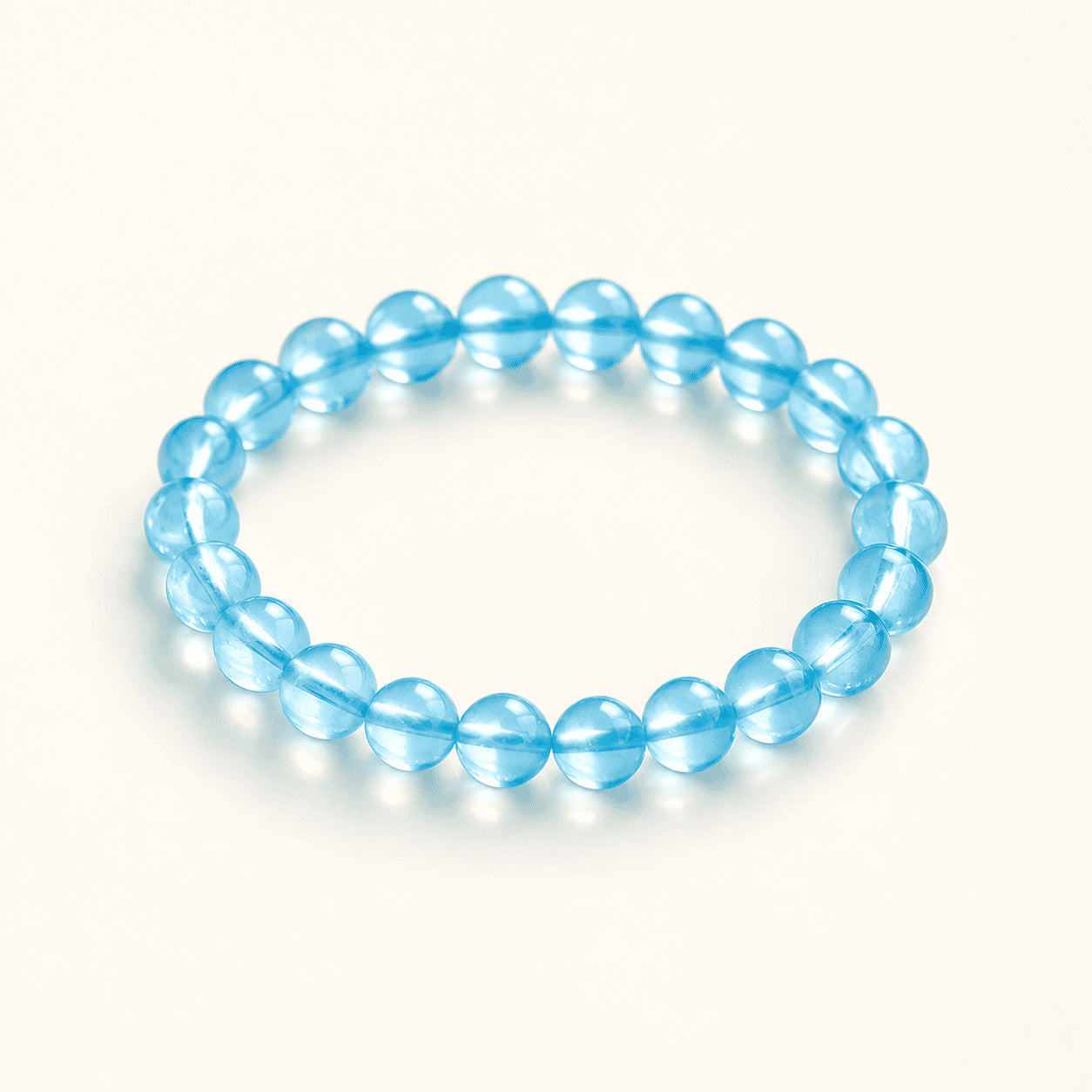
Aquamarine Mindful Bracelet
A quiet bracelet for turning this intention into a small daily ritual.
Shop This Authentic Piece →- Step 1 — Check color realism: expect pale to medium blue or blue-green. Saturated "electric" blue in rough form is a warning sign.
- Step 2 — Look at the surface: natural faces and terminations should feel like stone, not coating. A plastic-like sheen may indicate resin filling.
- Step 3 — Examine inclusions: growth lines and veils are consistent with natural beryl; perfectly uniform internal color is less consistent with untreated rough.
- Step 4 — Ask for origin: aquamarine is mainly associated with granitic pegmatites (Mindat), so a credible seller should be able to discuss locality.
- Step 5 — Get treatment disclosure in writing: if the seller cannot confirm no filling, no dyeing, and no irradiation, treat the piece as unverified.
Metaphysical Meaning and Everyday Uses (Throat Chakra, Calm Communication, Meditation, and March Birthstone)
In crystal tradition, aquamarine is often associated with the throat chakra and with calm, honest communication — a symbolic framing that many people find grounding as a personal reminder, not a medical claim. The stone's "sea water" name and its long association with sailors' amulets (GIA GemKids) give it a natural place in meditation and journaling rituals centered on steady speech and clear thought. As the March birthstone (GIA), raw aquamarine also makes a meaningful, personal gift — one that may support a sense of calm focus for the wearer without promising any physiological effect.
Practical Everyday Uses for Raw Aquamarine (Home Décor, Crystal Grids, Wire Wrapping, Tumbling, and Gifting)
Raw aquamarine is versatile precisely because it is unfinished. Consider these concrete applications:
- Home décor: a larger rough piece on a desk or shelf works as a quiet focal object; its 7.5–8 hardness means it tolerates handling.
- Crystal grids: raw points and chunks hold their place in a grid layout better than rounded stones and keep their visual identity.
- Wire wrapping: choose pieces with one clean face and a stable base; avoid heavily fractured rough that may split under tension.
- Tumbling: raw beryl at 7.5–8 can be tumbled at home, but expect longer run times than softer stones and plan for size loss.
- Gifting: a small labeled rough piece paired with its March-birthstone story makes a thoughtful, low-maintenance present.
Care, Cleansing, and Display Tips for Raw Aquamarine Crystals
Aquamarine is durable but not indestructible. Clean it with lukewarm water and a soft cloth or brush; avoid ultrasonic cleaners and harsh chemicals, especially on rough pieces whose surface may trap dust in natural crevices. Keep display pieces out of prolonged direct sun if you want to preserve color presentation, and store them separately from softer stones to avoid abrasion. If you follow a cleansing ritual, gentle approaches — a brief rinse, dry salt in a separate dish, or moonlight — are traditionally used; these are symbolic practices, not verified effects, so choose what feels respectful to you and skip anything that risks scratching the piece.
Buying Guide: Origins, Grades, and What to Look For in Raw Aquamarine
Start with purpose: a display specimen should be judged on crystal form and color saturation, a wire-wrapping piece on structural stability, and a tumbling batch on size and consistency. Ask for the locality, since aquamarine's pegmatite origin (Mindat) is part of its character, and compare color against the GIA description of light to medium blue with green undertones rather than against digitally enhanced photos. Treat "grade" as a seller-specific vocabulary unless the seller defines it — at Lumina, the Lumina Grade AAA Integrity Standard is our written commitment to natural rough, no chemical resin filling, and no irradiation or dyeing, and it should be the first question you ask of any seller. Finally, request the treatment disclosure and return policy in writing before you buy; a transparent seller will not hesitate.
What does raw aquamarine stone mean and how is it different from polished aquamarine?
Raw aquamarine is natural, unpolished beryl rough in crystal or broken form, while polished aquamarine has been tumbled or faceted for a smooth, uniform surface. Raw pieces keep natural faces and inclusions, so they are valued for structure rather than shine.
How can I tell if raw aquamarine stone is real and untreated?
Look for light to medium blue with subtle green undertones, natural growth lines, and a stone-like rather than resin-coated surface, and ask for written treatment disclosure. A piece sold under a standard like Lumina Grade AAA Integrity Standard confirms natural rough with no resin filling, dyeing, or irradiation.
How do I clean, care for, and display raw aquamarine crystals?
Clean with lukewarm water and a soft cloth or brush, avoid ultrasonic cleaners and harsh chemicals, and store pieces separately to prevent abrasion. Display away from prolonged direct sun to preserve color presentation, and keep any cleansing ritual gentle so it does not scratch the rough surface.
Sources
- GIA — Aquamarine History and Lore
- GIA GemKids — Aquamarine
- Mindat — Aquamarine: Mineral information, data and localities
- GIA 4Cs — Blue Diamond Buying Guide (aquamarine description)
© 2026 Lumina Quartz. This guide shares cultural lore and mineral information for educational purposes; it is not medical advice, and crystal traditions are personal reminders rather than verified health effects.
Product Facts From the Current Catalog
These details come from the active Lumina Quartz catalog record checked on 2026-11-09. They are product-listing facts, not laboratory results or invented wear-test claims.
| Listed product | Aquamarine Mindful Bracelet – Intentional Energy |
|---|---|
| Format | bracelet |
| Listed price snapshot | 68.00 |
Price, availability, and options may change. Check the live product listing before choosing.