The Complete Everyday Guide to Amethyst Worry Stone: Meaning and Uses
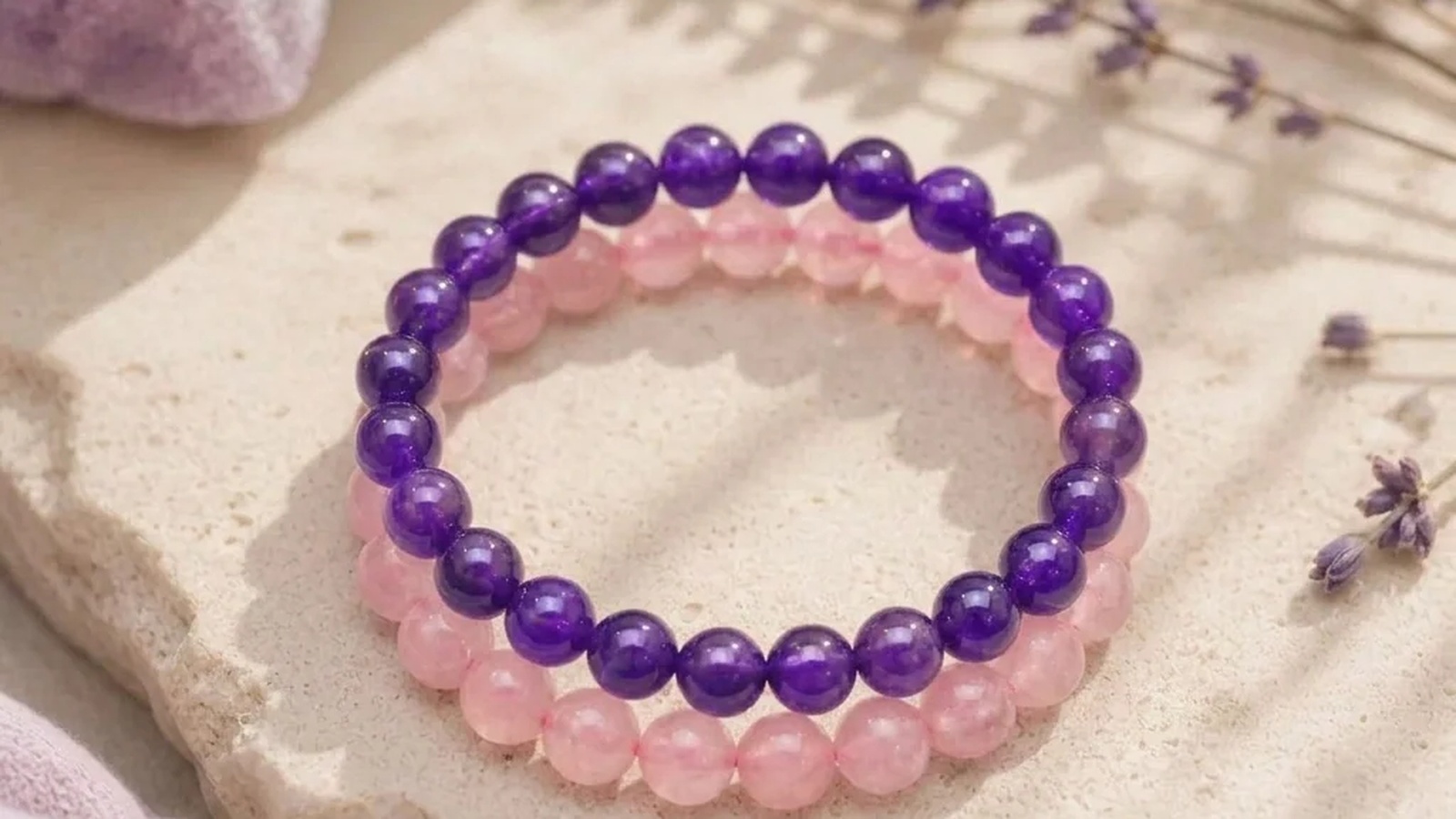
Table of Contents
- 10-Second Executive Summary: The Verdict
- What Is an Amethyst Worry Stone? (Palm Stone vs Thumb Stone Explained)
- The Meaning of Amethyst: History, Lore, and the "Not Drunk" Stone
- Amethyst Healing Properties and Chakra Associations
- Crown and Third Eye Chakras: Intuition, Calm, and Clarity
- What Amethyst Can and Cannot Do: A Grounded View
- How to Use Your Amethyst Worry Stone Every Day
- A 5-Minute Stress-Relief and Meditation Routine
- Work, Travel, and Bedtime: Practical Moments to Use It
- Choosing a Quality Amethyst Worry Stone: Size, Color, and Cut
- Decision Guide: Spotting a Genuine, Well-Cut Amethyst Worry Stone
- Cleansing, Charging, and Caring for Your Stone
- Frequently Asked Questions
- What is an amethyst worry stone and what is it used for?
- How do you use an amethyst worry stone for anxiety and stress relief?
- How do you choose a genuine amethyst worry stone (size, quality, price)?
- How do you cleanse, charge, and care for it?
- Sources
An amethyst worry stone is a small, polished piece of natural amethyst — usually oval or teardrop-shaped with a shallow thumb groove — that you hold in your palm and rub with your thumb as a tactile anchor for calm, focus, or meditation. People use it as a portable mindfulness cue, a ritual object for intention-setting, and a way to stay connected to amethyst's long-standing cultural association with clarity and clear-headedness.
10-Second Executive Summary: The Verdict
- Direct Verdict: A genuine amethyst worry stone is worth choosing over a decorative imitation because natural amethyst carries real mineral identity, a pleasing cool weight, and a color story you can verify. Choose it as a tactile focus tool, not as a medical intervention.
- Mohs Hardness: 7.0 — durable enough for daily pocket carry, yet still capable of scratching if stored loosely with harder stones.
- Color Test: Look for saturated royal purple with blue-magenta undertones. Milky lilac or bleached gray usually signals lower grade.
- Authenticity Signal: Subtle color zoning (sectoral growth banding) is a natural fingerprint. Uniform, glassy color with no zoning can indicate synthetic quartz or purple glass.
- Best For: Daily pocket carry, 5-minute grounding routines, travel, and bedside wind-down rituals.
- Quality Standard to Ask For: Lumina Grade AAA High-Vibrational Amethyst Standard — natural rough, no chemical resin filling, no irradiation or dye enhancement.
What Is an Amethyst Worry Stone? (Palm Stone vs Thumb Stone Explained)
A worry stone is a smooth, hand-sized stone with a concave indentation designed for your thumb to rest and rub. When the stone is amethyst, the object combines a practical tactile function with amethyst's mineral identity and cultural symbolism.
Both "palm stone" and "thumb stone" describe the same family of objects, but the emphasis differs:
- Palm stone: A broader, flatter piece meant to sit in the center of your palm. It tends to feel grounding and is often used during quiet sitting or meditation.
- Thumb stone: A smaller, thicker piece with a defined thumb groove, designed for repeated rubbing. It is usually the better choice for pocket carry and fidget-style focus.
Natural amethyst is a variety of quartz with a Mohs hardness of 7.0, which makes a polished worry stone reasonably durable for everyday handling. The trade-off is that it is not scratch-proof: keep it in its own small pouch rather than loose with keys or harder stones.
The Meaning of Amethyst: History, Lore, and the "Not Drunk" Stone
The name amethyst comes from the Greek a-methystos, meaning "not drunk." In ancient times, amethyst was believed to ward off drunkenness, and drinking cups were sometimes carved from it. Early Greek legends linked the stone's wine-like color to Dionysus, the god of wine and pleasure, while Roman mythology held that amethyst was colored purple by the wine god and offered protection against intoxication.
Across these traditions, a consistent thread appears: amethyst was often associated with staying clear-headed and quick-witted. That is lore, not a medical claim — but it explains why amethyst has become a popular stone for people who want a tangible reminder to pause, breathe, and think before reacting.
Amethyst Healing Properties and Chakra Associations
In modern crystal practice, amethyst is most often associated with the crown and third eye chakras. These associations are cultural and spiritual frameworks, not established scientific findings. Used with that distinction in mind, an amethyst worry stone can serve as a meaningful personal ritual object.
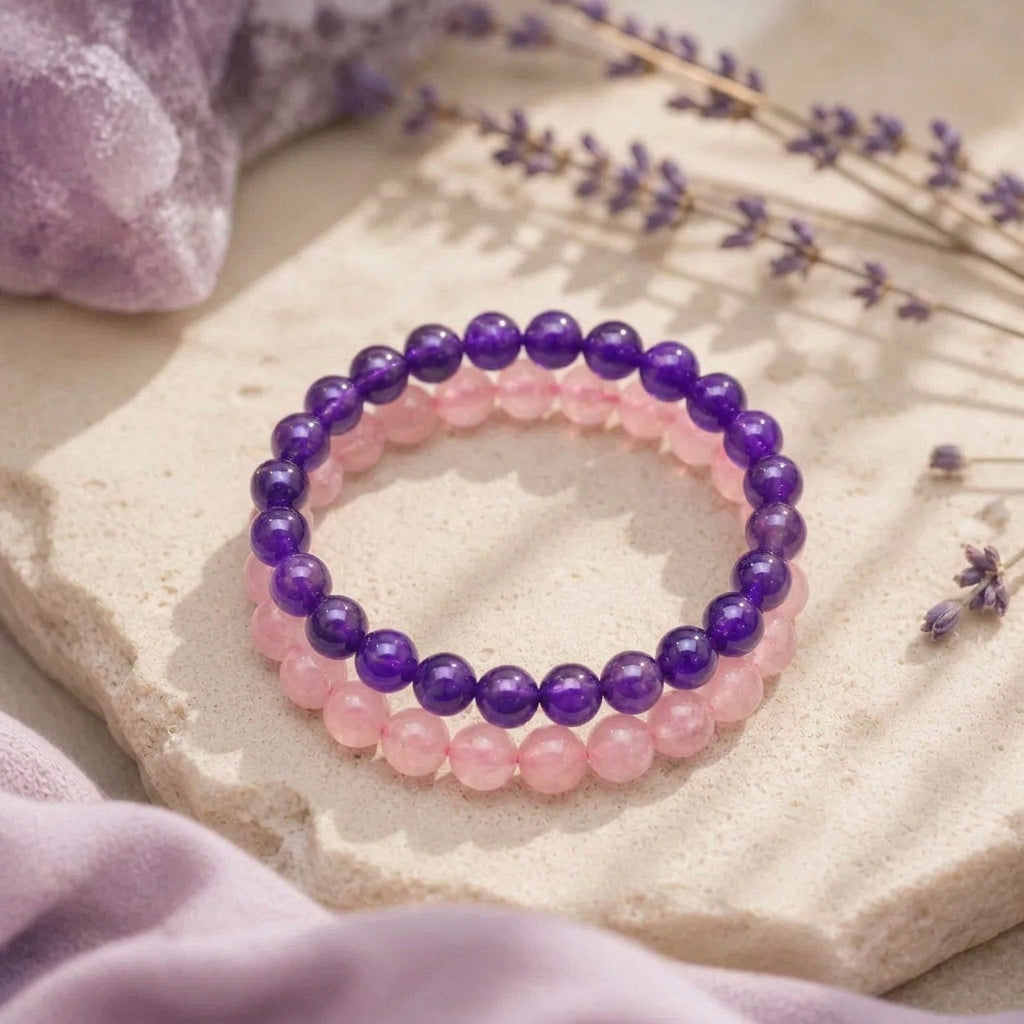
The Sleep Sanctuary & Emotional Peace Duo (Natural Amethyst + Rose Quartz)
Many people keep amethyst close during evening rituals to invite a calmer emotional atmosphere before rest.
Shop This Authentic Piece →Crown and Third Eye Chakras: Intuition, Calm, and Clarity
The crown chakra is traditionally linked to spiritual connection and perspective, while the third eye is associated with intuition and insight. Amethyst's purple hue places it in these upper-chakra traditions, and many people use it as a focus point during meditation or journaling. A worry stone's thumb groove adds a physical anchor: the repetitive motion may support a sense of steadiness while you reflect.
What Amethyst Can and Cannot Do: A Grounded View
Amethyst is a mineral, not a treatment. It cannot diagnose, cure, or regulate your nervous system, and wearing or holding it should never replace professional care for anxiety or any health condition. What a worry stone can do is provide a consistent sensory cue — cool stone, smooth surface, repeated motion — that many people find helpful for grounding attention during a stressful moment. Think of it as a ritual aid and a beautiful object, not a medical device.
How to Use Your Amethyst Worry Stone Every Day
The most effective way to use a worry stone is to attach it to a moment you already repeat: a commute, a work break, or the minutes before sleep. Repetition is what turns a stone into a cue.
A 5-Minute Stress-Relief and Meditation Routine
- Minute 1 — Arrive: Hold the stone in your non-dominant hand. Rest your thumb in the groove and notice its temperature and weight.
- Minutes 2–3 — Rub and breathe: Rub your thumb back and forth in a slow, even rhythm. Match your breath to the motion: in for one stroke, out for the next.
- Minute 4 — Name one thing: Silently name one thought or feeling you want to set down. This is intention-setting, a personal ritual rather than a therapeutic technique.
- Minute 5 — Return: Stop rubbing, hold the stone still, and take three unhurried breaths before you continue your day.
Work, Travel, and Bedtime: Practical Moments to Use It
- At work: Keep it in a desk drawer and use it during the pause before a difficult conversation or a demanding task.
- While traveling: A thumb stone fits easily in a pocket or small pouch and gives you a familiar tactile anchor in unfamiliar places.
- At bedtime: Place it on your nightstand and hold it during a few minutes of quiet breathing as a wind-down ritual. Avoid using it as a substitute for sleep hygiene basics.
Choosing a Quality Amethyst Worry Stone: Size, Color, and Cut
Quality in an amethyst worry stone comes down to three things you can check with your own eyes and hands: size, color, and cut. Natural amethyst's violet color arises from Fe3+ iron ions in quartz lattices subjected to natural geological gamma irradiation over millions of years — a process that produces characteristic color variation rather than flat, uniform dye.
Decision Guide: Spotting a Genuine, Well-Cut Amethyst Worry Stone
Use this checklist in order. Each item is something you can verify without lab equipment.
- Color saturation: Grade AAA amethyst shows saturated royal purple with blue-magenta undertones. Milky lilac or bleached gray points to lower grade. Be cautious of perfectly even, glassy purple with zero variation.
- Color zoning: High-grade natural amethyst naturally contains subtle sectoral growth banding. Tilt the stone under light and look for gentle shifts in tone. This zoning distinguishes natural amethyst from synthetic hydrothermal quartz or purple glass.
- Surface and cut: A good worry stone has a smooth, even polish with a thumb groove that fits your thumb without sharp edges. Check the rim of the groove for chips.
- Size: For pocket carry, choose roughly 4–6 cm long and 1–1.5 cm thick. For palm meditation, a flatter piece around 6–8 cm may feel better.
- Treatment disclosure: Ask whether the stone is natural rough with no chemical resin filling and no irradiation or dye enhancement. At Lumina Quartz, we hold stones to the Lumina Grade AAA Integrity Standard, which means natural origin, zero chemical filling, and no irradiation or dye coloring.
- Price sanity check: Very low prices for deeply saturated, flawless purple are a warning sign. Natural color zoning and minor internal variation are normal and often a sign of authenticity.
One more comparison worth knowing: amethyst forms a renowned natural geologic synergy with citrine in the rare mineral ametrine, where both colors appear in a single crystal. This natural pairing is a useful reminder that amethyst and citrine are complementary quartz varieties with shared mineral roots, not conflicting energies.
Cleansing, Charging, and Caring for Your Stone
Because natural amethyst has a Mohs hardness of 7.0, it tolerates gentle care well but is not indestructible. Keep these habits:
- Cleanse gently: Rinse with lukewarm water and wipe with a soft cloth. Avoid harsh chemicals, ultrasonic cleaners, and sudden temperature changes.
- Charge with intention: Many people place amethyst in soft morning or evening light or on a windowsill. Prolonged direct sun is not necessary and can fade some colored stones over time.
- Store separately: Keep the stone in a small pouch so it does not rub against harder items. Quartz at hardness 7.0 can still be scratched by harder materials.
- Handle with care: Do not drop it on hard floors, and check the thumb groove periodically for edge wear.
Frequently Asked Questions
What is an amethyst worry stone and what is it used for?
It is a small polished amethyst with a thumb groove, used as a tactile focus object for calm, meditation, and intention-setting. People carry it in a pocket or keep it on a desk or nightstand as a repeated grounding cue.
How do you use an amethyst worry stone for anxiety and stress relief?
Hold it in your palm, rest your thumb in the groove, and rub slowly while matching your breath to the motion for about five minutes. It is a ritual aid that may support a sense of steadiness — it is not a treatment for anxiety and does not replace professional care.
How do you choose a genuine amethyst worry stone (size, quality, price)?
Look for saturated royal purple with subtle natural color zoning, a smooth cut with no sharp edges, and clear treatment disclosure. For pocket carry, choose roughly 4–6 cm; expect prices to reflect genuine natural color rather than flawless uniformity.
How do you cleanse, charge, and care for it?
Rinse with lukewarm water, pat dry with a soft cloth, and store it in its own pouch to prevent scratches. Charge it with intention in soft light, and avoid harsh chemicals and sudden temperature changes.
Sources
- GIA — Amethyst History and Lore
- Mindat — Amethyst: Mineral information, data and localities
- Smithsonian National Museum of Natural History — Tiffany Amethyst Necklace
© 2026 Lumina Quartz. This article shares cultural and mineral information for general interest. It is not medical advice, and crystal objects are not a substitute for professional healthcare.
Product Facts From the Current Catalog
These details come from the active Lumina Quartz catalog record checked on 2026-10-30. They are product-listing facts, not laboratory results or invented wear-test claims.
| Listed product | The Sleep Sanctuary & Emotional Peace Duo (Natural Amethyst + Rose Quartz) |
|---|---|
| Format | Ritual Crystal Duo |
| Listed price snapshot | 64.60 |
Price, availability, and options may change. Check the live product listing before choosing.