Strawberry Quartz Meaning: A Complete Guide to This Crystal for Self-Love and Grounding
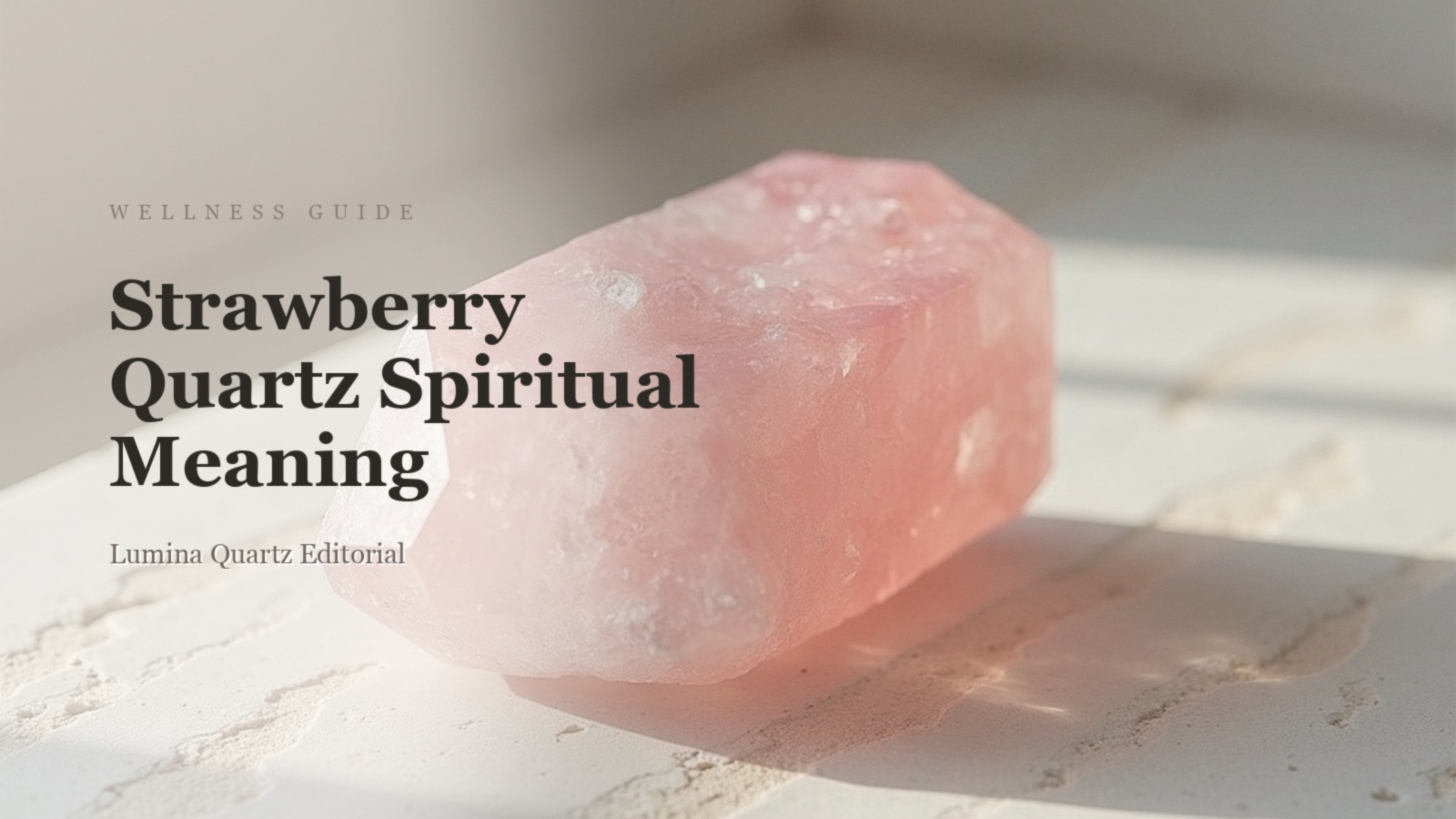
Table of Contents
- Key Takeaways
- Introduction to Strawberry Quartz
- What is Strawberry Quartz?
- Brief History and Origins
- Spiritual Meaning and Energy
- The Stone of Inner Love
- Love with Purpose: Self-Acceptance and Radiating Love
- Enhancing Intuition and Spiritual Awareness
- Healing Properties and Chakra Association
- Heart Chakra Healing
- Grounding and Root Chakra Connection
- Emotional Healing and Releasing Blockages
- How to Use Strawberry Quartz
- Meditation and Aura Cleansing
- Wearing Strawberry Quartz Jewelry
- Carrying in Your Pocket or Placing in Your Space
- Strawberry Quartz vs. Rose Quartz
- Key Differences in Energy and Purpose
- Choosing the Right Crystal for You
- Cleansing and Caring for Strawberry Quartz
- Ways to Cleanse and Recharge
- Daily Care Tips
- Frequently Asked Questions
- What chakra is strawberry quartz associated with?
- How can I incorporate strawberry quartz into my practice?
- Is strawberry quartz a real crystal?
- Conclusion and Final Thoughts
There are crystals that hum softly in the background of daily life, and then there are those that seem to carry an entire season within them. Strawberry quartz, with its blushing pink body and delicate flecks of crimson, holds the quiet warmth of a late spring afternoon in every polished stone. For those drawn to its tender glow, the strawberry quartz spiritual meaning unfolds gradually, like a conversation with an old friend: gentle, honest, and deeply grounding.
Key Takeaways
- Strawberry quartz is a stone of inner love and self-acceptance, often associated with the heart chakra and emotional healing.
- It bridges the heart and root chakras, offering a rare combination of gentle upliftment and firm grounding.
- Its spiritual meaning centers on self-compassion, loving with purpose, and deepening intuition.
- You may use strawberry quartz in meditation, as jewelry, or by placing it in your environment to carry its energy throughout the day.
- Strawberry quartz is a real, naturally occurring quartz variety characterized by hematite inclusions that create its pink-to-red color.
- Proper cleansing and care help keep the stone clear, both physically and energetically.
Introduction to Strawberry Quartz
What is Strawberry Quartz?
Strawberry quartz is a variety of quartz crystal distinguished by its pink-to-red coloration, which typically results from inclusions of hematite or other iron-based minerals. The interplay of light within the stone creates a visual texture that closely resembles the glistening surface of a freshly cut strawberry. It is a translucent stone, most often tumbled, cabbed, or carved, and its unique patterning makes every single piece one of a kind.
According to the mineral database Mindat, the material was originally known as "scarlet quartz" in the late nineteenth century, describing fine-grained red hematite-included quartz from the iron mines of Cumbria, England. The Gemological Institute of America (GIA) notes that "strawberry quartz" is not a strictly defined term in gemology, but is generally recognized in the market as single-crystal quartz with numerous striped or flaky hematite inclusions that give it a pink to red overall appearance. Because mine production is limited and rough sizes are small, strawberry quartz is usually cut into beads, cabochons, or faceted stones, or used for small carvings.
Brief History and Origins
Quartz itself has been honored across civilizations for millennia, but strawberry quartz as a recognized variety is a more recent addition to the crystal family. It first gained attention among collectors largely through sources in Russia, where the distinctive hematite-included quartz was unearthed in generous quantities. Deposits have also been documented in locations such as Kazakhstan and Brazil. While it does not carry the ancient documented lineage of amethyst or rose quartz, strawberry quartz has quickly found its place among those who work with crystals for emotional and spiritual support. Its arrival on the scene may be recent, but the energy it carries feels timeless — a quiet reminder that the earth's offerings are never exhausted, and that new teachers can emerge at any moment.
Spiritual Meaning and Energy
The strawberry quartz spiritual meaning is woven around love — not only romantic love, but the quiet, sustaining love that begins within. It is often described as a stone that helps soften self-criticism and encourages a warmer inner dialogue. In energetic practices, strawberry quartz is frequently used to invite compassion, support emotional release, and open the heart to receive affection in its many forms. Many crystal practitioners describe its energy as both tender and steady, which is part of why it is treasured by those who want emotional openness without feeling ungrounded.
The Stone of Inner Love
If rose quartz is the stone of universal love, strawberry quartz may be understood as the stone of inner love — the kind that allows you to look at your reflection and meet that person with kindness. Many practitioners associate strawberry quartz with self-acceptance, noting that it may support a gentle shift in how we perceive our own worth. It is not a stone that demands transformation; rather, it waits patiently, inviting you to soften the edges of your inner critic over time.
Love with Purpose: Self-Acceptance and Radiating Love
Inner love is not meant to remain contained. Once you begin to accept yourself more fully, that warmth naturally radiates outward. Strawberry quartz is often associated with this ripple effect — the way self-compassion becomes the foundation for more meaningful relationships. When the heart feels full and steady, love flows more effortlessly toward others without the need for validation or control. This is what some practitioners call love with purpose: not a vague emotion, but an intentional, grounded way of being in relationship with yourself and the world around you.
Enhancing Intuition and Spiritual Awareness
Beyond its connection to love, strawberry quartz is also considered a stone that may support intuition and spiritual awareness. The quartz structure amplifies energy and intention, while the hematite inclusions are thought to ground those insights into the physical body. This combination is particularly valuable for those who tend toward airy, dissociative spiritual experiences. Strawberry quartz may help integrate wisdom into daily life, allowing intuition to feel less like a distant whisper and more like a trustworthy inner guide.
Healing Properties and Chakra Association
When working with crystals, many people turn to chakra associations to understand how a stone's energy might support their overall well-being. Strawberry quartz is most often associated with two chakras: the heart chakra and the root chakra. This dual connection makes it a uniquely balanced stone — one that may encourage emotional openness and physical steadiness at the same time.
Heart Chakra Healing
The heart chakra, located at the center of the chest, is the energy center associated with love, compassion, and emotional expression. Strawberry quartz is often used in heart chakra work because its gentle, warm energy may help release emotional tension and encourage forgiveness — both of oneself and of others. For those who carry old wounds around trust or intimacy, strawberry quartz may offer a quiet invitation to soften the walls around the heart.
Grounding and Root Chakra Connection
The root chakra, at the base of the spine, is associated with stability, safety, and a sense of belonging in the physical world. The hematite within strawberry quartz is traditionally linked with grounding, and this mineral pairing is what gives the stone its distinctive dual nature. When used intentionally, strawberry quartz may help you feel anchored enough to explore emotional depth without becoming unmoored. It is a gentle reminder that true openness requires a steady foundation beneath it.
Emotional Healing and Releasing Blockages
Many who work with strawberry quartz describe it as a supportive companion for releasing emotional blockages. Rather than forcing catharsis, the stone is thought to encourage a slow, compassionate unwinding of old hurts. This can look like journaling a difficult memory with more kindness than before, or simply noticing where you hold tension and choosing to breathe into it. Strawberry quartz does not promise to erase pain; it invites you to meet it with tenderness.
How to Use Strawberry Quartz
Meditation and Aura Cleansing
Holding or resting strawberry quartz nearby during meditation can be a lovely way to welcome its calming energy. You might place it over the heart while breathing slowly, or hold it in your palm and set a simple intention for self-kindness. Some practitioners also use it in aura-cleansing rituals, gently passing the stone through the space around the body to invite a sense of renewal.
Wearing Strawberry Quartz Jewelry
Because its energy is soft rather than overwhelming, strawberry quartz is well suited to everyday wear. A bracelet, pendant, or pair of earrings keeps the stone close to the heart or in your energy field throughout the day. Many wearers find that simply catching a glimpse of its blush-toned glow offers a small reminder to pause, breathe, and be kind to themselves.
Carrying in Your Pocket or Placing in Your Space
A tumbled strawberry quartz in a pocket or bag is an easy way to keep its grounding energy nearby. You might also place a piece on a bedside table, desk, or meditation altar. In shared spaces, it can serve as a quiet anchor for gentler communication and mutual respect.
Strawberry Quartz vs. Rose Quartz
Both stones are pink, both are quartz, and both are associated with the heart — which is why they are so often compared. Yet their energies and appearances differ in meaningful ways.
Key Differences in Energy and Purpose
A Simple Comparison at a Glance
| Feature | Strawberry Quartz | Rose Quartz |
|---|---|---|
| Appearance | Pink to red with visible hematite flecks or spangles | Soft, even pink, often cloudy or translucent |
| Primary inclusions | Hematite or other iron-based minerals | Titanium, iron, and other trace minerals |
| Chakra focus | Heart and root | Heart |
| Energetic tone | Warm, grounding, self-focused love | Gentle, expansive, universal love |
| Best for | Inner-child work, self-acceptance, staying grounded | Opening to love, compassion, relationship harmony |
Choosing the Right Crystal for You
If your work is centered on self-love and you often feel scattered or overwhelmed, strawberry quartz's grounding quality may feel especially supportive. If your focus is on opening the heart to universal love or deepening a romantic connection, rose quartz remains the classic choice. Many practitioners keep both, reaching for one or the other depending on what the day asks of them.
Cleansing and Caring for Strawberry Quartz
Ways to Cleanse and Recharge
- Smoke cleansing: Pass the stone through palo santo or incense smoke with intention.
- Moonlight: Leave it on a windowsill under the full moon to gently recharge.
- Sound: Use a singing bowl or bell to clear the stone's energy.
- Visualization: Hold it and imagine soft light washing through the crystal.
Daily Care Tips
Keep strawberry quartz away from harsh chemicals and prolonged direct sunlight, which may cause the color to fade over time. Clean it with a soft cloth and lukewarm water when needed. When it isn't being worn or used, store it in a soft pouch or on a dedicated tray to protect its surface.
Frequently Asked Questions
What chakra is strawberry quartz associated with?
Strawberry quartz is most commonly associated with the heart chakra and the root chakra. Its heart connection supports love and compassion, while its hematite content gives it a grounding quality linked to the root.
How can I incorporate strawberry quartz into my practice?
You can meditate with it over the heart, wear it as jewelry, carry a tumbled piece in your pocket, or place it in a room where you want to encourage gentleness and calm. It also works well as part of a crystal grid focused on self-love and stability.
Is strawberry quartz a real crystal?
Yes. Strawberry quartz is a naturally occurring quartz that gains its pink-to-red color from hematite inclusions. It is worth noting that other materials sold under the name are sometimes heat-treated or synthetic, so it helps to purchase from a reputable source and to treat the term as a market description rather than a strict gemological classification.
Conclusion and Final Thoughts
Strawberry quartz is a stone for those who are learning to love themselves more gently — and to stay grounded while they do it. Whether you are drawn to its blush-pink glow for its beauty, its heart-centered energy, or its quiet grounding support, it offers a steady companion for the tender work of self-acceptance. To explore other crystals that pair well with this intention, you might enjoy our guide to rose quartz or the steady warmth of red jasper.