Smoky Quartz Properties: The Grounding Crystal for Stress Relief and Meditation
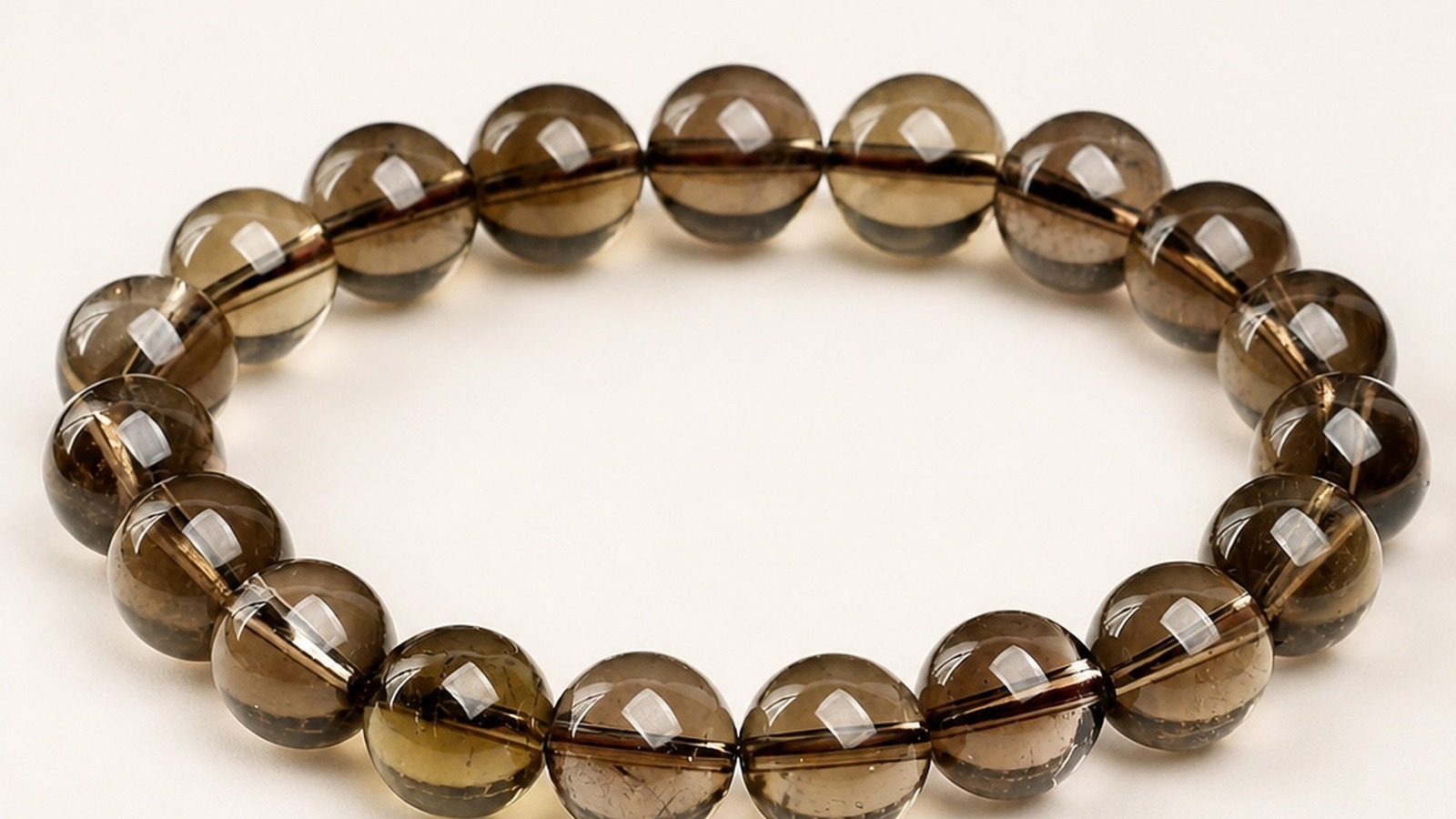
Table of Contents
- Introduction to Smoky Quartz
- What is Smoky Quartz?
- Chemical Composition and Formation
- Color Variations and Appearance
- Smoky Quartz Properties
- Physical Properties
- Metaphysical Properties
- Natural vs. Irradiated Smoky Quartz
- Healing Benefits of Smoky Quartz
- Emotional and Mental Healing
- Physical Healing
- How to Use Smoky Quartz
- In Jewelry
- In Meditation and Spiritual Practices
- In Home and Office Decor
- How to Cleanse and Care for Smoky Quartz
- Buying Guide for Smoky Quartz
- What to Look For
- Quality and Authenticity
- Key Takeaways
- Smoky Quartz FAQ
- Conclusion
- Sources
There are stones that seem to carry the earth's quiet memory within their depths, and smoky quartz is one of them. Its translucent brown-grey body holds the stillness of ancient forests, the patience of river stones, and the grounding calm of soil after rain. For those who feel stretched thin by modern life, this humble yet powerful crystal offers a reminder: you are allowed to slow down, come back to yourself, and simply be whole.
Introduction to Smoky Quartz
Smoky quartz has walked alongside humanity for centuries. The ancient Romans carved it into signet rings and seals. Scottish Highlanders wore it as a protective brooch called a creag an dubh. Tibetan Buddhists used it in meditation practice. Its story is long and varied, yet the thread that ties these traditions together is consistent—smoky quartz has always been understood as a stone of grounding, protection, and quiet strength.
The name "quartz" itself traces back to the Greek krystallos, meaning "ice"—a word that also gave us "crystal." The Greeks believed quartz was water frozen so deeply it could never thaw, and the National Museum of Natural History notes that smoky quartz is one of the most common and beloved varieties of this family, alongside citrine, amethyst, and rose quartz.
Today, the smoky quartz properties most often highlighted in crystal healing communities include its capacity to absorb negative energy and ease emotional tension. It is frequently described as a "root-to-earth" stone, one that helps you feel anchored and resilient, especially during turbulent times. But above all, smoky quartz is a companion for honest self-reflection—it doesn't ask you to be perfect, only to be present.
What is Smoky Quartz?
Smoky quartz is a variety of crystalline quartz (silicon dioxide) that gets its characteristic brown-to-grey coloration from natural irradiation and the presence of aluminum impurities within the crystal lattice. It is found on every continent, with notable deposits in Brazil, Switzerland, the Himalayas, Scotland, and Madagascar.
Chemical Composition and Formation
At its core, smoky quartz shares the same chemical formula as all quartz—SiO₂. Yet it is the subtle presence of aluminum ions, combined with exposure to natural radiation over millions of years, that transforms the crystal's transparency from clear to smoky. This process occurs deep within granite pegmatites and hydrothermal veins, where the crystal slowly grows while being bathed in the elements that will eventually give it its signature hue.
There is something poetic about this formation process. The stone darkens not from flaw, but from time and pressure and exposure to forces far older than any of us. In this way, smoky quartz properties mirror the human experience—we too are shaped by what we endure.
Color Variations and Appearance
Smoky quartz ranges in color from pale, almost translucent beige to deep, opaque brown-black. Some specimens exhibit a warm golden-brown tone, while others lean greyer and cooler. When the color is especially dark, the stone is sometimes called morion; when it carries a golden tint, it may be referred to as cairngorm, named after the Cairngorms mountain range in Scotland.
The crystal habit is typically prismatic, forming hexagonal columns with pointed terminations. Many specimens show natural growth lines, phantom formations, and mineral inclusions that add character and texture. No two pieces are exactly alike—which is one of the reasons smoky quartz feels so personal.
Smoky Quartz Properties
When we speak of smoky quartz properties, it is helpful to distinguish between its physical characteristics—the measurable, empirical traits—and the metaphysical associations that have developed through centuries of human use and intuitive exploration.
Physical Properties
On the Mohs hardness scale, smoky quartz ranks at 7, making it a durable stone well-suited for daily wear in jewelry. It has a vitreous luster, a conchoidal fracture pattern, and no cleavage, meaning it breaks with smooth, shell-like curves rather than along flat planes. It is piezoelectric, generating a small electric charge when subjected to mechanical stress—a property shared by all quartzes and one that underpins their use in clocks, radios, and electronic devices.
Visually, smoky quartz is translucent to transparent, often displaying inclusions of other minerals such as rutile, hematite, or chlorite. These inclusions can create fascinating visual effects—tiny golden needles, flaky red specks, or soft green veils—that make each specimen a unique work of natural art.
Metaphysical Properties
In the world of energy work and crystal healing, smoky quartz is often associated with the root chakra, the energetic center located at the base of the spine that governs feelings of safety, stability, and belonging. It is said to help transmute dense, heavy energy—fear, anger, grief, resentment—into something lighter and more manageable, much like a forest fire clears the way for new growth.
Many practitioners describe smoky quartz as an "electrical grounding rod" for the aura. It may support the release of negative patterns and emotional baggage, making space for clarity and renewed purpose. Its frequency is deeply grounding rather than uplifting or high-vibrational; it doesn't lift you up so much as hold you steady while you find your own footing.
Natural vs. Irradiated Smoky Quartz
Because the same darkening effect can be produced artificially, it helps to understand where your stone likely came from. The table below outlines the practical differences readers most often ask about. Both types share the same underlying silicon dioxide structure; the distinction is about origin, not identity.
| Attribute | Naturally Irradiated | Artificially Irradiated |
|---|---|---|
| Color origin | Developed over millions of years from natural radiation in the earth | Turned dark in a controlled facility, often using gamma radiation |
| Typical color range | Pale beige to deep brown-black, often with subtle zoning | Frequently very dark, sometimes nearly black across the whole crystal |
| Common source | Brazil, Switzerland, the Himalayas, Scotland, Madagascar | Often low-grade quartz from Arkansas rock deposits |
| Price at retail | Wider range, driven by clarity and color depth | Usually lower, though inexpensive specimens appear in both categories |
| Grounding use in energy work | Described by practitioners as gently anchored | Described by some practitioners as equally grounding, though others prefer natural stones |
The mineral community has documented this practice for years: dealers have shipped large volumes of quartz to food-processing facilities, where pallets are run through gamma irradiation to darken the stone. This does not make the crystal radioactive or unsafe—the treatment changes color, not the material—but it does mean a deep black-brown tone alone is not proof of natural origin.
Healing Benefits of Smoky Quartz
When discussing healing benefits, it's important to speak with honesty: crystals are not a substitute for medical care. However, many people find that incorporating smoky quartz into their wellbeing practices offers meaningful emotional and psychological support.
Emotional and Mental Healing
Smoky quartz is often associated with emotional resilience. Those who feel overwhelmed by anxiety, stress, or cyclical negative thinking may find that holding or carrying smoky quartz encourages a calmer, more centered mental state. Its grounding energy may support the ability to step back from emotional turbulence and observe it with a degree of detachment and compassion.
In a gentle way, smoky quartz can also support the release of old, stored tension. It is not a stone that forces healing—rather, it creates a safe container in which difficult emotions can surface and be acknowledged without judgment. Many users describe feeling "heavier" when they first begin working with smoky quartz, as though the stone is absorbing and redistributing energy that has been held in the body for years.
If your stress tends to live in the shoulders and jaw, smoky quartz may pair well with slower practices—deep breathing, a warm bath, or simply sitting quietly with the stone in your palm. If your stress is more restless and scattered, a cooler stone like kyanite may complement it. Many people keep both on hand for different moods.
Physical Healing
In folk and crystal traditions, smoky quartz has been linked to the lower body—legs, feet, and hips—and to practices of feeling "at home" in your physical form. Some practitioners suggest it for grounding during gentle movement such as walking or stretching. These are traditional associations rather than clinical claims, and smoky quartz should never replace advice from a qualified healthcare professional.
How to Use Smoky Quartz
The beauty of smoky quartz is how easily it fits into ordinary life. You don't need an elaborate ritual to work with it—just a willingness to slow down.
In Jewelry
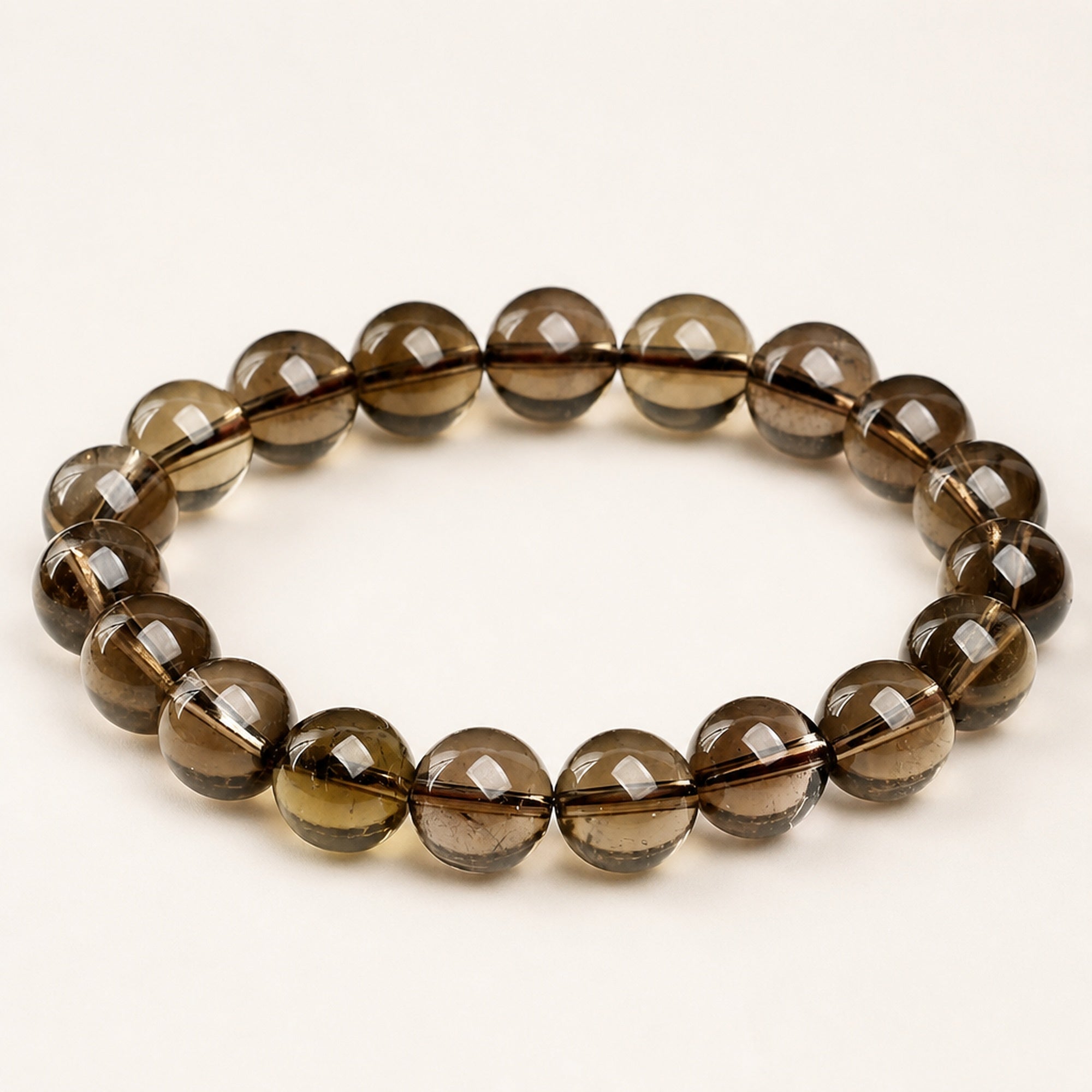
Because it ranks at 7 on the Mohs scale and has no cleavage, smoky quartz is well-suited to daily wear. Bracelets, pendants, and rings are common formats. A bracelet can serve as a quiet reminder to check in with your breath and your body throughout the day—especially useful if you spend long hours at a desk. If you'd like a simple way to carry this grounding energy with you, the Smoky Quartz Bracelet – Calm Release is designed for exactly that kind of everyday companionship.
In Meditation and Spiritual Practices
Hold a tumbled smoky quartz in your non-dominant hand, or place it on the ground in front of you to symbolize anchoring. Some practitioners rest it near the base of the spine during seated meditation. Tibetan Buddhist traditions have used smoky quartz for centuries, viewing it as a stone that supports patience and clear seeing. A short five-minute session, done consistently, often lands more deeply than a long, occasional one.
In Home and Office Decor
A smoky quartz point on a desk or near a workspace exit can act as a gentle boundary marker—a reminder to leave work tension behind when the day ends. Larger pieces in living rooms or entryways bring warmth and a sense of settled calm to a space. Placing one near a window where afternoon light passes through can be unexpectedly beautiful, as the stone glows a soft amber-brown.
How to Cleanse and Care for Smoky Quartz
Smoky quartz is relatively low-maintenance. To clean it physically, wipe with a soft damp cloth or wash gently with mild soap and lukewarm water, then pat dry. Avoid prolonged sunlight if you want to preserve the natural color range, though brief exposure is harmless.
Energetically, many people cleanse their smoky quartz with running water, dry brown rice, or a night in a bowl of dry sea salt. Because it is a grounding stone, some practitioners prefer to recharge it in soil or near the roots of a living plant rather than in direct sunlight.
Buying Guide for Smoky Quartz
Whether you're choosing your first smoky quartz or adding to a collection, a few practical guidelines will help you choose a piece you'll love for years.
What to Look For
- Color: Choose the tone you're drawn to. Pale champagne and deep morion black are equally valid—neither is "better."
- Clarity: Some collectors prize flawless transparency; others love visible inclusions such as rutile needles or phantom layers.
- Cut and polish: For jewelry, check that facets are sharp and the surface is smooth and free of chips.
- Feel: Hold the stone if you can. A piece that feels comfortable in your palm is more likely to become part of your routine.
Quality and Authenticity
Smoky quartz is genuinely affordable and abundant, which means outright fakes (such as glass) are less common than with rarer stones—but artificially darkened quartz is widespread. The mineral community documents this openly. A few practical notes:
- Very dark, uniformly black-brown specimens at low prices are often irradiated. That isn't a flaw—just honest labeling.
- Natural specimens often show subtle color zoning or lighter areas near the termination.
- Ask sellers about origin when it matters to you. Reputable shops will say whether the stone is natural or treated.
- Glass imitations may show bubbles under a loupe; real quartz typically doesn't.
Whichever you choose, buy from sellers who communicate clearly about what they're offering. Honesty about treatment is a better marker of quality than any particular color.
Key Takeaways
- Smoky quartz is a brown-to-grey variety of quartz, colored by natural radiation and aluminum impurities.
- It ranks 7 on the Mohs scale—durable enough for daily wear.
- Its physical properties are well understood; its metaphysical associations are traditional and supportive, not medical.
- Naturally irradiated and artificially irradiated smoky quartz are both real quartz—the difference is origin, not substance.
- Its core gift is grounding: a quiet, steady presence during stressful or reflective times.
Smoky Quartz FAQ
Smoky Quartz Bracelet
A gentle ritual piece for bringing this intention into your daily routine.
Shop This Authentic Piece →What is smoky quartz and how is it formed?
Smoky quartz is a variety of silicon dioxide (SiO₂) that develops its brown-to-grey color from trace aluminum impurities exposed to natural radiation over long periods deep underground. It forms in granite pegmatites and hydrothermal veins worldwide.
What are the healing properties of smoky quartz?
In crystal traditions, smoky quartz is associated with grounding, emotional resilience, and the release of heavy or stored tension. It is often described as helping users feel centered and anchored. These are traditional associations rather than medical claims, and it should not replace professional care.
How do you cleanse and care for smoky quartz?
Wipe with a soft damp cloth or wash gently with mild soap and lukewarm water. Energetically, many people cleanse it with running water, dry salt, or by resting it near plant roots. Avoid prolonged direct sunlight if you want to preserve the color.
What is the meaning of smoky quartz?
Smoky quartz has long been understood as a stone of grounding, protection, and quiet strength. The Romans used it in signet rings, Scottish Highlanders wore it as a protective brooch, and Tibetan Buddhist practitioners used it in meditation.
How can I tell if smoky quartz is real?
Smoky quartz is abundant and inexpensive, so outright fakes are uncommon. However, artificially irradiated quartz is widespread and is still real quartz—just color-treated. Natural specimens often show subtle color zoning, while glass imitations may contain bubbles visible under a loupe. Sellers should disclose treatment honestly.
What are the physical properties of smoky quartz?
It has a Mohs hardness of 7, a vitreous luster, no cleavage, and a conchoidal fracture pattern. It is piezoelectric and typically forms hexagonal prisms with pointed terminations. Color ranges from pale beige to near-black.
Conclusion
Smoky quartz asks very little of you. It doesn't demand that you feel better, think differently, or hurry toward healing. It simply sits with you—in your pocket, on your desk, against your wrist—and quietly reminds you that grounding is available, right now, in the body you already have. Whether you resonate with its physical properties, its long human history, or its gentle reputation for steadying the mind, smoky quartz is a companion worth knowing.
Related Reading
- Black Tourmaline Meaning: Meaning, Properties, and Everyday Uses
- Kyanite Crystal Meaning: A Guide to Benefits, Uses, and Chakra Alignment
- Red Jasper: A Gentle Guide to Meaning, Benefits, and Uses
- Rose Quartz Crystal: A Gentle Guide to Meaning, Benefits, and Uses