Silver Quartz Crystal Bracelet: Complete Buying Guide & Meaning
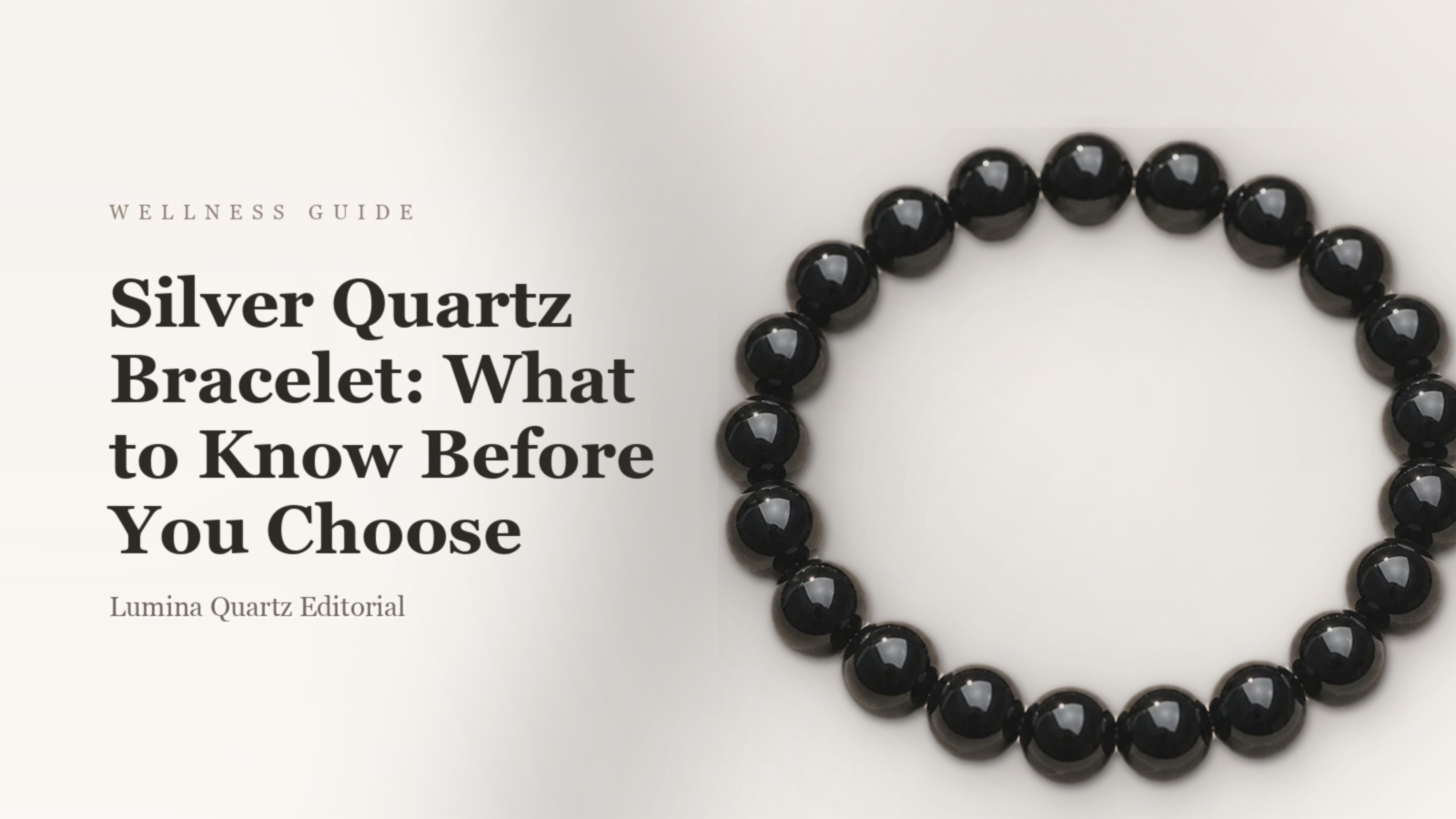
Table of Contents
- Introduction to Silver Quartz Bracelets
- Key Takeaways
- Silver Quartz Bracelet Comparison: Which Stone, Which Setting
- Types of Quartz Used in Silver Bracelets
- Clear Quartz
- Rose Quartz
- Smoky Quartz and Other Varieties
- Silver Quartz Bracelet Styles: Beaded, Cabochon, and Raw Stone
- How to Select the Perfect Silver Quartz Bracelet
- Consider the Silver Quality (Sterling Silver vs. Silver Plated)
- Bracelet Size and Fit
- Quartz Cut and Clarity
- Styling Tips for Silver Quartz Bracelets
- Caring for Your Silver Quartz Bracelet
- Frequently Asked Questions About Silver Quartz Bracelets
- Conclusion and Buying Guide
- Related Reading
- Sources
Introduction to Silver Quartz Bracelets
There is a quiet poetry in the meeting of silver and quartz—a union of earthly strength and ethereal clarity. A silver quartz bracelet is more than an accessory; it is a gentle companion for your journey, a grounding presence that rests against your skin, catching light and intention with equal grace. Whether you are drawn to the luminous transparency of clear quartz, the soft blush of rose, or the deep, smoky hues that recall ancient earth, these bracelets carry a resonance that feels both personal and universal.
The pairing has deep roots. Historical records show rock crystal used for decoration and jewelry for at least 4,000 years, and quartz's high thermo-conductivity—which makes it feel cool to the touch—may be part of why early civilizations believed these crystals were permanently frozen ice. In recent years, silver quartz bracelets have grown steadily in popularity, not merely as fashion statements but as meaningful talismans that many people reach for during times of transition, reflection, or quiet hope. The combination of sterling silver—a metal long associated with lunar energy and emotional balance—with quartz, one of the most abundant and diverse minerals on the planet, creates a synergy that feels both timeless and intimately modern.
This guide is written for those who are considering a silver quartz bracelet, whether as a gift for someone treasured or as a personal anchor. We will explore the types of quartz most often set in silver, how to choose a bracelet that fits both your wrist and your spirit, ways to style it with honesty and ease, and simple practices to care for your piece so that it may remain a steady companion through the seasons.
Before we go further, let us pause and acknowledge: while many people find comfort and resonance in crystals, the benefits associated with silver quartz bracelets are not medical claims. Rather, they speak to the personal, symbolic, and energetic meanings that individuals may discover in their own experience. In this space, we honor both the mystery and the science, the poetry and the practicality.
Key Takeaways
- Silver quartz bracelets combine the grounding presence of silver with the clarifying symbolism of quartz — a pairing often associated with emotional balance, mental focus, and gentle self-awareness.
- Different quartz varieties offer distinct qualities: clear quartz is often linked to clarity and amplification, rose quartz to compassion and tenderness, smoky quartz to protection and release.
- Consider both the silver quality and the stone's natural character. Sterling silver (925) is more durable than silver-plated options, and genuine quartz typically shows natural inclusions rather than perfect uniformity.
- Fit matters for comfort and symbolism. A bracelet that moves slightly on your wrist may support a sense of flow, while a closer fit can feel more grounding and secure.
- Care for your piece with mindful attention: gentle cleaning, safe storage, and periodic recharging of the quartz in soft moonlight or on a selenite plate may help preserve its beauty and resonance.
- Allow your personal connection to guide your choice. The "right" bracelet is ultimately the one that feels like an honest reflection of your inner landscape.
Silver Quartz Bracelet Comparison: Which Stone, Which Setting
Use this table as a starting point, not a rulebook. Color in quartz comes from trace elements and internal structure rather than a single recipe—depending on the impurities present, quartz may appear colorless, milky white, pink, purple, yellow, or brown. Scientists rely on other physical properties alongside color to identify a specimen, which is a useful reminder that what you see is only part of the story.
| Quartz variety | Color cue | Often chosen when | Silver pairing |
|---|---|---|---|
| Clear quartz | Colorless, transparent | You want a neutral, all-occasion piece and a sense of mental clarity | Polished silver beads or a slim prong setting |
| Rose quartz | Light pink | You are drawn to softness, self-compassion, and heart-centered intentions | Brushed or matte silver, which cools the pink |
| Smoky quartz | Pale to deep brown | You want a grounding, protective-feeling stone for busy seasons | Oxidized or antiqued silver for contrast |
| Milky quartz | Soft white, semi-translucent | You prefer a calm, understated look that layers easily | High-polish silver for a clean, cool finish |
| Amethyst-toned quartz | Purple | You want a quieter, more introspective tone | Simple bezel settings that let the color lead |
Quick Checklist Before You Buy
- Check the hallmark. Look for a "925" or "sterling" stamp on the clasp or inside the band.
- Look closely at the stone. Natural quartz usually has minor internal features; perfectly identical beads across a strand are worth a second look.
- Test the weight. Sterling silver has a noticeable heft compared with many plated pieces.
- Consider the clasp. A lobster clasp or secure toggle protects a piece you plan to wear daily.
- Name your intention. Deciding what the bracelet means to you before purchase makes the choice far easier.
A gentle boundary: crystal traditions are symbolic and personal. They are not a substitute for medical care, mental health support, or professional advice of any kind.
Types of Quartz Used in Silver Bracelets
Quartz is a mineral of remarkable diversity. While all quartz shares the same chemical composition—silicon dioxide—variations in color, transparency, and internal structure give each variety its distinctive character. Quartz crystals show roughly 100 different crystallographic forms in nature, which is part of why the material feels endlessly varied in the hand. In silver bracelets, quartz is most often featured as a faceted bead, a smooth cabochon, or a raw, unpolished stone that retains its natural texture.
Clear Quartz
Clear quartz is perhaps the most widely recognized variety, prized for its transparency and its ability to refract light into tiny rainbows. Often called the "master healer" in crystal traditions, clear quartz is associated with clarity of thought, amplified intention, and the harmonization of one's energy field. When set in silver, clear quartz takes on a luminous, almost ethereal quality—the metal's cool sheen complements the stone's transparency, creating a piece that feels both modern and ancestral. Many people choose a clear quartz silver bracelet when they are seeking mental focus, setting new intentions, or navigating decisions with a need for greater perspective.
Rose Quartz
Rose quartz, with its gentle pink translucence, is a stone often associated with love—not only romantic love but also self-love, compassion, and emotional tenderness. Its color comes from trace amounts of titanium, iron, or manganese, and its history reaches back through many cultures; the Romans used rose quartz as a seal to signify ownership, and Egyptians believed the stone could prevent aging. The softness of its hue makes it a natural pairing with silver, which cools and balances the warmth of the pink without overpowering it. Wearing a rose quartz silver bracelet is often described as a soothing experience, as if the stone itself carries a whisper of kindness. Many people reach for rose quartz during times of grief, heartache, or when they are working on healing their relationship with themselves.
Smoky Quartz and Other Varieties
Smoky quartz ranges in color from pale, translucent brown to deep, almost opaque charcoal, with the darker tones linked to additional silicon within the crystal structure. It is a stone of grounding and protection, often associated with the release of emotional patterns that no longer serve and with the quiet steadiness of standing your ground. In silver, smoky quartz reads as understated and sophisticated—an easy piece to wear with denim, wool, or evening black.
Other varieties you may encounter include milky quartz, with its soft white translucence and calming presence, and rutilated or tourmalinated quartz, where fine needles of other minerals are suspended inside the clear stone. Each carries its own visual personality, and each pairs beautifully with silver.
Silver Quartz Bracelet Styles: Beaded, Cabochon, and Raw Stone
When people search for a silver quartz bracelet, they are usually picturing one of three constructions:
- Beaded strands: Polished quartz beads strung on elastic or wire with silver spacers, accents, or a silver focal bead. This is the most common style, and the easiest to wear every day.
- Cabochon and bezel settings: A smooth, unfaceted stone set into a silver frame. Bezel settings protect the stone's edges, making them a good choice for regular wear.
- Raw or tumbled stones: Pieces that keep their natural texture, often wired or set in open silver frames. These feel earthy and one-of-a-kind, though they can catch on delicate fabrics.
If you are drawn to both quartz and grounding stones, our guide to the Obsidian Bracelet: Your Guide to Grounding & Protection explores a complementary direction.
How to Select the Perfect Silver Quartz Bracelet
Choosing well comes down to three practical questions: what is the silver, how does it fit, and what does the stone itself look like. Answer those honestly and the decision becomes far simpler.
Consider the Silver Quality (Sterling Silver vs. Silver Plated)
Sterling silver is an alloy containing 92.5% silver, usually marked "925." It is durable, holds a polish well, and can be re-polished over years of wear. Silver-plated jewelry consists of a thin silver layer over a base metal; it can look identical on day one but tends to wear through at contact points such as clasps and bead holes. If you plan to wear your bracelet daily, sterling silver is generally the more forgiving long-term choice. It does tarnish over time—that is normal and reversible with a soft polishing cloth.
Bracelet Size and Fit
Measure your wrist snugly with a soft tape, then add roughly half an inch for a comfortable, slightly relaxed fit, or a little less if you prefer a close fit. Beaded bracelets on elastic should slide on without stretching dramatically; a strand that requires real effort will put pressure on the cord. If you are between sizes and plan to layer, size up rather than down.
Quartz Cut and Clarity
Natural quartz is rarely flawless, and that is part of its honesty. Look for a stone with good surface polish, a consistent color across the strand, and inclusions that read as character rather than cracks. Faceted beads catch light and feel dressier; smooth beads feel softer and more casual. Neither is better—only better for the way you intend to wear it.
Styling Tips for Silver Quartz Bracelets
Silver quartz bracelets are unusually easy to style because cool metal and translucent stone sit comfortably next to almost anything.
- Stack by texture, not by color. Pair a polished quartz strand with a brushed silver bangle or a fine chain for depth.
- Keep the metal consistent. Wearing silver-toned metals together reads as intentional; mixing silver and gold works best when one clearly dominates.
- Let one stone lead. If you layer quartz with another crystal, choose a single focal piece and let the rest recede.
- Match the occasion. A close-fitting beaded strand suits everyday wear; a cabochon piece in a silver frame feels more formal.
- Wear it where you'll see it. Many people find that a bracelet worn on the dominant hand acts as a small, frequent reminder of the intention they set.
If you would like to build a fuller practice around your piece, our Daily Crystal Ritual guide walks through setting intention, wearing, and cleansing in simple steps.
Caring for Your Silver Quartz Bracelet
A little attention goes a long way.
- Clean gently. Warm water with a drop of mild dish soap and a soft cloth is usually enough for both silver and quartz. Pat dry rather than air drying to avoid water spots.
- Avoid harsh chemicals. Chlorine, perfumes, hairspray, and household cleaners can dull silver and cloud a stone's surface over time. Put jewelry on last when getting ready.
- Store separately. A soft pouch or a lined box keeps silver from scratching against harder pieces.
- Remove for rough activity. Exercise, gardening, and swimming are kinder to your bracelet if it stays on the shelf.
- Recharge mindfully. Many people place quartz in soft moonlight or on a selenite plate overnight. Sunlight is lovely for clear quartz but can fade the color of rose and smoky stones over long exposure.
- Polish as needed. A jeweler's polishing cloth restores shine to sterling silver without abrasives.
Frequently Asked Questions About Silver Quartz Bracelets
Is a silver quartz bracelet made of real sterling silver?
Not always. Genuine sterling silver is 92.5% silver and is usually stamped "925" or "sterling" on the clasp or band. If you do not see a hallmark, the piece may be silver plated. Plated jewelry can look beautiful and cost less, but the silver layer can wear through at high-contact points with daily wear.
How can I tell whether the quartz is genuine?
Look for natural variation. Real quartz typically shows minor internal inclusions, slight differences in color from bead to bead, and small irregularities in shape. Perfectly uniform, glassy beads with no internal features at all may be glass or synthetic material. Quartz is also cool to the touch at first because of its high thermal conductivity, though this is not a definitive test on its own.
Which quartz is best for a first silver quartz bracelet?
Clear quartz is the most versatile starting point—it suits nearly every outfit and carries a neutral, clarity-oriented meaning. If you are drawn to warmth and softness, rose quartz is a lovely alternative, and smoky quartz suits anyone who prefers a darker, more grounding aesthetic.
Can I wear my silver quartz bracelet in the shower or pool?
It is best not to. Water alone is not usually damaging, but soap residue dulls silver, chlorine and salt can affect both metal and stone over time, and elastic cord weakens with repeated soaking. Removing your bracelet before showering, swimming, or washing dishes will noticeably extend its life.
How do I choose the right bracelet size?
Measure your wrist snugly with a soft tape measure, then add about half an inch for a relaxed fit or a quarter inch for a close fit. If you plan to stack bracelets, size up slightly so the pieces sit together without pinching.
What does a silver quartz bracelet mean?
Meanings vary by stone and by wearer. Silver is traditionally associated with reflection and emotional balance, while clear quartz is linked to clarity, rose quartz to compassion, and smoky quartz to grounding. Ultimately the meaning you give the piece—through the intention you set when you put it on—matters most.
Conclusion and Buying Guide
A silver quartz bracelet sits at a lovely intersection: the cool, reflective calm of silver and the quiet character of a stone formed over millennia. When you shop, lead with the practical questions first—is the silver hallmarked, does the fit feel right on your wrist, does the stone look naturally varied—and then let your intuition weigh in on the color and cut.
Start with clear quartz if you want something endlessly wearable, rose quartz if you are drawn to softness, smoky quartz if you want grounding weight, and milky or rutilated quartz if you love texture and subtlety. Whichever you choose, wear it with intention, care for it simply, and let it become the kind of piece that quietly marks your days rather than competing for attention. That is the whole art of it: a small, honest object that meets you where you are.