Red Agate: Spiritual Meaning, Symbolism, and Daily Use
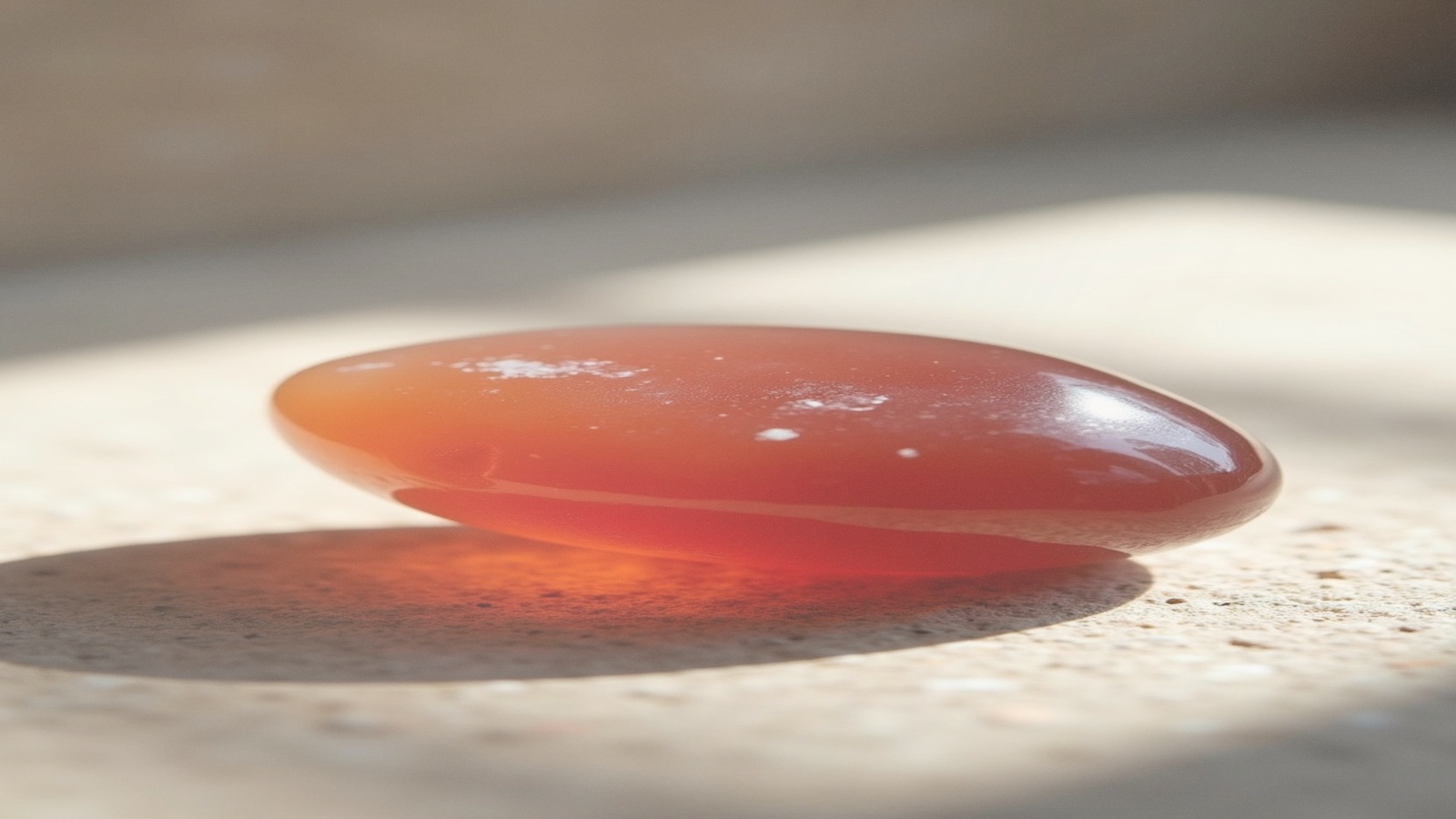
Table of Contents
- What Is Red Agate? A Quick Geology Primer
- 10-Second Executive Summary / The Verdict Box
- What Is Red Agate? A Quick Geology Primer
- Chalcedony, Agate, and Carnelian: What's the Difference
- Red Agate Meaning and Symbolism
- Courage, Vitality, and the Root Chakra
- Warmth, Joy, and Auspicious Beginnings in Eastern Culture
- Healing Properties and Emotional Support (Root and Sacral Chakras)
- Shades of Red: How Color Depth Changes the Meaning
- Natural vs. Heat-Treated and Dyed Red Agate: How to Tell
- Buyer's Decision Checklist: Natural vs. Treated Red Agate
- How to Wear and Care for Red Agate Every Day
- Bracelets, Beads, and Meaningful Gift Moments
- Where Red Agate Fits and Where It Doesn't
- Frequently Asked Questions
- What does red agate symbolize in crystal healing?
- Is red agate the same as carnelian?
- Is red agate natural or heat-treated and dyed?
- Sources
What Is Red Agate? A Quick Geology Primer
Red agate is a translucent-to-opaque variety of chalcedony—microcrystalline quartz—whose red color usually comes from iron oxide (hematite) inclusions. In Chinese "Nanhong" material from Liangshan, Sichuan, field reports describe red agate forming in basalt cavities and interlayer fissures, colored by natural hematite particles, with premium "Bing Piao" types showing red inclusions that appear to float on ice-like clear chalcedony (GIA Gem News International).
10-Second Executive Summary / The Verdict Box
- Direct Verdict: Red agate's meaning centers on courage, vitality, warmth, and grounding—most often linked in crystal tradition to the root and sacral chakras, while honoring that these are cultural and personal-reminder meanings, not medical effects.
- Mineral & Hardness: Chalcedony (microcrystalline quartz); Mohs hardness approximately 6.5–7.
- Color Origin: Often natural hematite/iron oxide inclusions; color can also be enhanced by historic heat ("burning") and dye methods, so disclosure matters.
- Best For: Daily-wear bracelets, beads, and meaningful gifts where sturdy, warm-toned grounding symbolism is desired.
- Buying Signal: Look for honest disclosure of treatment and choose pieces meeting the Lumina Grade AAA Integrity Standard for natural-origin, non-injected, non-irradiated, non-dyed expectations.
What Is Red Agate? A Quick Geology Primer
Red agate belongs to the chalcedony family: microscopic quartz fibers (with a small amount of moganite) that form dense, waxy stones capable of holding vivid color (Mindat). Because chalcedony is porous, it readily accepts chemical solutions—which is exactly why so much agate on the market has been dyed or heat-treated for centuries. That porosity is both agate's charm and its caution: a stone can look ancient and natural while quietly carrying modern treatment.
Chalcedony, Agate, and Carnelian: What's the Difference
The terms overlap because they describe structure and color rather than separate minerals. Chalcedony is the broad family. Agate is chalcedony that shows banding or patterned inclusions—red agate may be banded or nearly uniform. Carnelian is typically the orange-to-red-brown chalcedony long prized for its warm, glowing tone. In practice, many "red agates" sold in jewelry are simply carnelian by another name. The key distinction is not a different gem species but a different visual story: agate emphasizes pattern, carnelian emphasizes color depth.
Red Agate Meaning and Symbolism
Across cultures, red agate's meaning clusters around the color red itself—courage, vitality, warmth, and the sense of beginning something with steady feet. This is symbolic and cultural, not a measurable property. It is fair to say red agate may support a feeling of grounded confidence as a reminder object; it is not fair to claim it alters mood or health.
Courage, Vitality, and the Root Chakra
In modern crystal traditions, red agate is most often associated with the root chakra and, secondarily, the sacral chakra. The root chakra symbolism is about stability and safety in the body—red being the color tradition assigns to it. The sacral association speaks to warmth, creativity, and appetite for life. Many wearers use red agate as a tactile anchor: a bead to touch before a difficult conversation, a reminder to breathe and stand firm.
Warmth, Joy, and Auspicious Beginnings in Eastern Culture
In Chinese culture, red carries auspicious weight—festival color, good-fortune color, a hue of beginnings. Nanhong red agate from Liangshan has become especially collectible in recent years, valued for its saturated "floating" red patterns (GIA). The symbolism is not that the stone brings luck; it is that red objects are traditionally chosen to mark hopes for joy, protection, and a fresh start.
Healing Properties and Emotional Support (Root and Sacral Chakras)
Crystal-healing literature often frames red agate as supportive of vitality and emotional warmth, with the root chakra as its primary symbolic home and the sacral chakra as its secondary one. Treat this as a personal-reminder practice, not a treatment. A useful rule: use the stone to cue habits—grounding breath, a pause before reacting, a small daily intention—rather than to expect the stone alone to change anything. If you are dealing with persistent anxiety or intrusive thoughts, a crystal may complement a calming routine, but it should never replace professional care.
Shades of Red: How Color Depth Changes the Meaning
Color depth shifts the symbolic reading, and buyers should know that depth can be natural or produced.
- Pale, translucent red (often called "skin red"): Gentle, open, associated with soft warmth and beginning-level grounding.
- Deep, saturated "cherry" red: Traditionally read as the strongest courage-vitality expression; premium Nanhong is prized for this saturation.
- "Bing Piao" floating red: Clear chalcedony with suspended red hematite patterns—a collector's aesthetic where pattern, not uniform color, carries the value.
- Orange-red carnelian tones: Warmer, more solar; often read as joy, creative confidence, and energy rather than root-level stability.
Practically, the "meaning" follows the visual: the more uniform and bright the red, the more the stone leans toward vitality symbolism; the more patterned and translucent, the more it reads as individual, personal, and contemplative.
Natural vs. Heat-Treated and Dyed Red Agate: How to Tell
This is the crux of honest buying. Much agate is treated, and treatment is not automatically bad—it is bad to be undisclosed. Historic sources describe artificially coloring agate with silver nitrate solutions and "burning" grayish stones in ovens to produce red carnelian tones (Mindat). Both techniques are old, legitimate when disclosed, and a problem only when sold as natural color.
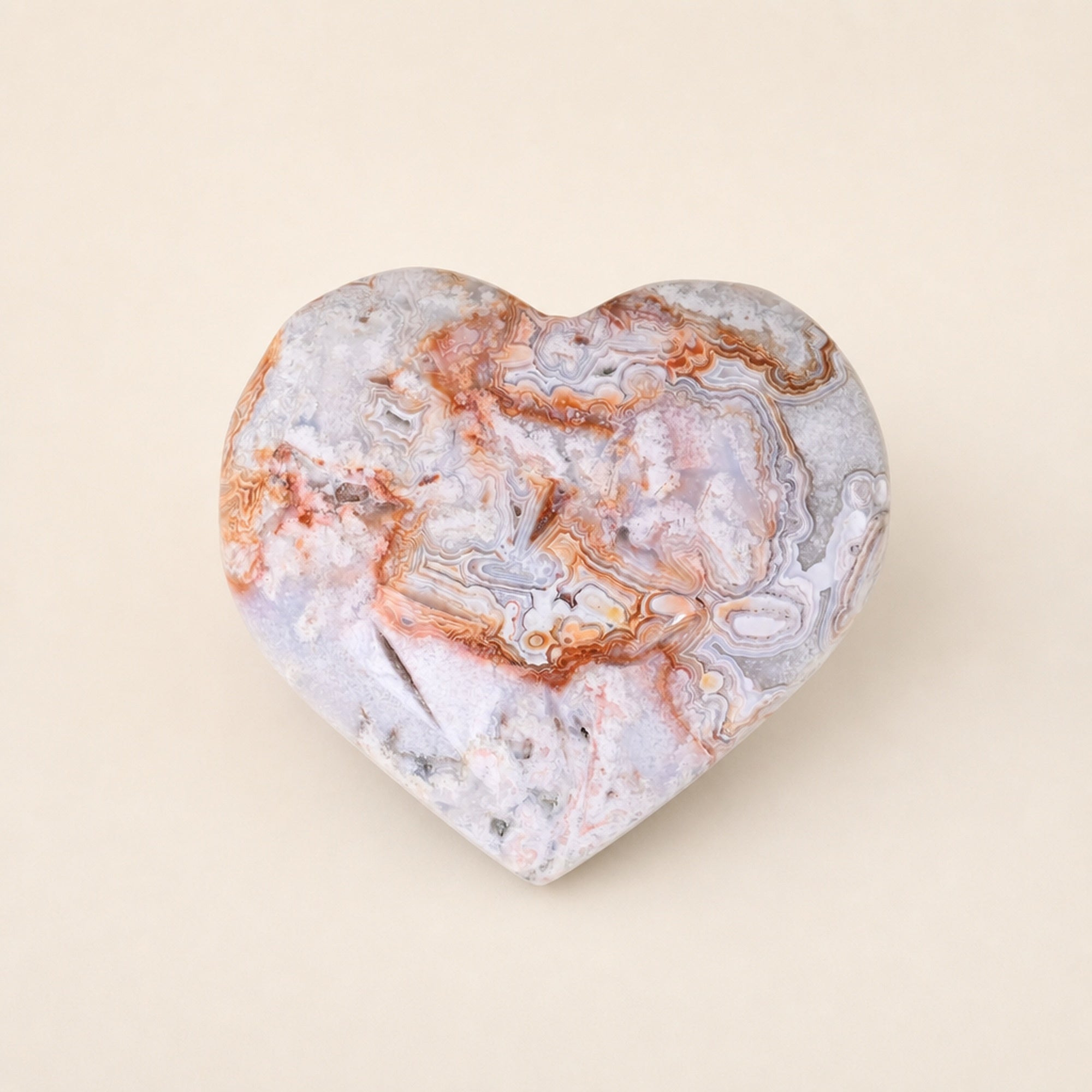
A related stone-family option
Crazy Lace Agate Heart Stone – Joyful Movement
This is a related variety in the same stone family, not a Agate product. We only identify jewelry as Agate when that exact material is verified.
Explore this related optionBuyer's Decision Checklist: Natural vs. Treated Red Agate
- Ask for treatment disclosure in writing. A seller who cannot say "natural color" or "heat-treated" or "dyed" is not ready to sell. Heat treatment (historic "burning") and dyeing are the two common alterations on record.
- Match the price to the claim. A deeply saturated, uniform red in a large piece at a low price is a red flag for dyed or composite material—natural saturated Nanhong commands a premium for a reason.
- Look for natural hematite character. Natural red agate is colored by iron oxide/hematite inclusions, which often appear as uneven red distribution or "floating" patterns in clearer chalcedony (GIA). Suspiciously flat, painted-on color across bands suggests dye.
- Inspect the surface and drill holes. Dye often concentrates in cracks and holes; look for darker color pooling near the drill hole or along fractures.
- Demand a provenance statement. For Nanhong claims, ask about origin (Liangshan, Sichuan) and the type (e.g., Bing Piao). Prefer pieces meeting the Lumina Grade AAA Integrity Standard: natural ore, no chemical injection, no irradiation, no dye—stated, not implied.
- Choose a return window. If treatment claims cannot be verified by you, ensure you can return the piece.
How to Wear and Care for Red Agate Every Day
At Mohs 6.5–7, red agate is sturdy for jewelry but softer than quartz-and-feldspar everyday contact surfaces. It tolerates daily wear well with simple habits: avoid ultrasonic cleaners and harsh chemicals, wipe with a soft cloth, and remove before hot springs, swimming pools, and manual labor. Because dyed stones can fade or bleed, store treated pieces away from light and moisture extremes, and test care products on an inconspicuous spot first.
Bracelets, Beads, and Meaningful Gift Moments
Beaded bracelets are the natural home for red agate: they keep the stone close, let you use individual beads as tactile anchors, and suit stackable gift formats. When gifting, pair the piece with a one-line intention card—"for steady courage," "for a warm beginning"—so the symbolism travels with the object. If you are buying for a child or for heavy daily wear, favor smaller, smooth beads and avoid porous stones in water play.
Where Red Agate Fits and Where It Doesn't
Red agate is a strong choice for wearers drawn to grounding, warmth, and courage symbolism, and for gift-givers who want a warm, culturally rich object. It is a weaker choice if you want a fully natural, investment-grade collector stone at a low price, or if you expect the stone to regulate emotion or health—no mineral can. Honest boundaries are part of the stone's value: meaning belongs to the wearer; treatment belongs to the seller's disclosure.
Frequently Asked Questions
What does red agate symbolize in crystal healing?
Red agate is most often associated symbolically with courage, vitality, warmth, and grounding, commonly linked to the root chakra. These are cultural and personal-reminder meanings, not verified health effects.
Is red agate the same as carnelian?
Not exactly. Both are chalcedony, but carnelian usually refers to the orange-to-red-brown color expression, while agate emphasizes banding or pattern. Many red agate beads on the market are carnelian by another name.
Is red agate natural or heat-treated and dyed?
It depends on the piece. Red agate color can be natural hematite-driven, or produced by historic heat "burning" and dyeing techniques. Because chalcedony is porous, dye can penetrate it deeply—so always ask for written treatment disclosure and prefer the Lumina Grade AAA Integrity Standard.
Sources
- GIA Gem News International — Nanhong red agate from Liangshan, Sichuan
- Mindat — Historic Methods of Artificially Coloring Agates
© 2026 Lumina Quartz. This article offers cultural, geological, and care information. Crystal meanings are symbolic and personal and are not medical advice.