Larimar Stone: Meaning, Healing Properties, and Daily Benefits
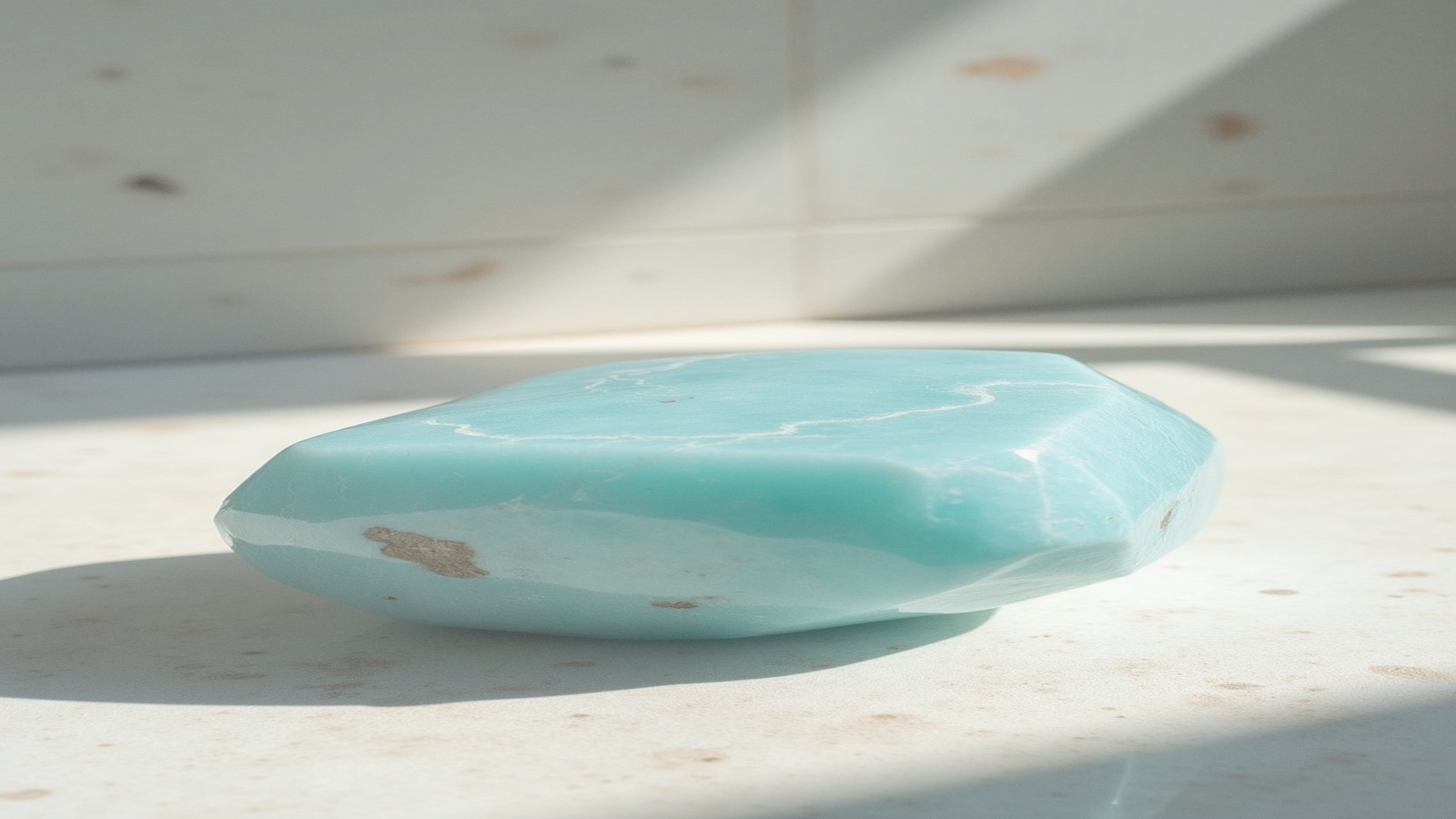
Table of Contents
- 10-Second Executive Summary / The Verdict Box
- What Is Larimar Stone? Meaning and Origin
- Larimar's Physical and Geological Properties
- Healing Properties of Larimar: Emotional and Spiritual Benefits
- Throat, Heart, and Third Eye Chakra Connection
- Calm, Communication, and Emotional Balance
- Daily Benefits: How to Wear Larimar for Calm and Confidence
- How to Choose and Care for Larimar Jewelry
- Larimar Buying Checklist: A Step-by-Step Screen
- Quick Comparison: Claim vs. What You Can Verify
- Applicability Boundaries
- Benefits vs. Evidence: Using Larimar Responsibly
- Larimar FAQ: Common Questions Answered
- What is larimar stone and where does it come from?
- What are the healing properties and benefits of larimar?
- Which chakras does larimar work with?
- How do you wear and care for larimar jewelry?
- Is larimar a safe or scientifically proven healing stone?
- Sources
The benefits most often associated with larimar are emotional calm, clearer communication, and a gentle sense of grounding — but the stone's documented value rests on two separate layers: a verified mineral identity (blue pectolite, Mohs hardness 5) and a long-standing cultural tradition of use in the Dominican Republic. Understanding both, honestly and without overwriting, is what lets you use larimar well.
10-Second Executive Summary / The Verdict Box
- Direct Verdict: Larimar is a blue variety of pectolite, not a scientifically proven healing device. Its benefits are best understood as symbolic and personal — a tactile reminder for calm and self-expression — not a treatment.
- Mineral Identity: Pectolite, formula NaCa2Si3O8(OH); color blue to bluish-white, with blue attributed to trace copper in published gemological study.
- Mohs Hardness: 5 (measured) — soft enough to need care with rings and daily wear.
- Density: 2.74–2.90 g/cm³; crystal system triclinic (massive habit in gem material).
- Origin: Filipinas Larimar Mine, Sierra de Baoruco, Barahona Province, Dominican Republic — the classic and primary source.
- Best For: Pendants, earrings, and cabochon pieces worn for calm and communication intentions; keepsake stones rather than high-impact daily rings.
- Buying Standard: Ask any seller for written disclosure of treatment status — natural rough, no resin filling, no irradiation or dye enhancement — and verify it before purchase.
What Is Larimar Stone? Meaning and Origin
Larimar is a trade name for a bluish massive pectolite found in the Dominican Republic and exploited as a gem material. Its first described locality is the Filipinas Larimar Mine in Los Checheses, Sierra de Baoruco, Barahona Province, where blue pectolite occurs as a hydrothermal mineral in cavities and veins within altered basalt, according to geological descriptions of the deposit. The name itself is a modern trade designation rather than a mineralogical species name — in strict terms, the stone is pectolite, and "larimar" is how the blue gem variety is marketed and loved.
The stone's cultural meaning is often associated with the sea: its blue-to-white color range is frequently described as wave-like, and many wearers treat it as a symbol of calm water and clear speech. That is a poetic and cultural layer, not a physical property. Keeping the two layers distinct — what the stone is versus what it means to you — is the honest way to work with it.
Larimar's Physical and Geological Properties
The verified facts matter because they tell you how to live with the stone. Mindat records larimar's formula as NaCa2Si3O8(OH), with a measured Mohs hardness of 5 and a density between 2.74 and 2.90 g/cm³. It is triclinic, and the gem material is typically massive rather than showing distinct crystal faces. Published gemological study of blue pectolite from the Dominican Republic attributes the blue color to small amounts of copper and notes that the color appears stable to light but does react to irradiation and to the heat of a jeweler's torch.
Those details translate directly into care guidance: a hardness of 5 sits below quartz (7), so larimar scratches more easily than many everyday stones, and heat sensitivity means it should never be torch-set or exposed to sudden temperature change. A gemologist can also easily separate larimar from similar-looking materials, which is useful if you ever need authentication.
Healing Properties of Larimar: Emotional and Spiritual Benefits
In crystal and metaphysical traditions, larimar is often associated with calm, honest communication, and emotional steadiness — qualities that may support a personal practice of reflection, though they are not clinical outcomes and are not backed by medical evidence. The most useful framing is this: larimar is a reminder object. Holding it or glancing at it can cue a pause, a breath, or a kinder sentence. The pause is yours; the stone is the anchor.
Throat, Heart, and Third Eye Chakra Connection
Within chakra traditions, larimar is most commonly linked with the throat chakra (expression and voice), often additionally associated with the heart (compassion) and third eye (clarity and perspective). These assignments are cultural and symbolic conventions, not measurable energies. If the framework speaks to you, use it as a language for intention-setting — for example, wearing larimar at the throat as a cue to speak more deliberately. If it doesn't, the same benefits can be framed simply as mindfulness reminders.
Calm, Communication, and Emotional Balance
The qualities most often associated with larimar — calm, communication, emotional balance — map neatly onto everyday habits. A small ritual works better than a large claim: before a difficult conversation, hold the stone for one slow breath, then state your first sentence in your head before you say it aloud. That is a communication practice that may support more grounded exchanges, and larimar simply marks the moment.
Daily Benefits: How to Wear Larimar for Calm and Confidence
Because of its softness, the smartest daily use of larimar is deliberate placement rather than all-day abuse. A pendant sits at the throat — the traditional chakra association — and stays out of the way of knocks and scrapes. Stud or small drop earrings keep the stone visible without exposing it to impact. A ring is lovely but should be treated as occasional wear, since a Mohs 5 stone can scratch and chip against harder surfaces.
For confidence, the practical benefit comes from the cue, not the chemistry: choose one larimar piece as your "steady" object and wear it only for moments that call for a clear voice — presentations, honest conversations, difficult emails. Over time the association strengthens, and putting the piece on becomes a small switch into a calmer mode. That is a behavioral benefit you build, and the stone helps you remember to build it.
How to Choose and Care for Larimar Jewelry
Quality in larimar is visible and testable. Look for natural blue-to-white variation, cool temperature against the skin, and a surface that shows genuine stone character rather than a uniform, plastic-smooth glaze. Avoid pieces that look suspiciously saturated or unnaturally even, and ask directly whether a stone has been resin-filled or irradiated — published gemological sources note that blue pectolite reacts to irradiation and jeweler's torch heat, so treatment disclosure is a fair question to put in writing.
Care is simple and non-negotiable given hardness 5: store larimar separately from harder stones, put jewelry on last and take it off first, avoid ultrasonic and steam cleaners, and keep it away from direct heat and sudden temperature swings. Wipe with a soft, damp cloth and dry fully. These steps protect the stone's surface and color for years.
Larimar Buying Checklist: A Step-by-Step Screen
Use this checklist when evaluating a larimar piece, moving from what is verifiable to what is personal:
- Confirm the species: Larimar is blue pectolite, formula NaCa2Si3O8(OH). A seller who calls it a "crystal" or invents another mineral family has not done their homework.
- Check the hardness expectation: Mohs 5 means you should expect visible care requirements — if a seller claims it is "scratch-proof" or "as hard as quartz," that contradicts the measured data.
- Ask about treatment in writing: Published gemological study notes that blue pectolite reacts to irradiation and jeweler's torch heat, and resin filling is a known market practice. Request a written treatment statement — natural rough, no resin, no irradiation, no dye — before you buy.
- Inspect color naturally: Expect blue, bluish-white, white, and gray tones with copper-derived blue. Uniform, neon-saturated blue is a red flag for enhancement.
- Match setting to softness: Favor pendants, earrings, and protected bezel settings over exposed prong-set rings.
- Separate the claims: Accept cultural and symbolic meaning as meaning; decline any medical or guaranteed-healing claim.
Quick Comparison: Claim vs. What You Can Verify
| Claim Often Seen | What Published Sources Support | How to Use This |
|---|---|---|
| No scientific evidence supports healing claims for stones | Decline as a medical claim; treat the stone as a personal, symbolic reminder only | |
| "Extremely hard, safe for daily rings" | Measured Mohs hardness of 5, below quartz | Prefer pendants, earrings, or protected settings for regular wear |
| "Color is always natural and permanent" | Blue attributed to copper; color appears stable to light but reacts to irradiation and torch heat | Ask for written disclosure of any treatment before purchase |
| "Rare mineral species" | Larimar is a trade name for blue massive pectolite | Judge the piece on verified mineral facts and visible stone character |
Applicability Boundaries
- This guide covers larimar as a gem material and cultural symbol only; it is not a medical or therapeutic guide.
- Hardness and heat guidance applies to natural blue pectolite; treated or assembled pieces may behave differently.
- Chakra associations are presented as cultural tradition, not measurable energy effects.
- Anyone with health concerns should consult a qualified professional rather than relying on a stone.
Benefits vs. Evidence: Using Larimar Responsibly
Larimar FAQ: Common Questions Answered
What is larimar stone and where does it come from?
Larimar is a trade name for blue massive pectolite found chiefly in the Dominican Republic, first described from the Filipinas Larimar Mine in the Sierra de Baoruco, Barahona Province, where it occurs in cavities and veins of altered basalt.
What are the healing properties and benefits of larimar?
Larimar is traditionally associated with calm, clear communication, and emotional balance in crystal traditions; these are symbolic and personal benefits, not scientifically proven healing effects, and should not replace medical care.
Which chakras does larimar work with?
In chakra traditions larimar is most often linked to the throat chakra, and commonly also associated with the heart and third eye; these are cultural associations, not measurable energies.
How do you wear and care for larimar jewelry?
Wear it as pendants, earrings, or protected settings; with Mohs hardness 5, store it separately from harder stones, avoid ultrasonic and steam cleaners, and keep it away from direct heat and sudden temperature changes.
Is larimar a safe or scientifically proven healing stone?
Larimar is safe to wear when cared for, but it is not a scientifically proven healing stone; treat any health claim as unverified, and consult a qualified professional for medical concerns.
Sources
- Mindat — Larimar (variety of pectolite): https://www.mindat.org/min-29025.html
- GIA — Blue Pectolite from the Dominican Republic: https://www.gia.edu/dam/migrated-assets/_assets/107c8b59683902b9-Blue-Pectolite-from-the-Dominican-Republic.pdf
- Mindat — Lorimar (synonym note): https://zh.mindat.org/min-29026.html
Disclaimer: This article shares mineral facts from cited sources and cultural meaning drawn from crystal traditions. It is not medical advice. Crystal use is a personal, symbolic practice and is not a substitute for professional care.
© 2026 Lumina Quartz
Crystal traditions are presented here as symbolic, cultural, and personal ritual practices. They are not medical tools; consult a qualified professional for health concerns.
Interested in verified Larimar Stone Benefits jewelry?
We are reviewing materials, sizing, supplier images, and shipping details before adding Larimar Stone Benefits jewelry. Subscribe for launch updates.
Ask About Availability