Howlite Crystal: Spiritual Meaning, Symbolism, and Daily Use
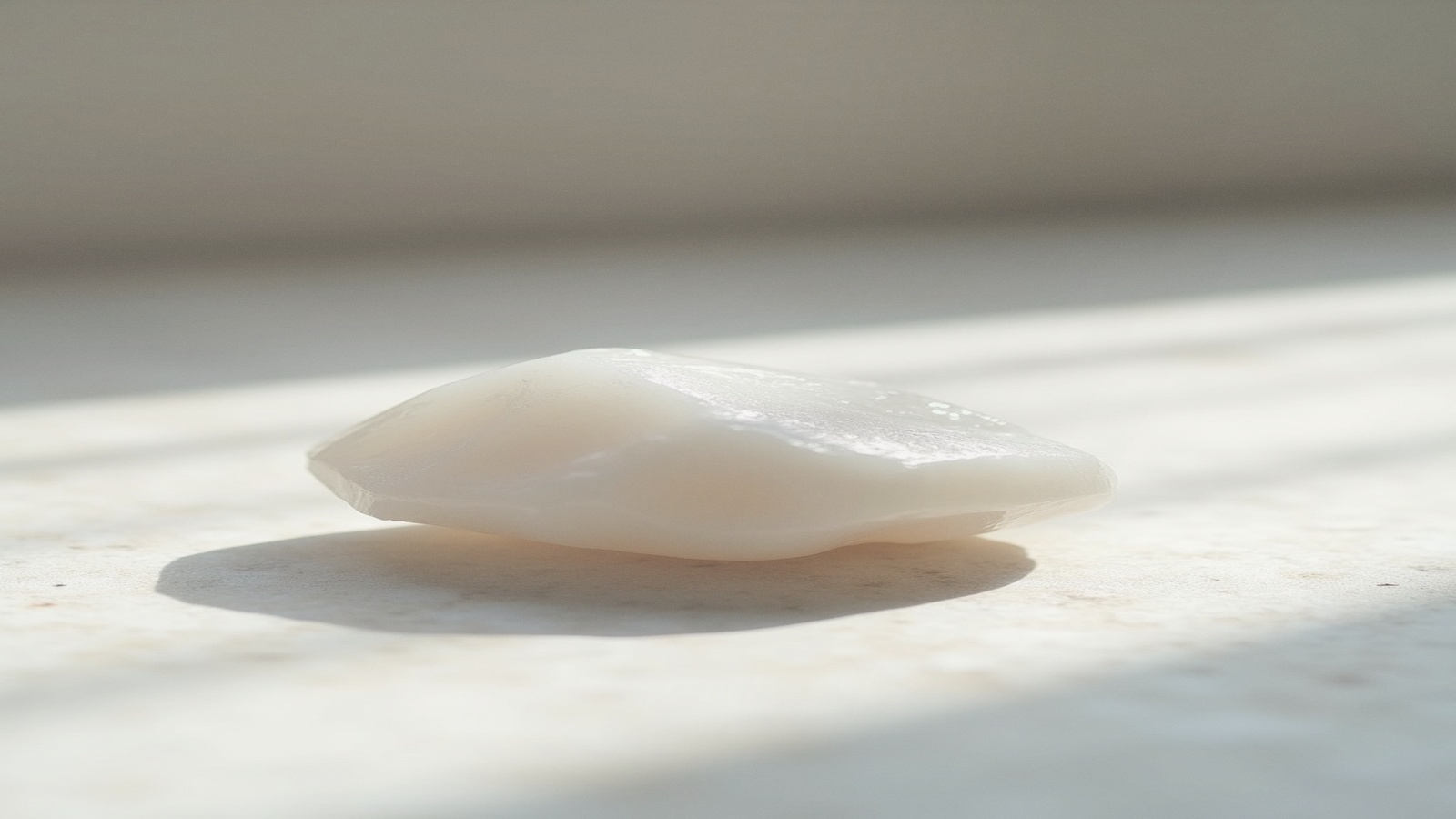
Table of Contents
- What Is Howlite?
- 10-Second Executive Summary / The Verdict Box
- What Is Howlite? Origin, Appearance, and Mineral Facts
- Howlite Crystal Meaning and Spiritual Symbolism
- Howlite Healing Properties: Calm, Sleep, and Emotional Balance
- Howlite vs. Turquoise: How to Spot Dyed Howlite
- Decision Table: Howlite vs. Dyed Howlite vs. Turquoise
- How to Use Howlite Every Day: Jewelry, Meditation, and Home
- How to Cleanse and Care for Your Howlite Crystal
- How to Choose Authentic Howlite: Buying Checklist
- FAQ: Howlite Crystal Meaning
- What is howlite crystal good for?
- Is howlite a calming stone?
- How do you use howlite in daily life?
- Is howlite the same as turquoise?
- How do you cleanse howlite?
- Sources
What Is Howlite?
Howlite is a calcium borosilicate hydroxide mineral with the chemical formula Ca2B5SiO9(OH)5, and it typically occurs as compact, earthy masses rather than visible crystals. It is most often white to light grey with grey or black veining, and it is relatively soft — the earthy material gives a hardness of about 3.5 on the Mohs scale, which is really the hardness of separating the material rather than a clean crystal face. That softness matters for daily wear, cleansing, and how you tell natural howlite from dyed stones.
10-Second Executive Summary / The Verdict Box
- Direct Verdict: Howlite is a soft white-to-grey veined mineral often associated with calm, patience, and quiet reflection; it is a grounding everyday stone, not a medical treatment.
- Mineral Identity: Calcium borosilicate hydroxide, Ca2B5SiO9(OH)5.
- Mohs Hardness: About 3.5 for the compact earthy material — treat it gently.
- Appearance: Usually compact earthy masses; very rarely in crystals; white to grey with grey or black veins.
- Best For: Low-contact jewelry (earrings, pendants), meditation, bedside or desk placement, and calm-focused home decor.
- Watch Out For: Dyed howlite sold as turquoise; harsh cleansers, ultrasonic cleaners, and long soaking.
What Is Howlite? Origin, Appearance, and Mineral Facts
Howlite is a boron-bearing mineral, and its chemistry — calcium, silicon, boron, hydrogen, and oxygen — is what gives it a distinctive identity among white stones. According to mineral databases, it forms "usually compact earthy masses and very rarely in crystals," which explains why most howlite you see is a smooth, opaque, vein-patterned mass rather than a faceted gem. Its composition is roughly 20.48% calcium, 7.18% silicon, 13.81% boron, 1.29% hydrogen, and 57.24% oxygen by weight.
Visually, natural howlite is white to light grey with darker grey or black spiderweb-like veins. The contrast is usually soft, not sharply black-and-white. Because the material is porous and soft, it takes dye easily — which is why so much howlite on the market is dyed blue and sold as turquoise, or dyed other colors for fashion jewelry. That dyeability is a practical fact about the stone, not a flaw in the stone itself.
Howlite Crystal Meaning and Spiritual Symbolism
In crystal lore, howlite is often associated with calm, patience, and the quiet processing of restless thoughts. It is frequently described as a "quieting" stone — one that may support reflection rather than stimulation. These are cultural and symbolic associations, not verified physiological effects. Howlite may be used as a personal reminder to slow down, breathe, and observe your thoughts without chasing them.
Symbolically, its white body with dark veins is often read as a visual metaphor: calm clarity threaded with the marks of lived experience. Some people keep howlite nearby during journaling, study, or bedtime routines because the stone's soft appearance and associations with patience suit those moments. Others use it as a grounding anchor in meditation — a physical object to return attention to when the mind wanders. None of this requires believing the stone "does" anything; the meaning is in the ritual and the reminder.
Howlite Healing Properties: Calm, Sleep, and Emotional Balance
Howlite is often associated with calm and emotional balance in crystal traditions, and it is sometimes placed near the bed or used in evening routines. These associations are cultural and symbolic. Howlite is not a treatment for insomnia, anxiety, or any medical condition, and it should not replace care from a qualified professional.
What you can honestly do with howlite is build a calming routine around it: a stone on the nightstand as a cue to put the phone down, a few minutes of slow breathing while holding it, or a brief journaling pause before sleep. The stone may support the habit; the habit is what does the work. If you struggle with persistent sleep or mood concerns, speak with a healthcare provider rather than relying on any crystal.
Howlite vs. Turquoise: How to Spot Dyed Howlite
Howlite is not the same as turquoise. Turquoise is a different mineral with a different chemistry and a much higher value, and dyed howlite is one of the most common turquoise imitations. The giveaway is usually the pattern and the uniformity: natural howlite has grey-to-black veining, while dyed howlite often shows blue dye pooling in the veins or a too-even, chalky blue surface. Real turquoise typically has a different matrix and color range, and it is usually sold with clearer provenance at higher prices.
A practical test is to look closely at the veins with a loupe or magnifier: dye often concentrates in cracks and pits, and the base color may look slightly uneven where the porous stone absorbed it. If a seller offers "turquoise" at a very low price with black spiderweb veining and a chalky feel, dyed howlite is a likely explanation. At Lumina Quartz, our Lumina Grade AAA Integrity Standard means natural, un-dyed material with no chemical stabilization, no irradiation, and no color treatment — so a howlite piece sold under our standard is howlite, honestly labeled, not a turquoise substitute.
Decision Table: Howlite vs. Dyed Howlite vs. Turquoise
| Feature | Natural Howlite | Dyed Howlite | Turquoise |
|---|---|---|---|
| Base color | White to light grey | Usually blue, sometimes green or pink | Blue to blue-green |
| Veining | Grey or black, soft contrast | Dark veins with dye pooling in cracks | Matrix varies by origin; often brown or black |
| Hardness (Mohs) | About 3.5 (earthy material) | About 3.5, same base material | Typically 5–6 |
| Price signal | Inexpensive | Inexpensive | Significantly higher |
| Honest label | "Howlite" | "Dyed howlite" | "Turquoise" with provenance |
How to use this table: If the price is low and the color is vivid blue with black veins, assume dyed howlite until proven otherwise. If a seller cannot say what the stone is, treat the label as unverified. Buy natural howlite when you want howlite — and ask for treatment disclosure in writing.
How to Use Howlite Every Day: Jewelry, Meditation, and Home
Howlite is soft, so daily use should be low-contact. Earrings, pendants, and beaded bracelets worn occasionally are better choices than rings or bracelets that rub against hard surfaces all day. For meditation, hold a smooth howlite palm stone or bead and use it as a attention anchor: when the mind wanders, return to the stone's cool, smooth surface. For home use, place a howlite piece on a desk, nightstand, or entryway tray as a visual cue for pause — a small ritual object rather than a decorative afterthought.
If you wear howlite jewelry, remove it before showering, swimming, cleaning, or exercising. Because the material is porous and soft, it can absorb oils and dyes and is easily scratched by harder stones and metal clasps. Store it separately in a soft pouch.

A related color-family option
Moonstone Bracelet (Grade AAA Natural Gemstone) | New Beginnings & Intuition Jewelry // Lumina Quartz
This broader color-family option is not presented as Howlite. We only identify jewelry as Howlite when that exact material is verified.
Explore this related optionHow to Cleanse and Care for Your Howlite Crystal
Cleanse howlite gently. Because it is soft and porous, avoid ultrasonic cleaners, steam cleaners, harsh chemicals, and long soaking. A simple approach: wipe with a soft, slightly damp cloth, dry immediately, and keep it away from dyed fabrics and lotions. For energetic cleansing in crystal traditions, many people use moonlight, a dry salt-free bowl, sound, or smoke — methods that avoid water and harsh substances. If you use water at all, keep it brief and pat dry right away.
Store howlite away from harder stones like quartz and away from direct sunlight for long periods, since some dyed pieces can fade. Natural howlite is more stable, but the softness still argues for a padded pouch and a separate compartment.
How to Choose Authentic Howlite: Buying Checklist
Use this checklist before you buy:
- Ask what it is. The label should say "howlite," not "turquoise" or a vague trade name.
- Check the color. White-to-grey base with grey or black veining points to natural howlite; vivid blue with pooled dye points to dyed.
- Look at the veins. Dye tends to collect in cracks and pits; natural veining is more diffuse.
- Ask about treatment. A reputable seller discloses dye, stabilization, and irradiation. Under the Lumina Grade AAA Integrity Standard, we specify natural origin, zero chemical stabilization, and no irradiation or dye.
- Match hardness to use. At about 3.5 on the Mohs scale, howlite is best for low-contact pieces, not rings or heavy-wear bracelets.
- Check the price logic. Very low prices for "turquoise" are a red flag for dyed howlite.
FAQ: Howlite Crystal Meaning
What is howlite crystal good for?
Howlite is often associated with calm, patience, and quiet reflection, and it is commonly used as a meditation or bedside stone and in low-contact jewelry. It is a symbolic and ritual object, not a medical treatment.
Is howlite a calming stone?
In crystal traditions, howlite is often described as calming and grounding; this is a cultural association, not a verified physiological effect. It may support a calming routine, but it does not replace professional care.
How do you use howlite in daily life?
Wear it as earrings or a pendant, hold a palm stone during meditation, or place a piece on a desk or nightstand as a pause cue. Because it is soft (about 3.5 Mohs), remove it before water, cleaning, and exercise.
Is howlite the same as turquoise?
No. Howlite is a calcium borosilicate hydroxide mineral, while turquoise is a different mineral; dyed howlite is a common and inexpensive imitation of turquoise.
How do you cleanse howlite?
Wipe it with a soft, slightly damp cloth and dry it immediately, or use dry methods like moonlight or sound. Avoid ultrasonic cleaners, steam, harsh chemicals, and long soaking.
Sources
© 2026 Lumina Quartz. This article shares mineral facts and cultural associations; it is not medical advice.