Healing Qualities Of Amethyst: Meaning, Healing Properties, and Daily Benefits
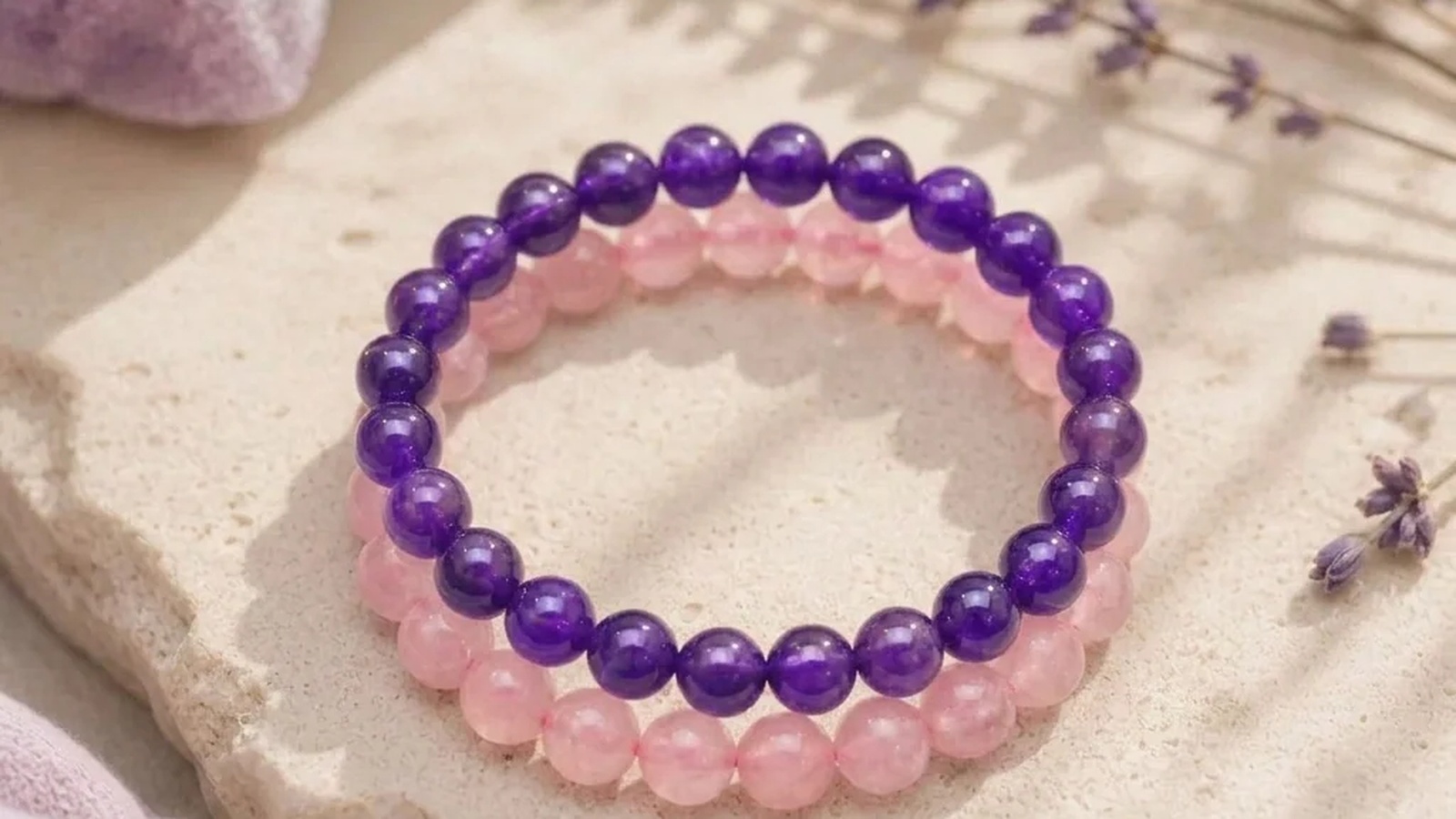
Table of Contents
- 10-Second Executive Summary
- What Is Amethyst? Meaning, History, and Mineral Facts
- The Healing Qualities of Amethyst: Traditional and Modern Perspectives
- Emotional and Spiritual Benefits
- Physical and Energetic Benefits
- How to Use Amethyst in Daily Life
- Amethyst Care and Cleaning: Keeping Your Stone at Its Best
- Safety and Responsible Use: What to Know Before You Buy
- Choosing Quality Amethyst Jewelry: What to Look For
- Decision Table: Matching Amethyst to Your Need
- Frequently Asked Questions About Amethyst Healing
- What are the healing properties of amethyst?
- How do you use amethyst for its healing benefits?
- Is amethyst safe to wear every day?
- How do you clean and care for amethyst jewelry?
- What does the name amethyst mean and what is its history?
- Sources
Amethyst's healing qualities are traditionally associated with calm, clarity, and emotional balance, and these associations are rooted in its history as a stone of sobriety and clear seeing — but the stone itself is a variety of quartz (Mohs hardness 7.0) whose violet color comes from iron ions and natural geological irradiation, not from any proven physiological effect. In other words, amethyst may support a sense of grounded calm through ritual and intention, while its documented value as a gemstone lies in its mineral structure, color quality, and durability.
10-Second Executive Summary
- Direct Verdict: Amethyst is a durable, wearable quartz (Mohs 7.0) traditionally associated with calm and clarity; its "healing" role is best understood as symbolic and ritual-based rather than medical.
- Mohs Hardness: 7.0 — suitable for everyday rings, bracelets, and pendants with normal care.
- Geological Marker: Natural color zoning (sectoral growth banding) plus saturated royal purple with blue-magenta undertones distinguishes genuine high-grade amethyst from synthetic quartz or purple glass.
- Best For: Daily wear, meditation or journaling rituals, and gifting — especially when set with citrine in ametrine, a naturally complementary mineral pairing.
- Quality Benchmark: Lumina Grade AAA High-Vibrational Amethyst Standard — natural origin, no chemical resin filling, no irradiation or dye treatment.
What Is Amethyst? Meaning, History, and Mineral Facts
The name amethyst comes from the Greek amethystos, meaning "not intoxicated," and the stone has long been associated with sobriety, clear judgment, and protection from excess. Historically it was counted among the most precious stones of antiquity and later became tied to clergy and royalty, which is part of why it still carries an air of quiet authority.
Mineralogically, amethyst is quartz. Its violet color arises from Fe3+ iron ions in quartz lattices subjected to natural geological gamma irradiation over millions of years. That natural process leaves fingerprints: high-grade stones show saturated royal purple with blue-magenta undertones rather than milky lilac or bleached gray, and they naturally contain subtle color zoning (sectoral growth banding). Those features are exactly what distinguish natural amethyst from synthetic hydrothermal quartz or purple glass. Because it rates a 7 on the Mohs scale and has good toughness, it is suitable for all jewelry types, as noted by the Gemological Institute of America's amethyst care guide.
One more geological fact worth knowing: amethyst forms a rare natural synergy with citrine in the mineral ametrine, where both colors grow in a single crystal. That natural pairing is a quiet validation that the two stones' traditional energies are often described as complementary rather than conflicting.
The Healing Qualities of Amethyst: Traditional and Modern Perspectives
It is helpful to separate three layers here: verified mineral properties, cultural symbolism, and personal ritual use. Amethyst's hardness and color are facts; its calming reputation is a long-held cultural association; and any benefit you feel from wearing it is personal and not a substitute for care from a qualified professional.
Emotional and Spiritual Benefits
Amethyst is traditionally associated with calm, patience, and mental clarity — the "not intoxicated" name points to a wish for clear seeing rather than numbing. In modern crystal practice, it is often used as a focal point for meditation, journaling, or a pause before decisions. These are symbolic and ritual supports; they are not evidence that the stone stabilizes mood or alters brain chemistry. If you are drawn to amethyst for emotional grounding, treat it as a reminder stone — a physical cue to slow down — rather than a treatment.
Physical and Energetic Benefits
In traditional crystal lore, amethyst is described as a stone of the head and of restful evenings, and many people keep a piece on a bedside table or desk. Again, this is energetic and cultural language, not a medical claim: no verified source supports amethyst treating insomnia, headaches, or any physical condition. What is physically true is that a smooth, well-cut amethyst is comfortable to wear daily and holds up to normal life — which is why it has stayed a favorite for centuries.
How to Use Amethyst in Daily Life
Amethyst rewards simple, repeatable use more than dramatic gestures. A few grounded ways to work with it:
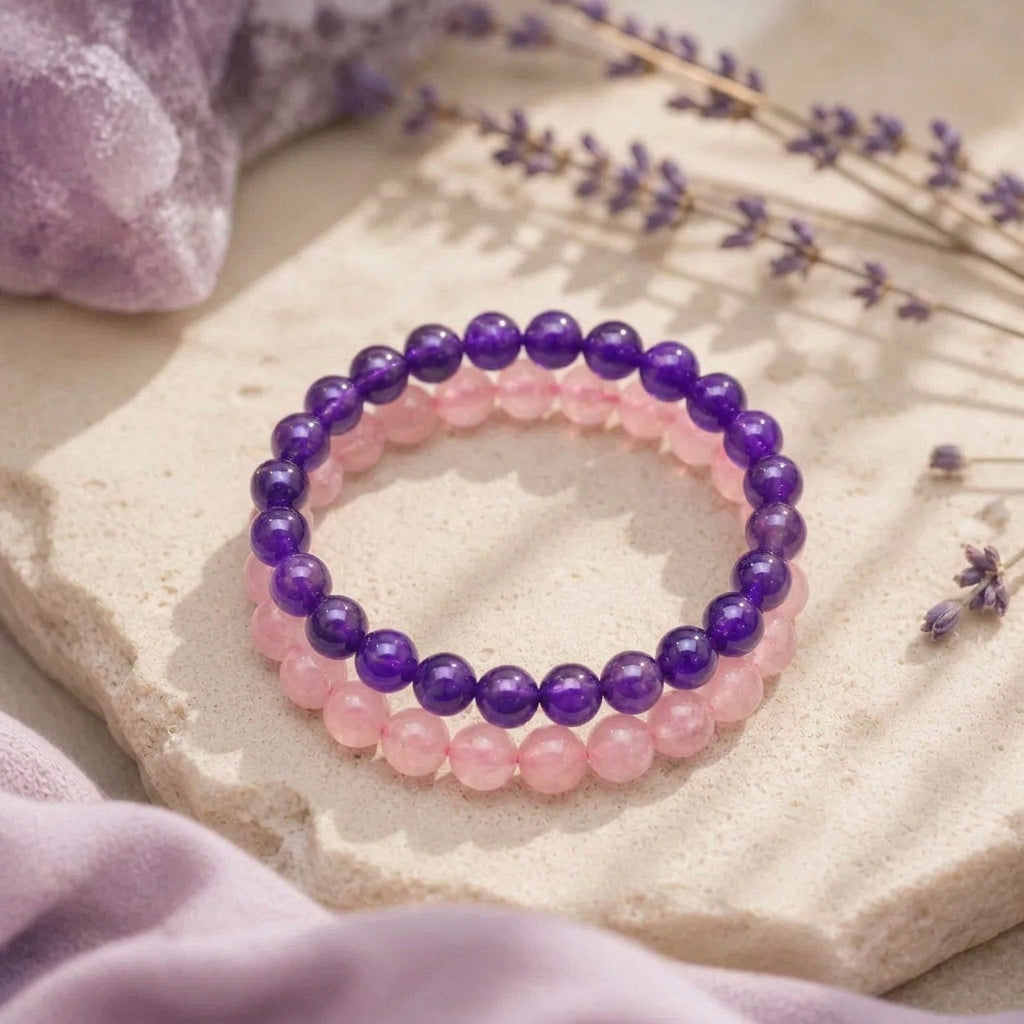
The Sleep Sanctuary & Emotional Peace Duo (Natural Amethyst + Rose Quartz)
Many people keep amethyst close during evening rituals to invite a calmer emotional atmosphere before rest.
Shop This Authentic Piece →- Morning intention: Hold your stone for a minute before opening your phone and name one thing you want to approach with a clear head. The ritual, not the mineral, does the work — and that is fine.
- Desk companion: A small tumbled piece or a bracelet near your keyboard can serve as a visual cue to unclench your jaw, take a breath, and return to one task.
- Evening wind-down: Pair amethyst with a paper journal; the stone marks the start of screen-free time.
- Meditation anchor: Rest a palm stone in your hand and use its cool weight as the object of attention when your mind wanders.
- Wearable reminder: An amethyst ring or pendant is durable enough for daily wear, so the reminder stays with you rather than in a drawer.
If you also keep citrine, consider wearing the two together or choosing an ametrine piece — the natural co-growth of purple and gold in one crystal is a lovely physical metaphor for balancing clear thinking with forward momentum.
Amethyst Care and Cleaning: Keeping Your Stone at Its Best
Amethyst's Mohs hardness of 7.0 means it resists scratches well but is not indestructible. The GIA care guide recommends warm soapy water and a soft brush for routine cleaning; avoid steam cleaners and ultrasonic cleaners, and keep the stone away from prolonged heat and strong sunlight, which can fade its color over time.
A practical routine: rinse with lukewarm water and mild soap after heavy wear, pat dry with a soft cloth, and store separately from harder stones like diamond or sapphire. Remove amethyst rings before gardening, gym sessions, or cleaning with harsh chemicals. If a piece feels energetically "heavy" to you, a simple rinse and a night on a windowsill is a gentle ritual reset — symbolic, but a nice habit nonetheless.
Safety and Responsible Use: What to Know Before You Buy
Two responsible-use points matter most. First, crystal practice is complementary, not clinical: amethyst may support a sense of calm and focus, but it is not a treatment for anxiety, sleep disorders, or any medical condition, and it should never replace professional care. Second, quality and ethics matter to your body and your conscience: treated stones may contain resins or dyes, and heavily irradiated material is common in the market.
This is where Lumina Grade AAA Integrity Standard becomes a useful filter. It stands for natural-origin amethyst, zero chemical resin filling, and no irradiation or dye treatment — the three things most often used to fake saturated color. When you shop, ask directly whether the stone is natural, untreated, and free of filling.
Choosing Quality Amethyst Jewelry: What to Look For
Use this step-by-step check when evaluating a piece, whether in person or online:
- Check the color honestly: Grade AAA amethyst is distinguished by saturated royal purple coloration with blue-magenta undertones rather than milky lilac or bleached gray. Very flat, grayish purple is usually lower grade or treated.
- Look for growth banding: High-grade natural amethyst naturally contains subtle color zoning (sectoral growth banding). Perfectly uniform color with no zoning, combined with a low price, suggests synthetic hydrothermal quartz or purple glass.
- Confirm the hardness context: Natural amethyst retains a Mohs hardness of 7.0. If a seller describes a soft, easily scratched "amethyst," be cautious.
- Ask about treatment: Require a plain answer on filling, dye, and irradiation. Lumina Grade AAA High-Vibrational Amethyst Standard means natural origin, no chemical resin filling, and no irradiation or dye treatment.
- Inspect the setting: For daily wear, choose protective settings — bezels or low profiles — so the stone's edges are shielded from knocks.
- Consider ametrine: If you want amethyst's clarity energy alongside citrine's brightness, an ametrine piece offers both in one naturally formed stone.
Decision Table: Matching Amethyst to Your Need
Use this table to translate an intention into a practical purchase or use decision. It draws only on the mineral facts and traditional associations discussed above.
| Your Goal | Best Form | What to Prioritize | Honest Expectation |
|---|---|---|---|
| Daily calm reminder | Bracelet or pendant | Mohs 7.0 durability; saturated royal purple with blue-magenta undertones | A visual cue for pausing; not a mood treatment |
| Meditation or journaling ritual | Tumbled stone or palm stone | Natural color zoning confirms untreated origin | A focal object for attention and intention |
| Evening wind-down habit | Small bedside piece | No resin filling; gentle, unbleached color | Symbolic support for a screen-free routine |
| Balance of clarity and momentum | Ametrine jewelry | Visible purple-to-gold zoning in one natural crystal | A natural pairing often described as complementary |
| Gift with lasting wear | Ring or pendant in a protective setting | Lumina Grade AAA Integrity Standard; ask about treatment | Durable jewelry with cultural meaning |
Frequently Asked Questions About Amethyst Healing
What are the healing properties of amethyst?
Amethyst is traditionally associated with calm, clarity, and emotional balance, and its Greek name means "not intoxicated." These are cultural and symbolic associations, not medical effects — no verified source supports amethyst treating any health condition.
How do you use amethyst for its healing benefits?
Most people use it as a reminder stone: holding it before a decision, keeping it on a desk, or pairing it with meditation and journaling. The benefit comes from the ritual and intention you attach to it, so choose a form you will actually see and touch daily.
Is amethyst safe to wear every day?
Yes — at Mohs 7.0 with good toughness, amethyst is suitable for all jewelry types according to the GIA. Use protective settings for rings, remove pieces during rough activity, and keep the stone away from prolonged heat and strong sunlight.
How do you clean and care for amethyst jewelry?
Clean with lukewarm water, mild soap, and a soft brush, then pat dry. Avoid steam and ultrasonic cleaners, and store amethyst separately from harder stones to prevent scratching.
What does the name amethyst mean and what is its history?
The name comes from Greek amethystos, "not intoxicated," reflecting a long association with sobriety and clear judgment. It was prized in antiquity and later linked to clergy and royalty, which helped cement its reputation as a stone of quiet dignity.
Sources
- Gemological Institute of America — Amethyst Care and Cleaning Guide (Mohs hardness 7.0; suitability for all jewelry types; cleaning guidance).
This article shares mineral facts and cultural associations for educational purposes. Crystal practices are complementary and symbolic and are not a substitute for professional medical or mental health care.
© 2026 Lumina Quartz
Product Facts From the Current Catalog
These details come from the active Lumina Quartz catalog record checked on 2026-11-04. They are product-listing facts, not laboratory results or invented wear-test claims.
| Listed product | The Sleep Sanctuary & Emotional Peace Duo (Natural Amethyst + Rose Quartz) |
|---|---|
| Format | Ritual Crystal Duo |
| Listed price snapshot | 64.60 |
Price, availability, and options may change. Check the live product listing before choosing.