Garnet Stone: Meaning, Healing Properties, and Daily Benefits
Table of Contents
- What Is Garnet Stone? Origin, Types, and Composition
- Garnet Meaning and Symbolism: The Stone of Passion and Protection
- Garnet Healing Properties: Physical, Emotional, and Spiritual Benefits
- Emotional Healing: Confidence, Love, and Letting Go
- Spiritual and Chakra Benefits: Root Chakra Grounding
- Daily Benefits: How to Wear and Use Garnet in Everyday Life
- Decision Table: Choosing Garnet for Your Specific Goal
- Garnet as January Birthstone and Traditional Gift
- How to Choose, Care For, and Style Garnet Jewelry
- FAQs About Garnet Stone Properties
- Sources
What Is Garnet Stone? Origin, Types, and Composition
Garnet is one of the most common mineral groups on Earth, occurring in almost any color and prized both as a gemstone and as an industrial mineral used in abrasives, non-slip surfaces, and filtration. If you are asking what garnet stone is at its core, the short answer is this: garnet is not a single mineral but a family of closely related silicate minerals that share a similar crystal structure, which is why the U.S. Geological Survey describes it as one of the most widespread minerals in the world.
This family structure is why garnet appears in so many colors. Different chemical compositions within the group produce different varieties, and gemologists often identify a stone by measuring how it sits between "end-member" species. Common gem varieties include:
- Almandine — the deep red to brownish-red garnet most familiar in jewelry, historically called "carbuncle," a term derived from the Latin for "live coal" (Wikipedia).
- Pyrope — typically blood-red to pink, often found blended with almandine in a natural series.
- Spessartine — orange to reddish-orange, sometimes called mandarin garnet.
- Grossular — includes green varieties such as tsavorite.
- Andradite — includes the brilliant green demantoid.
- Uvarovite — a rare emerald-green garnet usually found in small crystals.
Because the garnet group spans such a range, the properties people associate with "garnet" can vary depending on the variety and color you choose. A deep red almandine carries a different visual and symbolic weight than a soft green grossular, and knowing the difference helps you select a stone that matches both your intention and your wardrobe.
Garnet Meaning and Symbolism: The Stone of Passion and Protection
Garnet is one of the most common minerals in the world and occurs in almost any color, though it is most widely known for its beauty as a gemstone (USGS). Its historical name, carbuncle, meaning "live coal," reflects the deep red of some varieties. If you like the idea of wearing garnet as a personal reminder of warmth or courage, that is simply a choice you make for yourself — a private habit rather than a property of the stone.
Because garnet is January's birthstone, it is a popular choice for gifts and travel tokens (USGS). Some people give a garnet to a loved one before a journey as a personal keepsake, and others wear one as a reminder to stay in touch with people they care about. These are individual habits and gestures, not guarantees of safe travel or mended relationships.
Red garnet is prized for its color and brilliance, and it is a favorite in jewelry for that reason alone (GIA). If you are drawn to red garnet, you can treat it as a personal cue to move forward with courage when a path is not fully clear — a small, private reminder rather than a talisman of luck or success.
Garnet Healing Properties: Physical, Emotional, and Spiritual Benefits
Beyond jewelry, garnet is an essential industrial mineral used in abrasive products, non-slip surfaces, and filtration because of its hardness and other properties (USGS). Some people enjoy garnet for its color and the personal themes they choose to associate with it, such as vitality or warmth. Those associations are personal habits of thought, not medical claims or guarantees.
Garnet has a long history as a gemstone, and its name covers a group of minerals rather than a single species (Wikipedia). Old stories about garnet and health belong to the past and do not describe how the stone works. Today, if you wear garnet, you can simply enjoy its color and use it as a personal reminder to pause and cool down when you feel overheated or reactive — a habit you choose, not an effect of the stone.
Garnet is valued by many people as a personal focal point for clearer thinking. If you like the idea of using a stone as a cue, you can wear garnet as a reminder to slow down and make decisions deliberately. That is a personal habit of attention, not a guarantee of sharper intuition or deeper spiritual understanding.
Emotional Healing: Confidence, Love, and Letting Go
Emotionally, people often choose garnet because its warm color feels confident and renewing. You might wear a garnet as a personal reminder to let go of what has ended without bitterness, or to reawaken a sense of aliveness after a muted period. These are private intentions and habits, not effects the stone is known to produce.
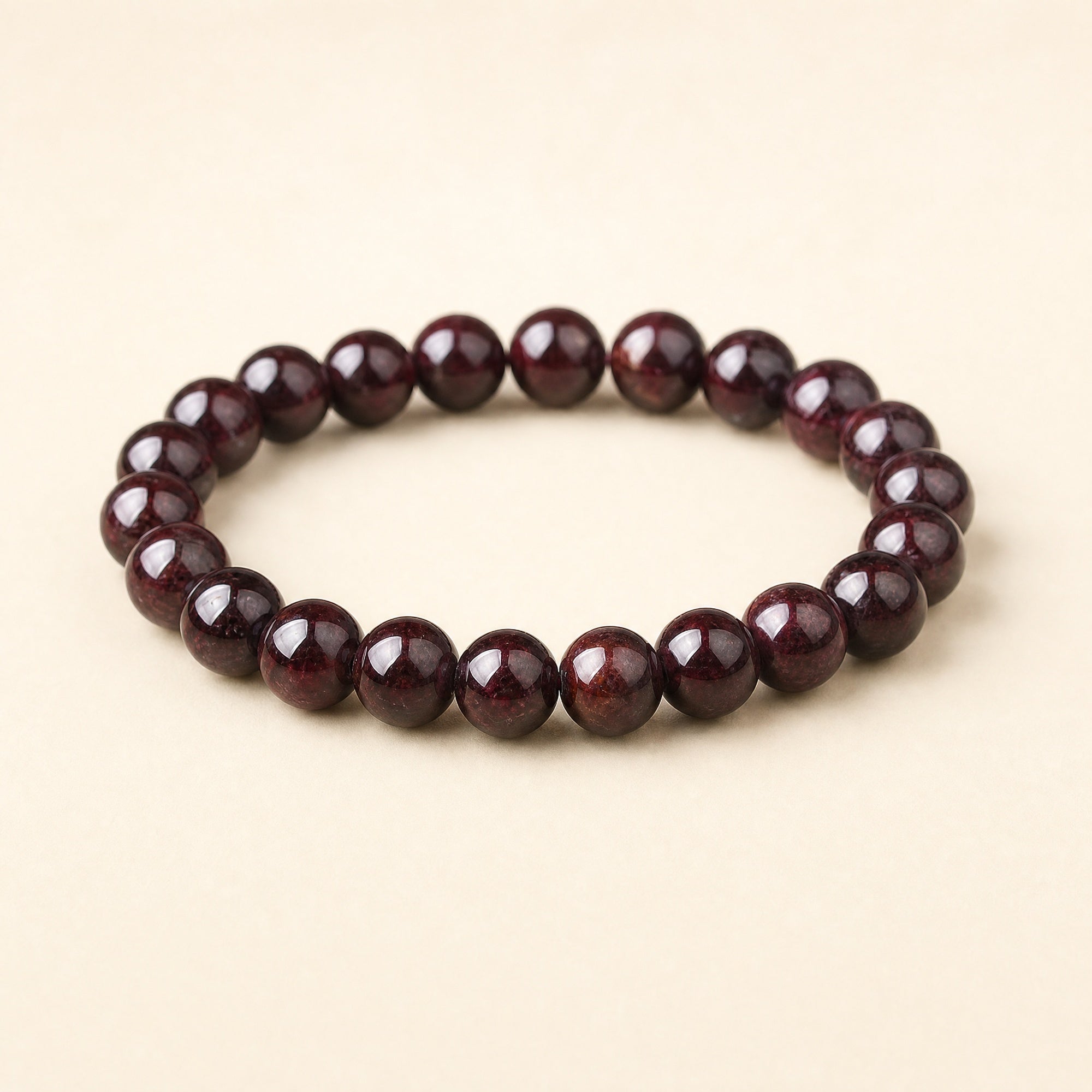
Garnet Bracelet
A quiet bracelet for turning this intention into a small daily ritual.
Shop This Authentic Piece →Used gently, garnet may support:
- Feeling more grounded in your own worth
- Reconnecting with desire, creativity, and warmth
- Releasing resentment so energy is not spent on old grievances
- Moving through transitions with steadiness rather than fear
Spiritual and Chakra Benefits: Root Chakra Grounding
In chakra traditions, garnet is sometimes associated with the root chakra and with feeling anchored and connected to the Earth. You can use that idea as a personal framework: wear garnet as a reminder to feel stable enough to take action rather than escaping into abstraction. It is a chosen habit of reflection, not a balancing effect of the stone on the body.
Daily Benefits: How to Wear and Use Garnet in Everyday Life
Garnet is a genuinely wearable stone because of its hardness, but it should not be subjected to hard blows or rough wear (GIA). That balance — durable enough for daily jewelry, but not indestructible — shapes how you use it. Everyday uses that people find meaningful include:
- Wearing a garnet ring or pendant as a visible point of focus during a transition, new job, or fresh start.
- Keeping a small tumbled garnet in a pocket or travel bag as a symbolic companion for journeys and safe returns.
- Placing garnet near a workspace as a reminder of warmth, courage, and steady momentum.
- Gifting garnet before a move, trip, or new chapter, following the traditional association with safe travel and mended bonds.
Because garnet carries a fire-red palette, it can also double as an intentional wardrobe element — something you wear on days you want to feel more present and less drained.
Decision Table: Choosing Garnet for Your Specific Goal
Use this table to match your purpose with the garnet variety and use case most often associated with it. Associations are traditional and symbolic, not medical.
| Your Goal | Best-Suited Variety | Color | Practical Use |
|---|---|---|---|
| Grounding & root chakra balance | Almandine or Pyrope | Deep red | Pendant or tumbled stone kept close to the body |
| Confidence & reawakened warmth | Pyrope | Rosy red to pink | Ring or bracelet worn daily |
| Creativity & optimistic momentum | Spessartine | Orange to reddish-orange | Statement piece for visible wear |
| Renewal & heart-centered growth | Tsavorite (Grossular) | Green | Delicate earrings or small pendant |
| Protection during travel or transition | Any red garnet | Red | Pocket stone or travel-worn piece, gifted before a journey |
Applicability boundary: This table reflects traditional symbolism and common crystal practice. It is not a substitute for medical, psychological, or financial guidance, and no variety of garnet should be expected to produce guaranteed outcomes.
Garnet as January Birthstone and Traditional Gift
Garnet is the recognized birthstone for January, a role it has held in modern birthstone lists and one that the USGS notes alongside its status as an essential industrial mineral. This dual identity — gem and workhorse — is part of what makes garnet appealing as a gift: it is beautiful enough to treasure and common enough to be accessible.
Garnet is January's birthstone, which gives it a natural place in gifting traditions (USGS). Some people give a garnet before a journey or as a token of affection, and others wear one as a private reminder to come back safely and whole. These are personal gestures and habits, not promises the stone makes.
How to Choose, Care For, and Style Garnet Jewelry
Choosing garnet well comes down to three practical checks: color, setting, and intended use. Walk through this short checklist before you buy.
- Match color to purpose. Deep red almandine and pyrope lean grounding and protective; orange spessartine leans creative and optimistic; green grossular leans fresh and heart-centered.
- Check the setting's protection level. Garnets should not be subjected to any hard blows or rough wear (GIA), so choose bezel or protective settings for rings worn during activity.
- Decide on daily vs. occasional wear. A pendant or earring tolerates daily use better than a ring on a working hand.
- Confirm care instructions. Follow the GIA's guidance for gentle cleaning, and avoid ultrasonic or steam cleaners unless a jeweler confirms they are safe for your specific stone.
- Store it separately. Keep garnet in its own pouch or compartment so harder gems do not scratch it.
Styling is where garnet rewards a little thought. Its warm reds flatter gold and copper metals and pair naturally with earthy, autumnal tones, while cooler green and orange varieties work well with silver. For a daily grounding piece, a simple almandine pendant is easy to keep on. For a statement, spessartine in a warm metal setting catches light in a way that feels both bold and grounded.
FAQs About Garnet Stone Properties
What are the metaphysical and healing properties of garnet stone?
Garnet is a group of minerals that occurs in almost any color and is used both as a gemstone and as an industrial mineral (USGS). Some people choose to associate garnet with personal themes such as vitality, warmth, or grounding, and wear it as a reminder of those intentions. These are personal habits and symbolic choices, not medical claims or effects of the stone.
What does garnet symbolize and what is its spiritual meaning?
Garnet is January's birthstone and is known for its beauty as a gemstone (USGS). Any symbolism you attach to it — passion, protection, or grounding — is a personal choice and a reminder habit you create for yourself, not an inherent spiritual property of the stone.
Is garnet a good stone for everyday wear and jewelry?
Yes, garnet is durable enough for regular jewelry, but it should not be subjected to hard blows or rough wear (GIA). Pendants and earrings tend to hold up best for daily use; rings do better with protective settings.
How do you care for and clean garnet jewelry?
Clean garnet gently and avoid rough wear or impact. Follow expert guidance such as the GIA garnet care guide, store the piece separately, and confirm with a jeweler before using ultrasonic or steam cleaning.
What are the different types of garnet and their colors?
The main gem varieties include almandine (deep red to brownish-red), pyrope (blood-red to pink), spessartine (orange to reddish-orange), grossular (including green tsavorite), andradite (including green demantoid), and uvarovite (emerald green). Different chemical compositions within the garnet group produce these colors, and stones are often identified by where they sit between end-member species (Wikipedia; USGS).
Sources
- USGS — Garnet, An Essential Industrial Mineral and January's Birthstone
- U.S. Geological Survey — Garnet Publication
- GIA — Garnet Care and Cleaning Guide
- Wikipedia — Garnet
This content is for informational and symbolic purposes only and is not medical advice. Crystal and gemstone traditions described here are not a substitute for professional care.
© 2026 Lumina Quartz
Product Facts From the Current Catalog
These details come from the active Lumina Quartz catalog record checked on 2026-09-27. They are product-listing facts, not laboratory results or invented wear-test claims.
| Listed product | Garnet Bracelet – Enduring Drive |
|---|---|
| Format | Bracelet |
| Listed price snapshot | 42.00 |
Price, availability, and options may change. Check the live product listing before choosing.