Crystals For Sleep: Best Stones and Simple Daily Rituals
Introduction: Why Crystals for Sleep?
There is a particular stillness that settles over a room when the world dims its lights. It is in this quiet that we often find ourselves wrestling with the day's residue—thoughts that spiral, muscles that cling to tension, and a mind that refuses to soften. If you have reached for crystals for sleep, you are not alone. Across cultures and centuries, humans have turned to the earth's quiet companions to create a sense of safety, rhythm, and release before rest.
Crystals do not promise a magical cure. Instead, they may support a shift in atmosphere, a gentle reminder to slow down, and a tangible anchor for intention. When we hold a stone in our palms, we are reminded that we are part of a larger, slower universe—one that does not rush, one that knows how to wait. In this way, crystals for sleep become more than objects; they become allies in our nightly return to ourselves.
It helps to place crystals within a broader picture. Sleep difficulties are common, and the National Center for Complementary and Integrative Health (NCCIH) notes that there are more than 70 recognized sleep disorders, with insomnia—trouble falling or staying asleep—among the most frequently discussed. Crystals are best understood as a supportive, calming ritual alongside the fundamentals of good sleep, not as a replacement for them. If sleep struggles persist, the NCCIH encourages talking with a health care provider, who can offer guidance tailored to your situation.
This guide explores some of the stones often associated with restful nights, offers simple ways to bring them into your routine, and invites you to approach your sleep practice with curiosity rather than pressure. Because rest, after all, is not something we force. It is something we allow.
The Best Crystals for Sleep
When you begin your journey with crystals for sleep, it helps to know that each stone carries its own quiet personality. Some are known for softening anxiety, others for clearing mental clutter, and a few for simply holding space. Below are five beloved stones, each with a unique way of offering comfort.
Amethyst – The Ultimate Sleep Crystal
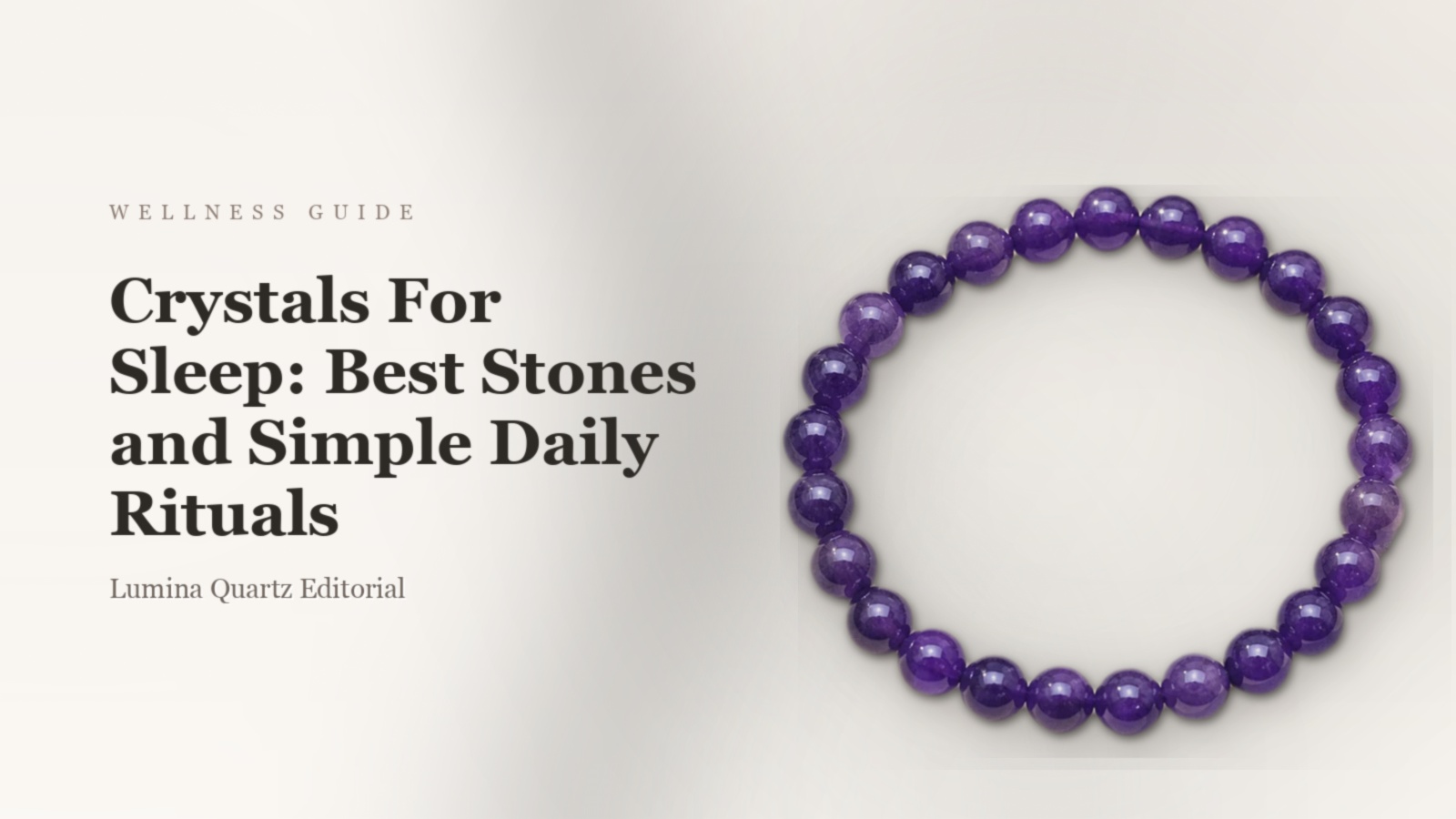
Amethyst is perhaps the most widely recognized crystal for sleep—and for good reason. Its deep violet hue echoes the twilight hour, the moment when day dissolves into night. Amethyst is often associated with tranquility and emotional balance. Many people find that keeping a piece near their bed may support a calmer mind before sleep. Its gentle, expansive energy is said to encourage a sense of peace that carries you gently into dreaming.
You might place an amethyst cluster on your nightstand, or hold a tumbled stone in your hand as you settle into your pillow. Some enjoy wearing amethyst jewelry during the day, letting its presence linger until evening arrives.
Lepidolite – Calm an Overactive Mind
If your mind tends to race the moment your head touches the pillow, lepidolite may become a cherished companion. This soft lavender stone contains natural lithium, a mineral often associated with mood stability. While we never make medical promises, lepidolite is frequently regarded by crystal practitioners as a soothing influence for nervous thoughts and restless energy.
Lepidolite tends to feel cool and almost feather-light in the hand. Many people describe its energy as a lullaby for the nervous system. Keep it beneath your pillow or simply hold it as you practice slow, deep breathing. Its presence may support a feeling of emotional release, helping you let go of what no longer serves you before sleep.
Selenite – Clear and Purify Your Space
Selenite is known as a stone of clarity and purification. With its soft, satiny glow, it resembles moonlight captured in mineral form. Many people use selenite to cleanse the energy of their bedroom, creating a sanctuary that feels fresh and calm. It is often said that selenite can help clear mental fog and invite a sense of quiet spaciousness into a room.
A selenite tower placed in the corner of your bedroom may act as a gentle energetic anchor, while a small selenite wand on your nightstand can be used to clear the space around your bed. Some even rest a selenite palm stone on their chest during relaxation, letting its luminous presence guide them into a slower rhythm.
Moonstone – Support Restful Nights
Moonstone, with its pearlescent shimmer, is intimately tied to the cycles of the moon and the ebb and flow of tides. It is often associated with intuition, emotional balance, and the feminine energy of receptivity. For those who struggle to transition from the busyness of day to the vulnerability of night, moonstone may serve as a gentle guide into a more trusting state of rest.
Many people find that holding moonstone during evening reflection helps them tune in to their emotions, making it easier to release worries and soften into sleep. Its energy feels dreamlike and soothing, a reminder that surrender is not weakness but wisdom.
Clear Quartz – Amplify Your Sleep Intentions
Clear quartz is known as the master healer for its ability to amplify energy and intention. While it may not carry a specific sleep-related vibration, it works beautifully alongside other crystals for sleep by magnifying their influence. If you set a nightly intention—such as "I rest deeply" or "I release today's worries"—clear quartz can act as a powerful conduit for that thought, carrying it into the energetic field of your sleep space.
Place a clear quartz point near your bed, or pair it with amethyst or lepidolite in a small pouch beneath your pillow. A clear quartz crystal can also be held during meditation to help you focus your mind and quiet the noise within.
Choosing Your Sleep Crystal: A Simple Comparison
If you are unsure where to begin, this quick guide can help you match a stone to what you notice most at bedtime.
- Restless, racing thoughts: Lepidolite or amethyst — both are often chosen for a calmer, quieter mind.
- Difficulty settling the room's atmosphere: Selenite — frequently used to freshen and clear a space.
- Emotional ups and downs at night: Moonstone — associated with emotional balance and gentle transition.
- Wanting to reinforce a nightly intention: Clear quartz — paired with another stone to amplify focus.
- New to crystals entirely: Amethyst — the most familiar and forgiving starting point.
Where to begin: Choose a stone you feel drawn to rather than one you think you "should" use. Comfort matters more than category. Place it where it feels natural—on a nightstand, in a small pouch, or simply where your eyes rest before sleep.
Comfort and safety checklist:
- Choose smooth, tumbled stones for anything placed under a pillow to avoid sharp edges.
- Keep small stones away from children and pets.
- Handle selenite gently—it is soft and can scratch or flake.
- Treat crystals as a calming ritual, not as a treatment for a diagnosed sleep disorder.
- If sleep problems are persistent, talk with a health care provider.
How to Use Crystals for Better Sleep
Knowing which crystals for sleep to choose is only half of the journey. The other half lies in how you invite them into your life. A crystal is not a distant artifact; it is a companion that responds to your attention. Here are several simple, grounding ways to work with your stones.
Under Your Pillow or Near Your Bed
The simplest method is also one of the most effective. Place a small, smooth stone (avoid sharp or heavily textured pieces for comfort) beneath your pillow, or rest it on your nightstand. As you drift off, your body and mind will sense its presence, and over time, the area around your bed becomes associated with the calming energy of your chosen stone.
If you prefer your crystals close but not under your pillow, a small pouch tied to the bedpost or a shallow dish on the nightstand works just as well. A beautifully displayed piece, such as a polished amethyst cluster or selenite tower, can double as a soft reminder of your wind-down intention each evening.
Create a Crystal-Infused Bedtime Ritual
A ritual is simply a repeated gesture that signals safety to the nervous system. You might begin by dimming the lights, holding your chosen stone, and taking three slow breaths. As you exhale, imagine the day's tension leaving your body and settling into the stone. Then place it beside your bed and let it hold that weight for you overnight.
You can also pair your stone with a quiet moment of gratitude or a single intention for the night ahead. The words matter less than the consistency—the same small act, repeated, becomes a doorway into rest.
Use in Meditation or Relaxation
Before sleep, a short meditation can help bridge the gap between a busy day and a quiet night. Sit or lie comfortably and rest a tumbled amethyst or moonstone in your open palm. Let your attention settle on the stone's cool weight and smooth surface. When thoughts drift in, gently return your focus to the stone.
Even five minutes of this practice can shift the tone of your evening. You are not trying to empty your mind—only to give it something gentle to rest on.
Simple Daily Rituals with Sleep Crystals
Crystals tend to work best when they are woven into the rhythms of everyday life rather than saved for special occasions. These simple routines can help you stay connected to your stones throughout the day.
Morning Intention Setting
Before you begin your day, take a moment to hold your sleep crystal and set a quiet intention—perhaps for calm, patience, or presence. This small act links the stone to your waking hours, so that by evening it already feels familiar and reassuring.
Evening Unwind Routine
As the light softens, return the stone to its place near your bed. Pair this with a few gentle stretches, a warm drink, or a page of reading. Over time, these combined cues tell your body that rest is approaching.
Crystal Grid for Sleep
A crystal grid is a simple arrangement of stones set with a shared intention. For sleep, you might place amethyst at the center with clear quartz points around it, arranged in a way that feels balanced to you. The grid is not a machine—it is a visual reminder of the calm you are inviting. Keep it near your bed or on a bedside table, and let it be a quiet anchor for your nightly practice.
Tips for Choosing and Caring for Your Sleep Crystals
- Choose by feel: Hold a few stones and notice which one feels calming in your hand.
- Keep it simple: One or two stones are plenty. A single well-loved piece is enough.
- Clean gently: Dust stones with a soft cloth. Selenite should be kept dry, as water can damage its surface.
- Recharge with intention: Many people place stones in moonlight overnight to refresh them—an especially fitting ritual for moonstone.
- Store thoughtfully: Keep softer stones like selenite and lepidolite away from harder crystals that may scratch them.
Conclusion: Embrace Peaceful Nights with Crystals
Crystals for sleep are not about perfection or certainty. They are about creating a small, dependable ritual that helps you transition from the noise of the day into the stillness of night. Whether you choose amethyst, lepidolite, selenite, moonstone, or clear quartz, the real value lies in the attention you bring—the moment you pause, breathe, and allow yourself to rest.
Approach your practice with curiosity rather than pressure. If a stone does not feel right, set it aside. If one becomes a treasured companion, let that be a quiet pleasure. And if sleep continues to be difficult, remember that reaching out for support is itself a form of care. Rest is not something we force. It is something we allow.
Key Takeaways
- Amethyst, lepidolite, selenite, moonstone, and clear quartz are among the most commonly used crystals for sleep.
- Each stone is associated with a different quality—calm, mental quiet, purification, emotional balance, and amplification of intention.
- Simple placements under a pillow or on a nightstand are often enough.
- Daily rituals, including morning intention setting and evening unwinding, help crystals become a natural part of your routine.
- Crystals are a supportive ritual, not a treatment for sleep disorders. Persistent sleep problems deserve professional guidance.
Frequently Asked Questions
What crystals are good for sleep?
Amethyst, lepidolite, selenite, moonstone, and clear quartz are among the most frequently chosen. Amethyst is often recommended for general tranquility, lepidolite for a busy mind, selenite for clearing a space, moonstone for emotional balance, and clear quartz for amplifying your nightly intention.
How do you use crystals for sleep?
Place a smooth stone under your pillow or on your nightstand. You can also hold one during a short meditation or breathing practice before bed, or arrange a small crystal grid nearby. Consistency matters more than complexity.
Do crystals actually help with sleep?
There is no scientific evidence that crystals directly improve sleep. Their value tends to be ritualistic and psychological—they serve as a tangible cue for relaxation and intention. Many people find that this alone helps them feel calmer at bedtime, but crystals should be seen as a complement to, not a substitute for, good sleep habits.
Which crystal is best for insomnia?
No crystal is a treatment for insomnia. If you are dealing with persistent insomnia, the NCCIH recommends speaking with a health care provider. Many people who enjoy crystals find amethyst or lepidolite comforting as part of a wind-down routine.
Can you put crystals under your pillow?
Yes, many people do. Choose a small, smooth, tumbled stone rather than a sharp or fragile piece, and keep small stones away from children and pets. If it feels uncomfortable, a nightstand is just as effective.
Sources
- National Center for Complementary and Integrative Health (NCCIH). Sleep Disorders and Complementary Health Approaches: Usefulness and Safety.
- National Institutes of Health. Sleep Disorders.