Can You Wear Citrine and Amethyst Together? Bracelet Benefits & Pairing Guide
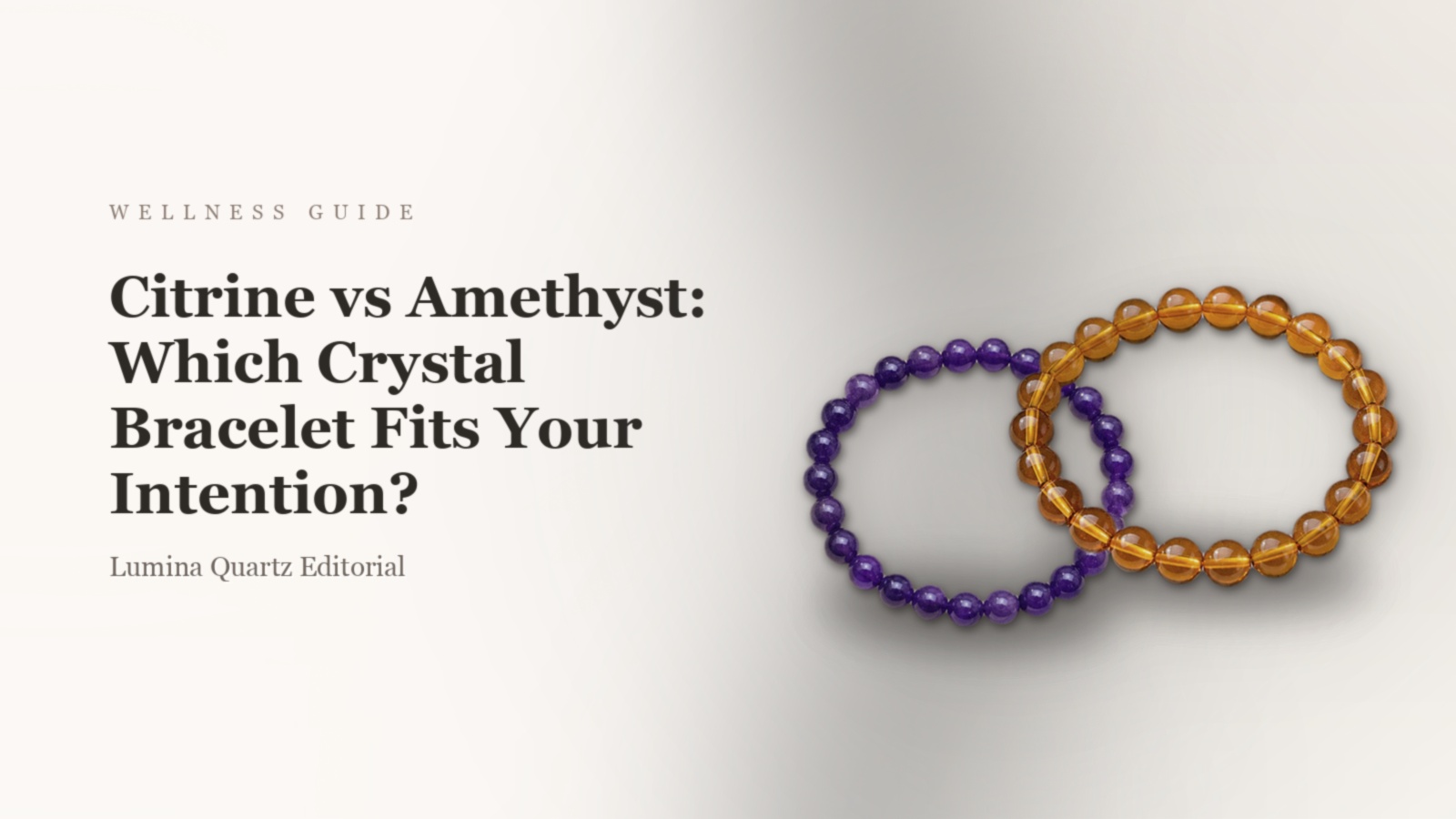
Table of Contents
- Introduction to Citrine and Amethyst Bracelets
- Can You Wear Citrine and Amethyst Together?
- Physical Differences: Color, Composition, and Hardness
- Metaphysical Properties: Amethyst for Peace, Citrine for Abundance
- Wearing Them Together: Synergy and Placement Tips
- How to Choose the Right Bracelet for Your Intention
- Key Takeaways
- Caring for Your Crystal Bracelet
- Frequently Asked Questions
- Related Reading
Introduction to Citrine and Amethyst Bracelets
There is a quiet poetry in the way light moves through a crystal. In the morning, as the sun crests the horizon, perhaps you glance down at your wrist and catch a flash of golden warmth—or a veil of tranquil violet. Two stones, born from the same mineral heart yet expressing entirely different parts of the spectrum: citrine and amethyst. Both are varieties of quartz, part of the same mighty family of silicates that has fascinated humanity for millennia. Yet when you hold a bracelet of citrine and a bracelet of amethyst side by side, you are holding two distinct invitations.
The choice between a citrine vs amethyst bracelet is more than a matter of color preference. It is an exploration of intention, a gentle inquiry into what your spirit is seeking. The citrine bracelet often whispers of abundance, creativity, and the warmth of the sun—a stone that does not hold energetic residue but instead radiates joy outward. The amethyst bracelet, on the other hand, speaks in the language of dusk and stillness—a guardian of peace, intuition, and the quiet spaces where clarity is born. Neither stone is "better." They are simply different expressions of the same loving earth, and your choice may shift as your seasons shift.
This guide is an invitation to walk alongside these two crystals, to understand their physical formation, and to explore how they may be worn together. We will look at the subtle differences between citrine and amethyst, how they may interact on your wrist, and how you can select the bracelet that best aligns with the energy you wish to cultivate. There is no pressure here, only presence. Let the light within these stones speak to the light within you.
Can You Wear Citrine and Amethyst Together?
Yes—many people do wear citrine and amethyst together, and the pairing is widely considered a natural one. Because both are quartz, they share the same basic hardness and temperament, so there is no physical conflict in wearing them side by side. Among the many "amethyst and citrine" pairings people ask about, this combination is one of the most harmonious: one stone cools, the other warms, and together they offer a balanced experience of calm and bright energy.
Answers to "can I wear amethyst and citrine together" depend less on rules and more on intention. There is no strict tradition that forbids it. In energetic terms, amethyst is often associated with stillness and higher awareness, while citrine is associated with warmth, creativity, and forward motion. Worn together, one can act as a gentle anchor for the other—citrine's brightness kept steady by amethyst's calm, amethyst's quiet lifted by citrine's optimism. Think of it as a conversation rather than a competition.
When asked "can amethyst and citrine be worn together," the practical answer is equally reassuring. Both stones are durable enough for daily bracelet wear, both polish to a smooth luster, and both look beautiful in warm-cool contrast. The main thing to keep in mind is care: as with any quartz bracelet, protect the stones from harsh chemicals, knocks, and long periods of direct sun, which can gradually fade color in both amethyst and citrine.
Physical Differences: Color, Composition, and Hardness
To truly appreciate the character of your bracelet, it is grounding to understand what it is made of. Both citrine and amethyst are forms of silicon dioxide, or quartz, which ranks a 7 on the Mohs hardness scale. This means they are durable enough for daily wear in a bracelet, though gentle care is still advised. The fundamental difference between them lies in the trace elements within the crystal lattice and the specific conditions of their formation.
Amethyst receives its iconic violet hue from the presence of iron, combined with natural irradiation over millions of years. The color can range from a pale lilac to a deep, velvety royal purple, often with a smoky undertone. Higher-quality amethyst is often associated with a rich, uniform saturation, though lighter shades can be equally beautiful and carry a softer energetic signature.
Citrine, by contrast, is rare in its natural state. Most citrine on the market today is the result of heat treatment of amethyst, a process that mirrors nature's own alchemy—the Gemological Institute of America notes that most citrine sold is heat-treated amethyst. This does not diminish the stone's beauty or its metaphysically associated qualities; the intention and energy of the wearer always remain central. That said, it is worth knowing that natural citrine and heated amethyst are not geologically identical, and some collectors note they differ in subtle properties. Natural citrine tends toward pale yellow to golden brown and is often slightly smoky; treated material often shows a brighter, more consistent lemon or honey tone. Neither is right or wrong—they are simply different expressions of the earth's transformative power.
Citrine vs Amethyst: Quick Reference
| Feature | Citrine | Amethyst |
|---|---|---|
| Color family | Pale yellow to golden brown | Lilac to deep royal purple |
| Mineral family | Quartz (silicon dioxide) | Quartz (silicon dioxide) |
| Mohs hardness | 7 | 7 |
| Typical origin | Often heat-treated amethyst; natural citrine is rare | Naturally colored quartz |
| Light sensitivity | Can fade with prolonged light and heat exposure | Can fade with prolonged light and heat exposure |
| Common associations | Abundance, joy, creativity | Peace, intuition, clarity |
Color-fading note based on gem-durability guidance from the GIA 4Cs.
Metaphysical Properties: Amethyst for Peace, Citrine for Abundance
While we honor that the true power of any crystal lies in the wearer's own heart and intention, certain metaphysical associations are often mentioned within the gemstone community. Understanding these can help you choose a bracelet that feels like a comforting companion on your journey.
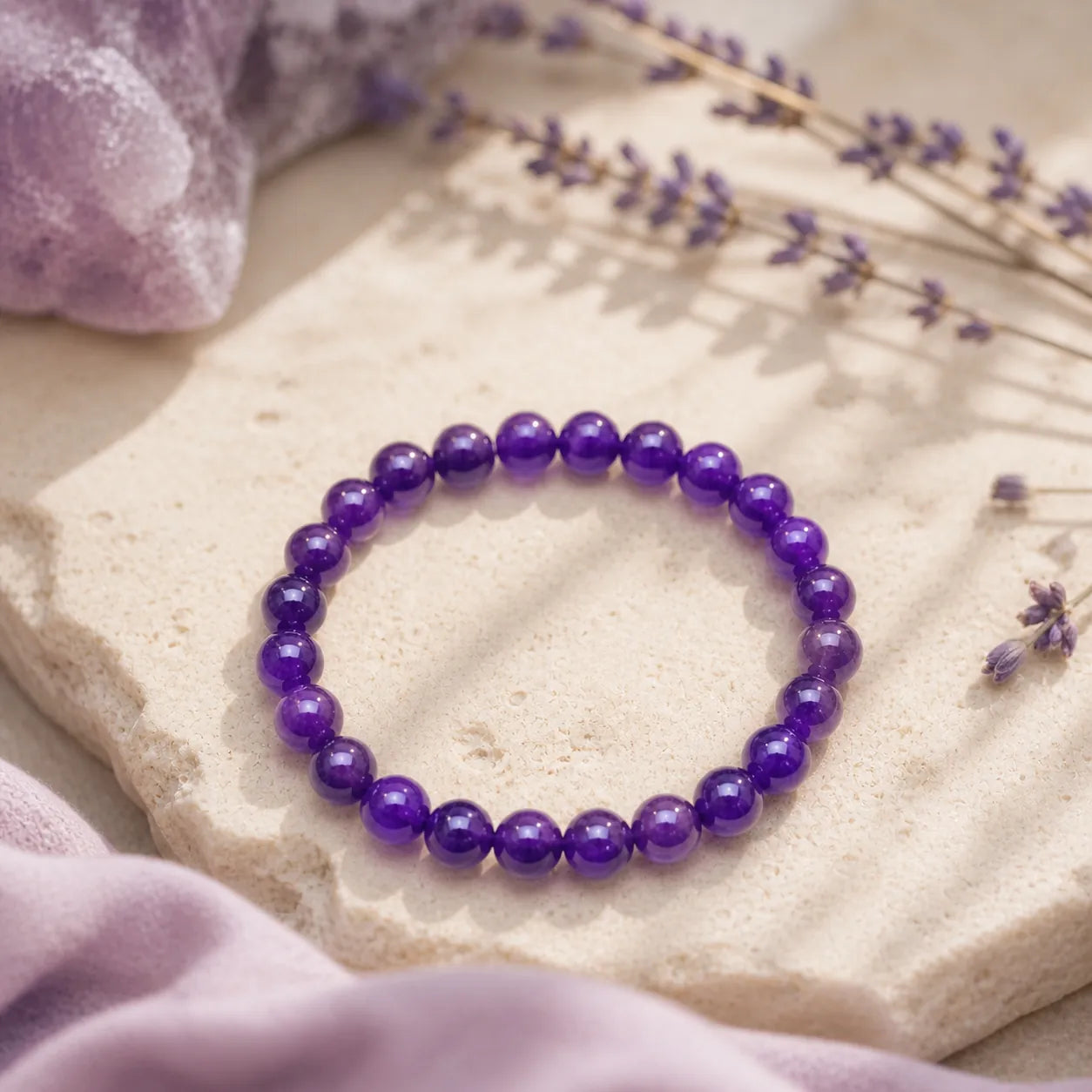
Amethyst for Peace and Intuition. Amethyst is often associated with the third eye and crown chakras, the energy centers connected to higher wisdom, spiritual awareness, and inner peace. It is considered a stone of serenity, and many people say that wearing an amethyst bracelet may support a calm mind, especially during meditation or restful evenings. It may help still the inner chatter, making space for clear intuition and gentle dreams. If you find yourself overthinking, feeling anxious, or struggling to find stillness, an amethyst bracelet may serve as a gentle anchor. The soft purple energy is like a deep breath for the soul—quiet, expansive, and restorative. If this is the energy you are drawn to, our Amethyst Calm Bracelet is a lovely place to begin.
Citrine for Abundance and Joy. Citrine, often called the "merchant's stone," is strongly associated with the solar plexus chakra (the center of personal power and will) and the sacral chakra (the seat of creativity and joy). Its golden light is considered a manifestation stone, often used to attract abundance in all forms—not just financial prosperity, but also creative inspiration, optimism, and warmth. Unlike many other crystals, citrine is believed to not hold or absorb negative energy; instead, it is said to transform it into positive, expansive energy. Wearing a citrine bracelet may support a sense of empowerment, helping you move through the world with a brighter spirit and a willingness to embrace new opportunities.
Wearing Them Together: Synergy and Placement Tips
Once you decide to wear both stones, a few simple guidelines can help the pairing feel intentional rather than accidental.
- Same wrist or different wrists? Many people stack both bracelets on one wrist for a warm-cool contrast, while others wear amethyst on the left and citrine on the right. There is no fixed rule—try each placement for a week and notice which feels more comfortable in your daily life.
- Stack with intention. If you wear them together, place the stone you want to "lead" closer to your hand. Those seeking calm may prefer amethyst nearest the wrist; those focusing on creative momentum may prefer citrine.
- Style with neutral tones. Citrine's gold and amethyst's violet pair beautifully with white, cream, denim, and soft earth tones, so the bracelets read as a deliberate accent rather than a clash.
- Give them their own space. Because both rank 7 on the Mohs scale, wearing them side by side is fine, but beads can slowly abrade each other. A small spacer bead or a loose fit helps reduce friction over time.
- Let the pairing shift with your season. Many wear both during transitions—more amethyst in the evening or during restful periods, more citrine during busy, creative chapters. The balance is yours to adjust.
Used together, amethyst and citrine can create a small daily ritual: a moment to pause, breathe, and remember both the calm you want to carry and the brightness you want to bring.
How to Choose the Right Bracelet for Your Intention
When you are ready to choose, let your intention guide you more than any rule.
- Choose amethyst first if your priority is calm, clearer sleep routines, meditation support, or a gentle counterweight to a busy mind.
- Choose citrine first if your priority is creative momentum, optimism, or a sense of forward movement in your projects and goals.
- Choose both if you want a balanced pair—one to steady you, one to lift you—or if you simply love the way the two colors meet in the light.
Fit and finish matter, too. Choose a bracelet that fits comfortably without pressing on the wrist, and look for smooth, well-polished beads. A slightly loose fit is generally more comfortable for all-day wear and helps protect the stones from unnecessary friction.
Key Takeaways
- Citrine and amethyst are both quartz, ranking 7 on the Mohs scale, and can comfortably be worn together.
- There is no strict rule against wearing amethyst and citrine on the same wrist—many people find the warm-cool pairing especially pleasing.
- Amethyst is commonly associated with peace and intuition; citrine with abundance and joy.
- Most citrine on the market is heat-treated amethyst, according to the GIA—this is normal and does not reduce its appeal.
- Keep both stones away from prolonged direct sun and harsh chemicals, which can gradually fade color.
Caring for Your Crystal Bracelet
Both amethyst and citrine are everyday-friendly stones, but they appreciate a little care. Wipe your bracelets with a soft, dry cloth after wear, and store them separately or in a soft pouch to reduce scratching between beads. Avoid soaking them in harsh cleaners or wearing them in chlorinated water, and remember that prolonged exposure to strong light and heat can gradually fade the color of both stones—so a shaded jewelry box is kinder than a sunny windowsill. If you like to cleanse your crystals energetically, simple methods such as moonlight, sound, or a brief intention-setting ritual are gentle options that suit these stones well.
Frequently Asked Questions
Amethyst Calm Bracelet
A gentle ritual piece for bringing this intention into your daily routine.
Shop This Authentic Piece →Can I wear citrine and amethyst on the same wrist?
Yes. Because both are quartz at the same hardness, there is no physical reason to avoid it. Many people enjoy stacking them for the warm-cool contrast, and a loose fit or a small spacer bead helps reduce wear between the beads.
Is heated amethyst the same as natural citrine?
Not exactly. Both can look similar, and most citrine on the market is indeed heat-treated amethyst, as the GIA notes. However, natural citrine and heat-treated amethyst are not geologically identical and can differ in subtle physical properties. Either way, what matters most for a bracelet is that you love the stone and wear it with intention.
Which stone should be closer to my hand when stacked?
There is no fixed rule. A common approach is to place the stone whose energy you want to "lead" closer to your hand—amethyst if you want calm, citrine if you want bright momentum. Wear both ways and see what feels right.
Can these bracelets fade over time?
Both citrine and amethyst can fade or change color with prolonged exposure to strong light and heat, so it is best to store them away from direct sun and avoid extended heat exposure.
Related Reading
If you enjoy pairing crystals with simple mindfulness rituals, you may also like 1111 Angel Number and Manifestation Crystals for a Mindful Ritual.