Chakra Healing Crystals: Meaning, Healing Properties, and Daily Benefits
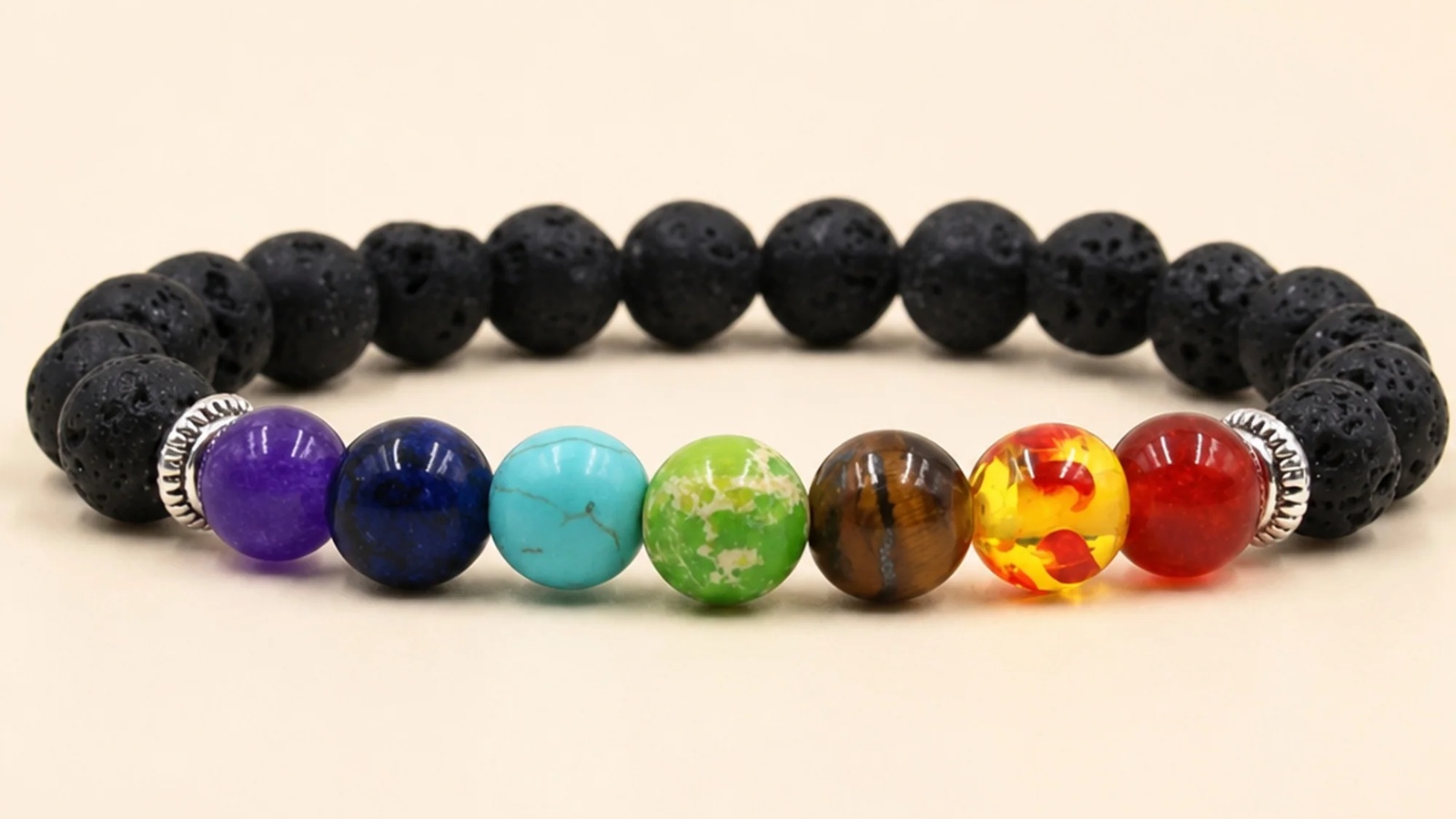
Table of Contents
- 10-Second Executive Summary
- What Are Chakra Healing Crystals? A Simple Introduction
- The 7 Chakras and Their Healing Crystals (Color, Meaning, and Properties)
- Root, Sacral, and Solar Plexus Stones
- Heart, Throat, Third Eye, and Crown Stones
- Decision Table: Choosing One Chakra Stone to Start With
- Applicability Boundaries
- How to Choose the Right Chakra Crystal for Your Needs
- Daily Benefits: 5 Practical Ways to Use Chakra Crystals
- How to Cleanse, Charge, and Care for Your Crystals
- Real vs. Dyed or Synthetic Stones: What to Check Before Buying
- Safety, Honest Expectations, and Responsible Crystal Healing
- FAQ: Chakra Healing Crystals
- What do the 7 chakra healing crystals mean, and which stone is right for each chakra?
- How do you use chakra crystals for healing, meditation, and daily energy balance?
- How can you tell real chakra healing crystals from fakes and dyed stones?
- Sources
Chakra healing crystals are natural stones traditionally matched to the body's seven chakras, the energy centers described in yogic and Hindu traditions. Each chakra is associated with a color and a set of qualities, and practitioners often pair a stone's color or mineral character with the center it is meant to represent. Below you will find the traditional meaning and properties of each chakra stone, a practical way to choose one, daily uses, care notes, and an honest look at what crystals can and cannot do.
10-Second Executive Summary
- Direct Verdict: Chakra healing crystals are best understood as symbolic and meditative tools. They may support focus, ritual, and reflection, but they are not medical treatments and do not replace professional care.
- Mohs Hardness: Quartz-based stones such as amethyst and clear quartz sit around 7 on the Mohs scale, while softer stones like sodalite and lapis lazuli are roughly 5 to 6. Check hardness before choosing how you wear or store a stone.
- Best Use Cases: Meditation anchors, journaling prompts, home or desk displays, and personal reminders tied to a specific chakra theme.
- Buying Standard: Look for natural stones described clearly, including any dye, irradiation, or resin treatment. As a personal benchmark, prefer untreated material and ask the seller for disclosure before buying.
What Are Chakra Healing Crystals? A Simple Introduction
Chakra crystals are natural stones chosen to correspond with the seven chakras, which tradition places along the spine from the base to the crown of the head. The word chakra means "wheel" in Sanskrit, and each center is linked with a color, a theme, and qualities such as grounding, expression, or insight. In crystal practice, a stone's color, transparency, and mineral character are used as a visual and tactile anchor for meditation or intention-setting.
It helps to separate three layers of meaning. The mineral facts are measurable: hardness, composition, and origin. The cultural layer is traditional: color associations and chakra correspondences passed down through yoga and healing lore. The personal layer is your own: what a stone reminds you to practice. Keeping these layers distinct keeps crystal work honest and grounded.
The 7 Chakras and Their Healing Crystals (Color, Meaning, and Properties)
The table below summarizes common correspondences. These pairings are traditional associations, not scientific claims, and different lineages vary in their stone choices.
Root, Sacral, and Solar Plexus Stones
- Root chakra (Muladhara): Traditionally red and linked with stability and safety. Common stones include red jasper, garnet, and bloodstone. Bloodstone, a quartz-family stone historically prized in the Middle Ages, is often associated in tradition with endurance and grounding.
- Sacral chakra (Svadhisthana): Traditionally orange and linked with creativity and feeling. Common stones include carnelian and orange calcite.
- Solar plexus chakra (Manipura): Traditionally yellow and linked with confidence and will. Common stones include citrine and yellow jasper.
Heart, Throat, Third Eye, and Crown Stones
- Heart chakra (Anahata): Traditionally green or pink and linked with compassion. Common stones include rose quartz and green aventurine.
- Throat chakra (Vishuddha): Traditionally blue and linked with expression. Common stones include blue lace agate and sodalite.
- Third eye chakra (Ajna): Traditionally indigo and linked with insight. Common stones include amethyst and lapis lazuli.
- Crown chakra (Sahasrara): Traditionally violet or white and linked with connection and clarity. Common stones include clear quartz and selenite.
Decision Table: Choosing One Chakra Stone to Start With
Use this table to match your current focus to a starting stone, then check hardness so you know how to wear and store it. These are traditional pairings offered as personal practice suggestions, not medical guidance.
| Your Focus | Chakra | Starting Stone | Approx. Mohs Hardness | Practical Note |
|---|---|---|---|---|
| Feeling unsteady or scattered | Root | Red jasper or bloodstone | 6.5 to 7 | Durable enough for a pocket stone |
| Creative blocks | Sacral | Carnelian | 6.5 to 7 | Keep away from prolonged sun to limit fading |
| Confidence and follow-through | Solar plexus | Citrine | 7 | Store separately from softer stones |
| Self-compassion | Heart | Rose quartz | 7 | Fine for daily wear; avoid harsh cleaners |
| Speaking and writing clearly | Throat | Sodalite or blue lace agate | 5.5 to 6.5 | Softer; better as a desk stone than a ring |
| Reflection and meditation | Third eye | Amethyst | 7 | Color may fade in direct sun |
| Clarity and spaciousness | Crown | Clear quartz or selenite | 2 to 7 | Selenite is very soft; handle gently and keep dry |
Applicability Boundaries
This table applies to choosing a single stone for personal ritual, reflection, or display. It does not apply to health decisions, diagnosis, treatment, or claims about physical energy systems. If you are choosing a gift, match the recipient's stated interest in a theme rather than assuming a need.
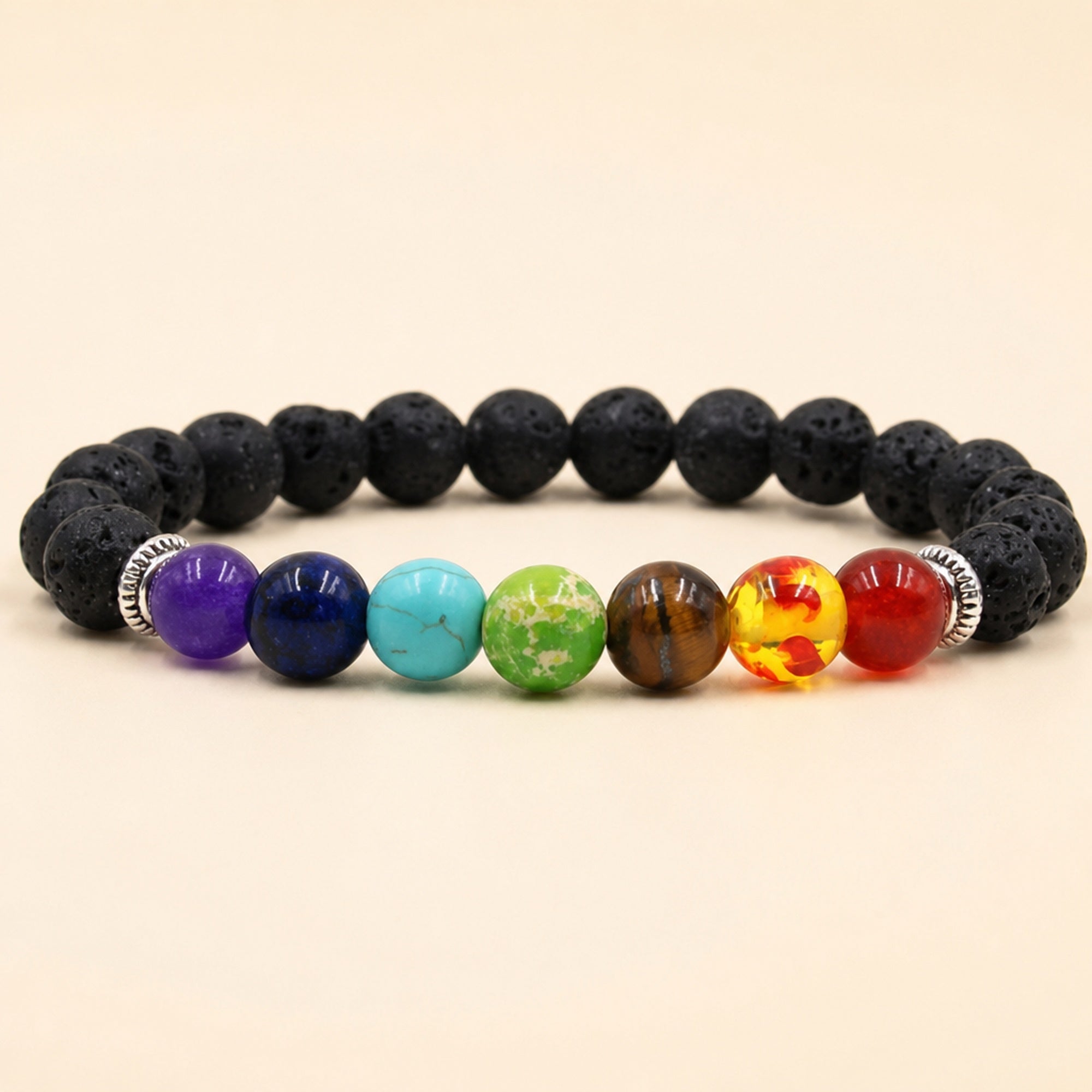
Seven Chakra Bracelet
A quiet bracelet for turning this intention into a small daily ritual.
Shop This Authentic Piece →How to Choose the Right Chakra Crystal for Your Needs
Start with the theme rather than the stone. If your practice is about grounding, look to the root correspondences; if it is about expression, start with the throat. Then apply a short checklist before buying:
- Name the intention. Write one sentence about what you want the stone to remind you to do, such as "pause before I speak."
- Check the color honestly. Natural stones vary in shade. Uniformly bright, identical pieces are often dyed.
- Confirm hardness. Match the stone's Mohs hardness to how you will use it. Soft stones such as selenite suit displays, not rings.
- Ask about treatment. Ask the seller whether the stone is natural, dyed, irradiated, or resin-filled. As a personal preference, untreated natural material is easier to verify and care for.
- Feel for weight and temperature. Natural quartz-family stones feel cool and dense in the hand; plastic or glass imitations often feel light and warm.
Daily Benefits: 5 Practical Ways to Use Chakra Crystals
Crystal work is most useful as a gentle ritual. These five practices are personal suggestions for focus and reflection; any sense of calm or self-awareness comes from the attention you bring to the practice, not from a demonstrated property of the stone.
- One-minute morning check-in. Hold a root or heart stone, take three slow breaths, and name one thing you need today.
- Meditation anchor. Place an amethyst or clear quartz beside you and return your attention to it when your mind drifts.
- Journal pairing. Set a throat or solar plexus stone on your desk and write one honest sentence before you begin work.
- Space marker. Keep a small stone on a shelf or windowsill as a visual cue for a quality you want to practice at home.
- Evening release. Hold a stone and note one thing you want to set down before sleep, keeping the practice brief and simple.
How to Cleanse, Charge, and Care for Your Crystals
"Cleansing" and "charging" are traditional practices rather than tested procedures. Treat them as care rituals that also protect your stones physically.
- Wipe and rinse with care. Use a soft cloth and a little water. Avoid soaking porous or soft stones such as selenite and calcite.
- Use moonlight or indirect sunlight. Overnight moonlight is gentle. Prolonged direct sun can fade amethyst and rose quartz, so limit exposure.
- Skip harsh methods on dyed or filled stones. Salt water, heat, and ultrasonic cleaners can damage treatments and soft material.
- Store separately. Wrap softer stones so they do not scratch against quartz, which is harder.
- Dry fully. Moisture trapped against a strand can weaken it over time.
Real vs. Dyed or Synthetic Stones: What to Check Before Buying
Many "chakra sets" sold cheaply are glass, resin, or dyed quartz. Before you buy, check these points:
- Color consistency: Natural stones show slight variations and inclusions. Perfectly uniform color across a set is a warning sign.
- Dye at cracks: Dye often pools in fractures. Look closely at the surface with a light.
- Weight and temperature: Real quartz-family stones feel cool and heavy; imitation pieces often feel light.
- Disclosure: Ask whether the stone is natural, dyed, irradiated, or resin-filled. Clear disclosure is a reasonable benchmark for any seller; comparing pieces this way is a personal buying preference, not a certification.
- Provenance: Ask where the material is sourced. Mineral databases such as Mindat can help you verify locality names and mineral information.
Safety, Honest Expectations, and Responsible Crystal Healing
Chakra crystals are symbolic and meditative tools. They may support a sense of calm or focus through ritual and attention, and they are often associated in tradition with personal reflection, but no stone has been shown to treat a health condition. Crystal work should not replace medical or mental health care, and if you are experiencing persistent distress, speak with a qualified professional.
Keep small stones and tumbled pieces away from children and pets because of choking risk. Some mineral dust, such as from raw malachite or quartz cutting, can irritate lungs, so avoid sanding or polishing at home. If a stone causes skin irritation, stop wearing it. Used with clear expectations, crystals can be a gentle part of a broader self-care routine.
FAQ: Chakra Healing Crystals
What do the 7 chakra healing crystals mean, and which stone is right for each chakra?
Traditional pairings are root with red jasper or bloodstone, sacral with carnelian, solar plexus with citrine, heart with rose quartz, throat with sodalite, third eye with amethyst, and crown with clear quartz or selenite. Choose the chakra that matches your current focus, and check hardness before deciding how to wear the stone.
How do you use chakra crystals for healing, meditation, and daily energy balance?
Use a stone as a meditation anchor, a journaling cue, or a small visual reminder in your space. Keep sessions short and consistent, and treat the practice as a support for attention and reflection rather than a treatment.
How can you tell real chakra healing crystals from fakes and dyed stones?
Look for natural color variation and visible inclusions, check whether dye has pooled in cracks, and note weight and temperature. Ask for clear disclosure of dye, irradiation, or resin filling, and compare sellers before you decide.
Sources
© 2026 Lumina Quartz. This article is for general information and personal reflection only and is not medical advice.
Product Facts From the Current Catalog
These details come from the active Lumina Quartz catalog record checked on 2026-10-22. They are product-listing facts, not laboratory results or invented wear-test claims.
| Listed product | Seven Chakra Bracelet – Balanced Ritual (8mm Natural Stones) |
|---|---|
| Format | Bracelet |
| Listed price snapshot | 34.99 |
Price, availability, and options may change. Check the live product listing before choosing.