Blue Lace Agate: Spiritual Meaning, Symbolism, and Daily Use
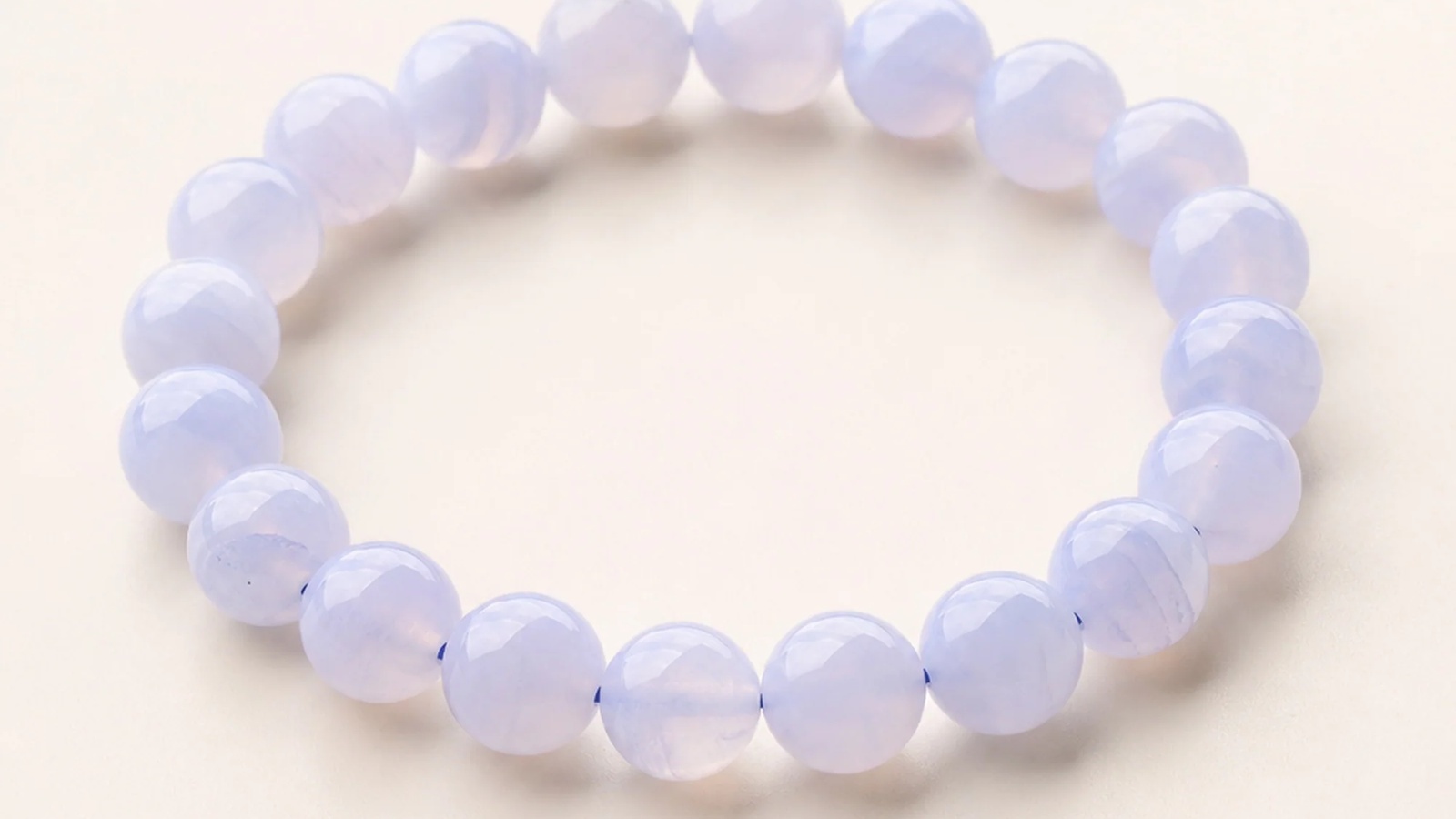
Table of Contents
- What Blue Lace Agate Is (and Isn't): Chalcedony, Not a Mineral of Its Own
- The Verdict Box: 10-Second Executive Summary
- The Look of the Stone: Lace Bands, Pale Sky Blue, and How It Forms
- Blue Lace Agate Meaning and Symbolism: Calm, Gentle Speech, and the Throat Chakra
- Traditional and Modern Uses for Calm and Clear Communication
- Everyday Ways to Carry and Work With It
- Where It Comes From: Namibia, the Single Vein, and Shrinking Supply
- Natural vs. Dyed: A Three-Step Pre-Purchase Check
- Care, Cleansing, and Storage: Water-Safe but Shade-Loving
- Pairings, Star Signs, and Gift Ideas
- Frequently Asked Questions
- What does blue lace agate mean spiritually?
- How do you tell if blue lace agate is natural or dyed?
- Is blue lace agate safe in water and sunlight, and how should I cleanse it?
- Sources
What Blue Lace Agate Is (and Isn't): Chalcedony, Not a Mineral of Its Own
Blue lace agate is a pale blue, banded variety of agate, which is itself a fine-grained form of chalcedony (SiO₂) — a variety of quartz. It is not a separate mineral species. Mindat lists it under agate/quartz with a vitreous lustre, blue colour, trigonal crystal system, and a hardness of 7. In everyday terms, that means it is a tough, wearable stone rather than a delicate one — but it also means it belongs to the vast quartz family, not to a rare mineral class of its own.
The Verdict Box: 10-Second Executive Summary
- Direct Verdict: Blue lace agate is a banded, pale blue chalcedony (quartz) traditionally associated with calm and clear speech, often linked with the throat chakra. It is a symbolic and ornamental stone, not a medical treatment.
- Mohs Hardness: 7 — durable for daily jewellery, but still scratchable by harder materials.
- Composition: SiO₂ (chalcedony/quartz), trigonal crystal system, vitreous lustre.
- Best Use Cases: Throat-chakra and communication intentions, calm-anchor rituals, gentle everyday jewellery, and gift-giving for speakers, writers, and caregivers.
- Buying Standard: Look for natural, untreated banding under the Lumina Grade AAA Integrity Standard — natural rough, no chemical resin filling, no irradiation or dye.
The Look of the Stone: Lace Bands, Pale Sky Blue, and How It Forms
Blue lace agate earns its name from its delicate, lace-like banding and its soft, pale blue tone. In the broader agate family, colour banding comes from microscopic inclusions — for example, iron oxide minerals can tint agate — and agates commonly form in cavities in volcanic rock, where silica-rich water deposits quartz layer by layer parallel to the cavity wall, as described by the Smithsonian National Museum of Natural History. That layered deposition is why each piece shows its own pattern of bands, swirls, or lace.
Not every pale blue banded stone is blue lace agate. The classic look is a light sky-blue body with fine white or deeper blue lacing. Genuine material usually shows soft, irregular transitions between bands; a stone where the blue sits only in surface cracks, or where every band is a uniform electric tone, deserves a closer look.
Blue Lace Agate Meaning and Symbolism: Calm, Gentle Speech, and the Throat Chakra
Spiritually, blue lace agate is most often associated with calm, gentle communication, and the throat chakra. In crystal traditions, blue stones are frequently linked with the throat area and with the idea of speaking one's truth softly rather than forcefully — and blue lace agate's pale, watery hue fits that symbolism closely. It may support intentions around patient listening, thoughtful wording, and steady self-expression.
It is important to separate two layers here. The mineral facts — composition, hardness, banding, formation — are established geology. The meaning — calm, clear speech, throat-chakra association — is cultural and symbolic, carried by tradition rather than by laboratory evidence. Blue lace agate does not "fix" stuttering, anxiety, or communication difficulties; it is often used as a personal reminder, a ritual object, or a beautiful anchor for an intention you have already chosen.
Traditional and Modern Uses for Calm and Clear Communication
Traditionally, blue lace agate has been carried or worn as a stone of gentle expression. In modern practice, people most often use it in three ways: as everyday jewellery, as a pocket or desk stone during conversations and presentations, and as part of a small throat-chakra arrangement with other blue or white stones. Its hardness of 7 makes it practical for rings, pendants, and bracelets, though a ring worn daily will eventually collect small surface scratches.
A useful distinction: use blue lace agate for intentions you can articulate and act on — "I will pause before replying," "I will speak one honest sentence today" — rather than for outcomes outside your control. The stone is a cue, not a cause.
For visual reference on how natural material appears, Mindat's Blue Lace Agate gallery shows specimens from Madagascar and the Lapurr Range in Turkana County, Kenya — a helpful baseline when comparing stones online.
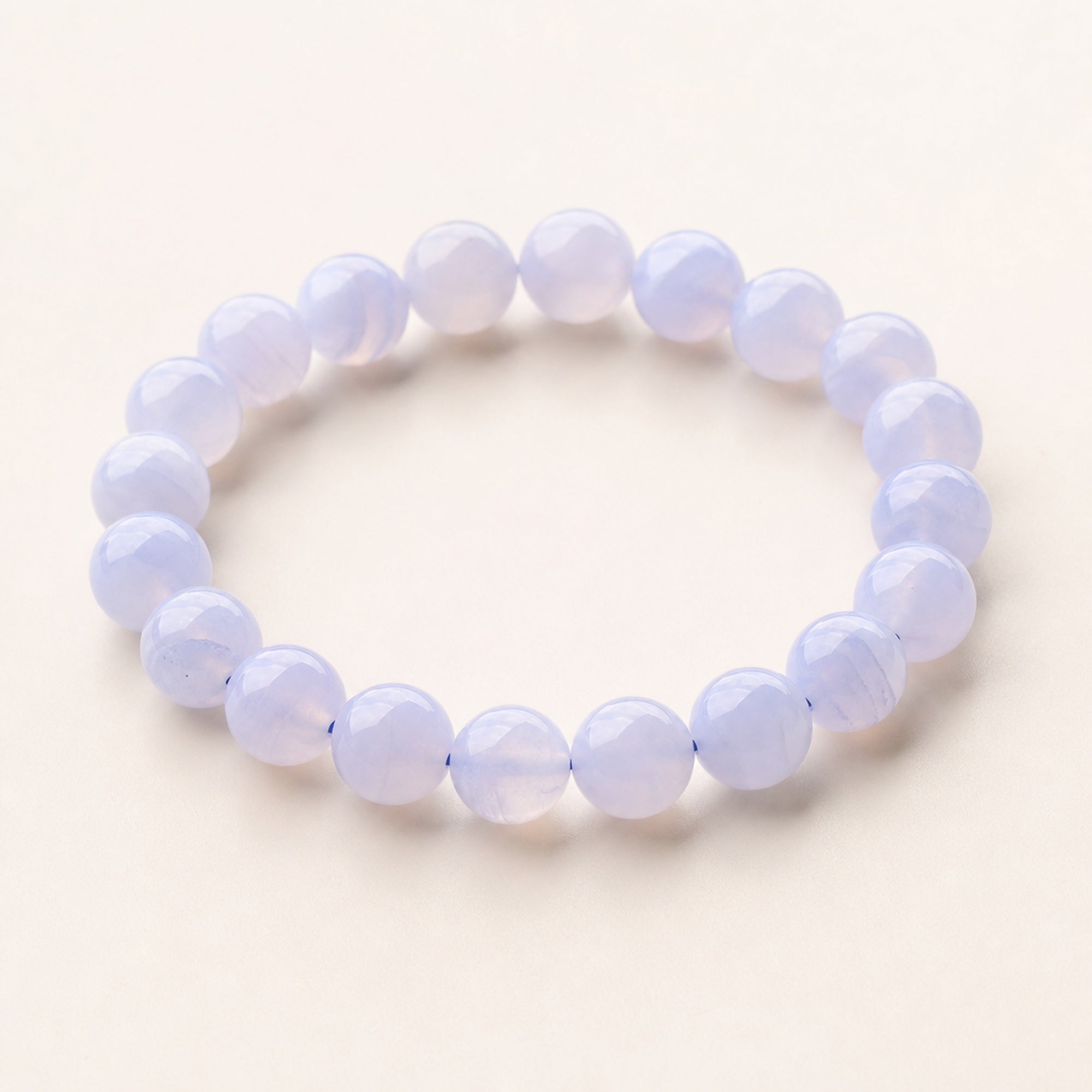
Blue Lace Agate Bracelet
A quiet bracelet for turning this intention into a small daily ritual.
Shop This Authentic Piece →Everyday Ways to Carry and Work With It
Keep it simple and repeatable. Choose one moment of the day — before a meeting, before a difficult message, before a family conversation — and hold the stone while naming your intention in a single sentence. Wear it on the side of the body that feels natural to you, or place it on your desk where you will see it before you speak. Because the symbolism is about gentle speech, the practice works best paired with an actual communication habit: one breath before answering, one rewrite before sending.
Where It Comes From: Namibia, the Single Vein, and Shrinking Supply
Blue lace agate is strongly associated with Namibia, where it has historically been mined from a limited deposit. The material has become harder to find and more expensive over time as that supply has thinned and demand for pale blue agate has grown. Mindat's specimen photographs also show material from Madagascar and Kenya, so blue lace agate is not exclusive to one country — but the most recognisable classic material is tied to a narrow source.
Practical takeaway: if you see large quantities of very uniform, strongly blue "blue lace agate" at a low price, ask where it came from and how it was treated. Scarcity and rising cost in the natural market are exactly the conditions under which dyed substitutes appear.
Natural vs. Dyed: A Three-Step Pre-Purchase Check
Use this checklist before you buy, whether in a shop or online:
- Look at the band edges. Natural banding transitions softly, with white and blue layers that blur into one another. Dye tends to sit in cracks, pits, and porous zones, leaving darker lines at the surface and a body colour that looks flat beneath.
- Compare the colour to known references. Blue lace agate is pale sky blue. A stone that is saturated cobalt or navy is either unusually rich or treated — a saturated tone with a low price is the stronger warning sign. Check against documented natural specimens, such as Mindat's Blue Lace Agate images.
- Ask for the integrity claim in writing. Under the Lumina Grade AAA Integrity Standard, a stone should be natural rough, with no chemical resin filling, no irradiation, and no dye. Request that statement from the seller rather than relying on a label like "natural" alone.
Boundary of this check: these steps help you spot the obvious — surface dye and suspiciously saturated, uniform colour. They cannot replace gemmological testing for fine or high-value pieces. For anything expensive, treat lab verification as the standard, not the checklist.
Care, Cleansing, and Storage: Water-Safe but Shade-Loving
With a Mohs hardness of 7 and a dense, cryptocrystalline structure, blue lace agate is generally water-safe for a quick rinse and sturdy enough for regular wear. Two cautions matter. First, dyed material can fade or bleed with prolonged soaking — another reason to favour untreated stones. Second, strong and prolonged sunlight is best avoided for blue tones, which may fade over long exposure; keep display pieces out of direct sun and store jewellery in a soft pouch or lined box away from harder stones that could scratch it.
For cleansing, keep it gentle and symbolic: a brief rinse in room-temperature water, a wipe with a soft cloth, and a moment of quiet intention are enough. Extended soaking, harsh cleaners, and ultrasonic machines are unnecessary for this stone.
Pairings, Star Signs, and Gift Ideas
Blue lace agate pairs naturally with other calm, communication-oriented stones — clear quartz for clarity of intention, white or pale stones for a softer visual balance, and other blue stones if you are building a throat-chakra arrangement. In star-sign traditions, it is most often associated with Gemini and Pisces, and sometimes with Taurus; treat these as cultural associations rather than rules.
As a gift, blue lace agate works well for people whose days are full of speech: teachers, therapists, customer-facing teams, writers, and caregivers. A small pendant, a tumbled pocket stone, or a palm-sized piece for a desk all carry the same meaning — a gentle invitation to speak clearly and listen well. Choose natural, untreated material under the Lumina Grade AAA Integrity Standard, and let the stone's quiet bands do the rest.
Frequently Asked Questions
What does blue lace agate mean spiritually?
It is most often associated with calm, gentle communication and the throat chakra — a symbolic stone for speaking honestly and softly. These meanings are cultural and traditional, not medically proven.
How do you tell if blue lace agate is natural or dyed?
Check whether colour sits in cracks rather than in soft, layered bands, and compare the tone to documented pale-blue natural specimens. For certainty, ask the seller for a written untreated claim such as the Lumina Grade AAA Integrity Standard.
Is blue lace agate safe in water and sunlight, and how should I cleanse it?
With a hardness of 7, it handles a brief room-temperature rinse and a soft-cloth wipe well. Avoid long soaking — especially for dyed stones — and keep it out of prolonged direct sunlight to protect its blue tone.
Sources
- Mindat — Blue Lace Agate (composition, hardness, lustre, crystal system, specimen localities)
- Smithsonian National Museum of Natural History — Quartz (var. agate): banding, inclusions, formation in volcanic cavities
- GIA — Gem Cutters Reveal the Beauty of Chalcedony (agate as microcrystalline quartz, historical naming)
© 2026 Lumina Quartz. This article shares cultural and geological information about blue lace agate. Crystal meanings are symbolic and traditional; they are not medical advice or a substitute for professional care.
Product Facts From the Current Catalog
These details come from the active Lumina Quartz catalog record checked on 2026-11-05. They are product-listing facts, not laboratory results or invented wear-test claims.
| Listed product | Blue Lace Agate Bracelet – Soft-Spoken Calm |
|---|---|
| Format | Bracelet |
| Listed price snapshot | 78.00 |
Price, availability, and options may change. Check the live product listing before choosing.