How to Wear Black Tourmaline for Protection: Wrist, Placement & Care
How to Wear Black Tourmaline for Protection
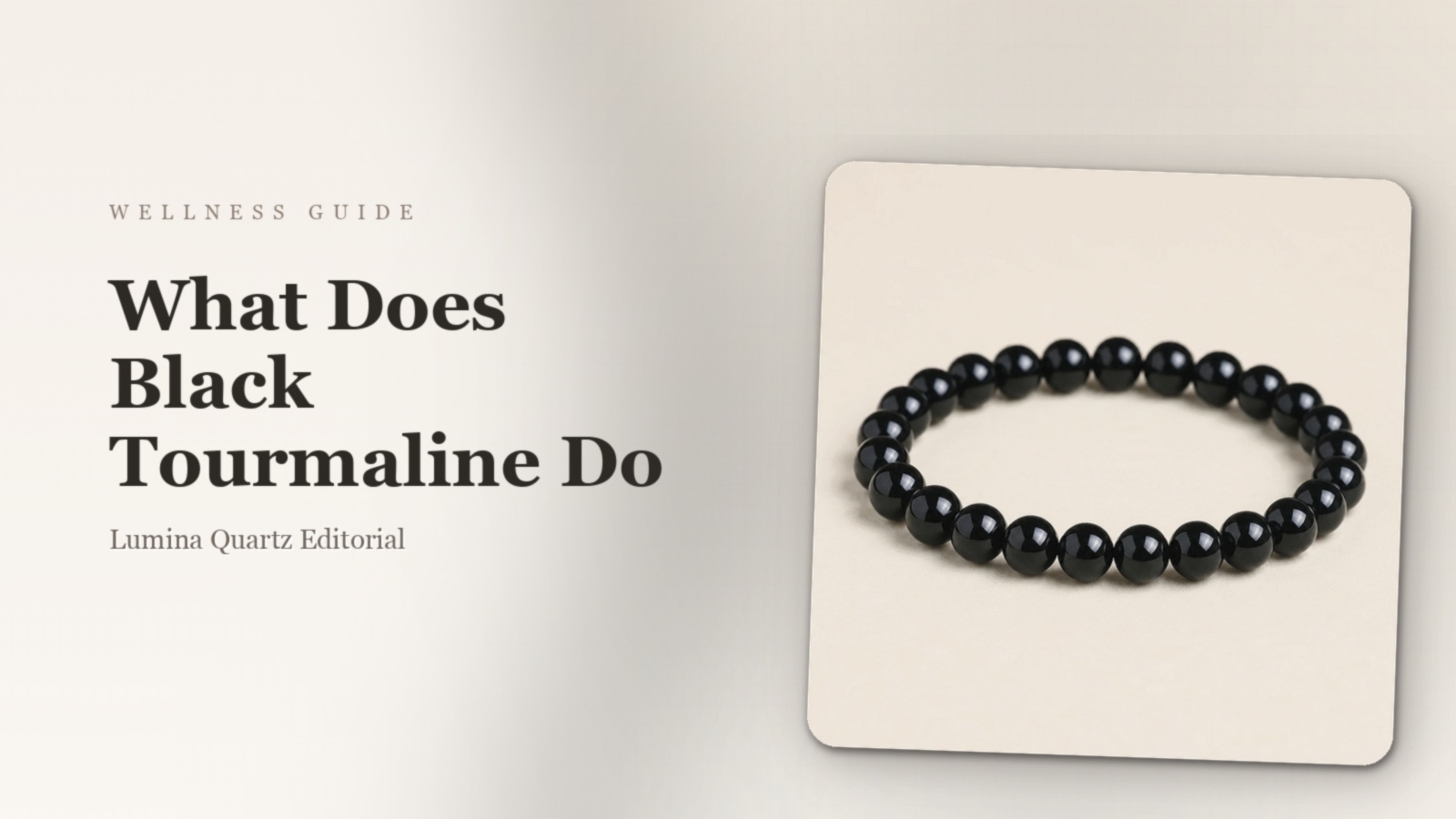
Wear black tourmaline as a bracelet or pendant when you want a portable reminder of grounding and personal boundaries. Many crystal traditions associate the left wrist with receiving and the right wrist with outward action, but comfort and personal preference matter more than a fixed rule. You can also place the stone near an entryway or workspace, and cleanse it according to the material and setting. These are personal spiritual practices, not medical or electromagnetic-shielding claims.
Table of Contents
- What Does Black Tourmaline Do?
- Which Wrist Do You Wear Black Tourmaline On?
- Where Else to Place Black Tourmaline
- Traditional Properties People Associate With Black Tourmaline
- Wear It or Place It? A Quick Decision Guide
- Black Tourmaline vs. Black Obsidian
- How to Cleanse and Care for Black Tourmaline
- FAQ: Common Questions About Wearing Black Tourmaline
- Related Reading
- Sources
What Does Black Tourmaline Do?
Black tourmaline—known to mineralogists as schorl—is a boron-bearing silicate mineral that grows into long, striated prismatic crystals. It is piezoelectric and pyroelectric, meaning it can develop an electrical charge when it is compressed or heated. It is not significantly magnetic; the faint pull some people notice is usually electrostatic attraction, the same everyday effect that makes a balloon cling to a wall.
In medieval Europe, schorl was handled by artisans and healers, and dark stones like it have appeared in protective talismans and ritual objects across Europe, the Middle East, and Asia for centuries. Many traditions link black stones to the earth element, to quiet endurance, and to the idea of standing firm.
What black tourmaline does, in practice, is simpler than any legend suggests. It gives you something solid to touch. If you wear it, it becomes a small recurring cue: adjust your posture, take one slower breath, decide where your attention actually belongs. That is a personal ritual, not a medical treatment, and it works best when you hold it lightly.
Which Wrist Do You Wear Black Tourmaline On?
If you have ever wondered what hand to wear black tourmaline on, the honest answer is: either one. There is no rule that produces a measurable result, and no tradition speaks with a single voice. What follows is the most common way people frame the choice—useful as a thinking tool, not as a law.
The Left Wrist: Receiving and Settling
In many crystal traditions, the left side of the body is associated with receiving, absorbing, and turning inward. Wearing black tourmaline on the left wrist is often chosen for calm, steadiness, and a sense of being held. People reach for it during long meetings, medical waiting rooms, or quiet evenings when the mind keeps circling.
The Right Wrist: Outward Action and Boundaries
The right side is frequently linked with projecting, doing, and engaging with the world. Wearing the stone on the right wrist is a common choice for people who want a visible reminder of boundaries before a difficult conversation, a commute through crowds, or a day of public-facing work. Some left-handed wearers simply flip the convention and treat their dominant hand as the active one—which is entirely reasonable.
Comfort and Practical Checks Matter More
A bracelet you fidget with, that catches on your keyboard, or that sits under a tight watch strap will not feel grounding—it will just feel annoying. Two practical notes:
- Ink, water, and lotion. Wear the bracelet on the hand you use less often if you write by hand or work with your hands all day.
- Clasp and elastic security. Check stretch cord and clasps before a busy day rather than after one.
The wrist you choose should feel right when you notice it—usually within the first hour.
Where Else to Place Black Tourmaline
A bracelet is only one option. Placement is really about where a reminder will meet you at the right moment.
- As a pendant. A black tourmaline pendant sits close to the chest or at the throat, which many people find more discreet than a bracelet at a formal workplace.
- In a pocket or bag. A tumbled stone or small point works well here; every time you reach for your keys, you touch something solid.
- By the entryway. A dish or bowl near the front door is a classic spot—an object to pass on the way in and out.
- On a desk. Near a monitor or beside a keyboard, kept out of the way of drinks and cables.
- At the bedside. On a nightstand rather than under a pillow if you move a lot in your sleep.
- In the car. In a cup holder or console tray, away from direct sun and heat.
If you would like a piece designed for daily wear, our Black Tourmaline Bracelet – Grounded Boundaries is sized for everyday use.
One boundary worth stating plainly: a stone is not a security system, a lock, an airbag, or a substitute for qualified professional help. It is a companion object, not a safeguard.
Traditional Properties People Associate With Black Tourmaline
When people search for black tourmaline magical properties, what they usually find are folk and metaphysical associations rather than scientific findings. Here are the ones that come up most often, described honestly.
Grounding and Rootedness
Black corresponds, in many energy systems, to the root chakra—the center of safety, stability, and physical presence. Holding a piece while breathing slowly, or keeping it in a pocket for the day, is a way of anchoring attention in the body rather than in worry.
Boundaries: A Mirror Rather Than a Sponge
Black tourmaline is traditionally described as repelling unwanted energy rather than absorbing it. The image used most often is a mirror: what approaches is reflected back, and the wearer stays steadier. Whether or not you take that literally, the underlying practice is familiar and useful—notice what is yours to carry and what is not.
Focus and Clarity
Because it is a grounding stone, it is often paired with study, meditation, or deep work. The mechanism, if there is one, is likely ordinary: a consistent physical cue helps you return to the task in front of you.
What It Is Not
Black tourmaline is not a treatment for anxiety, depression, insomnia, or any physical condition. It does not block electromagnetic radiation, and it should not be relied on for protection in unsafe situations. Treat any benefit you notice as personal and subjective rather than proven.
Wear It or Place It? A Quick Decision Guide
Use this table as a starting point, then adjust for your own routine.
- Best for: daily grounding cues, commutes, busy workdays, quiet pause practices, and simple intention-setting.
- Not ideal for: urgent safety situations, medical or mental health concerns, or anything requiring qualified professional support.
- Busy commute or crowded spaces → right wrist or a pocket stone → outward-facing boundary reminder → keep the clasp secure and the stone out of the way of your bag strap.
- Journaling, meditation, or winding down → left wrist or held in the palm → inward, settling association → sit somewhere comfortable; there is no need to force a feeling.
- Focused work at a desk → beside the monitor or in a tray → steady visual cue → keep it clear of drinks, cables, and direct sun.
- Coming home at the end of the day → entryway dish or hook → a transition marker → pair it with one small action, such as putting your keys down and taking a breath.
- Sleep or restlessness at night → nightstand, not under the pillow → low-key presence → choose a smooth tumbled stone over a pointed piece.
- Formal or client-facing settings → discreet pendant or slim bracelet → private reminder → check that no metal plating will react with perfume or hand cream.
A short care checklist: inspect the cord or clasp weekly, remove before swimming or showering, keep elastic and plated metals dry, store in a soft pouch away from harder stones, and cleanse on a rhythm that feels meaningful rather than obligatory.
Black Tourmaline vs. Black Obsidian: What's the Difference?
These two are the most frequently confused dark stones, and the confusion is understandable—both are black, both are sold as protection stones, and both are often tumbled into near-identical shapes. The differences are geological first and symbolic second.
The Repel vs. Absorb Distinction
In crystal traditions, black tourmaline is usually described as repelling unwanted energy, while black obsidian is described as absorbing or reflecting it back for examination. Think of tourmaline as a shield and obsidian as a mirror that shows you what is there. This is a symbolic framework, not a measurable effect, but it is a useful way to decide which stone suits a given moment.
What Does Obsidian Represent?
Obsidian represents transformation born of fire. It is volcanic glass—lava that cooled so quickly that no crystal structure had time to form—which is why it fractures into those smooth, curved, almost blade-like edges. In Mesoamerican cultures, obsidian was worked into cutting tools and polished mirrors, so it carries associations with both precision and truthful reflection.
In modern crystal practice, obsidian is often linked to shadow work, honesty, and clearing away what has been avoided. Its subtypes carry their own meanings: snowflake obsidian is associated with patience during change, and Apache tears with grief and release. Like tourmaline, it is a grounding stone in most traditions—but where tourmaline is described as steadying and protective, obsidian is described as revealing.
Which Stone Should You Choose?
- Choose black tourmaline if you want a steady, low-drama presence and you like its association with boundaries. It is harder (roughly 7 to 7.5 on the Mohs scale) and better suited to everyday jewelry.
- Choose black obsidian if you are drawn to its reflective symbolism, its glassy finish, and its association with honest self-examination. It scratches more easily, so it prefers gentler wear.
- Choose both if you enjoy working with them at different times—tourmaline for the commute, obsidian for the journal.
How to Cleanse and Care for Black Tourmaline
Cleansing is a symbolic reset—a way of marking that you are starting fresh with the stone. Care is practical and keeps the piece wearable for years.
Simple Cleansing Methods
- Moonlight or indirect sunlight. Set the stone on a windowsill overnight. Indirect light is safer than a hot, sunny spot.
- Sound. A singing bowl, chime, or bell is hands-off and safe for every setting.
- Smoke. Pass the stone through the smoke of dried herbs or resin, if that is a practice you already keep.
- Dry salt or a selenite plate. Rest the stone on either for a few hours. Avoid salt with plated metals, which can dull.
- Brief running water. Fine for a plain tumbled stone, but skip it for elastic cord, plated findings, and glued settings. Dry thoroughly afterward.
Care, Heat, and Storage
Tourmaline is a durable stone, but it has one clear vulnerability. According to the Gemological Institute of America's tourmaline care and cleaning guide, tourmaline is generally stable to light and is not affected by exposure to chemicals, but heat can damage it. In everyday terms, that means keeping your piece out of a hot car, away from steamers, and away from an open flame or hot stovetop.
GIA's tourmaline buying guide notes that color is the most important quality factor in tourmaline—for black tourmaline the color is uniform, so instead look at the cut, the finish, and how the piece is strung. Store your stone in a soft pouch or a compartment of its own so harder stones do not scratch it, and check the cord or clasp regularly.
Charging, in the traditional sense, is simply setting an intention: hold the stone, name what you want it to remind you of, and put it back where it will meet you tomorrow. There is no scientific mechanism here, and that is fine—the value is in the pause.
FAQ: Common Questions About Wearing Black Tourmaline
Does black tourmaline repel negative energy?
In many crystal traditions, yes—it is described as reflecting unwanted energy rather than absorbing it. There is no scientific evidence that a stone can alter energy, moods, or events, so treat this as a symbolic and personal practice. What is genuinely useful is the habit it supports: pausing, noticing, and deciding what is yours to carry.
What hand do you wear black tourmaline on?
Either hand. The most common convention is left wrist for receiving and settling, right wrist for outward action and boundaries, but traditions differ and comfort comes first. If a bracelet irritates your skin, snags on your keyboard, or sits awkwardly under a watch, move it or switch to a pendant or pocket stone.
How is black tourmaline different from black obsidian?
Black tourmaline is a crystalline mineral, roughly 7 to 7.5 on the Mohs hardness scale, and is traditionally associated with repelling and steadying. Black obsidian is volcanic glass with no crystal structure, softer and more prone to scratching, and is traditionally associated with reflection, honesty, and transformation.
How do you cleanse black tourmaline?
Choose whatever method suits the piece. Moonlight, sound, and smoke are safe for any setting. Dry salt and a selenite plate work well for plain stones. Brief running water is fine for a solid tumbled stone, but avoid it for elastic cord, plated metal, and glued settings. There is no required schedule—cleanse when it feels meaningful to you.
Can you wear black tourmaline every day?
Yes, if it is comfortable. Remove it before swimming, showering, or any activity that could strain the cord or expose plated metal to water and chemicals. Inspect the clasp or elastic every week or two, and store the piece in a soft pouch when you are not wearing it.
Related Reading
- Black Tourmaline Meaning: Meaning, Properties, and Everyday Uses
- Black Tourmaline Meaning: What This Crystal Symbolizes and How It Is Used